論文解説
Phi-3 Technical Report: A Highly Capable Language Model Locally on Your Phone
Phi-3 技術報告書:スマートフォンでローカル動作する高性能な言語モデル
- 課題 大規模言語モデルは、パラメータ数と学習トークン数を増やすことで性能を高めてきました。この論文は、データの品質を中心に据え、スマートフォンで動かせるほど小さなモデルが大型モデルに近い性能を出せるのかを問います。
- 手法 phi-3-miniはLlama-2と互換性のある構造で3.3Tトークンを学習しました。phi-3-smallはブロックスパースアテンションを、phi-3.5-MoEはtop-2ルーティングを用いて、規模と計算量を調整しています。
- 結果 phi-3-miniはMMLU 5-shotで68.8、MT-benchで8.38を記録し、GPT-3.5(MMLU 71.4、MT-bench 8.35)に近づいています。4-bit量子化モデルは約1.8GBのメモリを占め、iPhone 14で毎秒12個以上のトークンを生成したと報告されています。
スケーリング仮定と小型モデルの課題
大規模言語モデルは、パラメータ数と学習トークン数を一緒に増やすことで性能を高めてきました。この流れを説明するスケーリング則は、学習データの供給元が固定されていると仮定します。しかし、フロンティアモデル自体がデータの解釈や生成に使われるようになり、この仮定が揺らいでいます。
この論文は、モデルサイズを大きくする代わりに、データの品質と選別を基準にします。以前のphi系列の研究では、LLMによるフィルタリングとLLMが作った合成データを組み合わせることで、小型モデルでもより大きなモデルに近い性能が得られたと報告されています。この論文はそのレシピを拡張し、スマートフォンで動くほど小さなモデルがGPT-3.5やMixtral 8x7Bに近い性能を出せるかを検討します。
phi-3系列の基本構成
phi-3-miniはTransformerデコーダ構造で、基本のコンテキスト長は4Kです。ブロック構造はLlama-2に近くなるように揃えられ、トークナイザの語彙サイズは32064です。この互換性により、Llama-2系列向けに作られたパッケージをそのまま適用できると説明されています。hidden次元は3072、アテンションヘッドは32個、レイヤーは32個で、bfloat16により3.3Tトークンを学習しました。このモデルはすでにチャット形式でファインチューニングされています。長文脈版のphi-3-mini-128Kは、LongRopeでコンテキスト長を128Kまで伸ばしたモデルです。
phi-3-smallは7Bパラメータで、tiktokenトークナイザを使用します。語彙サイズは100352、基本のコンテキスト長は8192です。hidden サイズは4096で、32個のヘッドと32個のレイヤーを持ちます。活性化関数にはGEGLUを用いており、小さなプロキシモデルでハイパーパラメータを調整したあと、Maximal Update Parametrization(muP)を使って7Bモデルへ適用しました。4つのクエリが1つのキーを共有するgrouped-queryアテンションも採用されています。
phi-3-mediumはphi-3-miniと同じトークナイザと構造を使い、40個のヘッド、40個のレイヤー、埋め込み次元5120を持ちます。4.8Tトークンで学習されました。著者らは、一部のベンチマークで7Bから14Bへ拡大したときの向上が、3.8Bから7Bへ拡大したときより大幅に小さいと報告しており、データ混合が14B規模に合ったデータ最適領域にまだ達していない可能性があると解釈しています。
データ選別とデータ最適領域
学習データは、教育的なレベルを基準に強くフィルタリングされた公開Webデータと、LLMが生成した合成データで構成されます。事前学習は、重なりのない2つの段階で順に進められます。第1段階は一般知識と言語理解のためにWebデータを中心とし、第2段階では第1段階で使ったWebデータのうちより強く選別された部分に、論理推論といくつかのニッチな技術を教える合成データを加えます。
この論文は、コンピュート最適領域や過剰学習領域とは異なり、与えられた規模でデータの品質に注目します。公開Webデータは適切な程度の知識だけを含むよう絞り込み、推論能力を高められるページはより多く残します。例えば、特定の日付のプレミアリーグの試合結果は、フロンティアモデルにとっては良い学習データになりうるものの、小型モデルの容量を推論に使うために取り除く、と説明しています。図3は、同じ固定データで学習したLlama-2系列とphi系列について、MMLUの誤差とモデルサイズの対数関係を比較した資料です。ただし著者らは、データ最適領域は実際に証明された最適な混合を意味するわけではなく、理想的な方向性を示す概念だと明記しています。
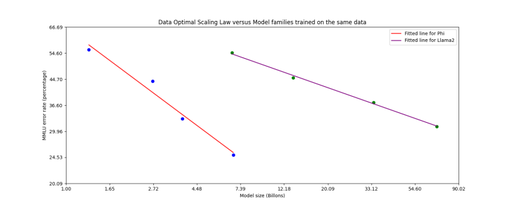
Figure 3 : Scaling law close to the “Data Optimal Regime” (from left to right: phi-1.5, phi-2, phi-3-mini, phi-3- small) versus Llama-2 family of models (7B, 13B, 34B, 70B) that were trained on the same fixed data. We plot the log of MMLU error versus the log of model size.
出典 · CC BY 4.0 · 元のPDFの4ページ目から図の部分を抽出しています。phi-3-smallのブロックスパースアテンション
phi-3-smallの中心となる構造変更はブロックスパースアテンションです。各アテンションヘッドごとに異なるスパースパターンを強制的に適用し、KVキャッシュを分けて使います。与えられたスパースパターンの中で、すべてのトークンが異なるヘッドから参照されるよう設計されており、長いコンテキストがヘッド同士に分けて処理されます。この方法は、KVキャッシュを大きく減らすことを目標としています。
図1はこの方法を示す概略図で、ローカルブロック2つと垂直stride 3を想定し、ブロック8にあるクエリトークンが参照するキーと値を表しています。青はローカルブロック、オレンジは遠距離または垂直ブロック、灰色はスキップされたブロックです。また、phi-3-smallは密なアテンション層とブロックスパース層を交互に配置し、KVキャッシュの削減と長い文脈での検索性能を両立させようとしました。実際の速度向上のため、学習にはFlash AttentionベースのTritonカーネルを、推論にはプリフィル段階用のカーネルと、vLLMのpaged attentionを拡張したデコーディングカーネルを実装しました。
このモデルには多言語データが追加で10%多く使われています。

Figure 1 : Toy illustration of the blocksparse attention in phi-3-small with 2 local blocks and vertical stride of 3. The table shows the Keys/values a query token in block 8 attended to. Blue=local blocks, orange=remote/vertical blocks, gray=blocks skipped.
出典 · CC BY 4.0 · 元のPDFの3ページ目から図の部分を抽出しています。phi-3.5-MoEのスパースルーティング
phi-3.5-MoEはフィードフォワード部分にMoE層を置き、入力ごとに一部のモジュールだけを選択的に活性化します。16個の専門家ネットワークのうち、top-2ルーティングで2つを選びます。各専門家は独立したGLUネットワークです。ルーティングモジュールはトークンごとに16個のうち2個の専門家を選ぶため、16 × 3.8B構成では活性パラメータが6.6B、全体のパラメータは42Bになります。
スパースルーターの学習にはSparseMixerという手法を使います。トークンごとに活性化されるパラメータが6.6Bに制限されるため、この構造の鍵は、全体の容量と推論時の計算量が別々の軸で調整される点です。トークナイザは、phi-3-mediumおよびphi-3-miniと同じ32064の語彙サイズを使用します。
事後学習の2段階
phi-3の事後学習は、教師ありファインチューニング(SFT)と直接選好最適化(DPO)の2段階で進められます。SFTでは、数学、コーディング、推論、対話、モデルのアイデンティティ、安全性など複数の領域の高品質データを使い、最初は英語の例のみを含めます。DPOのデータはチャット形式、推論、責任あるAIの領域を扱い、望ましくない振る舞いから遠ざかるように、その出力をrejected応答として使います。
この過程は、数学、コーディング、推論と頑健性、安全性を改善し、事前学習済みの言語モデルを、ユーザーが効率的かつ安全に対話できるAIアシスタントに変える役割を担います。
学術ベンチマークにおけるphi-3-miniの位置
学術ベンチマークの評価は、常識推論と論理推論を測る標準的なオープンソースのタスクで行われました。比較対象は、phi-2、Mistral-7b-v0.1、Mixtral-8x7b、Gemma 7B、Llama-3-instruct-8b、GPT-3.5です。すべての数値は同じパイプラインで生成され、プロンプトはfew-shot、temperatureは0です。著者らは、このパイプラインが他で発表された数値と評価方法の選択が異なるため、差が生じうると述べています。phi-3モデルに合わせた最適化は行っていないと明記されています。
MMLU 5-shotでは、phi-3-miniが68.8、phi-3-smallが75.7、phi-3-mediumが78.0を記録しています。同じ表でMixtral 8x7bは70.5、GPT-3.5は71.4です。MT-benchの2 round平均では、phi-3-miniが8.38、phi-3-smallが8.70、phi-3-mediumが8.91で、GPT-3.5は8.35です。したがって、phi-3-miniはMMLUではMixtralやGPT-3.5より低く、MT-benchではGPT-3.5と同程度です。要旨では、この結果はMMLU 69%、MT-bench 8.38と要約されています。
複数タスクの平均の行では、phi-3-miniは69.7、GPT-3.5は72.8です。
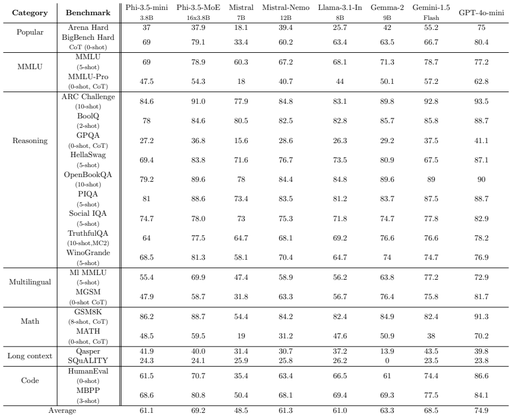
Table 3 : Model quality on representative benchmarks
出典 · CC BY 4.0 · 元のPDFの9ページ目から図の部分を抽出しています。4-bit量子化とiPhoneでの実行
phi-3-miniは4-bitに量子化され、メモリの占有が約1.8GBにとどまるよう設計されています。著者らは、このモデルをiPhone 14のA16 Bionicチップ上でネイティブに、完全オフラインで実行し、毎秒12個以上のトークンを生成したと報告しています。図2は、この実行の様子を示すキャプションで、同じ設定を表しています。
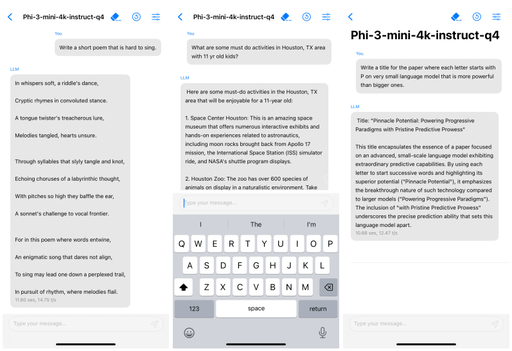
Figure 2 : 4-bit quantized phi-3-mini running natively on an iPhone with A16 Bionic chip, generating over 12 tokens per second.
出典 · CC BY 4.0 · 元のPDFの4ページ目から図の部分を抽出しています。この結果は、iPhone 14のA16 Bionicで、phi-3-miniという1つのモデルを測定したものです。他の端末、他のモデル、他の量子化設定に関する結果は、この論文では報告されていません。
多言語と長文脈への拡張
phi-3.5-miniとphi-3.5-MoEは、中間学習で多言語データと長文データをより多く使って作られました。LongRopeとmixed context window方式を適用し、コンテキスト長を4Kから128Kに伸ばしました。著者らは、この過程で4Kタスクの性能は落ちなかったと報告しています。多言語MMLU評価では、phi-3-miniの平均は47.3、phi-3.5-miniは55.4、phi-3.5-MoEは69.9です。phi-3.5-miniは、アラビア語、中国語、ロシア語、ウクライナ語、ベトナム語でphi-3-miniより大きく向上しました。
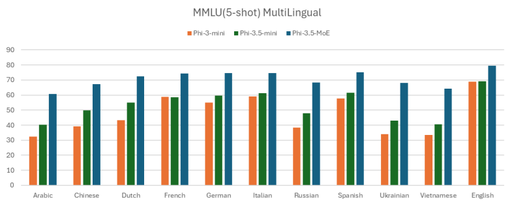
Figure 4 : Comparison of phi-3-mini, phi-3.5-mini and phi-3.5-MoE on MMLU-Multilingual tasks
出典 · CC BY 4.0 · 元のPDFの7ページ目から図の部分を抽出しています。長文脈評価では、RepoQAにおけるphi-3.5-MoEの平均は85、phi-3.5-miniは77、Llama-3.1-8B-Instructは71、Mixtral-8x7B-Instructは68、Mixtral-8x22B-Instructは67.8です。同じ表のgpt-4o-2024-05-13は90.6です。RULERでは4k区間の性能はphi-3.5-MoEが94.8、phi-3.5-miniが94.3、Llama-3.1-8B-Instructが95.5で同程度ですが、128k区間ではphi-3.5-MoEが64.2、phi-3.5-miniが63.6、Llama-3.1-8B-Instructが77.0です。
著者らは、この大きな低下の原因を、中間学習に高品質な長文データが不足していたためと推定しています。
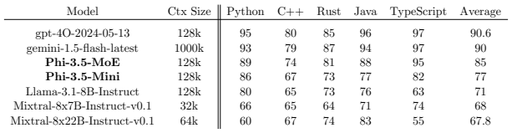
Table 1 : Comparison results on RepoQA benchmark.
出典 · CC BY 4.0 · 元のPDFの7ページ目から図の部分を抽出しています。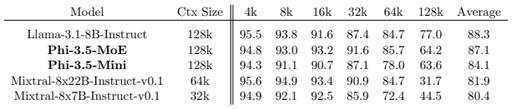
Table 2 : Comparison results on RULER benchmark.
出典 · CC BY 4.0 · 元のPDFの8ページ目から図の部分を抽出しています。phi-3-miniの安全性のアライメント
phi-3-miniは、Microsoftの責任あるAI原則に沿って開発されました。事後学習の段階では、有用性と無害性の選好データセットおよび自前で生成したデータセットを用いて、複数のリスクカテゴリを扱いました。独立したred teamがモデルを繰り返し検証し、そのフィードバックから追加データを作って事後学習データを磨きました。この過程で、red teamが測定した有害応答の比率は下がったものの、その比率は敵対的に誘導した複数ターンの対話で測定されたため、実際より大きく見積もられた値だと説明されています。
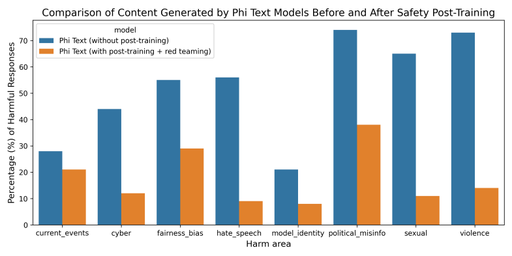
Figure 5 : Comparison of harmful response percentages by Microsoft AI Red Team between phi-3-mini before and after the safety alignment. Note that the harmful response percentages in this chart are inflated numbers as the red team tried to induce phi-3-mini in an adversarial way to generate harmful responses through multi-turn conversations.
出典 · CC BY 4.0 · 元のPDFの8ページ目から図の部分を抽出しています。内部の複数ターンRAIベンチマークにおけるUngroundednessでは、phi-3-miniは0.603、phi-3-smallは0.299、phi-3-mediumは0.213です。この指標は低いほど良いため、phi-3-miniはより大きいphi-3モデルより根拠のない応答が多い傾向にあります。同じ表で、Phi-2は1.481です。

Table 4 : Comparison of Microsoft internal multi-turn conversation RAI benchmark results of phi-3 models and other models. Note that a lower value indicates a better performance for all metrics in the table.
出典 · CC BY 4.0 · 元のPDFの10ページ目から図の部分を抽出しています。phi-3.5-Visionの構成と評価
phi-3.5-Visionは4.2Bパラメータのマルチモーダルモデルです。CLIP ViT-L/14の画像エンコーダが視覚トークンを作り、そのトークンがテキストトークンと順序の制約なしに混ぜられ、phi-3.5-miniのデコーダに入力されます。高解像度と多様なアスペクト比を扱うために、動的クロッピングで入力画像を2次元のブロック配列に分け、ブロックのトークンを連結します。複数画像の入力では、各画像のトークンを単純に連結します。事前学習は0.5Tトークンで、最大画像解像度は1344×1344に制限されています。損失はテキストトークンにのみ適用されます。
単一画像のベンチマークでは、phi-3.5-VisionはMMMU 43.0、ScienceQA 91.3、MathVista 43.9を記録しています。同じ表のGPT-4O 2024-05-13は、MMMU 61.8、ScienceQA 88.5、MathVista 54.4です。したがって、phi-3.5-Visionがすべての課題で上回るわけではありません。評価はLLaVA-1.5の設定に従い0-shotで行い、MM1-3B-ChatとMM1-7B-Chatの数値だけは発表された値を転記しました。複数画像の評価では、BLINKはphi-3.5-Visionが57.0、GPT-4Oが63.2で、VideoMMEは50.8対68.4です。
このBLINKの評価は、発表された方法と違い、ChatGPTを答えの選択には使いませんでした。VideoMMEでは16フレームを固定して入力しました。安全性の面では、phi-3.5-VisionのInternal点数は8.16で、安全性の事後学習を除いたモデルは7.06です。値が高いほど良い指標で、GPT4-Vは8.55です。
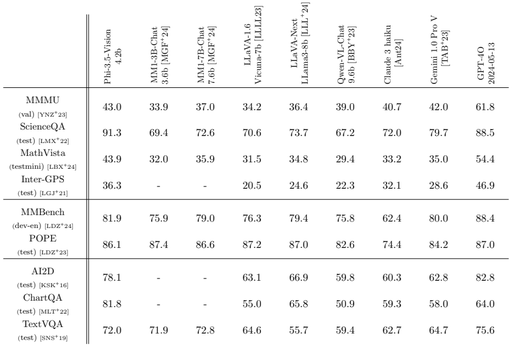
Table 5 : Comparison results on public MLLM benchmarks. All the reported numbers are produced with the exact same pipeline to ensure that the numbers are comparable except for MM1-3B-Chat [MGF +24] and MM1-7B- Chat [MGF+24], which are not publicly available. We adopted the evaluation setting used in Llava-1.5 [LLLL23], without any specific prompt or pre-processing image for all results. These numbers might differ from other published numbers due to slightly different prompts.
出典 · CC BY 4.0 · 元のPDFの14ページ目から図の部分を抽出しています。
Table 6 : Comparison results on public multi-image/video MLLM benchmarks. All the reported numbers are produced with the exact same pipeline to ensure that the numbers are comparable.
出典 · CC BY 4.0 · 元のPDFの15ページ目から図の部分を抽出しています。
Table 7 : Comparison results on public and private multi-modal RAI benchmarks. Note that all metrics in the table are [0,10] and a higher value indicates a better performance.
出典 · CC BY 4.0 · 元のPDFの15ページ目から図の部分を抽出しています。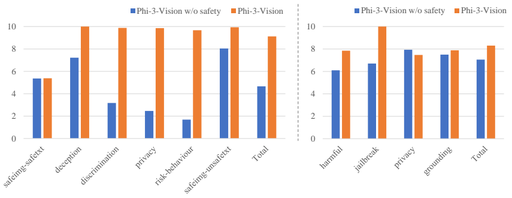
Figure 8 : Comparison of categorized RAI performance of Phi-3.5-Vision with and without the safety post-training on the VLGuard (left) and Internal (right) benchmark, respectively. It clearly indicates that safety post-training can enhance the RAI performance across nearly all the RAI categories.
出典 · CC BY 4.0 · 元のPDFの16ページ目から図の部分を抽出しています。残された限界と適用範囲
phi-3-miniは言語理解と推論で、より大きなモデルに近い能力を示しますが、モデルの容量が小さいため事実の知識を多くは保持できません。TriviaQA 5-shotでは、phi-3-miniは64.0で、Mixtral 8x7bは82.2、GPT-3.5は85.8です。著者らは、この弱点は検索エンジンと組み合わせて補えるとして、HuggingFace Chat-UIの例を示しています。また、言語は大部分を英語に限定しており、多言語への拡張はphi-3-smallによる初期結果があるだけです。事実誤り、バイアスの再現と増幅、不適切な内容の生成、安全性の問題も残っており、著者らは実際に使う前に利用事例ごとに評価すべきだと勧めています。
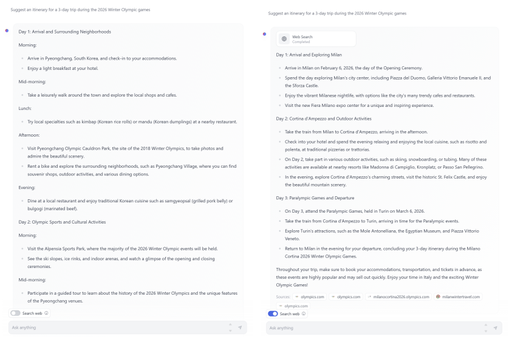
Figure 6 : Left: phi-3-mini’s completion without search. Right: phi-3-mini’s completion with search, using the default HuggingFace Chat-UI search ability. For reference, the 2026 Winter Olympic Games are scheduled to be held in Milano and Cortina in Italy, while the 2022 and 2018 Winter Olympic Games were held in Beijing, China and PyeongChang, Korea, respectively. Without the search results, the response is incorrect, while with the web search, not only does the response become accurate, but also gets more specific with suggestions.
出典 · CC BY 4.0 · 元のPDFの11ページ目から図の部分を抽出しています。phi-3.5-Visionは、高度な推論が必要な質問で限界があり、根拠のない出力が時々現れるため、金融のように慎重さが求められる分野では信頼しにくい場合があります。著者らは、推論と幻覚に関するDPOデータを追加する計画だと述べています。責任あるAIの面でも、captchaの解読や、虚偽情報を含む詐欺画像の説明のような有害または敏感な質問に答えない点で失敗することがあります。著者らは、この問題は一般のinstructデータから得たOCRのような能力と関係しており、有用性と無害性のトレードオフとして解釈しています。
論文情報
- 著者
- Marah Abdin, Jyoti Aneja, Hany Awadalla, Ahmed Awadallah, Ammar Ahmad Awan, Nguyen Bach, Amit Bahree, Arash Bakhtiari, Jianmin Bao, Harkirat Behl, Alon Benhaim, Misha Bilenko, Johan Bjorck, Sébastien Bubeck, Martin Cai, Qin Cai, Vishrav Chaudhary, Dong Chen, Dongdong Chen, Weizhu Chen, Yen-Chun Chen, Yi-Ling Chen, Hao Cheng, Parul Chopra, Xiyang Dai, Matthew Dixon, Ronen Eldan, Victor Fragoso, Jianfeng Gao, Mei Gao, Min Gao, Amit Garg, Allie Del Giorno, Abhishek Goswami, Suriya Gunasekar, Emman Haider, Junheng Hao, Russell J. Hewett, Wenxiang Hu, Jamie Huynh, Dan Iter, Sam Ade Jacobs, Mojan Javaheripi, Xin Jin, Nikos Karampatziakis, Piero Kauffmann, Mahoud Khademi, Dongwoo Kim, Young Jin Kim, Lev Kurilenko, James R. Lee, Yin Tat Lee, Yuanzhi Li, Yunsheng Li, Chen Liang, Lars Liden, Xihui Lin, Zeqi Lin, Ce Liu, Liyuan Liu, Mengchen Liu, Weishung Liu, Xiaodong Liu, Chong Luo, Piyush Madan, Ali Mahmoudzadeh, David Majercak, Matt Mazzola, Caio César Teodoro Mendes, Arindam Mitra, Hardik Modi, Anh Nguyen, Brandon Norick, Barun Patra, Daniel Perez-Becker, Thomas Portet, Reid Pryzant, Heyang Qin, Marko Radmilac, Liliang Ren, Gustavo de Rosa, Corby Rosset, Sambudha Roy, Olatunji Ruwase, Olli Saarikivi, Amin Saied, Adil Salim, Michael Santacroce, Shital Shah, Ning Shang, Hiteshi Sharma, Yelong Shen, Swadheen Shukla, Xia Song, Masahiro Tanaka, Andrea Tupini, Praneetha Vaddamanu, Chunyu Wang, Guanhua Wang, Lijuan Wang, Shuohang Wang, Xin Wang, Yu Wang, Rachel Ward, Wen Wen, Philipp Witte, Haiping Wu, Xiaoxia Wu, Michael Wyatt, Bin Xiao, Can Xu, Jiahang Xu, Weijian Xu, Jilong Xue, Sonali Yadav, Fan Yang, Jianwei Yang, Yifan Yang, Ziyi Yang, Donghan Yu, Lu Yuan, Chenruidong Zhang, Cyril Zhang, Jianwen Zhang, Li Lyna Zhang, Yi Zhang, Yue Zhang, Yunan Zhang, Xiren Zhou
- 学会・ジャーナル
- arXiv · プレプリント
- 公開日
- 2024年4月22日
- 登録日
- 2026年10月20日
- 更新日
- 2024年8月30日
- バージョン
- v4
- arXiv
- 2404.14219
- カテゴリ
- cs.CL · cs.AI
- ライセンス
- CC BY 4.0
- 掲載内容
- 論文情報・解説・論文の図
この解説は、Refivuの韓国語解説をAIで翻訳したものです。不正確な翻訳や誤りが含まれる可能性があります。論文と図の利用条件は各出典に従います。
アブストラクト
We introduce phi-3-mini, a 3.8 billion parameter language model trained on 3.3 trillion tokens, whose overall performance, as measured by both academic benchmarks and internal testing, rivals that of models such as Mixtral 8x7B and GPT-3.5 (e.g., phi-3-mini achieves 69% on MMLU and 8.38 on MT-bench), despite being small enough to be deployed on a phone. Our training dataset is a scaled-up version of the one used for phi-2, composed of heavily filtered publicly available web data and synthetic data. The model is also further aligned for robustness, safety, and chat format. We also provide parameter-scaling results with a 7B, 14B models trained for 4.8T tokens, called phi-3-small, phi-3-medium, both significantly more capable than phi-3-mini (e.g., respectively 75%, 78% on MMLU, and 8.7, 8.9 on MT-bench). To enhance multilingual, multimodal, and long-context capabilities, we introduce three models in the phi-3.5 series: phi-3.5-mini, phi-3.5-MoE, and phi-3.5-Vision. The phi-3.5-MoE, a 16 x 3.8B MoE model with 6.6 billion active parameters, achieves superior performance in language reasoning, math, and code tasks compared to other open-source models of similar scale, such as Llama 3.1 and the Mixtral series, and on par with Gemini-1.5-Flash and GPT-4o-mini. Meanwhile, phi-3.5-Vision, a 4.2 billion parameter model derived from phi-3.5-mini, excels in reasoning tasks and is adept at handling both single-image and text prompts, as well as multi-image and text prompts.
この論文を引用
Marah Abdin, Jyoti Aneja, Hany Awadalla, Ahmed Awadallah, Ammar Ahmad Awan, Nguyen Bach, Amit Bahree, Arash Bakhtiari, Jianmin Bao, Harkirat Behl, Alon Benhaim, Misha Bilenko, Johan Bjorck, Sébastien Bubeck, Martin Cai, Qin Cai, Vishrav Chaudhary, Dong Chen, Dongdong Chen, Weizhu Chen et al. (2024). Phi-3 Technical Report: A Highly Capable Language Model Locally on Your Phone. arXiv:2404.14219v4. https://arxiv.org/abs/2404.14219v4
BibTeX
@misc{abdin2024technical,
  title = {{Phi-3 Technical Report: A Highly Capable Language Model Locally on Your Phone}},
  author = {Marah Abdin and Jyoti Aneja and Hany Awadalla and Ahmed Awadallah and Ammar Ahmad Awan and Nguyen Bach and Amit Bahree and Arash Bakhtiari and Jianmin Bao and Harkirat Behl and Alon Benhaim and Misha Bilenko and Johan Bjorck and Sébastien Bubeck and Martin Cai and Qin Cai and Vishrav Chaudhary and Dong Chen and Dongdong Chen and Weizhu Chen and Yen-Chun Chen and Yi-Ling Chen and Hao Cheng and Parul Chopra and Xiyang Dai and Matthew Dixon and Ronen Eldan and Victor Fragoso and Jianfeng Gao and Mei Gao and Min Gao and Amit Garg and Allie Del Giorno and Abhishek Goswami and Suriya Gunasekar and Emman Haider and Junheng Hao and Russell J. Hewett and Wenxiang Hu and Jamie Huynh and Dan Iter and Sam Ade Jacobs and Mojan Javaheripi and Xin Jin and Nikos Karampatziakis and Piero Kauffmann and Mahoud Khademi and Dongwoo Kim and Young Jin Kim and Lev Kurilenko and James R. Lee and Yin Tat Lee and Yuanzhi Li and Yunsheng Li and Chen Liang and Lars Liden and Xihui Lin and Zeqi Lin and Ce Liu and Liyuan Liu and Mengchen Liu and Weishung Liu and Xiaodong Liu and Chong Luo and Piyush Madan and Ali Mahmoudzadeh and David Majercak and Matt Mazzola and Caio César Teodoro Mendes and Arindam Mitra and Hardik Modi and Anh Nguyen and Brandon Norick and Barun Patra and Daniel Perez-Becker and Thomas Portet and Reid Pryzant and Heyang Qin and Marko Radmilac and Liliang Ren and Gustavo de Rosa and Corby Rosset and Sambudha Roy and Olatunji Ruwase and Olli Saarikivi and Amin Saied and Adil Salim and Michael Santacroce and Shital Shah and Ning Shang and Hiteshi Sharma and Yelong Shen and Swadheen Shukla and Xia Song and Masahiro Tanaka and Andrea Tupini and Praneetha Vaddamanu and Chunyu Wang and Guanhua Wang and Lijuan Wang and Shuohang Wang and Xin Wang and Yu Wang and Rachel Ward and Wen Wen and Philipp Witte and Haiping Wu and Xiaoxia Wu and Michael Wyatt and Bin Xiao and Can Xu and Jiahang Xu and Weijian Xu and Jilong Xue and Sonali Yadav and Fan Yang and Jianwei Yang and Yifan Yang and Ziyi Yang and Donghan Yu and Lu Yuan and Chenruidong Zhang and Cyril Zhang and Jianwen Zhang and Li Lyna Zhang and Yi Zhang and Yue Zhang and Yunan Zhang and Xiren Zhou},
  year = {2024},
  eprint = {2404.14219},
  archivePrefix = {arXiv},
  url = {https://arxiv.org/abs/2404.14219v4}
}