論文解説
A Survey: Deep Learning for Hyperspectral Image Classification with Few Labeled Samples
少数のラベル付きサンプルを用いたハイパースペクトル画像分類のための深層学習:サーベイ
- 課題 ラベル付きサンプルが少ないハイパースペクトル画像分類では、多くのパラメータをもつ深層学習モデルを十分に学習させることが難しくなります。
- 手法 この論文は、少数サンプルのHSI分類研究を転移学習、能動学習、few-shot学習に分けて整理し、代表的なモデルを同じデータ分割とサンプル数の条件で比較しています。
- 結果 S-DMMは、クラスあたり10個のサンプルという条件で3つのデータセットのAAとOAが高かったと報告されています。オートエンコーダベースのモデルは、大半のデータセットで性能が低かったとされています。
ラベル付きサンプルが少ないHSI分類の難しさ
ハイパースペクトル画像(HSI)分類は、画素ごとに物質の特徴を表すスペクトルと、周辺の空間情報を合わせて扱う分野です。深層学習モデルは学習パラメータが多いため、大量のラベル付きサンプルがあると良い性能が得られる傾向があります。一方、HSIでは専門家による手作業のラベリングが難しく、時間もかかるため、十分なラベルを確保するのは困難です。論文で取り上げられているKSCの例では、クラスあたり10個のサンプルをランダムに選ぶと全体で130個のラベルになり、画像上では非常に散らばって見えるとされています。これに対して、50%のラベルを使う場合は深層学習により適していると説明されています。この論文は、こうしたギャップに対応するため、ラベルが少ない状況での深層学習手法を、転移学習、能動学習、few-shot学習の3つの学習パラダイムに分けて整理しています。
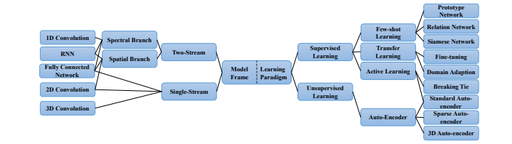
Figure 2 : The category of deep learning-based methods for hyperspectral image classification. The left is from the model architecture point of view, while the right is from the learning paradigm point of view. It is worth noting that the both kinds of methods can be combined arbitrarily.
出典 · CC BY 4.0 · Sen Jia, Shuguo Jiang, Zhijie Lin, Nanying Li, Meng Xu, Shiqi Yu · A Survey: Deep Learning for Hyperspectral Image Classification with Few Labeled Samples · 論文の図を引用 · 元のPDFの5ページ目から図の部分を抽出しています。3つの学習パラダイムの仕組み
転移学習は、ラベルが多い元ドメインで学習した知識を、ラベルの少ない対象ドメインへ移す方法です。論文では、元ドメインで十分に学習させたあとに、転移したモデルの一部を置き換えて対象データで調整する手順としてファインチューニング(fine-tuning)を説明しています。また、データ分布を適応させる系統としてDaNNやDANNなどを紹介しています。能動学習は、少数の初期ラベルで分類器を学習させたあと、クエリ関数が情報量の大きい未ラベルのサンプルを選び、専門家がラベルを付ける処理を繰り返す方法です。委員会ベースのEQBはエントロピーで情報量を測り、事後確率ベースのBreaking tiesは上位2クラスの確率差が最も小さいサンプルを選びます。
few-shot学習は、少数のサポートセットからクエリサンプルを分類するように学習するメタ学習系の方法です。プロトタイプネットワークは、クラスごとの埋め込みの平均で距離を計算し、リレーションネットワークは学習可能な関係関数で類似度を計算します。論文では、この3つのパラダイムはモデル構造と組み合わせて使えると述べられています。
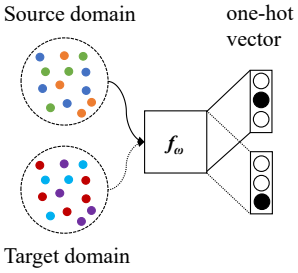
Figure 4 : Flowchart of the fine-tuning method. The solid line represents pretraining, and the dashed line represents fine-tuning. fω is a learning function.
出典 · CC BY 4.0 · Sen Jia, Shuguo Jiang, Zhijie Lin, Nanying Li, Meng Xu, Shiqi Yu · A Survey: Deep Learning for Hyperspectral Image Classification with Few Labeled Samples · 論文の図を引用 · 元のPDFの12ページ目から図の部分を抽出しています。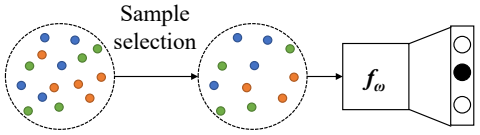
Figure 6 : Architecture of active learning.
出典 · CC BY 4.0 · Sen Jia, Shuguo Jiang, Zhijie Lin, Nanying Li, Meng Xu, Shiqi Yu · A Survey: Deep Learning for Hyperspectral Image Classification with Few Labeled Samples · 論文の図を引用 · 元のPDFの15ページ目から図の部分を抽出しています。オートエンコーダとCNNベースのモデルの役割
オートエンコーダは、入力を隠れ表現に符号化したあと、元に戻すように学習します。論文では、恒等関数として情報が素通りするのを防ぐために、スパース正則化やノイズ付加を用いると説明されています。Chenらは、スペクトルベクトルを入力とするオートエンコーダと、PCAで次元削減した空間パッチを入力とするオートエンコーダを用意し、両者を結合する方法を提案しました。畳み込みニューラルネットワークは、局所結合と重み共有によりパラメータを減らします。2D畳み込みは空間的なテクスチャ、1D畳み込みはスペクトル、3D畳み込みは両方の軸を同時に抽出するのに使われます。論文では、3D畳み込みはパラメータが多いため、少数サンプルの教師あり学習には向かないかもしれないと指摘しており、3D畳み込みオートエンコーダや残差構造などの代替案を紹介しています。
実験データセットと比較条件
実験は、PaviaU、Salinas、KSCの3つのベンチマークで行われました。PaviaUは103個のバンドと9個のオブジェクトクラスをもち、Salinasは204個のバンドと16クラス、KSCは176個のバンドと13クラスをもちます。比較対象のモデルは、S-DMM、3DCAE、SSDL、TwoCnn、3DVSCNN、SSLstm、CNN HSI、SAE LRです。学習サンプルは、クラスあたり10個、50個、100個の3つの条件に分けられ、各条件を10回繰り返して学習データを変えながら、AAとOAで評価します。最終的な画素分類は、10回の実験の投票結果で決まります。論文では、モデルの設定は元の論文に基づくものの一部は再実装を含み、同じ学習データ分割の方法を用いたと述べられています。
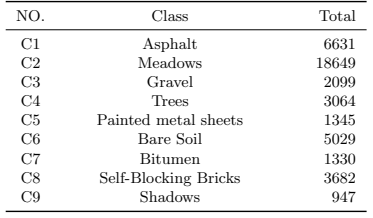
Table 1 : Pavia University. It contains 9 objects. The second column and last column represent the name of objects and sample number, respectively.
出典 · CC BY 4.0 · Sen Jia, Shuguo Jiang, Zhijie Lin, Nanying Li, Meng Xu, Shiqi Yu · A Survey: Deep Learning for Hyperspectral Image Classification with Few Labeled Samples · 論文の図を引用 · 元のPDFの19ページ目から図の部分を抽出しています。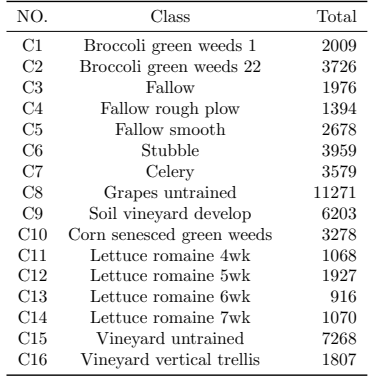
Table 2 : Salinas. It contains 16 objects. The second column and last column represent the name of objects and sample number, respectively.
出典 · CC BY 4.0 · Sen Jia, Shuguo Jiang, Zhijie Lin, Nanying Li, Meng Xu, Shiqi Yu · A Survey: Deep Learning for Hyperspectral Image Classification with Few Labeled Samples · 論文の図を引用 · 元のPDFの20ページ目から図の部分を抽出しています。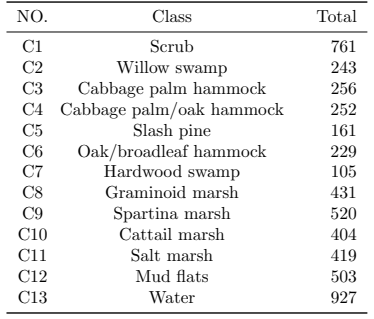
Table 3 : KSC. It contains 13 objects. The second column and last column represent the name of objects and sample number, respectively.
出典 · CC BY 4.0 · Sen Jia, Shuguo Jiang, Zhijie Lin, Nanying Li, Meng Xu, Shiqi Yu · A Survey: Deep Learning for Hyperspectral Image Classification with Few Labeled Samples · 論文の図を引用 · 元のPDFの20ページ目から図の部分を抽出しています。サンプル数によるモデル性能の比較
クラスあたり10個のサンプルという条件では、S-DMMはPaviaUでAA 91.08%、OA 84.55%を記録し、比較モデルより高い値でした。論文では、同じ10個の条件でS-DMMがSalinasとKSCでもAAとOAが最も高かったと報告されています。サンプル数が100個のPaviaUの条件では、CNN HSIのOAが97.35%で最も高く、3DVSCNNのAAが97.13%で最も高くなっています。論文では、オートエンコーダベースのモデルは大半のデータセットで性能が低かったとしています。教師なし学習では制約がないため学習目標と合わなくなることがあり、その現象と結びつけて解釈しています。ただし、この結果は本論文の3つのデータセットと明示されたサンプル条件で得られたものであり、別のデータやモデル構成へ一般化する根拠ではありません。
結果解釈の範囲
この研究の結果は、3つのベンチマークと、クラスあたり10個、50個、100個のサンプル条件に限られます。パラメータ数の測定では、SAE LRとCNN HSIが少なく、TwoCnnが最も多いという結果でした。また、S-DMMとCNN HSIがサンプル数の変化に影響されにくかったという観察は、この実験設定から得られたものです。論文では、一部のモデルはクラス数が少ない条件でクラス不均衡により性能が落ちると解釈していますが、これは著者の解釈として扱うべきです。さらに、再実装されたモデルが含まれているため、元の実装との差が結果に影響している可能性があります。
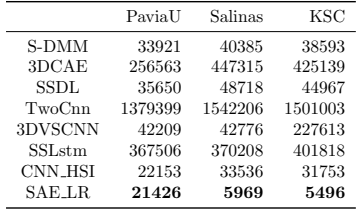
Table 8 : The number of trainable parameters
出典 · CC BY 4.0 · Sen Jia, Shuguo Jiang, Zhijie Lin, Nanying Li, Meng Xu, Shiqi Yu · A Survey: Deep Learning for Hyperspectral Image Classification with Few Labeled Samples · 論文の図を引用 · 元のPDFの39ページ目から図の部分を抽出しています。論文情報
- 著者
- Sen Jia, Shuguo Jiang, Zhijie Lin, Nanying Li, Meng Xu, Shiqi Yu
- 学会・ジャーナル
- arXiv · プレプリント
- 公開日
- 2021年12月3日
- 登録日
- 2026年11月6日
- 更新日
- 2021年12月3日
- バージョン
- v1
- arXiv
- 2112.01800
- DOI
- 10.1016/j.neucom.2021.03.035
- カテゴリ
- cs.CV · cs.AI · eess.IV
- ライセンス
- CC BY 4.0
- 掲載内容
- 論文情報・解説・論文の図
この解説は、Refivuの韓国語解説をAIで翻訳したものです。不正確な翻訳や誤りが含まれる可能性があります。論文と図の利用条件は各出典に従います。
アブストラクト
With the rapid development of deep learning technology and improvement in computing capability, deep learning has been widely used in the field of hyperspectral image (HSI) classification. In general, deep learning models often contain many trainable parameters and require a massive number of labeled samples to achieve optimal performance. However, in regard to HSI classification, a large number of labeled samples is generally difficult to acquire due to the difficulty and time-consuming nature of manual labeling. Therefore, many research works focus on building a deep learning model for HSI classification with few labeled samples. In this article, we concentrate on this topic and provide a systematic review of the relevant literature. Specifically, the contributions of this paper are twofold. First, the research progress of related methods is categorized according to the learning paradigm, including transfer learning, active learning and few-shot learning. Second, a number of experiments with various state-of-the-art approaches has been carried out, and the results are summarized to reveal the potential research directions. More importantly, it is notable that although there is a vast gap between deep learning models (that usually need sufficient labeled samples) and the HSI scenario with few labeled samples, the issues of small-sample sets can be well characterized by fusion of deep learning methods and related techniques, such as transfer learning and a lightweight model. For reproducibility, the source codes of the methods assessed in the paper can be found at https://github.com/ShuGuoJ/HSI-Classification.git.
この論文を引用
Sen Jia, Shuguo Jiang, Zhijie Lin, Nanying Li, Meng Xu, Shiqi Yu (2021). A Survey: Deep Learning for Hyperspectral Image Classification with Few Labeled Samples. arXiv:2112.01800v1. https://doi.org/10.1016/j.neucom.2021.03.035
BibTeX
@article{jia2021survey,
  title = {{A Survey: Deep Learning for Hyperspectral Image Classification with Few Labeled Samples}},
  author = {Sen Jia and Shuguo Jiang and Zhijie Lin and Nanying Li and Meng Xu and Shiqi Yu},
  year = {2021},
  eprint = {2112.01800},
  archivePrefix = {arXiv},
  doi = {10.1016/j.neucom.2021.03.035},
  url = {https://arxiv.org/abs/2112.01800v1}
}