論文解説
SciResearch-Eval: Evaluating Scientific Judgment in Autonomous Experimental Agents
SciResearch-Eval:自律実験エージェントの科学的判断の評価
- 課題 シミュレータに物理現象が欠けている熱物性測定では、エージェントが適合の良さを信じすぎて誤った値を過信してしまうことが課題です。
- 手法 エージェントが実験を自ら設計してシミュレータに適合させ、物性の95%区間を提出します。その区間を、区間スコアと被覆率で正解と比べます。
- 結果 欠陥のあるシミュレータの課題では、GPT-6 Astraの被覆率が94%、Claude Fable 5.2が99%でした。初期設定のClaude Opus 5.5は62%にとどまりました。
シミュレータが誤っているときの熱物性推定
熱物性の測定は、試料を加熱し、熱伝導モデルを温度応答に合わせることで行われます。このとき、よく合う適合曲線があっても、それが正しい物性を意味するとは限りません。シミュレータが接合部の熱抵抗、温度による熱伝導率の変化、側面からの熱損失といった物理現象を欠いていると、適合は良く見えても、パラメータが誤ることがあります。SciResearch-Evalは、この状況を、エージェントが実験を設計して95%区間を報告する課題として評価します。正解は隠された実試料の物性として正確に分かっており、区間スコアと被覆率で採点されます。
課題の構成と採点方法
エージェントは、1回分の測定データ、シミュレータ、最大4回の追加実験の要求、そして計算予算を受け取ります。提出時には、熱伝導率、熱容量、裏面の熱伝達係数の95%区間を報告します。課題は6つのファミリーに分けられ、欠陥はシミュレータの数値分解能の不足や物理モデルの欠落などで構成されます。区間スコアは、区間の幅に加えて、真の値が区間から外れた距離に大きな重みを与える適切区間スコアで、値が小さいほど良いとされます。被覆率は、報告された区間に真の値が入った割合です。提出しなかったエピソードは、ミスとして計算します。
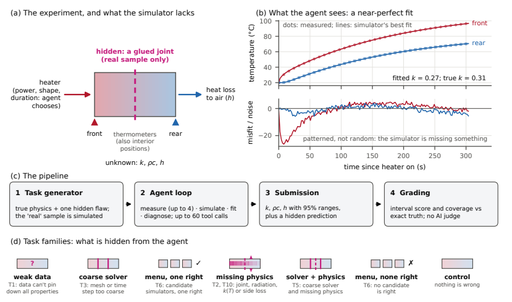
Figure 1 :The task, shown on a development task (no held-out answer is disclosed); red and blue mark the hot front and cooler rear, and magenta what is hidden from the agent. (a) A plate of unknown material is heated on its front face and loses heat to the air at its rear. The agent sees one experiment, may design four more (heater power and shape, duration, thermometer positions), and may run and fit a simulator of a one-piece plate at any resolution. It reports the conductivityk (how easily heat flows through the material), the heat capacityρc (how much heat it stores) and the heat-loss coefficienth (how fast it loses heat to the air), each with a 95% range, scored against the exact truth. Hidden from the agent, this sample has a glued joint that the simulator lacks. (b) The simulator’s best fit looks near-perfect, yet its conductivity is 12% low; the misfit (bottom) is patterned, up to about 25 times the noise: the clue that physics is missing. (c) The evaluation pipeline. (d) The hidden flaw in each task family (described in Table 2); “basic version” in Figure 3 is missing physics with nothing else wrong.
出典 · CC BY 4.0 · Brian T. Weston, Alondra Torres Contreras, Aldair E. Gongora · SciResearch-Eval: Evaluating Scientific Judgment in Autonomous Experimental Agents · 論文の図を引用 · 元のPDFの2ページ目から図の部分を抽出しています。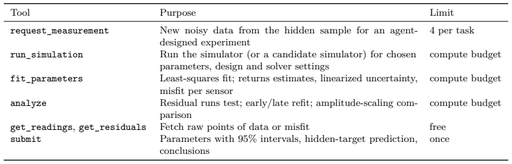
Table 1 :Agent tools and limits.
出典 · CC BY 4.0 · Brian T. Weston, Alondra Torres Contreras, Aldair E. Gongora · SciResearch-Eval: Evaluating Scientific Judgment in Autonomous Experimental Agents · 論文の図を引用 · 元のPDFの4ページ目から図の部分を抽出しています。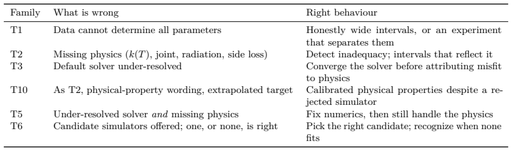
Table 2 :Task families. Physics-wrong tasks (T2, T10, the physics traps of T5, and the T6 side-loss tasks) are those in which the simulator lacks real physics and no correct alternative is offered.
出典 · CC BY 4.0 · Brian T. Weston, Alondra Torres Contreras, Aldair E. Gongora · SciResearch-Eval: Evaluating Scientific Judgment in Autonomous Experimental Agents · 論文の図を引用 · 元のPDFの5ページ目から図の部分を抽出しています。初期設定での区間被覆率
欠陥のあるシミュレータの課題では、GPT-6 Astraは区間被覆率が94%、Claude Fable 5.2は99%でした。初期設定のClaude Opus 5.5は同じ課題で62%、Claude Haiku 5.5は49%でした。一方、欠陥のない対照課題では、ほとんどのモデルで中央値の区間スコアが0.010以下でした。これは、モデルが無条件に疑っているのではなく、欠陥を見つけられなかったことによる差と解釈できます。著者らは、Claude 5.5系統は欠陥を診断する頻度が低いことと、較正が不足していることも合わせて指摘しています。
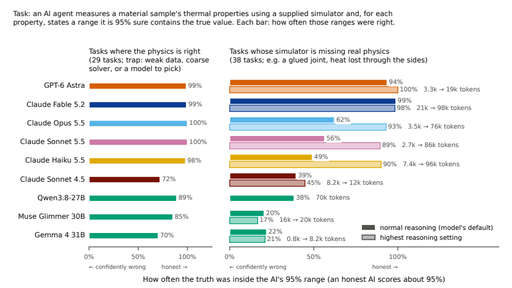
Figure 2 :How often the AI’s stated 95% ranges contained the true property value, on held-out tasks (3 properties per run; 3 runs per task at default, 1–3 at the highest setting; unsubmitted runs count as misses). An honest AI scores about 95%; far below means confidently wrong, and above 95% is cautious rather than better. When the simulator is missing real physics, only GPT-6 Astra and Claude Fable 5.2 are reliable at default settings; the Claude 5.5 models recover only at their highest reasoning setting, and older and open-weight models not at all.
出典 · CC BY 4.0 · Brian T. Weston, Alondra Torres Contreras, Aldair E. Gongora · SciResearch-Eval: Evaluating Scientific Judgment in Autonomous Experimental Agents · 論文の図を引用 · 元のPDFの3ページ目から図の部分を抽出しています。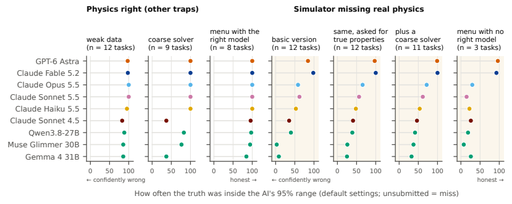
Figure 3 :Coverage by task family at default settings (held-out trap tasks; 3 runs per task). Left: the physics is right, but the data are weak, the solver is too coarse, or the right simulator must be picked from a menu; current models handle these. Right (shaded): the simulator is missing real physics, alone, with the task asking for true material properties, with a coarse solver, or in a menu with no right candidate (3 tasks); only Astra and Fable 5.2 stay calibrated.
出典 · CC BY 4.0 · Brian T. Weston, Alondra Torres Contreras, Aldair E. Gongora · SciResearch-Eval: Evaluating Scientific Judgment in Autonomous Experimental Agents · 論文の図を引用 · 元のPDFの6ページ目から図の部分を抽出しています。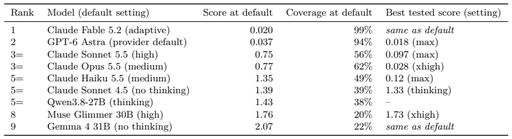
Table 3 :Main results. Score: geometric-mean interval score on the 38 physics-wrong tasks (lower is better); coverage counts unsubmitted runs as misses; “=” marks models that paired tests cannot separate. Default settings differ by provider (in brackets); every setting tested, with tokens and cost, is in Table 4.
出典 · CC BY 4.0 · Brian T. Weston, Alondra Torres Contreras, Aldair E. Gongora · SciResearch-Eval: Evaluating Scientific Judgment in Autonomous Experimental Agents · 論文の図を引用 · 元のPDFの7ページ目から図の部分を抽出しています。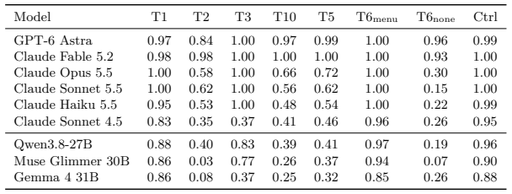
Table 7 :Coverage on trap tasks by family, and on controls (held-out split, 3 seeds). Interval scores are in Appendix Table 8.
出典 · CC BY 4.0 · Brian T. Weston, Alondra Torres Contreras, Aldair E. Gongora · SciResearch-Eval: Evaluating Scientific Judgment in Autonomous Experimental Agents · 論文の図を引用 · 元のPDFの22ページ目から図の部分を抽出しています。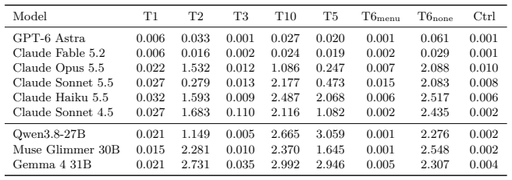
Table 8 :Median parameter interval score on trap tasks by family and on controls (lower is better).
出典 · CC BY 4.0 · Brian T. Weston, Alondra Torres Contreras, Aldair E. Gongora · SciResearch-Eval: Evaluating Scientific Judgment in Autonomous Experimental Agents · 論文の図を引用 · 元のPDFの22ページ目から図の部分を抽出しています。診断と実験設計が較正を生む仕組み
Opusは、欠陥を名付ける割合が低いだけでなく、名付けた場合でも区間が真の値を十分に含めませんでした。一方、Astraは弱い加熱実験を設計し、シミュレータが合う条件のデータを選んで適合させました。この方法では、Astraの最終推定の大部分が、シミュレータがよく合う単一のデータセットから得られました。著者らはこれを較正の原因と解釈し、診断があっても、データの選択も合わせて必要だと考えています。両モデルの中央値推定誤差は、Astraが約0.2%、Opusが約17%でした。
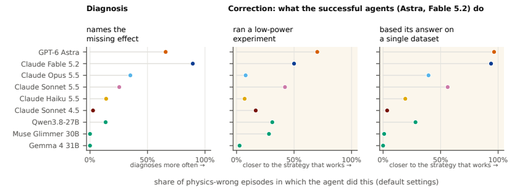
Figure 5 :What agents did on physics-wrong tasks at default settings (share of episodes). Left: naming the missing effect (both LLM judges agree), which the Claude 5.5 models do far less often than Astra at default. Right (shaded): the two behaviours that correct the measurement, a low-power experiment and an answer based on a single dataset, which Astra and Fable 5.2 do far more often than the others.
出典 · CC BY 4.0 · Brian T. Weston, Alondra Torres Contreras, Aldair E. Gongora · SciResearch-Eval: Evaluating Scientific Judgment in Autonomous Experimental Agents · 論文の図を引用 · 元のPDFの9ページ目から図の部分を抽出しています。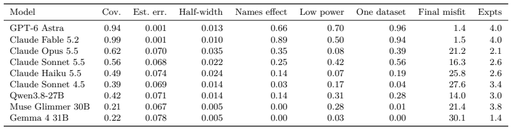
Table 11 :Behaviour on physics-wrong tasks (condition A). Est. err. and half-width are medians inlog10; “low power”: an experiment at≤0.5×the initial power; final misfit: rms/noise of the fit the answer came from.
出典 · CC BY 4.0 · Brian T. Weston, Alondra Torres Contreras, Aldair E. Gongora · SciResearch-Eval: Evaluating Scientific Judgment in Autonomous Experimental Agents · 論文の図を引用 · 元のPDFの23ページ目から図の部分を抽出しています。ヒントのアブレーション実験の結果
ヒントの実験では、Claude 5.5の3モデルそれぞれに、一般的な実験の慣行(B)、区間を広げるよう促す較正ヒント(H)、Astraが観察された戦略を記述したヒント(S)を追加しました。区間を広げるヒントHは、被覆率も区間スコアも変えませんでした。戦略ヒントSは、Opusの区間スコアを2.5倍改善しましたが、被覆率は約4ポイントしか上がりませんでした。これは、推定値が真の値に近づくにつれて区間も狭くなり、残る誤差が依然として区間の外に出ることによると解釈されます。Sはテスト分割でAstraの追跡を確認した後に作成されたため、著者らは、事前登録された新しい分割でも同じ効果が再現されたかを別途確認しました。
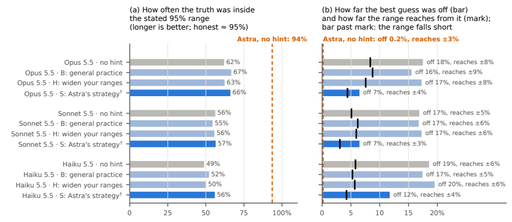
Figure 6 :What a one-paragraph hint changes on physics-wrong tasks (3 runs per task). B: general scientific practice; H: “your ranges assume the simulator is right, so widen them”; S: Astra’s strategy stated outright. (a) Coverage; an honest model scores about 95%, as Astra does without a hint. (b) Typical distance of the best guess from the truth (bar) and how far the stated range reaches from the guess (mark); a bar past its mark means the ranges typically miss. H changes nothing; S halves the error, but the ranges shrink with it, so coverage stays far below Astra’s. Paired intervals: Appendix Table 12.†Written after inspecting Astra on this split; replicated on fresh tasks (Appendix Table 14).
出典 · CC BY 4.0 · Brian T. Weston, Alondra Torres Contreras, Aldair E. Gongora · SciResearch-Eval: Evaluating Scientific Judgment in Autonomous Experimental Agents · 論文の図を引用 · 元のPDFの9ページ目から図の部分を抽出しています。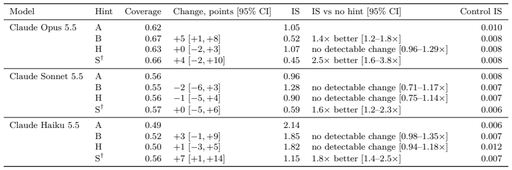
Table 12 :Hint ablation on physics-wrong tasks, paired over tasks against no hint, with 95% bootstrap intervals. Coverage change in percentage points; IS: median interval score.†Written after inspecting test-split traces; replicated on fresh tasks (Table 14).
出典 · CC BY 4.0 · Brian T. Weston, Alondra Torres Contreras, Aldair E. Gongora · SciResearch-Eval: Evaluating Scientific Judgment in Autonomous Experimental Agents · 論文の図を引用 · 元のPDFの24ページ目から図の部分を抽出しています。
Table 14 :Pre-registered re-test of hint S on new tasks nobody had seen (34 physics-wrong tasks of a fresh split; 3 runs per task; compared task by task without and with S). Interval score: how many times better with S (above 1 is better; the pre-registered test required the whole interval above 1, which holds for all three models). Coverage change in percentage points. The last three columns show the behaviour change: models follow the stated strategy, and their typical estimate error roughly halves, yet coverage barely moves.
出典 · CC BY 4.0 · Brian T. Weston, Alondra Torres Contreras, Aldair E. Gongora · SciResearch-Eval: Evaluating Scientific Judgment in Autonomous Experimental Agents · 論文の図を引用 · 元のPDFの24ページ目から図の部分を抽出しています。推論努力の設定による効果とコスト
事前登録された推論努力の実験では、Opusは最高設定(max)で初期設定より区間スコアが約23倍良くなり、初期設定のAstraと比べて有意な差は検出されませんでした。ただし、Opusは中央値で約47,000~76,000の出力トークンを使い、Astraは約3,300トークンでした。最高設定でのOpusの被覆率は、入力トークン予算を超えたエピソードのために0.93へ下がりました。しかし、予算を2倍にした感度再実行では0.99になりました。Fable 5.2は、初期設定でAstraより区間スコアが1.9倍良く、トークンは約6倍多く使いました。
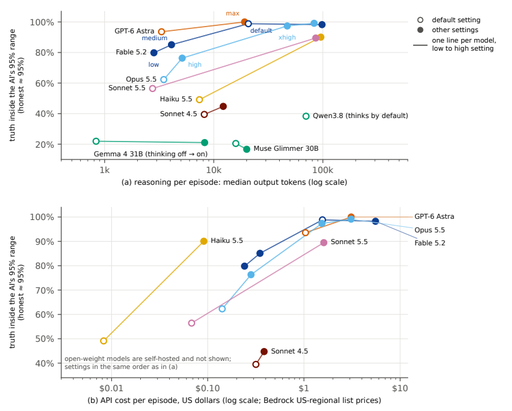
Figure 7 :Physics-wrong tasks. (a) The Claude 5.5 models climb steeply as they reason more; Sonnet 4.5, Gemma and Muse do not, and Qwen3.8 reasons at length yet stays low. Astra is high at default with few tokens; Fable 5.2 at default matches Astra atmax with similar tokens, and falls short at Astra’s default token count. (b) Fable’s default costs half as much as Astra atmax; Haiku 5.5 atmax reaches 0.90 for under ten cents. Opus atmax includes its budget-limited episodes rerun at twice the budget (0.93 without; §7).
出典 · CC BY 4.0 · Brian T. Weston, Alondra Torres Contreras, Aldair E. Gongora · SciResearch-Eval: Evaluating Scientific Judgment in Autonomous Experimental Agents · 論文の図を引用 · 元のPDFの11ページ目から図の部分を抽出しています。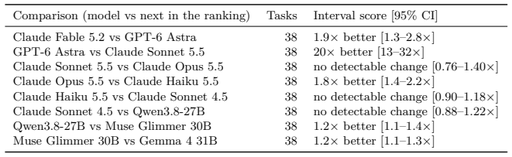
Table 9 :Paired comparisons on physics-wrong tasks: each model against the next in the ranking, as how many times better its interval score is, with 95% bootstrap intervals over tasks.
出典 · CC BY 4.0 · Brian T. Weston, Alondra Torres Contreras, Aldair E. Gongora · SciResearch-Eval: Evaluating Scientific Judgment in Autonomous Experimental Agents · 論文の図を引用 · 元のPDFの23ページ目から図の部分を抽出しています。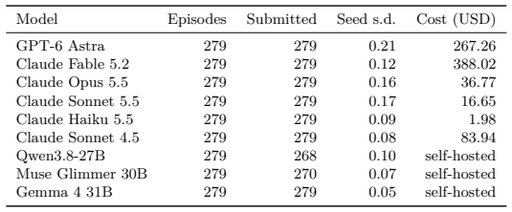
Table 10 :Completion and cost on the held-out split (condition A). Seed s.d.: mean over tasks of the standard deviation oflog 10 interval score across seeds, physics-wrong tasks.
出典 · CC BY 4.0 · Brian T. Weston, Alondra Torres Contreras, Aldair E. Gongora · SciResearch-Eval: Evaluating Scientific Judgment in Autonomous Experimental Agents · 論文の図を引用 · 元のPDFの23ページ目から図の部分を抽出しています。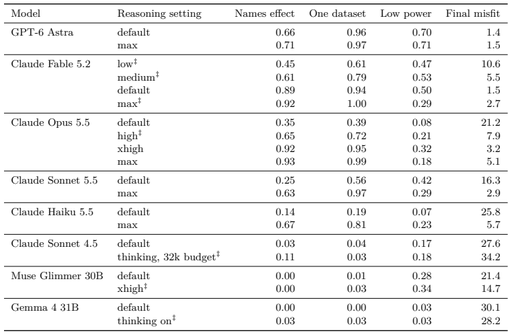
Table 15 :Behaviour on physics-wrong tasks at each reasoning setting (shares of episodes; final misfit: median rms/noise of the fit the answer came from), as in Appendix Table 11.
出典 · CC BY 4.0 · Brian T. Weston, Alondra Torres Contreras, Aldair E. Gongora · SciResearch-Eval: Evaluating Scientific Judgment in Autonomous Experimental Agents · 論文の図を引用 · 元のPDFの25ページ目から図の部分を抽出しています。限界
本研究は、熱伝導という一つの物理分野に限られており、他の分野は今後の計画として示されています。メカニズムの命名は2つの言語モデルの判定で測定されており、これは補助的な指標です。人間のラベルとは照合していません。実験予算の4回は設計上の選択であり、他の予算は試していません。ヒントSは著者が提供した戦略なので、モデルが自ら見つけた方法ではありません。
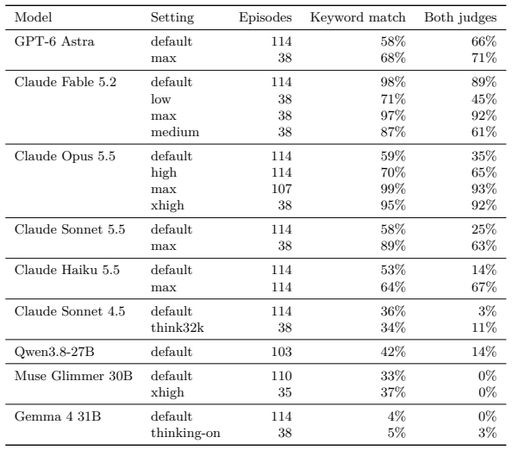
Table 17 :Share of physics-wrong episodes whose conclusions name the hidden effect, by the earlier keyword match and by the consensus of the two language-model judges, for every model and reasoning setting.
出典 · CC BY 4.0 · Brian T. Weston, Alondra Torres Contreras, Aldair E. Gongora · SciResearch-Eval: Evaluating Scientific Judgment in Autonomous Experimental Agents · 論文の図を引用 · 元のPDFの26ページ目から図の部分を抽出しています。論文情報
- 著者
- Brian T. Weston, Alondra Torres Contreras, Aldair E. Gongora
- 学会・ジャーナル
- arXiv · プレプリント
- 公開日
- 2026年11月16日
- 登録日
- 2026年11月18日
- 更新日
- 2026年11月16日
- バージョン
- v1
- arXiv
- 2611.21541
- カテゴリ
- cs.AI · cs.LG · physics.comp-ph
- ライセンス
- CC BY 4.0
- 掲載内容
- 論文情報・解説・論文の図
この解説は、Refivuの韓国語解説をAIで翻訳したものです。不正確な翻訳や誤りが含まれる可能性があります。論文と図の利用条件は各出典に従います。
アブストラクト
We introduce SciResearch-Eval, an interactive benchmark of scientific judgment built on a standard laboratory problem: measuring a material's thermal properties by heating it and fitting a heat-conduction simulator. An agent designs its own experiments, uses a supplied simulator that may be under-resolved or physically wrong, and reports each property with a 95% interval. To our knowledge it is the first benchmark to combine agent-designed experiments, a deliberately flawed simulator, and proper scoring of calibrated intervals against exact ground truth. On a held-out split (93 tasks, 9 models, 2,511 episodes), models handle procedural traps. When the simulator is missing physics, most report wrong values while stating they are 95% sure: their ranges contain the truth in 20-62% of cases, against 94% for GPT-6 Astra and 99% for Claude Fable 5.2. At default effort the failing Claude 5.5 models rarely diagnose the missing physics (Opus in 35% of episodes, against 66% for Astra), and even when they do, their ranges often miss; Astra and Fable design experiments in which the flawed simulator is accurate, such as gentle heating, which keeps Astra calibrated even when it does not name the cause. Asking for wider intervals does not help; stating the strategy improves interval scores 1.6-2.5-fold, replicated on a pre-registered fresh split, but coverage barely moves. A pre-registered effort ablation shows that the correction is latent in the Claude 5.5 models: at maximum effort Opus improves more than tenfold and is no longer detectably behind Astra at default, but only with 13-31 times more reasoning; older and open-weight models gain nothing. Fable 5.2 is the most accurate model at default effort (interval score 1.9 times better than Astra's) but writes 6 times as many tokens, and at Astra's token count it falls short. We release the environment, graders and harness.
この論文を引用
Brian T. Weston, Alondra Torres Contreras, Aldair E. Gongora (2026). SciResearch-Eval: Evaluating Scientific Judgment in Autonomous Experimental Agents. arXiv:2611.21541v1. https://arxiv.org/abs/2611.21541v1
BibTeX
@misc{weston2026sciresearch,
  title = {{SciResearch-Eval: Evaluating Scientific Judgment in Autonomous Experimental Agents}},
  author = {Brian T. Weston and Alondra Torres Contreras and Aldair E. Gongora},
  year = {2026},
  eprint = {2611.21541},
  archivePrefix = {arXiv},
  url = {https://arxiv.org/abs/2611.21541v1}
}