논문 해설
Multi-Step Reasoning with Large Language Models, a Survey
대규모 언어 모델을 활용한 다단계 추론: 서베이
- 연구 문제 대규모 언어 모델은 언어 생성은 잘하지만 다단계 추론은 어려워, Chain-of-thought 이후 프롬프트 기반 다단계 추론 연구가 수학에서 논리, 게임, 로봇, 코드로 확장되었습니다.
- 연구 방법 논문은 다단계 추론 방법을 단계 생성, 단계 평가, 단계 제어의 세 단계로 분류하여 각 방법의 역할을 비교합니다.
- 주요 결과 생성 방법은 Chain-of-thought에서 모델 생성 프롬프트로, 평가 방법은 자기 검증과 도구 실행으로, 제어 방법은 탐욕 선택에서 탐색과 강화학습으로 발전했다고 정리됩니다. 다만 보고된 점수는 조건이 달라 직접 비교가 어렵습니다.
다단계 추론 문제와 연구의 범위
대규모 언어 모델은 언어 생성에서는 좋은 성능을 보이지만, 초등 수학 단어 문제처럼 여러 단계를 거쳐야 하는 추론에서는 어려움을 겪었습니다. 이 서베이는 이러한 다단계 추론 문제를 프롬프트 기반 방법을 중심으로 정리합니다. 논문은 Chain-of-thought가 GSM8K 같은 수학 단어 문제에서 중간 추론 단계를 프롬프트에 포함시켜 성능을 높인 계기였다고 설명하며, 이후 연구가 논리, 조합 게임, 로봇 계획, 코드 생성으로 확장되었다고 밝힙니다. 따라서 이 글의 관심사는 단일 방법의 성능이 아니라, 추론 단계를 어떻게 생성하고 평가하고 제어하는지에 대한 공통 구조입니다.
생성, 평가, 제어의 세 단계 분류
논문의 핵심 기여는 다단계 추론 방법을 단계 생성, 단계 평가, 단계 제어의 세 단계로 나누는 분류 체계입니다. 생성 단계에서는 프롬프트가 추론 단계를 만들도록 합니다. 프롬프트는 연구자가 손으로 작성하거나, 외부 지식에서 가져오거나, 모델이 스스로 만들 수 있습니다. 평가 단계에서는 생성된 단계를 모델 자체, 도구 실행 결과, 외부 모델로 검증합니다. 제어 단계에서는 탐욕적으로 한 경로를 따르거나, 여러 경로를 앙상블하거나, 탐색 또는 강화학습으로 다음 단계를 결정합니다. 이 분류는 방법들이 어떤 단계에 초점을 두는지 비교하는 틀로 쓰입니다.
추론 시점 학습으로서의 In-context learning
Chain-of-thought 방법은 in-context learning 위에서 작동합니다. In-context learning은 파라미터를 바꾸지 않고, 추론 시점에 프롬프트에 주어진 예시와 지시를 이용해 수행하는 few-shot 학습입니다. 논문은 이 방식이 사전학습이나 fine-tuning보다 계산 비용이 낮고 프롬프트 형식에 민감하다고 설명합니다. 그래서 이 서베이의 많은 방법은 모델을 다시 학습하지 않고 프롬프트와 외부 제어 알고리즘만으로 추론 과정을 바꿉니다.
단계 생성: 수동 프롬프트에서 모델 생성 프롬프트까지
Chain-of-thought는 문제를 하위 단계로 나누어 답하도록 프롬프트를 작성합니다. 논문은 Wei 등의 연구에서 중간 추론을 답에 포함하도록 지시하면 GSM8K 정확도가 크게 오른다고 보고하며, 표 1에서는 GPT-3 175B 기준선과 Chain-of-thought의 정확도를 나란히 보여 줍니다. Zero-shot CoT는 'Let's think step by step'이라는 문구만 추가해 예시 없이 단계별 추론을 유도합니다. 외부 지식을 쓰는 Self-ask는 하위 질문을 만들고 필요하면 검색 엔진으로 답합니다. Auto-CoT는 모델이 질문을 군집화하고 예시를 만들어 프롬프트를 구성합니다. 이 세 접근은 프롬프트를 누가 만드는지가 다르며, 각 방식의 장단점이 있다고 논문은 설명합니다.
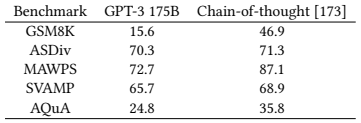
Table 1 . Accuracy of GPT-3 and Chain-of-thought on popular Math Word Problems benchmarks [173]
원문 · CC BY 4.0 · Aske Plaat, Annie Wong, Suzan Verberne, Joost Broekens, Niki van Stein, Thomas Back · Multi-Step Reasoning with Large Language Models, a Survey · 원문 그림 인용 · 원본 PDF 5쪽에서 그림 영역을 추출했습니다.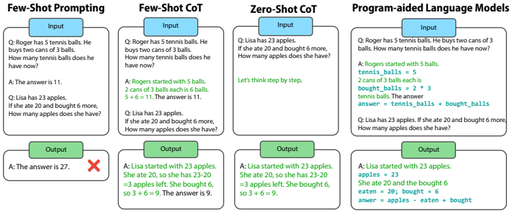
Fig. 3 . Different chain-of-though (CoT) prompting techniques. At the top the prompts, at the bottom the answers. When shown the longer example prompt, the LLM follows the longer example when answering the question (Few-Shot CoT [173]). Without example answer and usingLet’s think step by stepresults in similar answers (Zero-Shot CoT [ 75]). With Program-aided-language models [45] similar reasoning can be achieved.
원문 · CC BY 4.0 · Aske Plaat, Annie Wong, Suzan Verberne, Joost Broekens, Niki van Stein, Thomas Back · Multi-Step Reasoning with Large Language Models, a Survey · 원문 그림 인용 · 원본 PDF 11쪽에서 그림 영역을 추출했습니다.단계 평가: 자기 검증, 도구, 외부 모델
Self-consistency는 같은 질문에 대해 여러 추론 경로를 샘플링하고, 가장 많이 나온 답을 선택하는 앙상블 방법입니다. 논문은 복잡한 문제가 여러 올바른 추론 경로를 가질 수 있다는 점을 근거로 제시합니다. Self-verification은 모델이 자신의 결론을 원래 질문의 조건으로 사용해 답을 검증합니다. 도구 기반 평가는 Python 같은 형식 언어로 추론을 쓰고 인터프리터가 실행하여 결과를 확인합니다. Program-aided-language는 문제의 분해는 LLM이 맡고, 계산은 Python 인터프리터에 맡깁니다. 외부 모델 검증은 로봇의 물리 제약처럼 별도의 모델이 가능 여부를 판단하는 방식입니다.
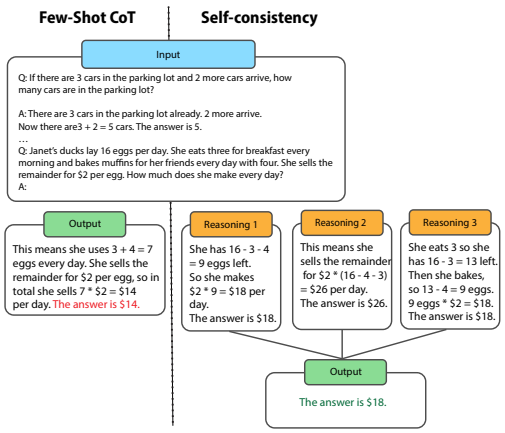
Fig. 4 . Self-Consistency (Adapted from [170]), showing majority voting over answers that the model produces
원문 · CC BY 4.0 · Aske Plaat, Annie Wong, Suzan Verberne, Joost Broekens, Niki van Stein, Thomas Back · Multi-Step Reasoning with Large Language Models, a Survey · 원문 그림 인용 · 원본 PDF 13쪽에서 그림 영역을 추출했습니다.단계 제어: 탐욕 선택, 앙상블, 탐색과 강화학습
제어 단계는 여러 추론 경로 중에서 어느 것을 따를지 결정합니다. 탐욕 선택은 하나의 프롬프트와 하나의 단계 사슬을 생성해 그대로 따르는 방식이며, 대부분의 초기 방법이 이에 속합니다. 앙상블 전략은 여러 단계 집합을 생성하고 평가한 뒤 결과를 합칩니다. Tree-of-thoughts는 BFS 또는 DFS 탐색으로 추론 단계를 확장하며, LLM이 하위 문제 생성과 평가를 맡고 탐색 알고리즘이 제어합니다. Buffer-of-thoughts는 문제 증류기가 만든 사고 템플릿을 메타 버퍼에 저장합니다. ReAct와 Reflexion은 강화학습 틀 안에서 외부 지식이나 실패 경험을 활용합니다. 논문은 외부 알고리즘이 제어하는 방법은 프롬프트만으로 제어하는 방법과 구별된다고 설명합니다.
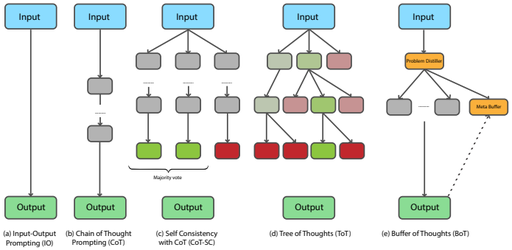
Fig. 5 . Reasoning structure of Simple prompting (a), Chain-of-thought (b), Self-Consistency (c), Tree-of-Thoughts (d) and Buffer of Thoughts (e); Prompts in (a) consist of an instruction, and, perhaps, few-shot examples of answers, providing no reasoning guidance; Chain-of-thought (b) guides the model with few-shot examples of reasoning steps; Self-Consistency (c) takes the majority vote of existing answers in the model; Tree-of-thoughts (d) uses an external prompt-optimizing algorithm to guide the model to perform a tree search over reasoning steps, exploring multiple alternatives; Buffer-of-thoughts (e) uses a problem distiller that stores high-level thoughts distilled from different problems in a meta-buffer, which is actively managed for capacity
원문 · CC BY 4.0 · Aske Plaat, Annie Wong, Suzan Verberne, Joost Broekens, Niki van Stein, Thomas Back · Multi-Step Reasoning with Large Language Models, a Survey · 원문 그림 인용 · 원본 PDF 18쪽에서 그림 영역을 추출했습니다.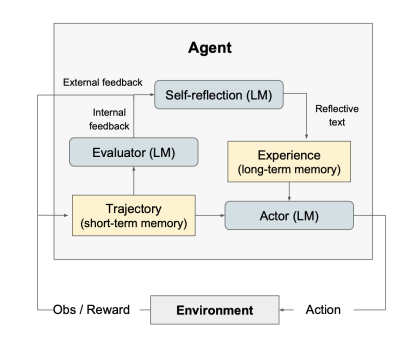
Fig. 6 . Architecture of Reflexion [ 141], showing a close resemblance to the agent/environment structure of reinforcement learning [147]
원문 · CC BY 4.0 · Aske Plaat, Annie Wong, Suzan Verberne, Joost Broekens, Niki van Stein, Thomas Back · Multi-Step Reasoning with Large Language Models, a Survey · 원문 그림 인용 · 원본 PDF 19쪽에서 그림 영역을 추출했습니다.결과 비교와 적용 범위
논문은 여러 방법의 보고된 결과를 표 2에 정리했으며, 각 점수는 원 논문의 조건을 따릅니다. 예를 들어 Self-consistency는 GSM8K에서 여러 수치 향상을 보고했고, MathPrompter는 MultiArith에서 92.5%를 보고했습니다. 그러나 논문은 사용한 LLM, 기준선, 평가 방식이 서로 달라 결과를 직접 비교하기 어렵다고 밝힙니다. 따라서 이 결과들은 한 방법이 모든 상황에서 우월하다는 근거로 읽기보다, 각 연구가 제시한 조건에서의 보고로 읽어야 합니다.
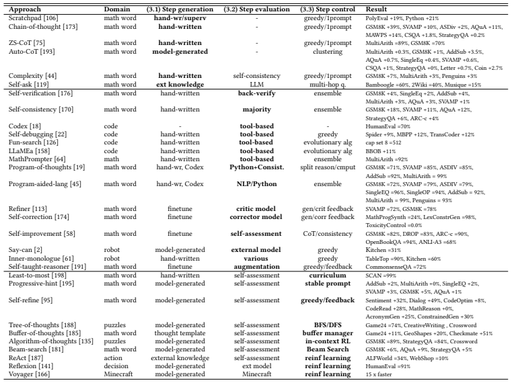
Table 2 . Taxonomy of approaches: Generation, Evaluation, and Control. Reported benchmark results: ’=’ is absolute score, ’+’ is improvement to a baseline
원문 · CC BY 4.0 · Aske Plaat, Annie Wong, Suzan Verberne, Joost Broekens, Niki van Stein, Thomas Back · Multi-Step Reasoning with Large Language Models, a Survey · 원문 그림 인용 · 원본 PDF 9쪽에서 그림 영역을 추출했습니다.한계와 남은 질문
논문은 LLM의 추론이 오류가 없지 않으며, 올바른 답을 잘못된 추론 사슬로 얻을 수 있다고 지적합니다. 충실성(faithfulness) 연구는 모델이 실제 추론 과정을 따르는지 확인하려고 하며, Lanham 등은 중간 추론을 일부러 바꾸어 측정했습니다. 또한 Self-verification과 Self-refine 같은 자기 평가 방법이 항상 오류를 줄이는 것은 아니라고 논문은 언급합니다. 마지막으로 논문은 in-context reinforcement learning, 다국어 추론, 전문 분야 추론, 작은 언어 모델로의 증류가 아직 충분히 연구되지 않았다고 정리합니다.
논문 정보
- 저자
- Aske Plaat, Annie Wong, Suzan Verberne, Joost Broekens, Niki van Stein, Thomas Back
- 학회·저널
- arXiv · 프리프린트
- 최초 공개일
- 2024년 7월 16일
- 등록일
- 2026년 11월 6일
- 수정일
- 2025년 11월 2일
- 버전
- v3
- arXiv
- 2407.11511
- 분류
- cs.AI · cs.CL · cs.LG
- 원문 이용 조건
- CC BY 4.0
- 제공 범위
- 논문 정보, 해설, 허용된 원문 그림
AI 해설은 논문 원문과 별개의 설명이며 오류가 있을 수 있습니다. 원문과 그림은 각 출처의 이용 조건과 따로 표시된 권리를 따릅니다.
초록
Large language models (LLMs) with billions of parameters exhibit in-context learning abilities, enabling few-shot learning on tasks that the model was not specifically trained for. Traditional models achieve breakthrough performance on language tasks, but do not perform well on basic reasoning benchmarks. However, a new in-context learning approach, Chain-of-thought, has demonstrated strong multi-step reasoning abilities on these benchmarks. The research on LLM reasoning abilities started with the question whether LLMs can solve grade school math word problems, and has expanded to other tasks in the past few years. This article reviews the field of multi-step reasoning with LLMs. We propose a taxonomy that identifies different ways to generate, evaluate, and control multi-step reasoning. We provide an in-depth coverage of core approaches and open problems, and we propose a research agenda for the near future. We find that multi-step reasoning approaches have progressed beyond math word problems, and can now successfully solve challenges in logic, combinatorial games, and robotics, sometimes by first generating code that is then executed by external tools. Many studies in multi-step methods use reinforcement learning for finetuning, external optimization loops, in-context reinforcement learning, and self-reflection.
원문 인용
Aske Plaat, Annie Wong, Suzan Verberne, Joost Broekens, Niki van Stein, Thomas Back (2024). Multi-Step Reasoning with Large Language Models, a Survey. arXiv:2407.11511v3. https://arxiv.org/abs/2407.11511v3
BibTeX
@misc{plaat2024multi,
  title = {{Multi-Step Reasoning with Large Language Models, a Survey}},
  author = {Aske Plaat and Annie Wong and Suzan Verberne and Joost Broekens and Niki van Stein and Thomas Back},
  year = {2024},
  eprint = {2407.11511},
  archivePrefix = {arXiv},
  url = {https://arxiv.org/abs/2407.11511v3}
}