논문 해설
Depth-Breadth Synergy in RLVR: Unlocking LLM Reasoning Gains with Adaptive Exploration
RLVR의 깊이-폭 시너지: 적응형 탐색으로 LLM 추론 성능 향상 끌어내기
- 연구 문제 GRPO 계열 RLVR은 그룹 누적 이점이 중간 난이도 문제에 치우쳐 어려운 문제의 학습 신호가 줄어들어 Pass@K 향상이 제한된다는 문제를 다룹니다.
- 연구 방법 DARS는 사전 롤아웃으로 문제별 난이도를 추정하고, ET 또는 HW 스케줄로 어려운 문제에 추가 롤아웃을 배분합니다. 큰 배치 폭 학습과 결합한 DARS-Breadth는 전체 배치 PPO 업데이트를 사용합니다.
- 주요 결과 DARS-1.5B-HW-Breadth는 Avg@128 52.4와 Pass@128 82.2로 RLVR 기준선(49.6, 79.6)보다 높았습니다. 배치 크기 확대는 Pass@1을 높였지만 Qwen2.5-Math-1.5B의 Pass@128은 낮췄습니다.
RLVR에서 깊이와 폭의 탐색 문제
검증 가능한 보상을 쓰는 강화학습(RLVR)은 수학 추론 능력을 높이는 데 쓰이지만, 이 논문은 탐색의 두 축인 깊이(어려운 문제의 난이도)와 폭(한 반복에서 쓰는 학습 인스턴스 수)이 기존 방법에서 충분히 다뤄지지 않는다고 짚습니다. 특히 그룹 단위의 누적 이점이 중간 난이도 문제에 가중치를 몰고 어려운 문제를 덜 반영하므로 Pass@K 향상이 제한된다고 주장합니다. 저자들은 이 편향을 깊이 측면의 문제로 보고, 폭 측면에서는 배치 크기 확대가 Pass@1을 높인다는 관찰을 함께 다룹니다.
DARS의 사전 롤아웃과 다단계 재배분
DARS는 각 질문에 대해 가벼운 사전 롤아웃 N_pre개를 수행해 경험적 정확도 a_j를 구하고, 난이도 점수 x_j = 1 − a_j를 정합니다. 이어서 누적 이점의 목표를 정해 추가 궤적 수 Δn_j를 배분하며, 상한으로 N_max를 둡니다. 이때 S(a) = 2a(1−a)를 이용하며, ET 스케줄은 모든 어려운 문제의 목표 누적 이점을 정확도 0.5 문제의 수준으로 맞추고, HW 스케줄은 2x_j를 곱한 목표로 더 어려운 문제에 더 많은 롤아웃을 배분합니다. 이 재배분은 GRPO 누적 이점의 편향을 보정하려는 설계입니다.
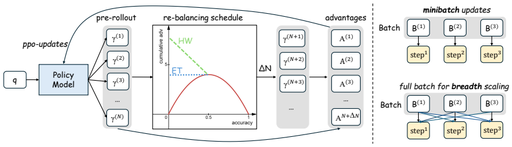
Figure 6 .The overall training framework of our Difficulty Adaptive Rollout Sampling (DARS) with breadth scaling. Our DARS consists of 2 phases: 1) a pre-rollout stage to evaluate the difficulty of the given question, and 2) a re-balancing rollout stage to adjust the cumulative advantage. For breadth scaling, we replace the PPO minibatch with the full batch with multiple PPO epochs.
원문 · CC BY 4.0 · Zhicheng Yang, Zhijiang Guo, Yinya Huang, Yongxin Wang, Dongchun Xie, Hanhui Li, Yiwei Wang, Xiaodan Liang, Jing Tang · Depth-Breadth Synergy in RLVR: Unlocking LLM Reasoning Gains with Adaptive Exploration · 원문 그림 인용 · 원본 PDF 5쪽에서 그림 영역을 추출했습니다.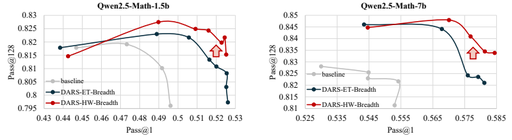
Figure 13 .Comparison of ET and HW schedule in breadth training of Qwen2.5-Math series.
원문 · CC BY 4.0 · Zhicheng Yang, Zhijiang Guo, Yinya Huang, Yongxin Wang, Dongchun Xie, Hanhui Li, Yiwei Wang, Xiaodan Liang, Jing Tang · Depth-Breadth Synergy in RLVR: Unlocking LLM Reasoning Gains with Adaptive Exploration · 원문 그림 인용 · 원본 PDF 22쪽에서 그림 영역을 추출했습니다.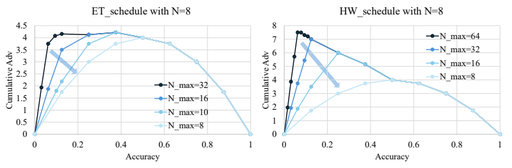
Figure 18 .Control the shape of Cumulative Advantage by adjusting theN max hyperparameter of DARS.
원문 · CC BY 4.0 · Zhicheng Yang, Zhijiang Guo, Yinya Huang, Yongxin Wang, Dongchun Xie, Hanhui Li, Yiwei Wang, Xiaodan Liang, Jing Tang · Depth-Breadth Synergy in RLVR: Unlocking LLM Reasoning Gains with Adaptive Exploration · 원문 그림 인용 · 원본 PDF 27쪽에서 그림 영역을 추출했습니다.전체 배치 업데이트와 폭 확대
DARS는 문제마다 롤아웃 수가 달라지므로 PPO의 미니배치 분할과 맞지 않습니다. 이 때문에 DARS-Breadth는 여러 PPO 에폭 동안 미니배치 대신 전체 배치를 사용합니다. 폭 실험에서는 배치 크기를 128에서 3072까지 크게 늘렸으며, 그 결과 모든 모델에서 Pass@1은 개선되었으나 Qwen2.5-Math-1.5B의 Pass@128은 악화되었습니다. 저자들은 큰 배치가 그래디언트 방향을 더 정확하게 하고 토큰 엔트로피를 유지한다고 해석하지만, 이는 저자의 해석이며 엔트로피 효과는 Figure 5의 학습 동역학 관찰에 근거합니다.
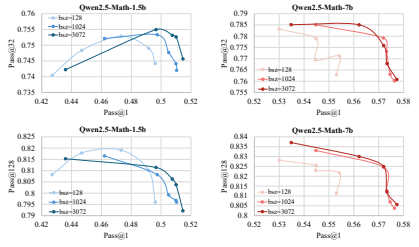
Figure 4 .Training dynamics ofPass@1andPass@Kperformance of Qwen2.5-Math-1.5B and -7B with different batch size.
원문 · CC BY 4.0 · Zhicheng Yang, Zhijiang Guo, Yinya Huang, Yongxin Wang, Dongchun Xie, Hanhui Li, Yiwei Wang, Xiaodan Liang, Jing Tang · Depth-Breadth Synergy in RLVR: Unlocking LLM Reasoning Gains with Adaptive Exploration · 원문 그림 인용 · 원본 PDF 3쪽에서 그림 영역을 추출했습니다.ET와 HW 스케줄이 유도하는 프롬프트 수준 목표
부록의 명제는 이상화된 Dr. GRPO 설정에서 ET 스케줄이 Log-Odds 목표에, HW 스케줄이 최대우도 목표에 해당하는 기대 그래디언트를 유도한다고 제시합니다. 이 결과는 p = pass@1(q)와 고정된 이상화 근사에 기대는 조건부 명제입니다. 또한 MaxRL과 DARS-HW는 문제 수준 최적화 가중치가 모두 (1−u)에 비례한다는 점에서 비교되지만, 이는 가중치의 비례 관계에 한정된 명제이며 두 방법의 분산 특성은 별도의 분석입니다.
주요 결과와 Pass@K 검증
Table 2에서 DARS-1.5B-HW-Breadth는 Avg@128 52.4와 Pass@128 82.2를 기록해, RLVR 기준선의 49.6과 79.6보다 높습니다. 기준선은 Dr. GRPO를 롤아웃 크기 8과 배치 크기 128로 실행한 설정이며, DARS 체크포인트는 기준선 Pass@1을 넘은 뒤 Pass@128이 가장 좋은 시점으로 선택되었습니다. 또한 DARS 학습 동역학에서 Pass@128은 기반 모델을 넘은 뒤 감소하는 경향을 보입니다. 이 결과는 여러 벤치마크를 합친 집계이며, 개별 벤치마크 값과 구분해서 읽어야 합니다.
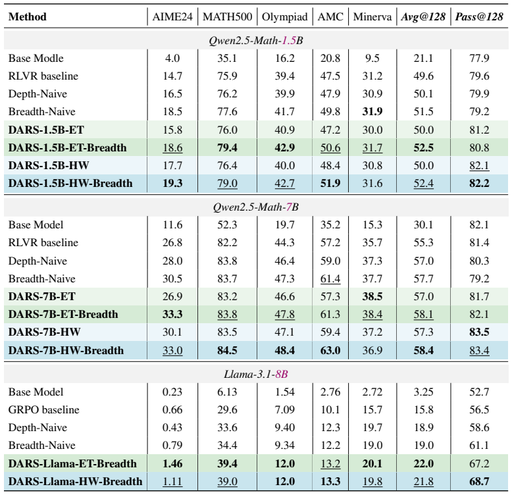
Table 2 . Overall performance of Pass@1 (Avg@128) and Pass@128 of Qwen2.5-Math series.
원문 · CC BY 4.0 · Zhicheng Yang, Zhijiang Guo, Yinya Huang, Yongxin Wang, Dongchun Xie, Hanhui Li, Yiwei Wang, Xiaodan Liang, Jing Tang · Depth-Breadth Synergy in RLVR: Unlocking LLM Reasoning Gains with Adaptive Exploration · 원문 그림 인용 · 원본 PDF 6쪽에서 그림 영역을 추출했습니다.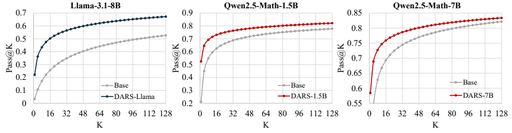
Figure 10 .CompletePass@Kaccuracy curve of base models and our DARS models.
원문 · CC BY 4.0 · Zhicheng Yang, Zhijiang Guo, Yinya Huang, Yongxin Wang, Dongchun Xie, Hanhui Li, Yiwei Wang, Xiaodan Liang, Jing Tang · Depth-Breadth Synergy in RLVR: Unlocking LLM Reasoning Gains with Adaptive Exploration · 원문 그림 인용 · 원본 PDF 9쪽에서 그림 영역을 추출했습니다.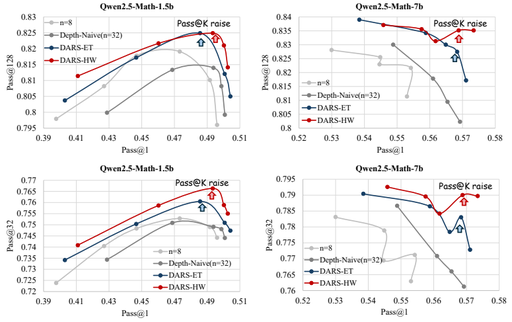
Figure 12 .Training dynamics ofPass@32/Pass@128andPass@1with different training steps of Qwen2.5-Math-1.5B and -7B.
원문 · CC BY 4.0 · Zhicheng Yang, Zhijiang Guo, Yinya Huang, Yongxin Wang, Dongchun Xie, Hanhui Li, Yiwei Wang, Xiaodan Liang, Jing Tang · Depth-Breadth Synergy in RLVR: Unlocking LLM Reasoning Gains with Adaptive Exploration · 원문 그림 인용 · 원본 PDF 22쪽에서 그림 영역을 추출했습니다.롤아웃 효율과 테스트 시간 확장
Table 4에서 DARS-ET는 Qwen2.5-Math-1.5B의 프롬프트당 평균 롤아웃을 32에서 15.2로 줄이고, 학습 단계당 시간을 179초에서 115초로 줄입니다. 같은 표에서 DARS-HW는 롤아웃 감소율이 더 작습니다. 테스트 시간 실험에서는 maj@8, maj@16과 pass@128을 비교했으며, 이 값들은 Table 3의 벤치마크별 결과이고 DARS-HW-Breadth가 AIME24와 AMC23 등에서 일부 향상을 보고합니다.
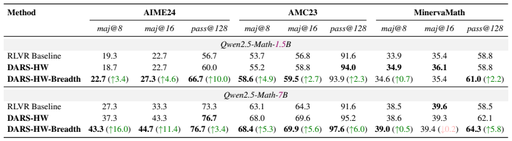
Table 3 .Benchmark-level test-time scaling performance of the best checkpoints.maj@kis averaged over five independent sampling rounds.
원문 · CC BY 4.0 · Zhicheng Yang, Zhijiang Guo, Yinya Huang, Yongxin Wang, Dongchun Xie, Hanhui Li, Yiwei Wang, Xiaodan Liang, Jing Tang · Depth-Breadth Synergy in RLVR: Unlocking LLM Reasoning Gains with Adaptive Exploration · 원문 그림 인용 · 원본 PDF 8쪽에서 그림 영역을 추출했습니다.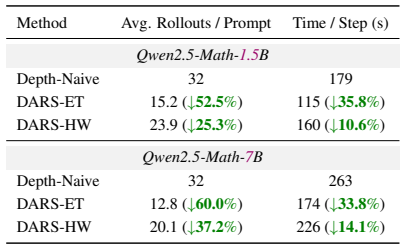
Table 4 .Average rollout numbers per prompt and wall-clock time per training step (seconds).
원문 · CC BY 4.0 · Zhicheng Yang, Zhijiang Guo, Yinya Huang, Yongxin Wang, Dongchun Xie, Hanhui Li, Yiwei Wang, Xiaodan Liang, Jing Tang · Depth-Breadth Synergy in RLVR: Unlocking LLM Reasoning Gains with Adaptive Exploration · 원문 그림 인용 · 원본 PDF 8쪽에서 그림 영역을 추출했습니다.적용 범위와 한계
본 실험은 주로 Qwen2.5-Math 계열 모델과 OpenR1-45K 하위 집합에서 수행되었으며, 주요 실험은 Dr. GRPO의 표준편차 항 제거 설정을 따릅니다. 표준편차 기반 이점에 대한 결과는 Qwen2.5-Math-1.5B에서 별도로 제시되었습니다. Llama-3.1-8B 실험은 MATH 데이터셋으로 학습했으며, 저자들은 Llama-3의 Pass@K 향상을 기반 모델의 중간 학습 특성으로 해석합니다. N_max 어닐링은 예비 실험이며, 원문은 이를 최종 방법으로 제시하지 않습니다.
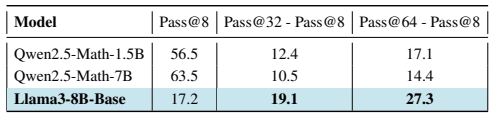
Table 10 .Pass@K gap comparison of Qwen2.5-Math-1.5/7B and LLama3-8B-Base
원문 · CC BY 4.0 · Zhicheng Yang, Zhijiang Guo, Yinya Huang, Yongxin Wang, Dongchun Xie, Hanhui Li, Yiwei Wang, Xiaodan Liang, Jing Tang · Depth-Breadth Synergy in RLVR: Unlocking LLM Reasoning Gains with Adaptive Exploration · 원문 그림 인용 · 원본 PDF 24쪽에서 그림 영역을 추출했습니다.
Table 11 .Preliminary study of an N max annealing schedule for transitioning fromPass@K-oriented exploration toPass@1-oriented refinement.
원문 · CC BY 4.0 · Zhicheng Yang, Zhijiang Guo, Yinya Huang, Yongxin Wang, Dongchun Xie, Hanhui Li, Yiwei Wang, Xiaodan Liang, Jing Tang · Depth-Breadth Synergy in RLVR: Unlocking LLM Reasoning Gains with Adaptive Exploration · 원문 그림 인용 · 원본 PDF 27쪽에서 그림 영역을 추출했습니다.논문 정보
- 저자
- Zhicheng Yang, Zhijiang Guo, Yinya Huang, Yongxin Wang, Dongchun Xie, Hanhui Li, Yiwei Wang, Xiaodan Liang, Jing Tang
- 학회·저널
- arXiv · 프리프린트
- 최초 공개일
- 2025년 8월 19일
- 등록일
- 2026년 10월 29일
- 수정일
- 2026년 4월 12일
- 버전
- v8
- arXiv
- 2508.13755
- 분류
- cs.LG · cs.AI
- 원문 이용 조건
- CC BY 4.0
- 제공 범위
- 논문 정보, 해설, 허용된 원문 그림
AI 해설은 논문 원문과 별개의 설명이며 오류가 있을 수 있습니다. 원문과 그림은 각 출처의 이용 조건과 따로 표시된 권리를 따릅니다.
초록
Reinforcement Learning with Verifiable Reward (RLVR) is a powerful method for enhancing the reasoning abilities of Large Language Models, but its full potential is limited by a lack of exploration in two key areas: Depth (the difficulty of problems) and Breadth (the number of training instances). Our analysis of the popular GRPO algorithm reveals a bias that down-weights difficult, low-accuracy problems, which are crucial for improving reasoning skills. To address this, we introduce Difficulty Adaptive Rollout Sampling (DARS), a method that re-weights difficult problems by using targeted, multi-stage rollouts. DARS increases the number of rollout outcomes for these harder problems according to our proposed re-balancing schedules and leads to consistent gains in Pass@K. We discovered that increasing rollout size alone does not improve performance and may actually impair it. In contrast, scaling the batch size to increase breadth via full-batch updates significantly boosted Pass@1 metrics. This improvement stems from higher token-level entropy, ensuring robust exploration and minimized gradient noise. We further present DARS-Breadth, a combined approach that uses DARS with a large breadth of training data. This method demonstrates simultaneous gains in both Pass@K and Pass@1, confirming that depth (adaptive exploration) and breadth (scaling iteration instances) are orthogonal and complementary dimensions for unlocking the full power of RLVR.
원문 인용
Zhicheng Yang, Zhijiang Guo, Yinya Huang, Yongxin Wang, Dongchun Xie, Hanhui Li, Yiwei Wang, Xiaodan Liang, Jing Tang (2025). Depth-Breadth Synergy in RLVR: Unlocking LLM Reasoning Gains with Adaptive Exploration. arXiv:2508.13755v8. https://arxiv.org/abs/2508.13755v8
BibTeX
@misc{yang2025depth,
  title = {{Depth-Breadth Synergy in RLVR: Unlocking LLM Reasoning Gains with Adaptive Exploration}},
  author = {Zhicheng Yang and Zhijiang Guo and Yinya Huang and Yongxin Wang and Dongchun Xie and Hanhui Li and Yiwei Wang and Xiaodan Liang and Jing Tang},
  year = {2025},
  eprint = {2508.13755},
  archivePrefix = {arXiv},
  url = {https://arxiv.org/abs/2508.13755v8}
}