논문 해설
Reading the Cell, Designing the Cure: Perturbation-Conditioned Molecular Diffusion for Function-Oriented Drug Design
세포를 읽고 치료법을 설계하다: 기능 중심 신약 설계를 위한 섭동 조건부 분자 확산
- 연구 문제 전사체 섭동 전후 상태를 조건으로 약물 분자를 생성하는 TBDD의 역문제를 다룹니다.
- 연구 방법 TFE가 섭동 전후 전사체에서 기능 표현을 만들고, PMD 확산 모델이 이를 AdaLN으로 받아 분자 그래프를 생성합니다.
- 주요 결과 벌크와 단일세포 설정 모두에서 CURE가 기준 모델보다 높은 구조 유사도와 낮은 PRnet MSE를 보고합니다.
전사체 섭동으로 약물 분자를 설계하는 문제
기존 구조 기반 약물 설계(SBDD)는 표적 단백질의 3차원 구조가 알려져 있어야 하며, 구조가 불명확하거나 질병 표현형이 여러 경로의 네트워크에서 나타나는 경우에는 한계가 있습니다. 이 논문은 세포의 전사체가 섭동 전후에 어떻게 달라지는지를 조건으로 삼아 약물 분자를 생성하는 전사체 기반 약물 설계(TBDD)를 다룹니다. 전사체 변화는 분자의 작용 기전을 반영하지만, 같은 전사체 변화를 만드는 구조는 여러 가지일 수 있어 역문제는 본질적으로 잘 정의되지 않습니다. 저자들은 이 문제에서 세 가지 어려움을 제시합니다. 첫째, 전사체 프로파일과 분자 그래프의 정보 밀도와 귀납 편향이 달라 단순한 직접 조건화가 불안정합니다.
둘째, 단일세포 RNA-seq는 dropout과 배치 효과, 잡음 때문에 조건 신호가 취약합니다. 셋째, 실험적 정답이 제한되어 있어 누수와 기억을 막는 분할과 대리 평가가 필요합니다.

Figure 2 .Schematic illustration of TBDD and its relationships with existing paradigms.TBDD is thereverse(design) direction complementary toPerturbation Prediction, and serves as a function-oriented complement to SBDD.
원문 · CC BY 4.0 · Ziyu Xu, Zijian Zhang, Liang Wang, Zhiyuan Liu, Qiang Liu, Shu Wu, Liang Wang · Reading the Cell, Designing the Cure: Perturbation-Conditioned Molecular Diffusion for Function-Oriented Drug Design · 원문 그림 인용 · 원본 PDF 2쪽에서 그림 영역을 추출했습니다.CURE의 구조: TFE와 확산 기반 분자 생성기
CURE는 전사체 섭동 특징 추출기(TFE)와 섭동 특징 유도 분자 그래프 확산 모델(PMD)로 구성됩니다. TFE는 섭동 전후 상태 Tpre와 Tpost에서 기능 중심의 섭동 표현 z를 만들고, PMD는 이 조건을 받아 분자 그래프를 생성합니다. TFE는 세 모듈로 나뉩니다. TFE-H는 단일세포 입력을 SCimilarity로 투영한 뒤 세포 주기 단계(G1, S, G2/M)와 전사체 군집별로 집계하여 하나의 평균 벡터로 뭉개지 않고 집단의 분포를 보존합니다. TFE-I는 Tpre와 Tpost를 서로 질의로 삼는 교차 어텐션과 자기 어텐션을 세 블록 쌓아 섭동 임베딩을 만듭니다. TFE-A는 같은 표현을 전역 위상 정렬과 Morgan 지문 기반 국소 생리활성 정렬의 두 화학 공간으로 사상합니다.
PMD에서는 이 조건 표현이 AdaLN을 통해 Graph Diffusion Transformer에 주입되며, Classifier-Free Guidance로 조건부 역확산을 수행합니다.
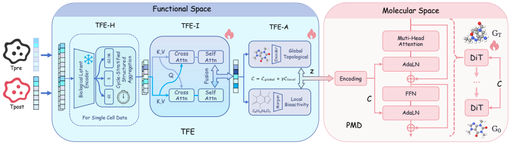
Figure 3 . Overall architecture of CURE. The model consists of a Transcriptome Perturbation Functional Feature Extractor (TFE) that processes transcriptome expression data (Tpre, Tpost) to produce a conditional embedding (C), and Perturbation feature-guided Molecular graph Diffusion model (PMD) uses the condition to generate a target molecule.
원문 · CC BY 4.0 · Ziyu Xu, Zijian Zhang, Liang Wang, Zhiyuan Liu, Qiang Liu, Shu Wu, Liang Wang · Reading the Cell, Designing the Cure: Perturbation-Conditioned Molecular Diffusion for Function-Oriented Drug Design · 원문 그림 인용 · 원본 PDF 4쪽에서 그림 영역을 추출했습니다.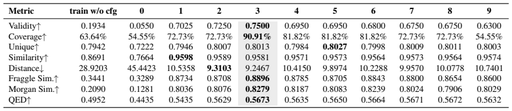
Table 6 .Performance of training w/o cfg under different guidance scale.↑means higher is better,↓means lower is better.
원문 · CC BY 4.0 · Ziyu Xu, Zijian Zhang, Liang Wang, Zhiyuan Liu, Qiang Liu, Shu Wu, Liang Wang · Reading the Cell, Designing the Cure: Perturbation-Conditioned Molecular Diffusion for Function-Oriented Drug Design · 원문 그림 인용 · 원본 PDF 17쪽에서 그림 영역을 추출했습니다.벌크·단일세포 데이터에서의 분포 및 기능 평가
평가는 벌크 L1000 데이터와 단일세포 Tahoe-100M 데이터에서 수행됩니다. 데이터는 85:10:5(train:test:val) 비율로 나누며, 무작위, 약물 마스크, 세포 마스크 방식의 분할이 사용됩니다. 기능 일관성은 PRnet MSE로 측정하며, 이는 생성 분자의 예측 표현형 벡터와 정답 약물의 차이를 계산하는 대리 지표입니다. 벌크 In-Distribution 설정에서 CURE 행은 Morgan Sim. 0.8228과 PRnet MSE 0.2328을 보고하며, 같은 설정의 GexMolGen, Gx2Mol, TRIOMPHE의 PRnet MSE는 각각 4.6504, 2.5987, 7.4599입니다.
단일세포 Unseen Drugs 설정에서 CURE의 PRnet MSE는 0.6482이며 비교 모델들은 4.9385 이상입니다. 단일세포 기준 모델은 기존 벌크 모델을 pseudo-bulk 평균으로 적응시켜 비교한 것이며, 부록의 metacell 집계 비교에서도 CURE의 우위가 유지됩니다. 이 결과는 PRnet이라는 특정 대리 평가자의 판단이며, 실험실 검증 결과는 아닙니다.
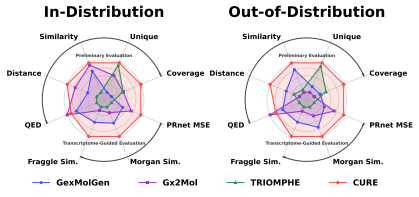
Figure 1 .Performance overview across diverse evaluation met- rics.CURE achieves strong overall performance across structural metrics and function-consistency proxies in both in-distribution and out-of-distribution settings. 1. Introduction
원문 · CC BY 4.0 · Ziyu Xu, Zijian Zhang, Liang Wang, Zhiyuan Liu, Qiang Liu, Shu Wu, Liang Wang · Reading the Cell, Designing the Cure: Perturbation-Conditioned Molecular Diffusion for Function-Oriented Drug Design · 원문 그림 인용 · 원본 PDF 1쪽에서 그림 영역을 추출했습니다.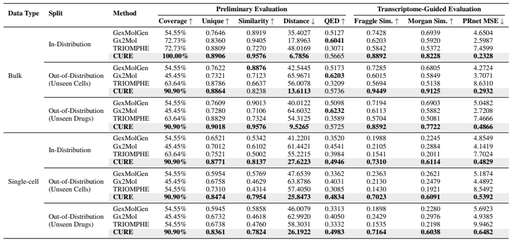
Table 1 .Comprehensive evaluation of CURE on both Bulk and Single-cell data. We report generalization performance and microscopic similarity across three generalization splits. To address the lack of dedicated single-cell baselines, we established a fair benchmark by adapting bulk models via pseudo-bulk profiling.
원문 · CC BY 4.0 · Ziyu Xu, Zijian Zhang, Liang Wang, Zhiyuan Liu, Qiang Liu, Shu Wu, Liang Wang · Reading the Cell, Designing the Cure: Perturbation-Conditioned Molecular Diffusion for Function-Oriented Drug Design · 원문 그림 인용 · 원본 PDF 6쪽에서 그림 영역을 추출했습니다.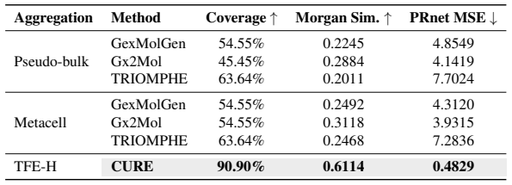
Table 11 .Single-cell baseline robustness: pseudo-bulk vs. metacell aggregation (in-distribution).
원문 · CC BY 4.0 · Ziyu Xu, Zijian Zhang, Liang Wang, Zhiyuan Liu, Qiang Liu, Shu Wu, Liang Wang · Reading the Cell, Designing the Cure: Perturbation-Conditioned Molecular Diffusion for Function-Oriented Drug Design · 원문 그림 인용 · 원본 PDF 20쪽에서 그림 영역을 추출했습니다.제로샷 유전자 억제제 설계와 도킹 결과
제로샷 유전자 억제제 평가에서는 10개 표적 유전자에 대해 약물 섭동으로 학습한 모델에 유전자 녹아웃 시그니처를 조건으로 넣습니다. 평가는 생성 분자와 알려진 억제제의 Morgan 유사도, 그리고 AutoDock Vina로 계산한 결합 친화도로 이루어집니다. 원문 표에서 CURE는 10개 표적 모두에서 가장 높은 Morgan 유사도와 가장 낮은 결합 에너지를 보고합니다. 다만 결합 에너지는 도킹 점수이므로 실제 결합 세기나 생물학적 활성을 직접 확인한 결과는 아닙니다. 부록의 도킹 표는 표적별 PDB 구조와 격자 중심, 알려진 억제제 대조군을 제시하며, 대부분 표적은 격자 크기 25 Å을 사용하고 MTOR와 SMAD3는 30 Å을 사용합니다.
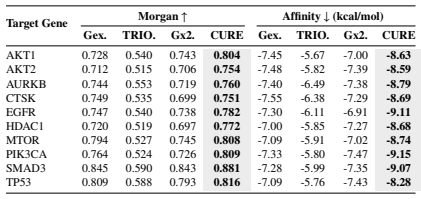
Table 2 .Zero-shot Gene inhibitor similarity and affinity.
원문 · CC BY 4.0 · Ziyu Xu, Zijian Zhang, Liang Wang, Zhiyuan Liu, Qiang Liu, Shu Wu, Liang Wang · Reading the Cell, Designing the Cure: Perturbation-Conditioned Molecular Diffusion for Function-Oriented Drug Design · 원문 그림 인용 · 원본 PDF 7쪽에서 그림 영역을 추출했습니다.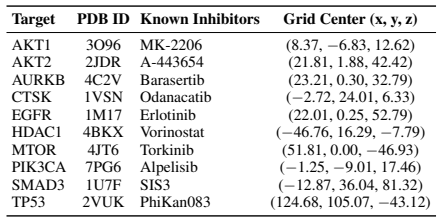
Table 14 .Docking protocol: PDB structures, grid centers, and known inhibitor controls.
원문 · CC BY 4.0 · Ziyu Xu, Zijian Zhang, Liang Wang, Zhiyuan Liu, Qiang Liu, Shu Wu, Liang Wang · Reading the Cell, Designing the Cure: Perturbation-Conditioned Molecular Diffusion for Function-Oriented Drug Design · 원문 그림 인용 · 원본 PDF 22쪽에서 그림 영역을 추출했습니다.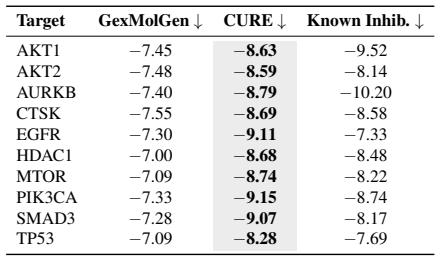
Table 15 .Binding affinity comparison (kcal/mol). Lower values indicate stronger binding.
원문 · CC BY 4.0 · Ziyu Xu, Zijian Zhang, Liang Wang, Zhiyuan Liu, Qiang Liu, Shu Wu, Liang Wang · Reading the Cell, Designing the Cure: Perturbation-Conditioned Molecular Diffusion for Function-Oriented Drug Design · 원문 그림 인용 · 원본 PDF 22쪽에서 그림 영역을 추출했습니다.TFE 모듈과 집계 방식의 절제 결과
절제 실험은 TFE 구성요소의 기여를 확인합니다. Tahoe 단일세포 데이터에서 TFE-H를 제거하면 분포 정렬과 구조 유사도가 뚜렷하게 낮아지며, 이는 단일세포 이질성을 다루는 집계 모듈의 효과를 보여 줍니다. L1000 벌크 설정에서 TFE-I와 TFE-A를 제거한 변형은 유효성이 크게 떨어집니다. 국소 지문 제약을 제거하면 약리단 충실도가 떨어집니다. 이 절제는 각 구성요소를 제거한 변형의 결과이므로 모든 모듈이 항상 이득을 준다는 결론으로 확대할 수 없습니다. 또한 w/o TFE 기준선은 L1000 Level 5 데이터로 학습되었다고 명시되어 있으며, Level 3 입력 비교는 별도의 조건입니다.
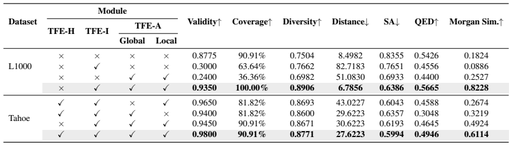
Table 4 .Ablation study of the TFE.*Note: w/o TFE is trained with L1000 level 5.
원문 · CC BY 4.0 · Ziyu Xu, Zijian Zhang, Liang Wang, Zhiyuan Liu, Qiang Liu, Shu Wu, Liang Wang · Reading the Cell, Designing the Cure: Perturbation-Conditioned Molecular Diffusion for Function-Oriented Drug Design · 원문 그림 인용 · 원본 PDF 8쪽에서 그림 영역을 추출했습니다.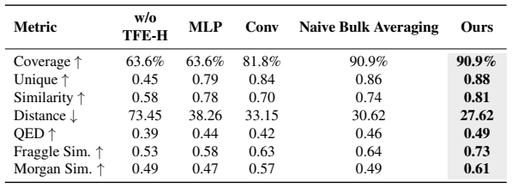
Table 5 .Ablation study of TFE-H. We compared different architectures and strategies.
원문 · CC BY 4.0 · Ziyu Xu, Zijian Zhang, Liang Wang, Zhiyuan Liu, Qiang Liu, Shu Wu, Liang Wang · Reading the Cell, Designing the Cure: Perturbation-Conditioned Molecular Diffusion for Function-Oriented Drug Design · 원문 그림 인용 · 원본 PDF 13쪽에서 그림 영역을 추출했습니다.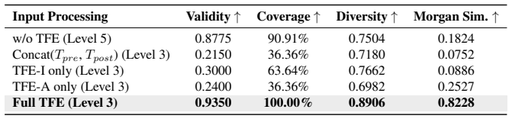
Table 13 .TFE input processing ablation (bulk in-distribution).
원문 · CC BY 4.0 · Ziyu Xu, Zijian Zhang, Liang Wang, Zhiyuan Liu, Qiang Liu, Shu Wu, Liang Wang · Reading the Cell, Designing the Cure: Perturbation-Conditioned Molecular Diffusion for Function-Oriented Drug Design · 원문 그림 인용 · 원본 PDF 21쪽에서 그림 영역을 추출했습니다.상위 k 검색과 한계
섭동 표현 z를 질의로 삼아 분자 지문 데이터베이스에서 Tanimoto 유사도 기반 상위 k 검색을 수행하면, k=10에서 Hit Rate가 90%를 넘는다고 보고됩니다. 이 결과는 생성기가 아니라 검색 기반 스크리닝의 성능이며, 검색 대상 데이터베이스와 조건에 의존합니다. 한계로는 실험실 검증이 없는 대리 평가에 의존한다는 점, 단일 대리 평가자 중심의 기능 비교, 그리고 저자들이 밝힌 문제 정의의 ill-posed 성격이 남아 있다는 점이 있습니다. 부록의 chemCPA 대체 평가는 같은 순위를 보고하지만, 이는 같은 계열의 대리 평가를 추가한 것이지 실제 활성의 확정이 아닙니다.
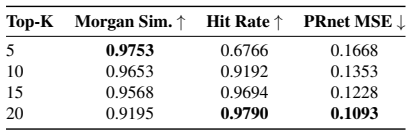
Table 3 .TFE Performance of the drug screener.
원문 · CC BY 4.0 · Ziyu Xu, Zijian Zhang, Liang Wang, Zhiyuan Liu, Qiang Liu, Shu Wu, Liang Wang · Reading the Cell, Designing the Cure: Perturbation-Conditioned Molecular Diffusion for Function-Oriented Drug Design · 원문 그림 인용 · 원본 PDF 7쪽에서 그림 영역을 추출했습니다.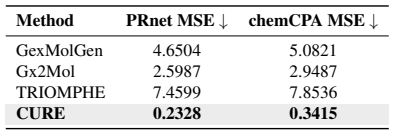
Table 10 .Functional proxy validation: PRnet vs. chemCPA. Method ranking is preserved.
원문 · CC BY 4.0 · Ziyu Xu, Zijian Zhang, Liang Wang, Zhiyuan Liu, Qiang Liu, Shu Wu, Liang Wang · Reading the Cell, Designing the Cure: Perturbation-Conditioned Molecular Diffusion for Function-Oriented Drug Design · 원문 그림 인용 · 원본 PDF 20쪽에서 그림 영역을 추출했습니다.논문 정보
- 저자
- Ziyu Xu, Zijian Zhang, Liang Wang, Zhiyuan Liu, Qiang Liu, Shu Wu, Liang Wang
- 학회·저널
- arXiv · 프리프린트
- 최초 공개일
- 2026년 5월 14일
- 등록일
- 2026년 10월 29일
- 수정일
- 2026년 5월 14일
- 버전
- v1
- arXiv
- 2605.15243
- 분류
- cs.LG · cs.AI · q-bio.BM · q-bio.MN · q-bio.QM
- 원문 이용 조건
- CC BY 4.0
- 제공 범위
- 논문 정보, 해설, 허용된 원문 그림
AI 해설은 논문 원문과 별개의 설명이며 오류가 있을 수 있습니다. 원문과 그림은 각 출처의 이용 조건과 따로 표시된 권리를 따릅니다.
초록
When reliable target structures are unavailable at scale or phenotypes arise from dysregulated pathways, transcriptomic perturbations provide a system-level functional readout for drug action. In this work, we formalize \emph{Transcriptome-based Drug Design (TBDD)} as a generative inverse problem: designing drug molecules conditioned on desired transcriptomic state transitions. We analyze the inherently ill-posed nature of this task, which is further complicated by the profound domain gap between biology and chemistry and by the sparsity of transcriptomic signals. To address these challenges, we propose \textbf{\themodel{}} (A \textbf{C}ell\textbf{U}lar \textbf{R}esponse \textbf{E}ngine), a multi-resolution transcriptome-guided diffusion framework. \themodel{} features a specialized \textbf{Transcriptome Perturbation Functional Feature Extractor (TFE)} that (1) distills function-oriented perturbation embeddings from pre/post states, (2) aligns these signatures to dual chemical views to bridge the cross-modal gap, and (3) performs heterogeneity-aware aggregation to extract robust state-specific signals from noisy transcriptomic data. Extensive evaluations on both standard benchmarks and rigorous out-of-distribution protocols demonstrate that \themodel{} consistently outperforms strong baselines in structural quality and functional consistency. Furthermore, we validate its practical utility via a zero-shot gene-inhibitor design task, highlighting the potential of phenotype-driven generative discovery.
원문 인용
Ziyu Xu, Zijian Zhang, Liang Wang, Zhiyuan Liu, Qiang Liu, Shu Wu, Liang Wang (2026). Reading the Cell, Designing the Cure: Perturbation-Conditioned Molecular Diffusion for Function-Oriented Drug Design. arXiv:2605.15243v1. https://arxiv.org/abs/2605.15243v1
BibTeX
@misc{xu2026reading,
  title = {{Reading the Cell, Designing the Cure: Perturbation-Conditioned Molecular Diffusion for Function-Oriented Drug Design}},
  author = {Ziyu Xu and Zijian Zhang and Liang Wang and Zhiyuan Liu and Qiang Liu and Shu Wu and Liang Wang},
  year = {2026},
  eprint = {2605.15243},
  archivePrefix = {arXiv},
  url = {https://arxiv.org/abs/2605.15243v1}
}