논문 해설
AI Isn't Getting Dumber, We're Getting Pickier: Rising Standards in Human Evaluation of Large Language Models
AI가 멍청해지는 것이 아니라, 우리가 까다로워지는 것이다: 대규모 언어 모델의 인간 평가 기준 상승
- 연구 문제 동일한 고정 AI 모델에 대한 Chatbot Arena의 both are bad 판정 비율이 시간이 지나며 올라가는지, 그리고 그 원인이 모델 변화인지 판정자 변화인지가 문제입니다.
- 연구 방법 버전이 고정된 모델 쌍의 블라인드 투표에 모델 쌍 고정효과 선형확률모형을 적용하고, 결정 투표 내 강한 모델의 승률로 절대 판정과 상대 판정을 분리합니다.
- 주요 결과 고정 쌍의 both are bad 비율은 월당 1.71 퍼센트포인트 상승했고, 2024년 결정 투표의 강한 모델 승률은 평평했습니다. 같은 판정자와 새로 도착한 판정자 모두에서 가혹화가 확인되었습니다.
사용자 불만은 모델 저하인가, 평가 기준 상승인가
사용자들은 ChatGPT 같은 AI 어시스턴트가 나빠졌다고 자주 불평합니다. 이 불평에는 두 가지 설명이 가능합니다. 하나는 제공자가 모델을 바꾸어 실제로 성능이 떨어졌다는 설명이고, 다른 하나는 모델은 그대로인데 판단하는 사람의 기대와 기준이 올라갔다는 설명입니다. 이 논문은 두 원인이 일상 사용에서는 구분하기 어렵다고 보고, 이를 가르기 위해 모델은 고정하고 판단자는 시간에 따라 추적할 수 있는 환경이 필요하다고 설정합니다.
이 연구는 Chatbot Arena의 블라인드 투표를 사용합니다. 사용자는 두 익명 모델의 답변을 보고 한쪽이 낫다고 고르거나 무승부, 또는 둘 다 나쁘다(both are bad)를 선택합니다.
모델 쌍 고정효과 회귀와 판단 분해
분석의 단위는 고정된 두 모델로 이루어진 쌍에서 나온 개별 투표입니다. 방정식은 BothBad_ipt = α_p + β·Months_t + x_i'γ + ε_ipt 형태의 선형확률모형이며, α_p는 모델 쌍 고정효과입니다. 이 설계에서 β는 같은 두 모델에 대한 판정이 시간에 따라 어떻게 바뀌는지만으로 식별됩니다. 따라서 모델 자체의 우열이나 쌍의 난이도는 상수로 흡수됩니다.
저자들은 같은 투표를 셋으로 나누어 봅니다. both are bad 비율, 한쪽 승리 비율, 무승부 비율입니다. 결정 투표 중 평점 차이가 20 Elo 이상인 쌍에서는 평점이 높은 모델이 이긴 비율을 따로 계산합니다. 이 승률은 both are bad와 무승부를 뺀 결정 투표 안에서 측정되므로, 절대 판정 변화와 상대 판정 변화를 분리하는 역할을 합니다.
대안 설명을 가르기 위해 저자들은 프롬프트 통제, 제공 설정 변화, 인터페이스 변화, 판단자 고정효과, 판단자-쌍 고정효과, 도착 코호트, 직전 대결 강도 같은 검정을 추가합니다.
같은 모델에 대한 판정은 가혹해지고, 상대 순위는 유지됩니다
동일한 고정 모델 쌍에서 both are bad 비율은 월당 1.71 퍼센트포인트 상승했고(SE 0.18), 평균은 17.1%입니다. 평균 판정 비율이 시작점과 끝점에서 같은 수준에 머문 전체 플랫폼 지표와 달리, 고정 쌍 내부에서는 점진적 상승이 나타납니다.
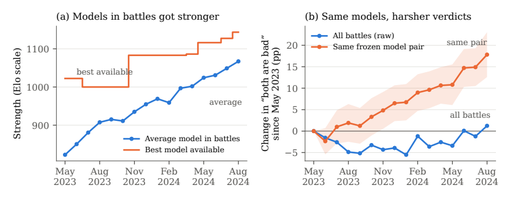
Figure 1 : Better models, steady verdicts. (a) Average Bradley–Terry rating (Elo scale) of the models in each month’s battles, and the rating of the best model with at least 500 battles that month. (b) Change since May 2023 in the share of “both are bad” votes: raw, across all battles (blue), and within the same frozen model pair (orange; calendar-month effects from a regression with pair fixed effects; shaded band is the 95% confidence interval, standard errors clustered by pair and week).
원문 · CC BY 4.0 · Zihan Chen, Lei Nico Zheng, Di Zhu · AI Isn't Getting Dumber, We're Getting Pickier: Rising Standards in Human Evaluation of Large Language Models · 원문 그림 인용 · 원본 PDF 8쪽에서 그림 영역을 추출했습니다.상대 판정은 다른 모습을 보입니다. 무승부 비율도 거의 변하지 않았습니다. 즉 추가된 both are bad 표는 주로 결정 투표에서 줄어든 몫에서 나왔고, 어떤 답변이 낫다는 선호 순위가 바뀐 것은 아닙니다. 14개 쌍에서도 모든 쌍에서 both are bad 비율이 15.5%에서 23.3%로 올랐습니다.
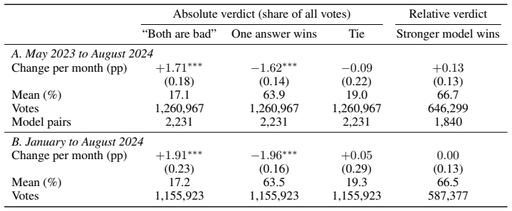
Table 2 : Verdicts on frozen model pairs over time: absolute and relative
원문 · CC BY 4.0 · Zihan Chen, Lei Nico Zheng, Di Zhu · AI Isn't Getting Dumber, We're Getting Pickier: Rising Standards in Human Evaluation of Large Language Models · 원문 그림 인용 · 원본 PDF 9쪽에서 그림 영역을 추출했습니다.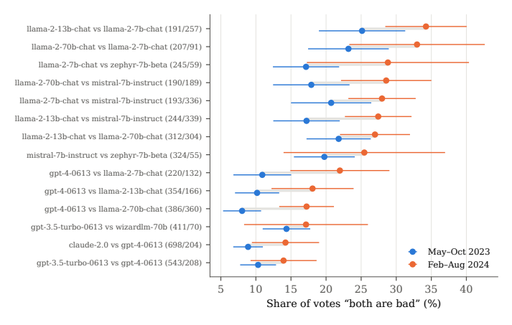
Figure 2 : Every pair judged often in both periods became “both are bad” more often. Frozen model pairs with at least 50 votes in May–October 2023 and in February–August 2024; vote counts in parentheses (early/late). Bars are 95% binomial confidence intervals.
원문 · CC BY 4.0 · Zihan Chen, Lei Nico Zheng, Di Zhu · AI Isn't Getting Dumber, We're Getting Pickier: Rising Standards in Human Evaluation of Large Language Models · 원문 그림 인용 · 원본 PDF 10쪽에서 그림 영역을 추출했습니다.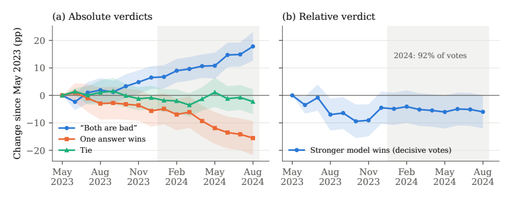
Figure 3 : Absolute verdicts drift; the relative verdict is flat from late 2023. Calendar-month effects (relative to May 2023) from regressions with model-pair fixed effects. (a) Shares of all votes on frozen pairs. (b) Share of decisive votes won by the higher-rated model, pairs whose ratings differ by at least 20 Elo points. Shaded bands are 95% confidence intervals, standard errors clustered by pair and week. The grey area marks 2024.
원문 · CC BY 4.0 · Zihan Chen, Lei Nico Zheng, Di Zhu · AI Isn't Getting Dumber, We're Getting Pickier: Rising Standards in Human Evaluation of Large Language Models · 원문 그림 인용 · 원본 PDF 10쪽에서 그림 영역을 추출했습니다.판정자 쪽 검정에서도 같은 판정자가 같은 쌍을 더 가혹하게 판정했고(판정자 고정효과 +1.90, 판정자-쌍 고정효과 +2.30), 나중에 도착한 판정자의 첫 투표도 더 가혹했습니다(도착 코호트 +1.25). 저자들은 이 결과를 판정자 구성 변화만으로는 설명하기 어렵고, 기준이 판정자 내부에서 움직인다는 해석으로 제시합니다.
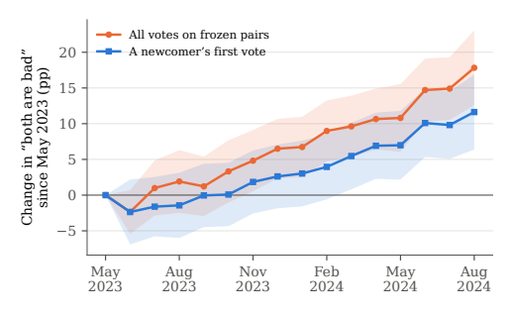
Figure 5 : Newcomers arrive pickier. Calendar-month effects (relative to May 2023) on “both are bad” within frozen model pairs, for all votes and for each judge identifier’s first recorded vote by month of arrival. Shaded bands are 95% confidence intervals, standard errors clustered by pair and week.
원문 · CC BY 4.0 · Zihan Chen, Lei Nico Zheng, Di Zhu · AI Isn't Getting Dumber, We're Getting Pickier: Rising Standards in Human Evaluation of Large Language Models · 원문 그림 인용 · 원본 PDF 14쪽에서 그림 영역을 추출했습니다.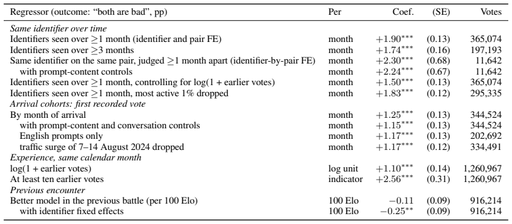
Table 4 : Who becomes pickier
원문 · CC BY 4.0 · Zihan Chen, Lei Nico Zheng, Di Zhu · AI Isn't Getting Dumber, We're Getting Pickier: Rising Standards in Human Evaluation of Large Language Models · 원문 그림 인용 · 원본 PDF 14쪽에서 그림 영역을 추출했습니다.프롬프트·제공 설정·인터페이스 대안 검증
프롬프트 통제를 넣어도 추세는 크게 줄지 않았습니다. 내용 통제 후 +1.63, 대화 통제 후 +1.57, 답변 통제 후 +1.59였고, 단일 턴 조건과 쉬운 영어 프롬프트에서도 양의 추세가 남았습니다. Oster(2019) 방식의 민감도 분석에서는 관측되지 않은 프롬프트 선택이 관측된 것의 36배 강해야 추세가 0이 된다고 계산됩니다. 다만 이 값은 최대 R²를 통제모형 R²의 1.3배로 둔 가정 아래의 계산이며, 최대 R²를 바꾸면 결과도 달라집니다.
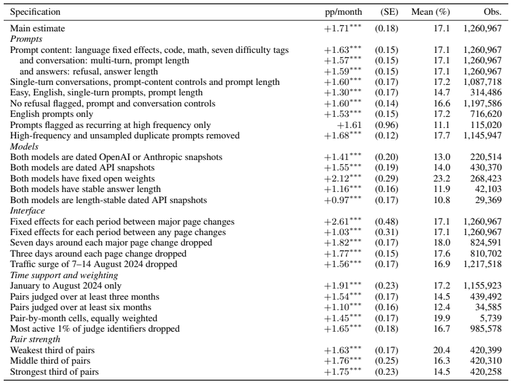
Table 3 : Robustness: change in “both are bad” per month within frozen model pairs
원문 · CC BY 4.0 · Zihan Chen, Lei Nico Zheng, Di Zhu · AI Isn't Getting Dumber, We're Getting Pickier: Rising Standards in Human Evaluation of Large Language Models · 원문 그림 인용 · 원본 PDF 12쪽에서 그림 영역을 추출했습니다.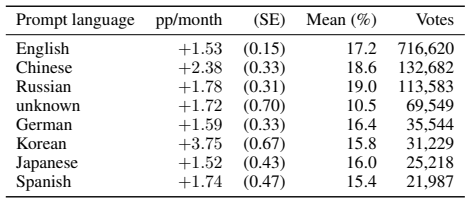
Table 7 : Change in “both are bad” per month within frozen pairs, by prompt language
원문 · CC BY 4.0 · Zihan Chen, Lei Nico Zheng, Di Zhu · AI Isn't Getting Dumber, We're Getting Pickier: Rising Standards in Human Evaluation of Large Language Models · 원문 그림 인용 · 원본 PDF 22쪽에서 그림 영역을 추출했습니다.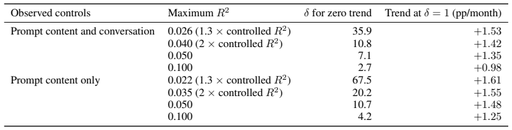
Table 10 : Coefficient-stability sensitivity for the main trend
원문 · CC BY 4.0 · Zihan Chen, Lei Nico Zheng, Di Zhu · AI Isn't Getting Dumber, We're Getting Pickier: Rising Standards in Human Evaluation of Large Language Models · 원문 그림 인용 · 원본 PDF 23쪽에서 그림 영역을 추출했습니다.제공 설정 대안으로는 날짜가 고정된 OpenAI·Anthropic 스냅샷 쌍에서 +1.41, 오픈 가중치 쌍에서 +2.12, 응답 길이가 안정적인 쌍에서 +1.16이 나왔습니다. 인터페이스 변화는 주요 변경 기간별 고정효과로 흡수하면 추세가 +2.61이 되고, 모든 변경 기간을 쓰면 +1.03입니다. 2024년 8월 7일 주간의 트래픽 급증을 제외해도 +1.56이었습니다.
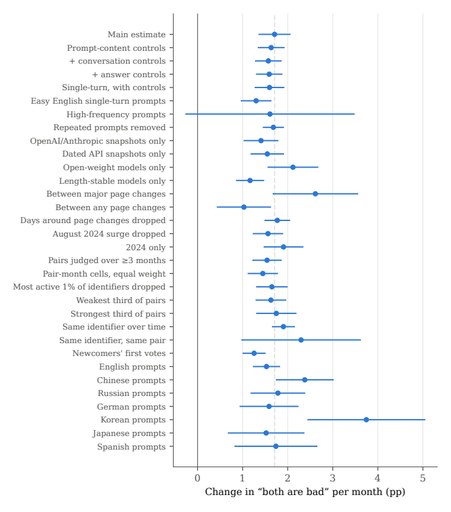
Figure 4 : One estimate, many cuts. Change in the share of “both are bad” votes per month within frozen model pairs, with 95% confidence intervals. The dashed line marks the main estimate.
원문 · CC BY 4.0 · Zihan Chen, Lei Nico Zheng, Di Zhu · AI Isn't Getting Dumber, We're Getting Pickier: Rising Standards in Human Evaluation of Large Language Models · 원문 그림 인용 · 원본 PDF 13쪽에서 그림 영역을 추출했습니다.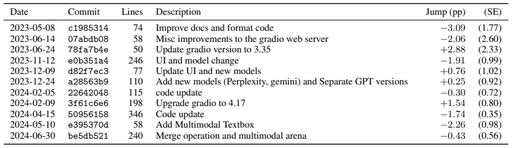
Table 8 : Jumps in “both are bad” at major changes to the anonymous battle page
원문 · CC BY 4.0 · Zihan Chen, Lei Nico Zheng, Di Zhu · AI Isn't Getting Dumber, We're Getting Pickier: Rising Standards in Human Evaluation of Large Language Models · 원문 그림 인용 · 원본 PDF 22쪽에서 그림 영역을 추출했습니다.이 검정들은 주로 측정 가능한 프롬프트·설정·인터페이스 변화로는 전부 설명되지 않는다는 근거입니다. 프롬프트 내용 자체는 원문이 없으므로 본 로그에서 직접 통제할 수 없었고, 이 점은 한계 절에서 함께 다룹니다.
판정자 식별자와 로그의 한계
판정자 식별자는 사람을 정확히 나타내지 않습니다. 공개 로그의 식별자는 투표가 나온 네트워크 주소에서 파생되며, 한 기기나 네트워크를 가리킬 수 있습니다. 또 로그는 투표를 선택한 사용자만 포함하며, 재방문 조건부 검정은 돌아온 사용자에 대한 결과입니다. 도착 코호트도 도착 시기에 따라 사람의 구성이 다를 가능성이 남습니다.
로그에는 프롬프트와 답변 본문이 없어 같은 프롬프트에서의 판정을 직접 비교할 수 없습니다. 고빈도 프롬프트 부분집합도 프롬프트 구성을 고정하지 못합니다. 신규 모델 도착일은 Arena에 처음 나타난 날짜이며 실제 노출을 측정한 것이 아닙니다. 상대 판정은 풀링된 비율이라 개별 쌍의 상쇄 변화를 가릴 수 있습니다.
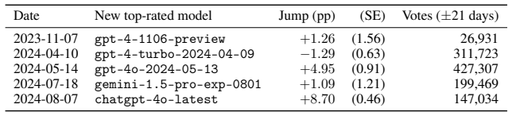
Table 9 : Jumps in “both are bad” at arrivals of a new top-rated model
원문 · CC BY 4.0 · Zihan Chen, Lei Nico Zheng, Di Zhu · AI Isn't Getting Dumber, We're Getting Pickier: Rising Standards in Human Evaluation of Large Language Models · 원문 그림 인용 · 원본 PDF 22쪽에서 그림 영역을 추출했습니다.메커니즘에 대해서도 한계가 있습니다. 데이터는 판정자 쪽 변화를 찾았지만 개인별 다른 AI 노출은 기록하지 않았습니다. 또한 더 높은 임계값과 더 세밀한 검토를 투표만으로 구분하지 못합니다. 이 점은 저자들이 향후 실험으로 다루어야 할 과제로 제시합니다.
논문 정보
- 저자
- Zihan Chen, Lei Nico Zheng, Di Zhu
- 학회·저널
- arXiv · 프리프린트
- 최초 공개일
- 2026년 11월 10일
- 등록일
- 2026년 11월 12일
- 수정일
- 2026년 11월 10일
- 버전
- v1
- arXiv
- 2611.14333
- 분류
- cs.HC · cs.AI · cs.CL · cs.CY
- 원문 이용 조건
- CC BY 4.0
- 제공 범위
- 논문 정보, 해설, 허용된 원문 그림
AI 해설은 논문 원문과 별개의 설명이며 오류가 있을 수 있습니다. 원문과 그림은 각 출처의 이용 조건과 따로 표시된 권리를 따릅니다.
초록
Users often complain that AI assistants such as ChatGPT are getting worse. Some versions do change, but human evaluation leaves a second possibility untested: the people judging may change. We separate the two on Chatbot Arena, a public platform where people compare answers from two anonymous large language models (LLMs) and pick the better one or say both are bad. We study 1,260,967 blind votes cast from May 2023 to August 2024 on pairs of models whose versions are fixed: dated vendor snapshots and models with fixed open weights. For the same pair of unchanged models, the share of votes saying "both are bad" rises by 1.71 percentage points a month on a mean of 17.1%, and by 1.91 points a month in 2024. In fourteen pairs observed often in both 2023 and 2024, it rose in every one, from 15.5% to 23.3%. The ranking does not trend: in 2024, the stronger model's share of decisive votes is flat. The rise holds within the same voter and on the same pair, and across arrival cohorts from their first recorded vote. It holds with prompt controls, in every major language, for dated vendor snapshots, open-weight models and models with stable answer length, and between interface changes. The drift is shared across models: month effects estimated from other models' pairs remove it from each model's own pairs. Platform-wide, the average model would be expected to score 78% against the 2023 average, yet the share of "both are bad" votes ended near where it began. The pattern fits a standard that follows the category's progress, so a product that stands still is judged as declining. Absolute verdicts on AI drifted while relative comparisons held steady, an evaluation drift that matters for LLM leaderboards and for the human feedback used to train models.
원문 인용
Zihan Chen, Lei Nico Zheng, Di Zhu (2026). AI Isn't Getting Dumber, We're Getting Pickier: Rising Standards in Human Evaluation of Large Language Models. arXiv:2611.14333v1. https://arxiv.org/abs/2611.14333v1
BibTeX
@misc{chen2026getting,
  title = {{AI Isn't Getting Dumber, We're Getting Pickier: Rising Standards in Human Evaluation of Large Language Models}},
  author = {Zihan Chen and Lei Nico Zheng and Di Zhu},
  year = {2026},
  eprint = {2611.14333},
  archivePrefix = {arXiv},
  url = {https://arxiv.org/abs/2611.14333v1}
}