논문 해설
ImageGem: In-the-wild Generative Image Interaction Dataset for Generative Model Personalization
ImageGem: 생성 모델 개인화를 위한 실제 환경 생성 이미지 상호작용 데이터셋
- 연구 문제 개인 선호를 반영하는 생성 모델 연구는 대규모이고 세밀한 실사용자 선호 데이터가 부족해 제약을 받아 왔습니다.
- 연구 방법 Civitai에서 수집한 ImageGem 데이터를 구축하고, 이를 집합 선호 정렬, 개인화 검색과 추천, LoRA 가중치 공간 편집에 활용합니다.
- 주요 결과 ImageGem 부분집합으로 정렬한 SD1.5는 Pick-a-Pic 부분집합과 비교해 여러 주제에서 선호 지표가 높았고, LoRA 가중치 공간의 SVD 기반 편집은 양방향에서 일관된 결과를 보였습니다.
개인 선호를 반영하는 생성 모델의 데이터 문제
기존 텍스트-이미지 개인화 연구는 특정 인물이나 사물의 정체성을 학습하는 데 집중해 왔고, 선호 정렬 연구는 대다수 사용자가 좋아할 이미지를 만드는 집합 선호에 초점을 맞춰 왔습니다. 개인 수준의 선호를 다루려면 대규모이면서 세밀한 사용자 선호 주석이 필요하지만, 이러한 데이터가 부족하다는 것이 저자들이 제시한 핵심 장애물입니다.
이 논문은 Civitai에서 수집한 실제 사용자 상호작용 데이터인 ImageGem을 제시합니다. 원문에 따르면 데이터에는 57K 사용자, 242K 맞춤형 LoRA, 3M 텍스트 프롬프트, 5M 생성 이미지가 포함됩니다. 데이터의 규모와 구성은 이 연구가 다루는 질문의 출발점입니다.
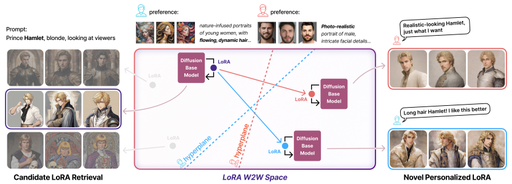
Figure 1 . Our proposed ImageGem dataset and its applications. The left side illustrates image and generative model retrieval. On the right, we demonstrate a novel task of generative model personalization through LoRA weights-to-weights (W2W) space construction.
원문 · CC BY 4.0 · Yuanhe Guo, Linxi Xie, Zhuoran Chen, Kangrui Yu, Ryan Po, Guandao Yang, Gordon Wetztein, Hongyi Wen · ImageGem: In-the-wild Generative Image Interaction Dataset for Generative Model Personalization · 원문 그림 인용 · 원본 PDF 1쪽에서 그림 영역을 추출했습니다.ImageGem 데이터 구축과 안전 필터링
ImageGem은 Civitai의 공개 API로 수집했으며, 세 가지 핵심 구성요소인 LoRA 모델, 그 LoRA로 생성한 이미지, 이미지를 올리고 모델을 공유한 사용자를 포함합니다. 이 구성요소는 이미지, LoRA, 사용자 사이의 3항 관계로 연결됩니다.
프롬프트와 사용자가 붙인 LoRA 태그에는 명시적 등급이 없기 때문에 저자들은 Detoxify로 프롬프트의 NSFW 확률을 추정했고, 프롬프트의 unsafe 확률이 0.2를 넘는 이미지를 제외했습니다. 이 필터링 후 데이터는 원문 표의 Raw 5,658,107개 이미지에서 Filtered 4,916,134개 이미지로 줄어듭니다.

Table 1 . Statistics of our ImageGem dataset.∗While every user generated at least one image, not all users uploaded LoRAs.†Excluded highest-uploader counts for unbiased averages.‡Many-to-many image-model relationships may cause image double-counting.
원문 · CC BY 4.0 · Yuanhe Guo, Linxi Xie, Zhuoran Chen, Kangrui Yu, Ryan Po, Guandao Yang, Gordon Wetztein, Hongyi Wen · ImageGem: In-the-wild Generative Image Interaction Dataset for Generative Model Personalization · 원문 그림 인용 · 원본 PDF 4쪽에서 그림 영역을 추출했습니다.집합 선호 정렬을 위한 선호 쌍 구성
집합 선호 정렬에서는 사용자의 좋아요와 같은 피드백을 프롬프트-이미지 쌍의 선호 신호로 사용합니다. 학습 목표는 DiffusionDPO를 따르며, 기준 모델 p_ref에 대해 보상 최대화 항과 KL 제약 항으로 구성된 식으로 표현됩니다. 이 식에서 β는 KL 항의 가중치이고, 보상 r(c, x0)은 전체 확산 체인에 대한 보상 R의 기댓값으로 정의됩니다.
차이는 선호 쌍이 명시적 사람 주석이 아니라 자연스러운 관찰에서 얻은 암묵적 선호라는 점입니다. 저자들은 프롬프트의 CLIP 임베딩을 HDBScan으로 군집화한 뒤, 각 군집 안에서 Human Preference Score v2 기반의 min-max 쌍 구성을 적용했습니다.
검색과 VLM 기반 생성 모델 추천
개인화 이미지 검색과 생성 모델 추천은 두 단계 구조를 사용합니다. 첫 단계에서 협업 필터링으로 사용자가 다음에 상호작용할 가능성이 높은 상위 k개 후보를 가져오고, 둘째 단계에서 VLM으로 후보 순위를 매깁니다. 이미지 후보 검색에는 FAISS 기반 근사 최근접 이웃 검색을 사용하며, 이미지 ID 임베딩은 사전학습된 ViT로 초기화합니다.
VLM 단계에서는 Pixtral-12B가 사용자의 과거 선호로부터 시각 선호 프로필 q_i를 생성하고, 후보 집합 C_i의 각 항목과 비교해 유사도 점수와 설명을 생성합니다. 원문은 VLM 순위가 호출이나 순서에 따라 흔들릴 수 있다고 밝히며, 이를 줄이기 위해 후보 부분집합을 샘플링하고 점수의 기댓값을 취하는 randomized scoring strategy를 사용합니다.
LoRA 가중치 공간의 편집 방향
생성 모델 개인화 실험에서는 사용자가 만든 LoRA들로 잠재 LoRA 가중치 공간을 구성합니다. 각 LoRA 가중치 행렬에 SVD를 적용하고 최상위 성분만 남긴 뒤, 모든 층의 축소된 행렬을 펼쳐 이어 붙여 벡터 θ_i를 만듭니다. 이 벡터 집합에 PCA를 적용해 상위 m개 주성분으로 기저를 구성합니다.
선호 방향은 사용자별 선호 라벨이 붙은 모델 가중치를 입력으로 하는 선형 분류기를 학습하고, 그 초평면의 법선 벡터 v를 사용하여 정해집니다. 편집은 θ_edit = θ + αv로 계산되며, α는 편집 강도를 조절합니다. 이 과정은 학습된 방향을 따라 기존 LoRA를 이동하는 실행 단계이며, 새로운 LoRA를 다시 학습하지 않습니다.
집합 선호 정렬 실험의 결과와 한계
SD1.5를 DiffusionDPO로 미세 조정한 실험에서, ImageGem 부분집합으로 학습한 체크포인트는 Pick-a-Pic 부분집합으로 학습한 체크포인트보다 Cars, Dogs, Scenery 세 주제 모두에서 Pick Score와 HPSv2 점수가 높았습니다. 평가는 DiffusionDB에서 주제별 OOD 프롬프트 200개를 샘플링해 체크포인트당 600장을 생성한 뒤 수행했습니다.
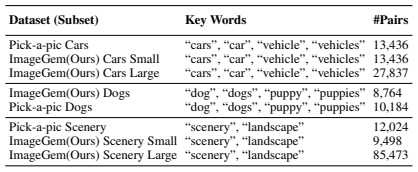
Table 2 . Subsets of three topics sampled from Our dataset and Pick-a-Pic at comparable scales, with images filtered by key words and excluding human character-related prompts. For cars and scenery, we found significantly more image pairs than Pick-a-Pic, so we split it into a small set and a large set for ablation study.
원문 · CC BY 4.0 · Yuanhe Guo, Linxi Xie, Zhuoran Chen, Kangrui Yu, Ryan Po, Guandao Yang, Gordon Wetztein, Hongyi Wen · ImageGem: In-the-wild Generative Image Interaction Dataset for Generative Model Personalization · 원문 그림 인용 · 원본 PDF 5쪽에서 그림 영역을 추출했습니다.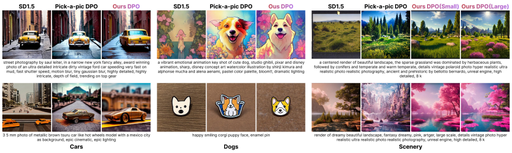
Figure 3 . Qualitative DiffusionDPO results comparison of images generated with OOD prompts in three topics sampled from DiffusionDB. For each prompt, random seed and all other hyperparameters are kept the same. Zoom in for the best view.
원문 · CC BY 4.0 · Yuanhe Guo, Linxi Xie, Zhuoran Chen, Kangrui Yu, Ryan Po, Guandao Yang, Gordon Wetztein, Hongyi Wen · ImageGem: In-the-wild Generative Image Interaction Dataset for Generative Model Personalization · 원문 그림 인용 · 원본 PDF 6쪽에서 그림 영역을 추출했습니다.Scenery 주제에서는 ImageGem 규모를 키울수록 여러 지표가 개선되었지만 CLIP Score는 원본 SD1.5보다 낮게 남았습니다. 저자들은 DiffusionDPO 학습 목표가 프롬프트 정합성보다 사람 선호를 우선하는 경향이 있을 것이라고 추측합니다. 이 해석은 저자의 추측이며, 같은 설정이 모든 모델이나 과제에 적용된다는 뜻은 아닙니다.

Table 4 . Quantitative DiffusionDPO results comparing average scores: Pick Score [19] and HPSv2 [37] for human preference alignment, and CLIP Score [15] for image-prompt alignment.
원문 · CC BY 4.0 · Yuanhe Guo, Linxi Xie, Zhuoran Chen, Kangrui Yu, Ryan Po, Guandao Yang, Gordon Wetztein, Hongyi Wen · ImageGem: In-the-wild Generative Image Interaction Dataset for Generative Model Personalization · 원문 그림 인용 · 원본 PDF 6쪽에서 그림 영역을 추출했습니다.검색과 추천 기준선 비교
이미지 검색에서는 두 타워 모델이 Images-1M 설정에서 Recall@k 기준 가장 높은 값을 보였습니다. 모델 추천에서는 SASRec이 ItemKNN과 UserKNN보다 Models-200K 설정의 Recall과 NDCG에서 우수했습니다. 저자들은 자기 주의로 사용자 상호작용의 시간적 변화를 모델링한 결과로 해석합니다.
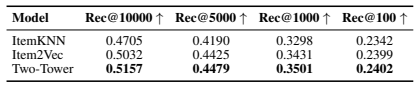
Table 5 . Comparisons of retrieval performance onImages-1M. “Rec@k” denotes Recall at rankk.
원문 · CC BY 4.0 · Yuanhe Guo, Linxi Xie, Zhuoran Chen, Kangrui Yu, Ryan Po, Guandao Yang, Gordon Wetztein, Hongyi Wen · ImageGem: In-the-wild Generative Image Interaction Dataset for Generative Model Personalization · 원문 그림 인용 · 원본 PDF 6쪽에서 그림 영역을 추출했습니다.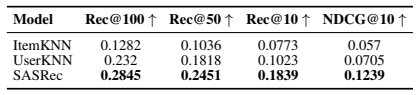
Table 6 . Transposed comparison of ranking performance on Models-200K. “Rec@k” denotes Recall at rankk.
원문 · CC BY 4.0 · Yuanhe Guo, Linxi Xie, Zhuoran Chen, Kangrui Yu, Ryan Po, Guandao Yang, Gordon Wetztein, Hongyi Wen · ImageGem: In-the-wild Generative Image Interaction Dataset for Generative Model Personalization · 원문 그림 인용 · 원본 PDF 6쪽에서 그림 영역을 추출했습니다.VLM 순위 실험은 무작위로 선택한 20명의 사용자에 대해 수행되었습니다. 최근 H=5개의 상호작용과 상위 M=10개의 검색 항목을 입력으로 사용했으며, Table 7에서는 이미지 추천의 Rec@5와 모델 추천의 NDCG@5 등이 함께 보고됩니다. 이 결과는 설정된 소규모 평가에서 나온 관찰로 읽어야 하며, 모든 사용자 집단에 대한 일반 결론으로 확대되지 않습니다.
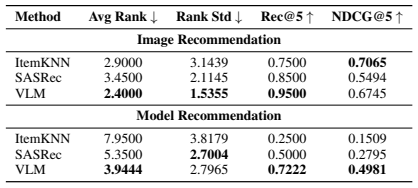
Table 7 . Ranking performance of ItemKNN, SASRec, and VLM on image and model recommendation tasks.
원문 · CC BY 4.0 · Yuanhe Guo, Linxi Xie, Zhuoran Chen, Kangrui Yu, Ryan Po, Guandao Yang, Gordon Wetztein, Hongyi Wen · ImageGem: In-the-wild Generative Image Interaction Dataset for Generative Model Personalization · 원문 그림 인용 · 원본 PDF 7쪽에서 그림 영역을 추출했습니다.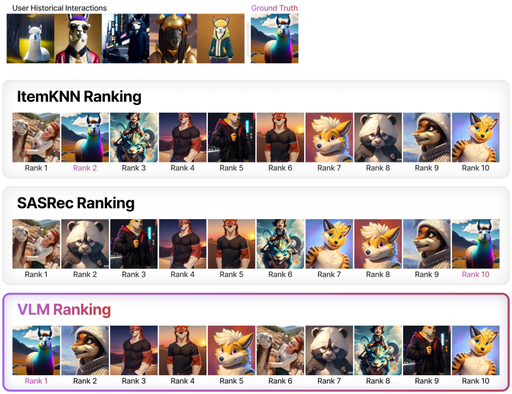
Figure 10 . The top row represents the user’s historical interactions (training set). The following rows show rankings from three recommen- dation models: ItemKNN, SASRec, and VLM. Images are ordered by ranking from left to right. The VLM model demonstrates superior performance, as its rankings align most closely with the user’s ground truth interaction.
원문 · CC BY 4.0 · Yuanhe Guo, Linxi Xie, Zhuoran Chen, Kangrui Yu, Ryan Po, Guandao Yang, Gordon Wetztein, Hongyi Wen · ImageGem: In-the-wild Generative Image Interaction Dataset for Generative Model Personalization · 원문 그림 인용 · 원본 PDF 13쪽에서 그림 영역을 추출했습니다.LoRA 편집 실험의 해석 범위
ani-real 방향의 편집 실험은 SDXL 기반 LoRA 23K개에서 학습한 방향을 사용해, SVD 기반 W2W 공간과 attn_v 기반 W2W 공간을 비교합니다. SVD 기반 공간은 ani-real과 real-ani 두 방향에서 부드럽고 일관된 편집을 보였고, attn_v 기반 공간은 ani-real에서는 잘 작동했지만 역방향으로 일반화되지 않았습니다. FF 층만 사용한 경우도 두 방향에서 성능이 낮았습니다.
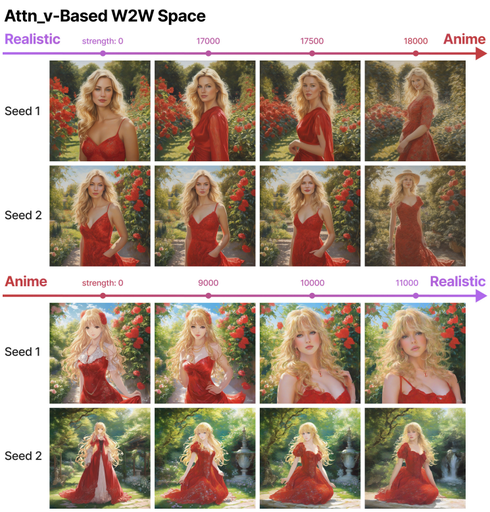
Figure 11 . Editing results using the W2W space constructed fromattn vlayers. Top: transformation fromrealistictoanime. Bottom: transformation fromanimetorealistic. The first column shows outputs from the unedited base model; subsequent columns show results with increasing tuning strength. Each row shares the same generation seed. While theani-realdirection produces coherent transitions, the reversereal-anidirection is less effective.
원문 · CC BY 4.0 · Yuanhe Guo, Linxi Xie, Zhuoran Chen, Kangrui Yu, Ryan Po, Guandao Yang, Gordon Wetztein, Hongyi Wen · ImageGem: In-the-wild Generative Image Interaction Dataset for Generative Model Personalization · 원문 그림 인용 · 원본 PDF 15쪽에서 그림 영역을 추출했습니다.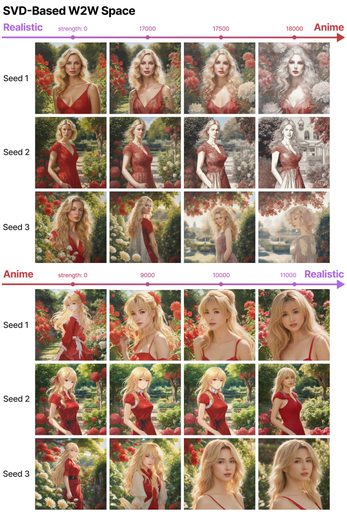
Figure 12 . Editing results using the SVD-based W2W space. Top: transformation fromrealistictoanime. Bottom: transformation from animetorealistic. The base model outputs are shown in the first column, followed by results with increasing tuning strength. Each row uses a fixed generation seed. The SVD-based representation supports smooth, bidirectional editing with semantically coherent outputs in both directions.
원문 · CC BY 4.0 · Yuanhe Guo, Linxi Xie, Zhuoran Chen, Kangrui Yu, Ryan Po, Guandao Yang, Gordon Wetztein, Hongyi Wen · ImageGem: In-the-wild Generative Image Interaction Dataset for Generative Model Personalization · 원문 그림 인용 · 원본 PDF 16쪽에서 그림 영역을 추출했습니다.개인 선호 실험에서는 사용자별 선호 클러스터와 VLM 설명으로 라벨을 만든 뒤, 편집된 모델이 CLIP과 VLM 순위에서 개선되었다고 보고합니다. 다만 이 개인 선호 결과는 선택된 사용자와 초기 모델에 대한 사례 검증이며, 모든 사용자에 대한 보편적 성능으로 해석하지 않습니다.
PCA 기반 공간의 한계와 향후 과제
저자들은 PCA에 의존하면 저랭크 LoRA로 모델 선택이 제한되어 모델 다양성이 줄어든다고 밝힙니다. 이로 인해 모델이 적은 scenery 같은 영역에서는 W2W 공간을 충분히 학습하기 어렵다고 설명합니다. 또한 집합 선호 정렬은 HPS 기반 선호 쌍을 사용했으므로, 암묵적 사용자 피드백을 직접 활용하는 실험은 향후 과제로 남습니다.
이 논문이 확인한 범위는 SD1.5 집합 정렬, 제한된 추천 평가, 주제별 LoRA 편집 사례입니다. 그 밖의 대규모 모델이나 다른 사용자 집단에 대한 효과는 이 논문의 근거만으로 확정되지 않습니다.
논문 정보
- 저자
- Yuanhe Guo, Linxi Xie, Zhuoran Chen, Kangrui Yu, Ryan Po, Guandao Yang, Gordon Wetztein, Hongyi Wen
- 학회·저널
- arXiv · 프리프린트
- 최초 공개일
- 2025년 10월 21일
- 등록일
- 2026년 11월 5일
- 수정일
- 2025년 10월 21일
- 버전
- v1
- arXiv
- 2510.18433
- 분류
- cs.CV · cs.AI · cs.IR
- 원문 이용 조건
- CC BY 4.0
- 제공 범위
- 논문 정보, 해설, 허용된 원문 그림
AI 해설은 논문 원문과 별개의 설명이며 오류가 있을 수 있습니다. 원문과 그림은 각 출처의 이용 조건과 따로 표시된 권리를 따릅니다.
초록
We introduce ImageGem, a dataset for studying generative models that understand fine-grained individual preferences. We posit that a key challenge hindering the development of such a generative model is the lack of in-the-wild and fine-grained user preference annotations. Our dataset features real-world interaction data from 57K users, who collectively have built 242K customized LoRAs, written 3M text prompts, and created 5M generated images. With user preference annotations from our dataset, we were able to train better preference alignment models. In addition, leveraging individual user preference, we investigated the performance of retrieval models and a vision-language model on personalized image retrieval and generative model recommendation. Finally, we propose an end-to-end framework for editing customized diffusion models in a latent weight space to align with individual user preferences. Our results demonstrate that the ImageGem dataset enables, for the first time, a new paradigm for generative model personalization.
원문 인용
Yuanhe Guo, Linxi Xie, Zhuoran Chen, Kangrui Yu, Ryan Po, Guandao Yang, Gordon Wetztein, Hongyi Wen (2025). ImageGem: In-the-wild Generative Image Interaction Dataset for Generative Model Personalization. arXiv:2510.18433v1. https://arxiv.org/abs/2510.18433v1
BibTeX
@misc{guo2025imagegem,
  title = {{ImageGem: In-the-wild Generative Image Interaction Dataset for Generative Model Personalization}},
  author = {Yuanhe Guo and Linxi Xie and Zhuoran Chen and Kangrui Yu and Ryan Po and Guandao Yang and Gordon Wetztein and Hongyi Wen},
  year = {2025},
  eprint = {2510.18433},
  archivePrefix = {arXiv},
  url = {https://arxiv.org/abs/2510.18433v1}
}