논문 해설
Deep Reinforcement Learning-based Methods for Resource Scheduling in Cloud Computing: A Review and Future Directions
클라우드 컴퓨팅의 자원 스케줄링을 위한 심층 강화학습 기반 방법: 검토와 향후 방향
- 연구 문제 클라우드 컴퓨팅의 자원 스케줄링은 많은 서버와 무작위 요청 아래에서 에너지·응답 시간·부하 균형 등 여러 목적을 함께 고려해야 하며, 목적함수가 명시적이지 않을 때 고전 알고리즘은 해를 평가하기 어렵습니다.
- 연구 방법 논문은 스케줄링 문제를 공식화하고 고전 알고리즘의 한계를 정리한 뒤, 강화학습을 DNN과 결합한 DRL 구조를 단계적으로 설명합니다.
- 주요 결과 검토 문헌에서 DRL 기반 방법은 흔한 기준선보다 나은 성능을 보였다고 보고되며, DDQN이 가장 많이 쓰인 모델로 나타납니다. 이는 자체 재측정이 아닌 문헌 요약입니다.
클라우드 자원 스케줄링의 어려움
클라우드 컴퓨팅에서는 많은 서버 노드와 무작위로 도착하는 사용자 요청을 효율적으로 배치해야 하며, 이는 에너지, 응답 시간, 부하 균형 등 여러 목적을 동시에 고려하는 문제입니다. 논문은 이 스케줄링 문제를 작업 파라미터 행렬 V, 노드 부하 행렬 L, 할당 행렬 X, 시작 시간 행렬 S와 목적함수 ω로 정식화합니다. 이때 많은 목적함수는 ω(X,S,V,L)가 명시적으로 주어지지 않는 암묵적 형태가 되며, 이 경우 고전 알고리즘은 해의 품질을 직접 평가하기 어렵다고 설명합니다.
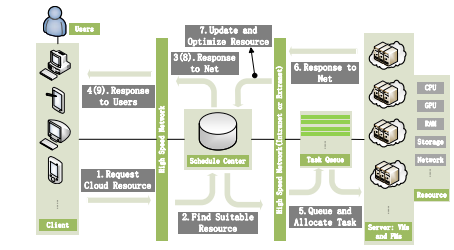
Figure 1 : Resource Management and Task Allocation Process based on Schedule Center.
원문 · CC BY 4.0 · Guangyao Zhou, Wenhong Tian, Rajkumar Buyya, Ruini Xue, Liang Song · Deep Reinforcement Learning-based Methods for Resource Scheduling in Cloud Computing: A Review and Future Directions · 원문 그림 인용 · 원본 PDF 2쪽에서 그림 영역을 추출했습니다.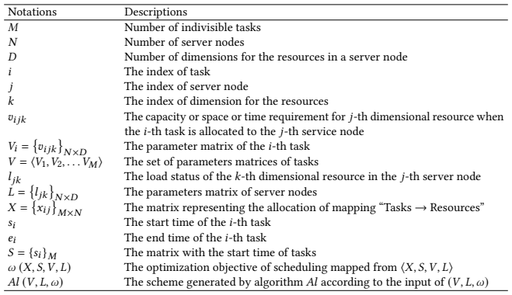
Table 1 : A List of Notations with Descriptions
원문 · CC BY 4.0 · Guangyao Zhou, Wenhong Tian, Rajkumar Buyya, Ruini Xue, Liang Song · Deep Reinforcement Learning-based Methods for Resource Scheduling in Cloud Computing: A Review and Future Directions · 원문 그림 인용 · 원본 PDF 3쪽에서 그림 영역을 추출했습니다.DRL 프레임워크의 구성
논문은 강화학습을 에이전트와 환경의 상호작용으로 보고, 상태, 행동, 환경, 피드백(보상), 전략을 기본 요소로 둡니다. 이후 행동 선택과 전략 갱신, 시간에 따라 변하는 상태, 외부 자극을 차례로 추가해 복합 구조로 확장합니다. DRL은 이 구조 가운데 의사결정기를 심층 신경망으로 바꾸어 연속적이거나 고차원인 상태 공간을 다루며, 피드백 매퍼는 목표 네트워크로 손실을 계산해 의사결정기의 파라미터를 갱신하는 방식으로 설명됩니다. 논문에서 DDQN은 행동 가치 Q 네트워크와 타깃 Q 네트워크를 함께 쓰는 대표 구조로 제시됩니다.
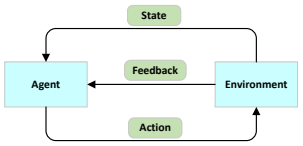
Figure 5 : A Fundamental Framework of RL.
원문 · CC BY 4.0 · Guangyao Zhou, Wenhong Tian, Rajkumar Buyya, Ruini Xue, Liang Song · Deep Reinforcement Learning-based Methods for Resource Scheduling in Cloud Computing: A Review and Future Directions · 원문 그림 인용 · 원본 PDF 9쪽에서 그림 영역을 추출했습니다.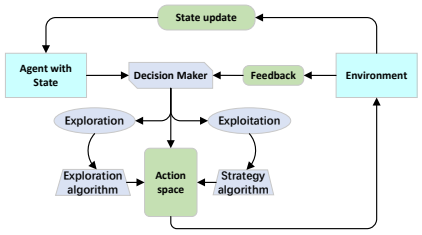
Figure 6 : A Framework of RL with Action Selection and Strategy Update.
원문 · CC BY 4.0 · Guangyao Zhou, Wenhong Tian, Rajkumar Buyya, Ruini Xue, Liang Song · Deep Reinforcement Learning-based Methods for Resource Scheduling in Cloud Computing: A Review and Future Directions · 원문 그림 인용 · 원본 PDF 9쪽에서 그림 영역을 추출했습니다.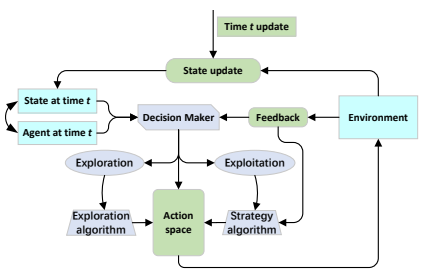
Figure 7 : A Complex Framework of RL based on Varying Agent-state.
원문 · CC BY 4.0 · Guangyao Zhou, Wenhong Tian, Rajkumar Buyya, Ruini Xue, Liang Song · Deep Reinforcement Learning-based Methods for Resource Scheduling in Cloud Computing: A Review and Future Directions · 원문 그림 인용 · 원본 PDF 9쪽에서 그림 영역을 추출했습니다.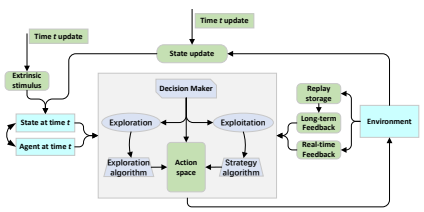
Figure 8 : A Framework of RL with Extrinsic Stimulus.
원문 · CC BY 4.0 · Guangyao Zhou, Wenhong Tian, Rajkumar Buyya, Ruini Xue, Liang Song · Deep Reinforcement Learning-based Methods for Resource Scheduling in Cloud Computing: A Review and Future Directions · 원문 그림 인용 · 원본 PDF 10쪽에서 그림 영역을 추출했습니다.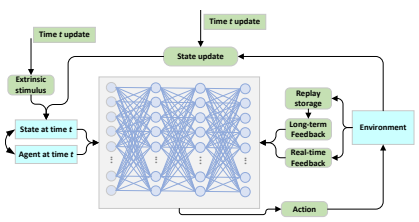
Figure 9 : A Framework of RL with DNN-based Decision- maker (Belonging to DRL).
원문 · CC BY 4.0 · Guangyao Zhou, Wenhong Tian, Rajkumar Buyya, Ruini Xue, Liang Song · Deep Reinforcement Learning-based Methods for Resource Scheduling in Cloud Computing: A Review and Future Directions · 원문 그림 인용 · 원본 PDF 10쪽에서 그림 영역을 추출했습니다.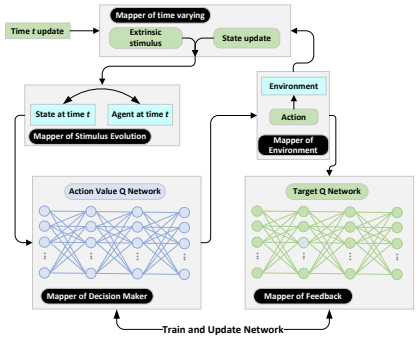
Figure 12 : A Framework of DDQN of DRL for Scheduling.
원문 · CC BY 4.0 · Guangyao Zhou, Wenhong Tian, Rajkumar Buyya, Ruini Xue, Liang Song · Deep Reinforcement Learning-based Methods for Resource Scheduling in Cloud Computing: A Review and Future Directions · 원문 그림 인용 · 원본 PDF 12쪽에서 그림 영역을 추출했습니다.검토 문헌의 비교 결과
논문은 검토한 DRL 연구들을 표로 정리하면서, 그 연구들의 실험에서 DRL이 Randomization, FCFS, Round-robin, Greedy, Q-learning, MDP 등 흔히 쓰이는 기준선보다 나은 성능을 보였다고 보고합니다. 이 결과는 논문이 자체 재측정한 실험이 아니라 검토 문헌에 보고된 결과를 요약한 것입니다. 또한 DDQN은 검토 문헌에서 가장 많이 쓰인 모델로 집계됩니다. 이 비교는 각 연구의 데이터와 기준선 조건에 따라 달라지므로, 하나의 공통 벤치마크 결과로 일반화해서는 안 됩니다.
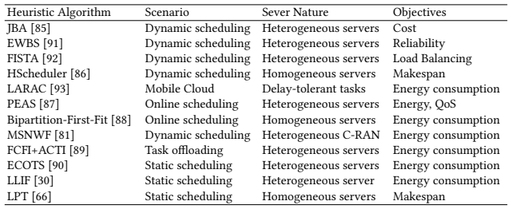
Table 2 : A Summary of Heuristic Algorithms.
원문 · CC BY 4.0 · Guangyao Zhou, Wenhong Tian, Rajkumar Buyya, Ruini Xue, Liang Song · Deep Reinforcement Learning-based Methods for Resource Scheduling in Cloud Computing: A Review and Future Directions · 원문 그림 인용 · 원본 PDF 6쪽에서 그림 영역을 추출했습니다.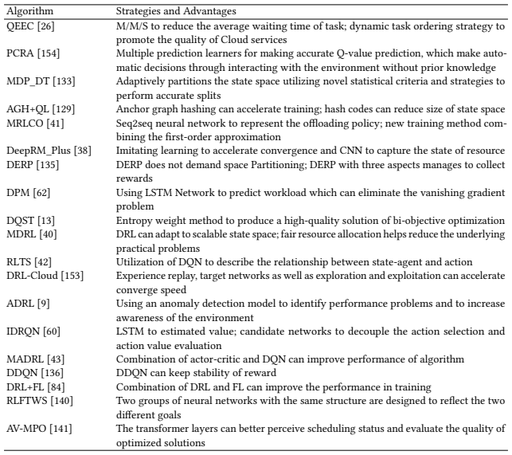
Table 9 : Summary of RL-based Algorithms in terms of Strategies and Advantages.
원문 · CC BY 4.0 · Guangyao Zhou, Wenhong Tian, Rajkumar Buyya, Ruini Xue, Liang Song · Deep Reinforcement Learning-based Methods for Resource Scheduling in Cloud Computing: A Review and Future Directions · 원문 그림 인용 · 원본 PDF 15쪽에서 그림 영역을 추출했습니다.DRL 적용의 한계와 향후 과제
논문은 DRL의 결과가 여전히 예측하기 어렵고, 최악의 경우 성능을 평가하기 어렵다고 지적합니다. 또한 경사 하강법과 Bellman 방정식이 국소 최적에 머물 수 있는 제약을 가지며, 학습 라벨이 대개 전역 최적해가 아니고 공개된 신뢰도 높은 데이터셋도 부족하다고 설명합니다. 논문은 이러한 한계를 근거로 복잡도 감소, 안정성 확보, 기준선과 벤치마크 정비 등을 향후 과제로 제시합니다. 이 논의는 저자의 검토와 해석이며, 개별 실험에서 직접 측정된 실패율로 보고된 것은 아닙니다.
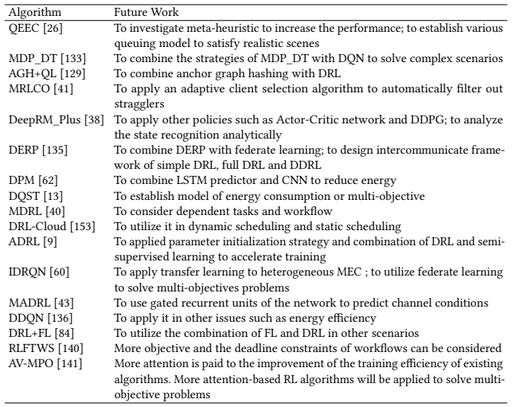
Table 10 : Future Work of RL-based Algorithms.
원문 · CC BY 4.0 · Guangyao Zhou, Wenhong Tian, Rajkumar Buyya, Ruini Xue, Liang Song · Deep Reinforcement Learning-based Methods for Resource Scheduling in Cloud Computing: A Review and Future Directions · 원문 그림 인용 · 원본 PDF 16쪽에서 그림 영역을 추출했습니다.논문 정보
- 저자
- Guangyao Zhou, Wenhong Tian, Rajkumar Buyya, Ruini Xue, Liang Song
- 학회·저널
- arXiv · 프리프린트
- 최초 공개일
- 2021년 5월 10일
- 등록일
- 2026년 11월 6일
- 수정일
- 2024년 11월 21일
- 버전
- v2
- arXiv
- 2105.04086
- DOI
- 10.1007/s10462-024-10756-9
- 분류
- cs.DC
- 원문 이용 조건
- CC BY 4.0
- 제공 범위
- 논문 정보, 해설, 허용된 원문 그림
AI 해설은 논문 원문과 별개의 설명이며 오류가 있을 수 있습니다. 원문과 그림은 각 출처의 이용 조건과 따로 표시된 권리를 따릅니다.
초록
As the quantity and complexity of information processed by software systems increase, large-scale software systems have an increasing requirement for high-performance distributed computing systems. With the acceleration of the Internet in Web 2.0, Cloud computing as a paradigm to provide dynamic, uncertain and elastic services has shown superiorities to meet the computing needs dynamically. Without an appropriate scheduling approach, extensive Cloud computing may cause high energy consumptions and high cost, in addition that high energy consumption will cause massive carbon dioxide emissions. Moreover, inappropriate scheduling will reduce the service life of physical devices as well as increase response time to users' request. Hence, efficient scheduling of resource or optimal allocation of request, that usually a NP-hard problem, is one of the prominent issues in emerging trends of Cloud computing. Focusing on improving quality of service (QoS), reducing cost and abating contamination, researchers have conducted extensive work on resource scheduling problems of Cloud computing over years. Nevertheless, growing complexity of Cloud computing, that the super-massive distributed system, is limiting the application of scheduling approaches. Machine learning, a utility method to tackle problems in complex scenes, is used to resolve the resource scheduling of Cloud computing as an innovative idea in recent years. Deep reinforcement learning (DRL), a combination of deep learning (DL) and reinforcement learning (RL), is one branch of the machine learning and has a considerable prospect in resource scheduling of Cloud computing. This paper surveys the methods of resource scheduling with focus on DRL-based scheduling approaches in Cloud computing, also reviews the application of DRL as well as discusses challenges and future directions of DRL in scheduling of Cloud computing.
원문 인용
Guangyao Zhou, Wenhong Tian, Rajkumar Buyya, Ruini Xue, Liang Song (2021). Deep Reinforcement Learning-based Methods for Resource Scheduling in Cloud Computing: A Review and Future Directions. arXiv:2105.04086v2. https://doi.org/10.1007/s10462-024-10756-9
BibTeX
@article{zhou2021deep,
  title = {{Deep Reinforcement Learning-based Methods for Resource Scheduling in Cloud Computing: A Review and Future Directions}},
  author = {Guangyao Zhou and Wenhong Tian and Rajkumar Buyya and Ruini Xue and Liang Song},
  year = {2021},
  eprint = {2105.04086},
  archivePrefix = {arXiv},
  doi = {10.1007/s10462-024-10756-9},
  url = {https://arxiv.org/abs/2105.04086v2}
}