논문 해설
IGAF: Incremental Guided Attention Fusion for Depth Super-Resolution
IGAF: 깊이 초해상도를 위한 점진적 유도 어텐션 융합
- 연구 문제 깊이 센서의 저해상도 깊이 맵을 RGB 안내로 고해상도화할 때, 기존 융합 방식은 관련 없는 RGB 구조를 과전달하여 번짐과 깊이 누출을 일으킵니다.
- 연구 방법 IGAF는 FWF로 각 모달리티 특징을 추출한 뒤, 원소별 곱셈 초기 융합과 두 개의 SAF 블록으로 RGB 구조 안내를 깊이 스트림에 반복 융합합니다.
- 주요 결과 NYU v2 ×4에서 IGAF의 RMSE는 1.12로 보고되며 SUFT의 1.14보다 낮습니다. NYU v2로만 학습한 모델은 세 개의 다른 데이터셋에서 zero-shot으로 평가되었습니다.
저해상도 깊이 맵의 한계와 가이드 기반 초해상도
깊이 센서는 소형성과 저전력 덕분에 로보틱스와 의료 영상 등에서 널리 쓰이지만, 공간 해상도가 RGB 센서보다 낮아 세밀한 장면 인식이 어렵습니다. 이 문제를 풀기 위해 고해상도 RGB 또는 회색조 영상을 안내로 사용하여 저해상도 깊이 맵을 고해상도 깊이 맵으로 복원하는 가이드 깊이 초해상도(GDSR)가 연구되어 왔습니다. 이 논문은 GDSR에서 두 모달리티의 특징을 어떻게 융합할지가 핵심이라고 봅니다.
기존 융합 방식은 대체로 특징을 단순 연결하거나 더하는 방식이었고, 이 때문에 RGB 영상의 관련 없는 구조가 깊이 맵으로 넘어가는 과전달(over-transfer)이 발생하여 번짐과 깊이 누출(depth bleeding), 구조 어긋남이 나타납니다. 저자들은 특징 추출기의 약점과 단일 단계 융합의 한계를 함께 지적하며, 이번 연구는 특징 추출과 교차 모달 융합을 반복적으로 수행하는 구조를 제안합니다.
IGAF의 특징 추출과 반복 융합 구조
IGAF는 두 입력을 받는 이중 스트림 구조입니다. RGB 안내 영상 gi와 bicubic 보간으로 RGB 영상 크기에 맞춘 업샘플링 LR 깊이 맵 LU를 각각 합성곱과 LeakyReLU에 통과시킨 뒤, 세 개의 IGAF 모듈에 넣습니다. 각 모달리티는 FWF 블록에서 특징 추출기(FE), 채널 주의(CA) 모듈, wide-focus(WF) 모듈을 거칩니다. WF는 서로 다른 팽창률의 합성곱 분기로 다중 수용장 특징을 추출합니다.
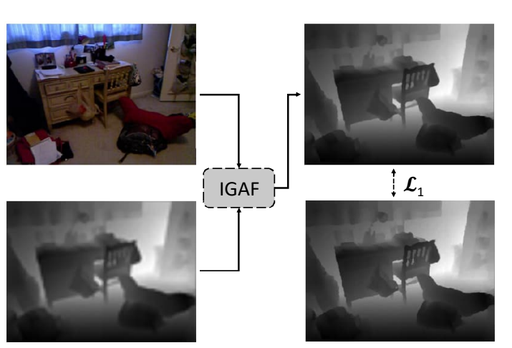
Figure 1 . Overview of the proposed multi-modal architecture for the guided depth super resolution estimation.
원문 · CC BY 4.0 · Athanasios Tragakis, Chaitanya Kaul, Kevin J. Mitchell, Hang Dai, Roderick Murray-Smith, Daniele Faccio · IGAF: Incremental Guided Attention Fusion for Depth Super-Resolution · 원문 그림 인용 · 원본 PDF 3쪽에서 그림 영역을 추출했습니다.IGAF 모듈 내부에서는 두 스트림을 원소별 곱셈으로 먼저 결합하여 초기 융합 결과를 만듭니다. 첫 번째 SAF(spatial attention fusion) 블록은 이 곱셈 결과와 RGB 스트림 특징으로 주의 가중치를 만들고 교차 곱하여 RGB 구조 안내를 얻습니다. 두 번째 SAF 블록은 이 안내 결과를 깊이 스트림과 융합합니다. 이렇게 두 단계로 나눈 점이 기존의 단일 단계 융합과 다른 핵심입니다. 최종적으로 깊이 정제 블록의 출력에 업샘플링 LR 깊이 맵을 더하는 전역 스킵 연결을 적용하여 HR 깊이 맵을 얻습니다.
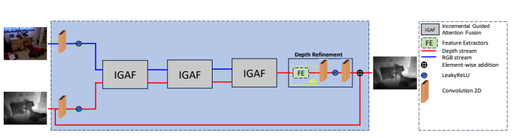
Figure 2 . The proposed multi-modal architecture utilizes information from both an LR depth map and an HR RGB image. Firstly, each modality passes through a convolutional layer followed by a LeakyReLU activation. The model utilizes the IGAF modules to combine information from the two modalities by fusing the relevant information on each stream and ignoring information that is unrelated to the depth maps. Finally, after the third IGAF module, the depth maps are refined and added using a global skip connection from the original upsampled LR depth maps. The RGB modality is used to provide guidance to estimate an HR depth map given an LR one.
원문 · CC BY 4.0 · Athanasios Tragakis, Chaitanya Kaul, Kevin J. Mitchell, Hang Dai, Roderick Murray-Smith, Daniele Faccio · IGAF: Incremental Guided Attention Fusion for Depth Super-Resolution · 원문 그림 인용 · 원본 PDF 4쪽에서 그림 영역을 추출했습니다.학습 설정과 데이터 분할
IGAF는 NYU v2 데이터셋에서만 학습됩니다. NYU v2는 1449쌍의 RGB와 깊이 영상으로 구성되며, 처음 1000쌍으로 학습하고 나머지 449쌍으로 평가합니다. 학습에는 L1 손실이 사용되며, 예측 깊이 맵과 정답 깊이 맵 차이의 절대값을 픽셀 수로 평균합니다. 학습 시 HR 영상에서 256 × 256 패치를 무작위로 잘라 사용하고, LR 깊이 맵은 bicubic 다운샘플링으로 생성합니다.
다른 세 데이터셋인 Middlebury, Lu, RGB-D-D는 학습에 사용되지 않습니다. 이 데이터셋들의 결과는 NYU v2에서 학습한 모델을 추가 미세조정 없이 적용한 zero-shot 예측입니다. 따라서 이 설정에서 확인되는 일반화는 NYU v2로 학습된 IGAF가 다른 데이터셋의 분포에서 작동하는지에 관한 것입니다.
NYU v2 비교와 zero-shot 검증
NYU v2 ×4, ×8, ×16 비교에서 IGAF의 RMSE는 각각 1.12, 2.48, 5.00입니다. ×4에서 SUFT의 RMSE는 1.14로, IGAF는 이 표의 비교 대상 중 가장 낮은 값을 보고합니다. 이 결과는 NYU v2 평가 분할에서 얻은 것입니다.
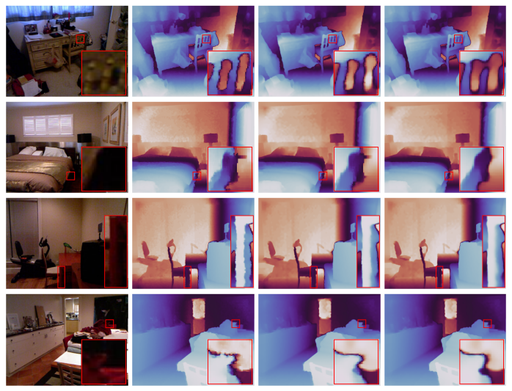
Figure 5 . Qualitative comparison between our model and SUFT [24]. The visualizations shown are for the ×8 case. Our model creates more complete depth maps as seen in (c) for rows 1 and 2. In (c), row 3 shows that our model creates sharper edges with minimal bleeding. Also, in (c), row 4 the proposed model creates less smoothing with less bleeding. (Colormap chosen for better visualization. Better seen in full-screen, with zoom-in options).
원문 · CC BY 4.0 · Athanasios Tragakis, Chaitanya Kaul, Kevin J. Mitchell, Hang Dai, Roderick Murray-Smith, Daniele Faccio · IGAF: Incremental Guided Attention Fusion for Depth Super-Resolution · 원문 그림 인용 · 원본 PDF 8쪽에서 그림 영역을 추출했습니다.
Table 1 . Results on the NYU v2 data set.
원문 · CC BY 4.0 · Athanasios Tragakis, Chaitanya Kaul, Kevin J. Mitchell, Hang Dai, Roderick Murray-Smith, Daniele Faccio · IGAF: Incremental Guided Attention Fusion for Depth Super-Resolution · 원문 그림 인용 · 원본 PDF 8쪽에서 그림 영역을 추출했습니다.RGB-D-D, Middlebury, Lu에서는 NYU v2로 학습한 모델을 zero-shot으로 평가하며, 각 데이터셋마다 평가 쌍 수가 다릅니다. Middlebury는 30쌍, Lu는 6쌍, RGB-D-D는 405쌍을 사용합니다. 이 결과들은 각 표의 개별 비교 조건에서 읽어야 하며, 데이터셋 사이의 값을 하나의 공통 프로토콜 결과로 합치지 않습니다.

Table 2 . Results on the RGB-D-D data set.
원문 · CC BY 4.0 · Athanasios Tragakis, Chaitanya Kaul, Kevin J. Mitchell, Hang Dai, Roderick Murray-Smith, Daniele Faccio · IGAF: Incremental Guided Attention Fusion for Depth Super-Resolution · 원문 그림 인용 · 원본 PDF 9쪽에서 그림 영역을 추출했습니다.
Table 3 . Results on the Lu data set.
원문 · CC BY 4.0 · Athanasios Tragakis, Chaitanya Kaul, Kevin J. Mitchell, Hang Dai, Roderick Murray-Smith, Daniele Faccio · IGAF: Incremental Guided Attention Fusion for Depth Super-Resolution · 원문 그림 인용 · 원본 PDF 9쪽에서 그림 영역을 추출했습니다.
Table 5 . Results on the Middlebury data set.
원문 · CC BY 4.0 · Athanasios Tragakis, Chaitanya Kaul, Kevin J. Mitchell, Hang Dai, Roderick Murray-Smith, Daniele Faccio · IGAF: Incremental Guided Attention Fusion for Depth Super-Resolution · 원문 그림 인용 · 원본 PDF 9쪽에서 그림 영역을 추출했습니다.융합 방식과 구성 요소에 대한 절제 검증
절제 실험은 NYU v2 ×4 설정에서 수행됩니다. IGAF 모듈을 덧셈 융합 또는 연결 융합으로 바꾼 변형은 RMSE가 각각 1.23과 1.22로, IGAF의 1.12보다 높습니다. 이 결과는 제안된 주의 기반 융합을 유지하는 것이 이 설정에서 더 낮은 오차를 준다는 관찰입니다.

Table 6 . Demonstrating the importance of the IGAF module.
원문 · CC BY 4.0 · Athanasios Tragakis, Chaitanya Kaul, Kevin J. Mitchell, Hang Dai, Roderick Murray-Smith, Daniele Faccio · IGAF: Incremental Guided Attention Fusion for Depth Super-Resolution · 원문 그림 인용 · 원본 PDF 9쪽에서 그림 영역을 추출했습니다.또한 스킵 연결 위치 변경, IGAF 모듈 추가, 가중치 없는 덧셈, MLP 층 축소, WF 제거를 비교합니다. 이 변형들의 RMSE는 1.14, 1.14, 1.17, 1.15, 1.14이며 전체 모델은 1.12입니다. 저자들은 추가 모듈이 파라미터를 늘려 과적합을 일으킬 수 있다고 해석합니다. 이 해석은 원문의 설명이며 별도 과적합 측정은 제시되지 않습니다.
결과의 적용 범위
결과는 LR 깊이 맵을 HR 실측에서 bicubic 다운샘플링으로 만든 설정에서 보고됩니다. RGB-D-D의 real-world manner 설정은 HR과 LR이 서로 다른 센서로 얻어진 별도 평가이며, 이 설정의 결과는 bicubic 다운샘플링 설정과 같은 조건으로 묶지 않습니다.

Table 4 . Results on the “real-world manner” RGB-D-D data set.
원문 · CC BY 4.0 · Athanasios Tragakis, Chaitanya Kaul, Kevin J. Mitchell, Hang Dai, Roderick Murray-Smith, Daniele Faccio · IGAF: Incremental Guided Attention Fusion for Depth Super-Resolution · 원문 그림 인용 · 원본 PDF 9쪽에서 그림 영역을 추출했습니다.주요 지표는 RMSE이며, 절제 실험은 NYU v2 ×4 한 설정에 한정됩니다. 따라서 이 결과만으로 모든 깊이 센서, 모든 데이터셋, 모든 배율에서 같은 효과가 나타난다고 말할 수 없습니다. 원문은 zero-shot 결과가 일반화 능력을 보여준다고 설명하지만, 이는 조사한 네 개의 평가 데이터셋과 NYU v2 학습 설정에 한정됩니다.
논문 정보
- 저자
- Athanasios Tragakis, Chaitanya Kaul, Kevin J. Mitchell, Hang Dai, Roderick Murray-Smith, Daniele Faccio
- 학회·저널
- arXiv · 프리프린트
- 최초 공개일
- 2025년 1월 3일
- 등록일
- 2026년 11월 6일
- 수정일
- 2025년 1월 3일
- 버전
- v1
- arXiv
- 2501.01723
- DOI
- 10.3390/s25010024
- 분류
- cs.CV
- 원문 이용 조건
- CC BY 4.0
- 제공 범위
- 논문 정보, 해설, 허용된 원문 그림
AI 해설은 논문 원문과 별개의 설명이며 오류가 있을 수 있습니다. 원문과 그림은 각 출처의 이용 조건과 따로 표시된 권리를 따릅니다.
초록
Accurate depth estimation is crucial for many fields, including robotics, navigation, and medical imaging. However, conventional depth sensors often produce low-resolution (LR) depth maps, making detailed scene perception challenging. To address this, enhancing LR depth maps to high-resolution (HR) ones has become essential, guided by HR-structured inputs like RGB or grayscale images. We propose a novel sensor fusion methodology for guided depth super-resolution (GDSR), a technique that combines LR depth maps with HR images to estimate detailed HR depth maps. Our key contribution is the Incremental guided attention fusion (IGAF) module, which effectively learns to fuse features from RGB images and LR depth maps, producing accurate HR depth maps. Using IGAF, we build a robust super-resolution model and evaluate it on multiple benchmark datasets. Our model achieves state-of-the-art results compared to all baseline models on the NYU v2 dataset for $\times 4$, $\times 8$, and $\times 16$ upsampling. It also outperforms all baselines in a zero-shot setting on the Middlebury, Lu, and RGB-D-D datasets. Code, environments, and models are available on GitHub.
원문 인용
Athanasios Tragakis, Chaitanya Kaul, Kevin J. Mitchell, Hang Dai, Roderick Murray-Smith, Daniele Faccio (2025). IGAF: Incremental Guided Attention Fusion for Depth Super-Resolution. arXiv:2501.01723v1. https://doi.org/10.3390/s25010024
BibTeX
@article{tragakis2025igaf,
  title = {{IGAF: Incremental Guided Attention Fusion for Depth Super-Resolution}},
  author = {Athanasios Tragakis and Chaitanya Kaul and Kevin J. Mitchell and Hang Dai and Roderick Murray-Smith and Daniele Faccio},
  year = {2025},
  eprint = {2501.01723},
  archivePrefix = {arXiv},
  doi = {10.3390/s25010024},
  url = {https://arxiv.org/abs/2501.01723v1}
}