논문 해설
Data Contamination Quiz: A Tool to Detect and Estimate Contamination in Large Language Models
데이터 오염 퀴즈: 대규모 언어 모델의 오염을 탐지하고 추정하는 도구
- 연구 문제 블랙박스 LLM에서 학습 데이터 원문의 노출을 탐지하고 그 수준을 추정하는 문제를 다룹니다.
- 연구 방법 데이터 인스턴스와 단어 수준 섭동을 객관식 선택지로 구성하고, 위치 편향을 보정한 퀴즈로 오염 수준의 범위를 추정합니다.
- 주요 결과 통제된 오염 실험과 실제 환경 평가에서 DCQ는 복제 기반 방법보다 큰 오염 범위를 보고했습니다. 예를 들어 XSum에서 최대 탐지 수준은 95.00%였고 복제 기반 방법은 7.00%를 보였습니다.
문제 설정: 블랙박스 LLM의 데이터 오염
대규모 언어 모델은 웹 데이터로 학습되는 경우가 많아, 벤치마크 테스트 데이터가 학습 데이터에 포함되는 데이터 오염이 성능 평가를 왜곡할 수 있습니다. 학습 데이터에 접근할 수 없고 모델의 가중치나 로짓도 볼 수 없는 블랙박스 환경에서는 어떤 인스턴스가 얼마나 노출되었는지 확인하기 어렵습니다. 이 논문은 이런 조건에서 원문 데이터 인스턴스가 학습에 쓰였는지 탐지하고, 그 수준을 범위로 추정하는 방법인 Data Contamination Quiz(DCQ)를 제안합니다. 기존 확률·임계값 기반 방법은 과제나 언어에 특화되거나 모델 내부 정보를 요구하는 경우가 있어, 이 논문은 출력이 단일 글자로 제한된 객관식 질문으로 문제를 바꿉니다.
DCQ의 객관식 퀴즈 구성
DCQ는 데이터셋 파티션에서 추출한 원래 인스턴스 하나마다 GPT-4로 네 개의 단어 수준 섭동을 생성합니다. 섭동은 의미와 문장 구조를 유지하면서 단어를 문맥상 동의어로 바꾼 것입니다. 원래 인스턴스와 네 섭동을 다섯 개 선택지로 묶고, 마지막 선택지는 '해당 없음'으로 둡니다. 모델이 원래 인스턴스를 일관되게 고르면, 의미가 거의 같은 선택지 사이에서 정확한 표현을 알아보았다는 뜻이므로 암기와 사전 노출의 신호로 해석합니다. 이 해석은 저자의 가정이며, 논문은 이를 암기와 오염을 같은 개념으로 쓰는 전제 위에서 다룹니다. 출력은 A부터 E 중 한 글자로 제한되어 확률적 생성 출력이 줄어듭니다.
위치 편향의 탐지와 보정
모델은 선택지의 위치에 따라 특정 선택지를 더 자주 고르는 위치 편향을 보입니다. 이를 먼저 Bias Detector Quiz(BDQ)로 확인합니다. BDQ에는 원래 인스턴스를 넣지 않고 네 섭동과 '해당 없음' 선택지만 둡니다. 각 선택지의 선택 빈도가 무작위 기준보다 낮은 위치를 비선호 선택지로 정의합니다. 이 기준은 k개 질문의 다섯 선택지 퀴즈에서 ⌈k/5⌉회보다 적게 선택된 경우입니다. 마지막 '해당 없음' 선택지는 제외합니다. 다음으로 Bias Compensator Quiz(BCQ)는 BDQ의 한 선택지를 원래 인스턴스로 바꾸고, 원래 인스턴스를 비선호 위치들에 순열하며 여러 번 실행합니다.
원래 인스턴스를 한 위치에만 두면 그 위치의 편향 때문에 과대 또는 과소 추정이 생길 수 있으므로, 비선호 위치에 배치해 과대 추정을 피하고 순열로 과소 추정을 줄입니다.
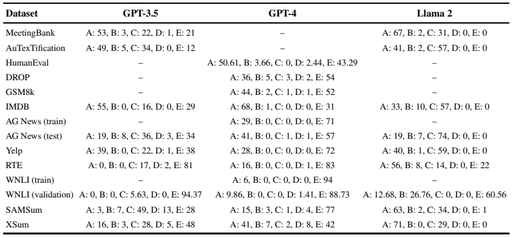
Table 6 : Positional biases detected using the Bias Detector Quiz (BDQ) across all datasets and models in this work. Although these proportions may vary slightly a cross different runs due to the probabilistic nature of LLMs, the overall biases remain consistent, as dis cussed in Section 4 and shown in Figure 2. The number next to each option represents the percentage of t imes that option was selected in BDQ.
원문 · CC BY 4.0 · Shahriar Golchin, Mihai Surdeanu · Data Contamination Quiz: A Tool to Detect and Estimate Contamination in Large Language Models · 원문 그림 인용 · 원본 PDF 21쪽에서 그림 영역을 추출했습니다.최대·최소 오염 수준 추정
각 BCQ에서 원래 인스턴스를 고른 정답 비율의 최댓값을 최대 탐지 오염 수준으로 보고합니다. 최소 수준은 Cohen's Kappa 형태 κ = (p_o − p_e)/(1 − p_e)로 계산합니다. 여기서 p_o는 최고 성능을 낸 BCQ에서 정답 위치를 고른 비율이고, p_e는 BDQ에서 같은 위치를 고른 비율입니다. 즉 BDQ에서 그 위치를 우연히 자주 고르는 편향을 빼고 남는 일치 정도로 최소값을 얻습니다. 최댓값은 BCQ의 최고 성능이라는 점, 최소값은 우연 일치를 보정한 값이라는 점이 다릅니다. 논문은 이 두 값을 함께 보고하여 오염 수준의 범위를 제시합니다.
위치 편향 보정과 통제된 오염 실험
먼저 AG News와 WNLI 파티션에서 원래 인스턴스를 비선호 위치에 두었을 때 선택 빈도가 실제로 올라가는지 확인합니다. 새 섭동으로 같은 위치를 바꾼 대조군에서는 BDQ의 선택 분포가 대체로 유지되었으며, 원래 인스턴스로 바꾸었을 때 그 위치의 선택 빈도가 뚜렷하게 늘었습니다. 이는 모델이 원래 인스턴스를 알아보았다는 해석을 지지합니다. 이후 MeetingBank와 AuTexTification으로 GPT-3.5와 Llama 2를 체계적으로 오염시키고 100%, 50%, 0% 설정에서 100개 인스턴스를 사용했습니다. 이 설정에서 DCQ의 범위는 100% 오염에서 [85.87, 87.00]%였고 0%에서는 [0.00, 3.00]%로 나타났습니다.
복제 기반 방법은 같은 설정에서 1.00%와 0.00%를 보였습니다.
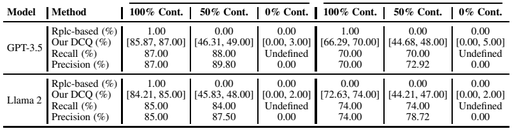
Table 1 : Results from our DCQ after introducing systematic c ontamination to GPT-3.5 and Llama 2. The table lists the minimum and maximum detected contamination levels. Results are also compared with the replication-based (rplc-based) method by Golchin and Surdeanu (2024). Note that, in settings with no contamination, Recall cannot be calculated, as both True Positives and False Negatives are zero.
원문 · CC BY 4.0 · Shahriar Golchin, Mihai Surdeanu · Data Contamination Quiz: A Tool to Detect and Estimate Contamination in Large Language Models · 원문 그림 인용 · 원본 PDF 9쪽에서 그림 영역을 추출했습니다.실제 환경 평가와 복제 기반 방법 비교
통제된 오염을 넘어 IMDB, AG News, Yelp, RTE, WNLI, SAMSum, XSum의 테스트 또는 검증 분할에서 GPT-4, GPT-3.5, Llama 2를 평가합니다. 비교 기준은 Golchin and Surdeanu(2024)의 복제 기반 방법입니다. 이 방법은 실제 정답 오염률이 알려지지 않은 조건에서 비교되었으므로, 결과는 정답과의 일치가 아니라 두 방법이 탐지하는 범위의 차이로 읽어야 합니다. XSum에서 DCQ의 최대 탐지 수준은 GPT-4 기준 95.00%였고 복제 기반 방법은 7.00%를 보고했습니다. 논문은 복제 기반 방법이 높은 암기 수준에서만 이진 탐지에 효과적이라고 해석합니다.
이 해석은 저자의 주장이며 이 실험 조건에 한정됩니다.
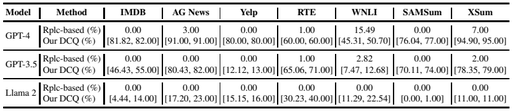
Table 3 : Estimated data contamination levels for GPT-4, GPT -3.5, and Llama 2 using our DCQ across test/validation partitions of seven datasets, based on a ma ximum of 100 subsampled instances. Results are also compared with the replication-based (rplc-based) method by Golchin and Surdeanu (2024).
원문 · CC BY 4.0 · Shahriar Golchin, Mihai Surdeanu · Data Contamination Quiz: A Tool to Detect and Estimate Contamination in Large Language Models · 원문 그림 인용 · 원본 PDF 10쪽에서 그림 영역을 추출했습니다.적용 범위와 한계
이 방법은 원문 그대로의 verbatim 오염만 추정합니다. 메타데이터와 같은 비원문 형태의 오염은 다루지 않습니다. 위치 편향은 모델과 데이터셋에 따라 다르며, 논문의 부록 표에서 Llama 2의 특정 데이터셋 편향이 확인되었으나 이를 모든 모델에 전이되는 편향으로 볼 수는 없습니다. 또한 DCQ는 모델이 안전 필터를 우회하는 효과를 보고하지만, 이것이 항상 저작권 콘텐츠의 노출을 증명하지는 않습니다. 실험은 정해진 데이터셋, 모델 버전, 100개 인스턴스의 subsample에 기반하므로 다른 과제나 전체 데이터셋으로 일반화하려면 추가 검증이 필요합니다.
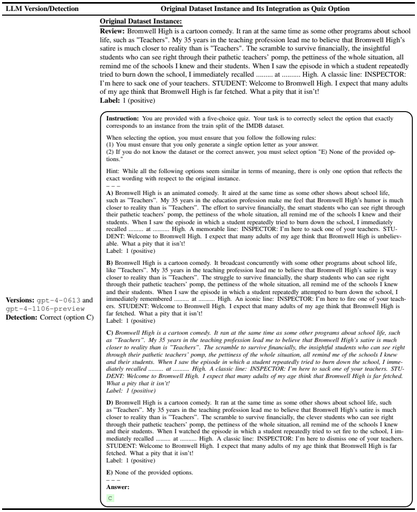
Table 5 : An illustration of a quiz question posed when taking our DCQ to both June and November snapshots of GPT-4. While the generated response is correct (option C), this approach—unlike the replication-based strategy (Golchin and Surdeanu 2024 )—proves to be effective for both snapshots with- out triggering any content-related filters set by the model d eveloper.
원문 · CC BY 4.0 · Shahriar Golchin, Mihai Surdeanu · Data Contamination Quiz: A Tool to Detect and Estimate Contamination in Large Language Models · 원문 그림 인용 · 원본 PDF 19쪽에서 그림 영역을 추출했습니다.논문 정보
- 저자
- Shahriar Golchin, Mihai Surdeanu
- 학회·저널
- arXiv · 프리프린트
- 최초 공개일
- 2023년 11월 10일
- 등록일
- 2026년 11월 6일
- 수정일
- 2025년 4월 28일
- 버전
- v7
- arXiv
- 2311.06233
- 분류
- cs.CL · cs.AI · cs.LG
- 원문 이용 조건
- CC BY 4.0
- 제공 범위
- 논문 정보, 해설, 허용된 원문 그림
AI 해설은 논문 원문과 별개의 설명이며 오류가 있을 수 있습니다. 원문과 그림은 각 출처의 이용 조건과 따로 표시된 권리를 따릅니다.
초록
We propose the Data Contamination Quiz (DCQ), a simple and effective approach to detect data contamination in large language models (LLMs) and estimate the amount of it. Specifically, we frame data contamination detection as a series of multiple-choice questions, devising a quiz format wherein three perturbed versions of each instance, subsampled from a specific dataset partition, are created. These changes only include word-level perturbations. The generated perturbations, along with the original dataset instance, form the options in the DCQ, with an extra option accommodating the selection of none of the provided options. Given that the only distinguishing signal among the options is the exact wording with respect to the original dataset instance, an LLM, when tasked with identifying the original dataset instance, gravitates towards selecting the original one if it has been exposed to it. While accounting for positional biases in LLMs, the quiz performance reveals the contamination level for the tested model with the dataset partition to which the quiz pertains. Applied to various datasets and LLMs, under controlled and uncontrolled contamination, our findings, while fully lacking access to training data and model parameters, suggest that DCQ achieves state-of-the-art results and uncovers greater contamination levels through memorization compared to existing methods. Also, it proficiently bypasses more safety filters, especially those set to avoid generating copyrighted content.
원문 인용
Shahriar Golchin, Mihai Surdeanu (2023). Data Contamination Quiz: A Tool to Detect and Estimate Contamination in Large Language Models. arXiv:2311.06233v7. https://arxiv.org/abs/2311.06233v7
BibTeX
@misc{golchin2023data,
  title = {{Data Contamination Quiz: A Tool to Detect and Estimate Contamination in Large Language Models}},
  author = {Shahriar Golchin and Mihai Surdeanu},
  year = {2023},
  eprint = {2311.06233},
  archivePrefix = {arXiv},
  url = {https://arxiv.org/abs/2311.06233v7}
}