Paper commentary
Geometric Feature-Based Facial Expression Recognition in Image Sequences Using Multi-Class AdaBoost and Support Vector Machines
- Problem Facial expressions must be recognized from image sequences without texture cues, and the pool of landmark-derived candidate features is too large to use directly, so the discriminative subset has to be selected automatically.
- Method Landmarks are initialized with elastic bunch graph matching and tracked with Gabor jets. Multi-class AdaBoost selects feature vectors using DTW-based weak classifiers, and the selected features are either classified directly or reduced and passed to an RBF-kernel SVM.
- Results Reached 95.17% recognition accuracy on CK+ with multi-class AdaBoost and DTW, and 97.35% with an SVM on boosted features, both under five-fold cross validation.
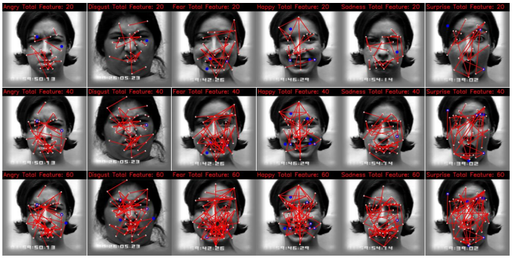
Figure 7 . Grouping of landmarks into different regions according to the facial geometry.
Original paper · CC BY 4.0 · Deepak Ghimire, Joonwhoan Lee · Geometric Feature-Based Facial Expression Recognition in Image Sequences Using Multi-Class AdaBoost and Support Vector Machines · Original paper figure · Extracted the figure area from page 12 of the original PDF.Why geometry alone on image sequences
The study keeps only geometry: landmarks are followed from a neutral state to a fully expressed state, and no texture information enters the classifier. Tracking many landmarks produces a large set of candidate features, and only some of them carry information that separates one expression from the others, so the central problem becomes choosing that subset.
The pipeline therefore has three parts: landmark initialization and tracking, normalization of the trajectories, and then feature construction, selection and classification.
From the first frame to normalized landmark trajectories
Initialization starts from a bunch graph, in which each node holds several model Gabor jets for one landmark, following the elastic bunch graph approach of Wiskott et al. [34]. A Haar-like detector first finds the face, then the two eye centers, and the remaining landmarks are placed from the known eye coordinates and refined by matching a Gabor jet against the bunch graph.
This gives 52 landmarks on the neutral frame.
In each following frame, the displacement of every landmark is estimated from the Gabor jet stored for the previous frame, and the jet is then updated for the next step.
Normalization first computes an average neutral-frame position for every landmark over all sequences. Each sequence is then shifted by the difference between its own first-frame position and that average, so every sequence starts from the same coordinates and follows its own displacements from there.
Building the feature pool
Each trajectory is resampled to N = 15 frames by linear interpolation, so that every sequence has the same length during prototype construction. Equal lengths are needed only while the prototypes are built; at classification time the DTW comparison tolerates sequences of different lengths.
The first feature type is built per landmark: each coordinate in a sequence is taken relative to the landmark's first-frame coordinate, which gives one type one feature vector per landmark, so L = 52.
The second feature type is built per pair of landmarks: the distance and the angle between the two landmarks are computed in each frame and then subtracted from their first-frame values. With L = 52 landmarks there are M = L × (L-1)/2 = 1,326 pair features, so the pool holds L + M = 1,378 feature vectors in total.
AdaBoost with a DTW weak classifier
AdaBoost combines weak classifiers into a stronger one and also selects features, with each new choice depending on the features already picked. The study uses the multi-class variant of Jhu et al. [40], which is trained with a multi-class exponential loss, and the weak classifier is a DTW comparison rather than a learned classifier.
For each expression class the prototype is the element-wise median of that class's training feature vectors, so an outlier moves it less than it would move a mean. The method assumes each class is unimodal, and the authors state that the experimental results support this assumption.
A weak classifier uses one feature f: the input sequence x is assigned to the class whose prototype lies at the smallest DTW distance from it. DTW aligns two sequences non-linearly in time, so differently long sequences can be compared and the same shape can match even when it is shifted along the time axis.
In each boosting round the feature with the lowest weighted error is chosen, and its weight is a log-ratio of its accuracy to its error plus an extra term log(K-1) that comes from the number of classes K. Weights are then updated, and the final strong classifier assigns the class that collects the largest weighted sum of the selected weak votes.
To analyze one expression at a time, that expression is treated as the positive class and the remaining five as the negative class. The positive class keeps one prototype, while the negative class keeps one prototype per expression, and a feature votes positive only when the positive prototype gives the smallest DTW distance among all prototypes.
Multi-class AdaBoost accuracy and confusions
The study uses 315 of the 593 CK+ sequences from 123 subjects, the ones that fit the six-class prototypic definition. Evaluation uses five-fold cross validation: each expression class is split into five subsets, each subset in turn is the test set, and the accuracies are averaged over the five trials.
Accuracy rises as more feature vectors are added, up to a limit, and the best value of 95.17% is reached with a minimum of 125 feature vectors.
With 75 feature vectors the per-class rates are 90 for anger, 95 for disgust, 84 for fear, 96.92 for happiness, 90 for sadness and 98.75 for surprise. With 125 feature vectors the rates are 95 for anger, 95 for disgust, 92 for fear, 96.92 for happiness, 93.33 for sadness and 98.75 for surprise.
The main confusions are between fear and happiness, which the authors attribute to similar mouth motion, and some disgust samples are assigned to happiness. The authors also note that sadness and anger are hard to tell apart even for human observers.
Looking at single weak classifiers, the average confusion scores show that no individual feature classifies well on its own. For example, 42.52% of the feature vectors classify anger correctly, while 59.51% of them classify surprise correctly.
SVM on boosted features
For the SVM route, each selected type one feature contributes its maximum displacement in the x and y directions, and each selected type two feature contributes its maximum change in distance and in angle. Each selected feature therefore contributes two values, so L selected features give a vector of dimension L × 2.
The SVM is an RBF-kernel classifier trained with libsvm, and its parameters are chosen by grid search.
More than 90% of the AdaBoost-selected features are type two features, which the authors take to show that landmark movements are not independent of each other.
The confusion matrices for 100 selected features show anger at 92.5 and sadness at 87.67, with sadness also confused with anger at 6.67.
Landmark regions behind the selected features
The landmarks are grouped into face regions according to facial geometry, so that the selected features can be read by region rather than by individual landmark.
Region R2, covering the eyes and eyebrows, contributes to the features of every expression, and pairs R1-R2 and R2-R3 appear for almost all expressions. Region R6, the mouth, contributes for anger and sadness only. Table 1 lists the single regions and region pairs selected for each expression.
In Figure 6, anger, sadness and disgust features tend to come from near landmark pairs, while fear, happiness and surprise features tend to come from far pairs. The authors note that the mouth stays closed and moves less for anger, disgust and sadness than for fear, happiness and surprise, and that reading the regions off the individual features is hard, which motivated the grouping.
Reported CK+ accuracies of other methods
The authors describe the 95.17% and 97.35% accuracies as comparable with the best reported CK+ accuracies. The method in reference [22] reports 99.7%, but its landmarks are placed manually and it uses more landmarks, whereas the proposed system initializes its landmarks automatically.
The LBP and SVM method of reference [7] reports 96.26%, but it was tested only on manually aligned sequences. The method of reference [44] reports 97.16% by selecting discriminative landmarks. Reference [9] reports 94.88% on a single image with LBP and kernel discriminant isomap, reference [14] reports 93.69% with local directional patterns, and reference [45] reports 97.14% with LBP and a sparse representation classifier.
Apart from the system in [22], the authors place their result at the second-best accuracy known to them, and these figures are the accuracies those works report rather than results obtained under this study's protocol.
Limitations
All reported experiments use the CK+ database, and the six-class study uses 315 of its 593 sequences. Only the CK+ database is used in the experiments, so the accuracies are not tested on other databases.
Fear and happiness are confused with each other, and the authors attribute this to similar mouth motion. The unimodal prototype assumption is supported only by the reported results, not by a separate test of unimodality.
The system in reference [22] reaches a higher accuracy, but that comparison is a different landmark setup and is not a controlled comparison.
Paper info
- Authors
- Deepak Ghimire, Joonwhoan Lee
- Venue
- arXiv · Preprint
- First published
- 2016-4-12
- Added
- 2026-11-5
- Updated
- 2016-4-12
- Version
- v1
- arXiv
- 1604.03225
- DOI
- 10.3390/s130607714
- Category
- cs.CV
- Original paper terms
- CC BY 4.0
- What we show
- Paper info, commentary and permitted figures from the original paper
AI commentary is a separate explanation from the original paper and may contain errors. The original paper and figures follow each source's terms of use and any rights noted separately.
Abstract
Facial expressions are widely used in the behavioral interpretation of emotions, cognitive science, and social interactions. In this paper, we present a novel method for fully automatic facial expression recognition in facial image sequences. As the facial expression evolves over time facial landmarks are automatically tracked in consecutive video frames, using displacements based on elastic bunch graph matching displacement estimation. Feature vectors from individual landmarks, as well as pairs of landmarks tracking results are extracted, and normalized, with respect to the first frame in the sequence. The prototypical expression sequence for each class of facial expression is formed, by taking the median of the landmark tracking results from the training facial expression sequences. Multi-class AdaBoost with dynamic time warping similarity distance between the feature vector of input facial expression and prototypical facial expression, is used as a weak classifier to select the subset of discriminative feature vectors. Finally, two methods for facial expression recognition are presented, either by using multi-class AdaBoost with dynamic time warping, or by using support vector machine on the boosted feature vectors. The results on the Cohn-Kanade (CK+) facial expression database show a recognition accuracy of 95.17% and 97.35% using multi-class AdaBoost and support vector machines, respectively.
Quote from the paper
Deepak Ghimire, Joonwhoan Lee (2016). Geometric Feature-Based Facial Expression Recognition in Image Sequences Using Multi-Class AdaBoost and Support Vector Machines. arXiv:1604.03225v1. https://doi.org/10.3390/s130607714
BibTeX
@article{ghimire2016geometric,
  title = {{Geometric Feature-Based Facial Expression Recognition in Image Sequences Using Multi-Class AdaBoost and Support Vector Machines}},
  author = {Deepak Ghimire and Joonwhoan Lee},
  year = {2016},
  eprint = {1604.03225},
  archivePrefix = {arXiv},
  doi = {10.3390/s130607714},
  url = {https://arxiv.org/abs/1604.03225v1}
}