Paper commentary
Learning Problem-agnostic Speech Representations from Multiple Self-supervised Tasks
- Problem Speech signals are long, high-dimensional and hierarchical, so a single self-supervised task is hard to design so that it yields general representations.
- Method A shared SincNet-based convolutional encoder is trained jointly with seven small worker networks, four regression and three binary discrimination, whose losses are averaged.
- Results PASE-FineTuned with an MLP classifier reached 97.7% accuracy on INTERFACE emotion recognition, and with an RNN classifier 85.3% phoneme accuracy on TIMIT.
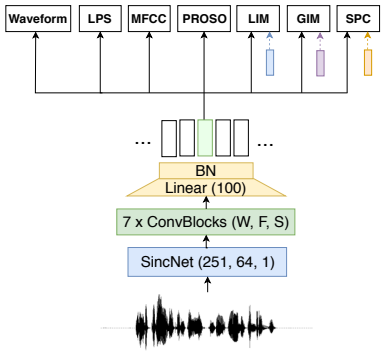
Figure 1 : The PASE architecture, with the considered workers.
Original paper · CC BY 4.0 · Santiago Pascual, Mirco Ravanelli, Joan Serrà, Antonio Bonafonte, Yoshua Bengio · Learning Problem-agnostic Speech Representations from Multiple Self-supervised Tasks · Original paper figure · Extracted the figure area from page 2 of the original PDF.Why one self-supervised task is not enough for speech
Supervised representations depend on large annotated corpora, and when they are learned for one problem they tend to carry that problem's bias into other uses. Self-supervised learning avoids annotation by deriving targets from the signal itself, through known transforms or sampling strategies. For speech this is hard, because the signal is high-dimensional and variable in length and has a layered structure of phonemes, syllables and words that no single pretext target is expected to expose.
The authors respond by letting several self-supervised tasks shape one encoder at the same time. Each task is read as a different soft constraint on the representation, and a representation that satisfies all of them is less likely to keep features that only suit the training data.
A shared encoder with workers
PASE maps the raw waveform through one encoder, and the resulting representation is passed to seven workers that work side by side. Regression workers predict signal-derived features, and discrimination workers separate positive from negative encoded samples. Figure 1 shows this layout with the workers attached to the encoder.
Each worker is a shallow network with a single hidden layer of 256 units and PReLU activation, and the waveform worker is the exception. Keeping the workers weak is deliberate: the high-level structure then has to be found by the encoder, not by the classifier heads.
The encoder and the workers are trained together, and the total loss is the average of the individual worker costs. Because the encoder receives the averaged gradients from all workers, its update moves toward a compromise between the worker losses.
Encoder: SincNet front end and strided convolutions
The first layer is SincNet, which convolves the waveform with parameterized sinc functions that act as rectangular band-pass filters. The number of its parameters does not grow with kernel size, which is why a wide kernel of 251 samples is used here with 64 filters and stride 1.
Seven one-dimensional convolutional blocks follow, each with batch normalization and a PReLU activation. Their kernel widths are 20, 11, 11, 11, 11, 11 and 11, their filter counts rise from 64 to 512, and their strides are 10, 2, 1, 2, 1, 2 and 2. A final convolution with kernel width 1 projects the 512 features to 100-dimensional embeddings.
Strided convolutions decimate the signal by a factor of 160, so the number of output frames is the number of input samples divided by 160. At 16 kHz this gives a 10 ms frame step, close to common speech front ends, and the encoder has a receptive field of about 150 ms. A non-affine batch normalization then normalizes each embedding dimension by its mean and variance.
Worker targets and objectives
Regression workers are trained with mean squared error on standardized targets, except the waveform worker, which uses an L1 loss. The waveform worker reconstructs the input through three deconvolutional blocks with strides 4, 4 and 10, which upsample the encoder output by a factor of 160. The L1 choice is motivated by the peaky, zero-centred speech distribution with prominent outliers.
The log power spectrum target uses a 25 ms Hamming window, a 10 ms step and 1025 frequency bins per frame. The MFCC target has 20 coefficients computed from 40 mel filter banks. The prosody target has four per-frame features: the interpolated log fundamental frequency, voiced or unvoiced probability, zero-crossing rate and energy.
Discrimination workers draw an anchor from a random sentence, a positive sample and a negative sample, and an MLP scores the pairs. The objective is written as the expectation over positive samples of log g(x_a, x_p) plus the expectation over negative samples of log(1 - g(x_a, x_n)), where g is the discriminator. The printed formula has no leading minus sign, although the text says it is minimized, so the sign is kept as printed here.
Encoder and discriminators cooperate rather than compete.
The LIM worker takes the positive from the same sentence as the anchor and the negative from another sentence, which likely has a different speaker. The GIM worker averages the encoded frames of a random chunk of 1 s into a global anchor, with the positive from another chunk of the same sentence and the negative from a different sentence.
The SPC worker uses a single frame as anchor, five future frames as positives and five past frames as negatives, sampled outside the 150 ms receptive field and up to 500 ms away. Unlike contrastive predictive coding, its negatives come from the past of the same sentence.
Training and reuse of the encoder
Adam updates the encoder and workers with an initial learning rate of 5·10−4, halved every 30 epochs. Mini-batches contain 32 waveform chunks of 16 k samples, which is 1 s at 16 kHz, and training runs for 150 epochs until the validation losses plateau. Regression targets are standardized with training-set mean and variance before the MSE is computed.
After pre-training, the encoder can be frozen and used as a feature extractor for a classifier, which is the PASE-Frozen setting. Fine-tuning updates the encoder and the classifier together on the target task, which is the PASE-FineTuned setting. A PASE-Supervised model is trained on the target task from random initialization, as a reference for the value of self-supervised pre-training.
Corpora and evaluation tasks
Self-supervised training uses a LibriSpeech portion taken from earlier work, with about 15 s of material for each of 2484 speakers.
Speaker identification uses VCTK, which has 109 speakers with English accents, and only 11 s of training material per speaker. Emotion recognition uses the English part of INTERFACE, with about 3 h for training, 40 min for validation and 30 min for test. For speaker and emotion tasks, posteriors are averaged over all frames and the highest-scoring class is chosen.
Phoneme recognition is tested on TIMIT, and noisy reverberant recognition on DIRHA. DIRHA training and validation sets come from WSJ-5k, which has 7138 sentences from 83 speakers, contaminated with impulse responses recorded in a real apartment. Recognition uses a DNN-HMM system in the PyTorch-Kaldi toolkit, with the DNN predicting context-dependent phones.
Worker ablation
The encoder is retrained with one worker removed at a time, and the frozen encoder features feed MLP classifiers with a single layer, or three layers for ASR. Each comparison is made against the model trained with all workers, on Speaker-ID, Emotion and ASR.
The authors report that removing the Prosody worker raises the relative error on emotion recognition by 131%. Waveform, LPS and MFCC are treated as useful for all tasks because they keep low-level speech information.
The SPC worker is associated with longer context, and the authors report 16% and 13% relative error increases for Speaker-ID and Emotion when it is removed. The 150 ms receptive field is described as large enough for a DNN-HMM system, following earlier work.
Comparison with MFCC and FBANK
Each classifier's hyperparameters are tuned independently on the validation set for each task.
PASE features beat MFCC and FBANK in most cases, and the gap grows when the encoder is fine-tuned. PASE-FineTuned gives the best score on every task and classifier in the table.
The best emotion result is 97.7% accuracy, obtained with an MLP and PASE-FineTuned. The authors compare this with a human-level accuracy of 80% measured in earlier work on the whole INTERFACE corpus, a different measurement from this experiment.
For TIMIT, PASE-FineTuned with an RNN reaches 85.3% phoneme accuracy, an error rate of 14.7%. The authors describe this as competitive with state-of-the-art systems that do not use system combination, speaker adaptation or multiple rescoring steps.
Transfer to noisy reverberant speech
The encoder trained on clean LibriSpeech is reused without retraining and paired with a GRU classifier for the DIRHA recognition task.
Even the frozen encoder beats both standard features and the supervised baseline on this corpus. PASE-FineTuned also beats the earlier SincNet-based results, which the authors take as evidence of transfer to a different acoustic scenario.
Limitations
Pre-training uses only a clean LibriSpeech subset, and the noise and reverberation test uses a single DIRHA setup with one GRU classifier. Whether the gains hold for other noise conditions or other classifiers was not tested.
The worker ablation reads the encoder through frozen features and simple classifiers, and its tables give single accuracy values without spread across runs. Several comparisons rely on figures from earlier work, such as the human-level emotion accuracy and the speaker-recognition results, not on runs under the same conditions.
Semi-supervised use and the addition of further self-supervised tasks are named as directions, and no experiment tests them.
Paper info
- Authors
- Santiago Pascual, Mirco Ravanelli, Joan Serrà, Antonio Bonafonte, Yoshua Bengio
- Venue
- arXiv · Preprint
- First published
- 2019-4-6
- Added
- 2026-11-5
- Updated
- 2019-4-6
- Version
- v1
- arXiv
- 1904.03416
- Category
- cs.LG · cs.SD · eess.AS · stat.ML
- Original paper terms
- CC BY 4.0
- What we show
- Paper info, commentary and permitted figures from the original paper
AI commentary is a separate explanation from the original paper and may contain errors. The original paper and figures follow each source's terms of use and any rights noted separately.
Abstract
Learning good representations without supervision is still an open issue in machine learning, and is particularly challenging for speech signals, which are often characterized by long sequences with a complex hierarchical structure. Some recent works, however, have shown that it is possible to derive useful speech representations by employing a self-supervised encoder-discriminator approach. This paper proposes an improved self-supervised method, where a single neural encoder is followed by multiple workers that jointly solve different self-supervised tasks. The needed consensus across different tasks naturally imposes meaningful constraints to the encoder, contributing to discover general representations and to minimize the risk of learning superficial ones. Experiments show that the proposed approach can learn transferable, robust, and problem-agnostic features that carry on relevant information from the speech signal, such as speaker identity, phonemes, and even higher-level features such as emotional cues. In addition, a number of design choices make the encoder easily exportable, facilitating its direct usage or adaptation to different problems.
Quote from the paper
Santiago Pascual, Mirco Ravanelli, Joan Serrà, Antonio Bonafonte, Yoshua Bengio (2019). Learning Problem-agnostic Speech Representations from Multiple Self-supervised Tasks. arXiv:1904.03416v1. https://arxiv.org/abs/1904.03416v1
BibTeX
@misc{pascual2019learning,
  title = {{Learning Problem-agnostic Speech Representations from Multiple Self-supervised Tasks}},
  author = {Santiago Pascual and Mirco Ravanelli and Joan Serrà and Antonio Bonafonte and Yoshua Bengio},
  year = {2019},
  eprint = {1904.03416},
  archivePrefix = {arXiv},
  url = {https://arxiv.org/abs/1904.03416v1}
}