論文解説
MemInStream: Memorizing or Merely Recognizing? Rethinking Streaming Video Memory Evaluation
MemInStream:暗記か、単なる認識か ストリーミング動画のメモリ評価の再検討
- 課題 既存のストリーミング動画QAの精度では、誤答と正答の原因がメモリにあるのか、理解の失敗や言語的な手がかりにあるのかを区別できません。
- 手法 質問ごとに証拠区間を付与します。証拠提供、テキストのみ、証拠以降の設定でsolvabilityとnecessityを検証して質問を絞り込み、ベンチマークを構築します。
既存のQA精度ではメモリを測りにくい理由
ストリーミング動画の理解では、過去の観測を保持して取り出す能力が重要になりました。しかし既存ベンチマークの質問応答精度は、この能力を直接測れていません。誤答は過去を忘れたからではなく、視覚的な理解が不足しているために生じることがあります。一方、正答は過去の記憶がなくても、言語的な手がかりや直近の観測だけで得られることがあります。論文では、この2つのあいまいさを、メモリのsolvability(証拠が与えられたときに答えられるか)とメモリのnecessity(過去の証拠がなければ答えられないか)に分けて扱っています。著者らは、既存の評価が過去のメモリを迂回する近道を許しうると考えています。この問題意識が、MemInStreamを設計する出発点です。
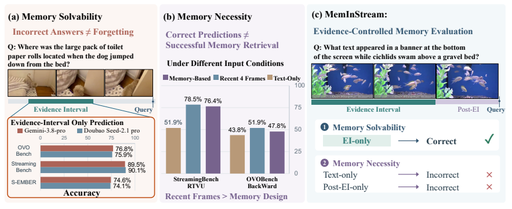
Figure 1 : (a)Memory Solvability. Models may fail to answer questions even when the required evidence intervals are directly provided. Results are reported on the backward tracing tasks of OVO-Bench, the real-time video understanding tasks of StreamingBench, and S-EMBER. (b)Memory Necessity. We compare a memory-based method (FluxMem [1]) with SimpleStream [2], which uses only the four most recent frames, and a text-only baseline. (c) Our evidence-controlled validation protocol ensures both memory solvability and memory necessity, providing a comprehensive benchmark dedicated to evaluating memory capabilities in streaming video understanding.
出典 · CC BY 4.0 · Zhenqi He, Dunyuan Xu, Yang Bo, Kien T. Pham, Yanghao Wang, Shuhan Li, Xintong Guo, Yuyang He, Fang Liu, Huankang Guan, Jingyan Chen, Rui Liu, Long Chen · MemInStream: Memorizing or Merely Recognizing? Rethinking Streaming Video Memory Evaluation · 論文の図を引用 · 元のPDFの2ページ目から図の部分を抽出しています。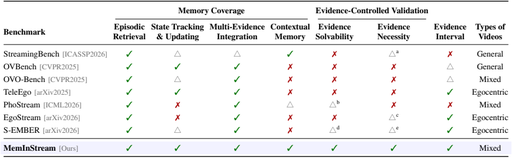
Table 1 : Comparison of streaming video benchmarks in terms of memory coverage and evidence-controlled validation. ✓indicates explicit coverage, while△denotes partial coverage or related validation mechanisms.
出典 · CC BY 4.0 · Zhenqi He, Dunyuan Xu, Yang Bo, Kien T. Pham, Yanghao Wang, Shuhan Li, Xintong Guo, Yuyang He, Fang Liu, Huankang Guan, Jingyan Chen, Rui Liu, Long Chen · MemInStream: Memorizing or Merely Recognizing? Rethinking Streaming Video Memory Evaluation · 論文の図を引用 · 元のPDFの3ページ目から図の部分を抽出しています。証拠を制御した検証プロトコル
MemInStreamでは、質問ごとに質問時点t_qと過去の証拠区間E_qを付与します。検証は2段階で行います。まず証拠区間だけを与えたときに、2つの検証モデルがどちらも正答できる質問だけを残し、solvabilityを確認します。次に、テキストのみを与えた設定と、証拠以降(Post-EI)の観測のみを与えた設定で、2つのモデルがどちらも誤答する質問だけを残し、necessityを確認します。文脈記憶のタスクでは、関連する対話ターンと証拠を一緒に求める3つの条件が追加されます。この手順により、視覚理解の失敗やメモリに依存しない近道で解ける質問を取り除けます。検証モデルはGemini-3.8-FlashとDoubao Seed-2.1-Proです。
その後、人手で正解と時間の整合を確認します。
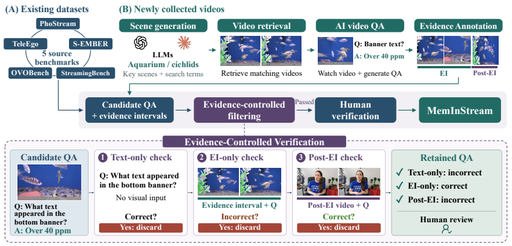
Figure 2 : Overview of the MEMINSTREAMconstruction pipeline.
出典 · CC BY 4.0 · Zhenqi He, Dunyuan Xu, Yang Bo, Kien T. Pham, Yanghao Wang, Shuhan Li, Xintong Guo, Yuyang He, Fang Liu, Huankang Guan, Jingyan Chen, Rui Liu, Long Chen · MemInStream: Memorizing or Merely Recognizing? Rethinking Streaming Video Memory Evaluation · 論文の図を引用 · 元のPDFの6ページ目から図の部分を抽出しています。ベンチマークの構成と課題カテゴリ
MEMINSTREAMは、既存ベンチマークの質問と、新たに収集した動画と生成した質問を組み合わせて構築されました。タスクは、Episodic Retrieval、State Tracking & Updating、Multi-Evidence Integration、Contextual Memoryの4つのカテゴリと、17の細分化されたタスクに分けられます。カテゴリはタスクの主なメモリ要求にもとづいて定義されており、互いに排他的ではありません。全体の質問は3,799個で、8,217個の証拠区間が注釈されています。質問1件あたりの証拠区間の平均は2.16個で、56.7%の質問が複数の証拠区間を必要とします。
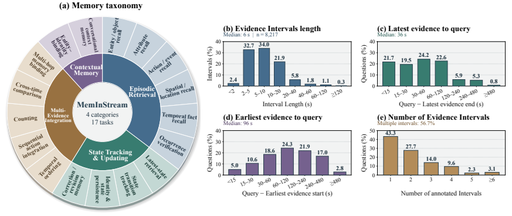
Figure 3 : (a) Hierarchical taxonomy comprising four major memory categories and 17 fine-grained tasks. (b) Distribution of evidence interval lengths. (c–d) Temporal distances from the latest and earliest evidence intervals to the query, respectively. (e) Distribution of the number of evidence intervals per question.
出典 · CC BY 4.0 · Zhenqi He, Dunyuan Xu, Yang Bo, Kien T. Pham, Yanghao Wang, Shuhan Li, Xintong Guo, Yuyang He, Fang Liu, Huankang Guan, Jingyan Chen, Rui Liu, Long Chen · MemInStream: Memorizing or Merely Recognizing? Rethinking Streaming Video Memory Evaluation · 論文の図を引用 · 元のPDFの7ページ目から図の部分を抽出しています。評価方法と完全一致の指標
回答は単一正解と複数正解が混在する形式です。モデルには正解の数を知らせていません。予測した回答の集合が正解の集合と完全に一致したときだけ正解とみなす、strict exact-match accuracyを使用します。全体の精度と、タスクごとのスコアを平均したmacro-average精度も合わせて報告しています。直近フレームの設定では、質問時点の直前N秒のフレーム(N∈{4,30}, 1fps)を使い、オフラインモデルはこのフレームのみを入力として受け取ります。オンラインモデルは、それぞれのメモリ機構によって質問時点の文脈を保持します。
モデルごとのメモリ性能の差
これは、同じ表で評価した独自モデルより、2つのカテゴリで高い値です。一方、Multi-hop Memory Bindingは、Gemini-3.8-Flash(30 frames)で13.07%、StreamForestで23.86%にとどまりました。Episodic Retrievalでは、Gemini-3.8-Flashの入力フレームを4から30に増やすと、26.38%から44.96%へ向上しました。ただし、すべてのカテゴリで同じ向上が見られたわけではありません。
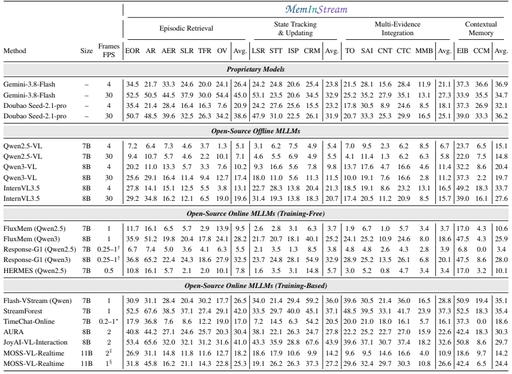
Table 2 : Comparison on MEMINSTREAM. Task scores are exact-match accuracy (%); each Avg. is the macro-average over tasks within that category. Frames/FPS reports input frame counts for proprietary and open-source offline models, and sampling rates (fps) for online models. Offline models use only the N most recent sampled frames before the query. †Response-G1 dynamically adjusts the fps between 0.25 and 1. ‡Up to 60 recent frames per query. ∗TimeChat-Online uses 4–316 input frames with adaptive sampling at 0.2, 0.5, or 1 fps. §Up to 768 input frames.
出典 · CC BY 4.0 · Zhenqi He, Dunyuan Xu, Yang Bo, Kien T. Pham, Yanghao Wang, Shuhan Li, Xintong Guo, Yuyang He, Fang Liu, Huankang Guan, Jingyan Chen, Rui Liu, Long Chen · MemInStream: Memorizing or Merely Recognizing? Rethinking Streaming Video Memory Evaluation · 論文の図を引用 · 元のPDFの9ページ目から図の部分を抽出しています。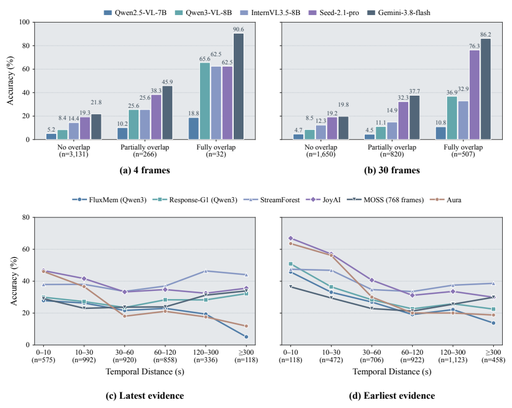
Figure 4 : Accuracy under different evidence overlap levels and temporal distances. (a, b) Accuracy for 4-frame and 30-frame inputs, respectively. No overlap, partial overlap, and full overlap indicate that the input window covers none, some, or all of the annotated evidence intervals, respectively. (c, d) Accuracy versus temporal distance to the query, measured from the latest evidence end and the earliest evidence start, respectively.
出典 · CC BY 4.0 · Zhenqi He, Dunyuan Xu, Yang Bo, Kien T. Pham, Yanghao Wang, Shuhan Li, Xintong Guo, Yuyang He, Fang Liu, Huankang Guan, Jingyan Chen, Rui Liu, Long Chen · MemInStream: Memorizing or Merely Recognizing? Rethinking Streaming Video Memory Evaluation · 論文の図を引用 · 元のPDFの10ページ目から図の部分を抽出しています。メモリの使用有無によるJoyAIの変化
JoyAI-VL-Interactionを、最大60個の直近フレーム(2fps)に固定した状態で、メモリを使うかどうかだけを変えて比較しました。メモリを有効にすると、Episodic Retrievalの平均は31.8%から41.0%に、State Tracking & Updatingは28.6%から43.9%に向上しました。Multi-Evidence Integrationは22.3%から32.6%に、Contextual Memoryは26.9%から29.7%に向上しています。最も大きな向上は、状態追跡と多重証拠の統合で見られました。これは、直近の観測の予算を固定した条件でメモリが役立つという観察です。
別のモデルや別の予算でも同じ大きさの効果があるとは限りません。
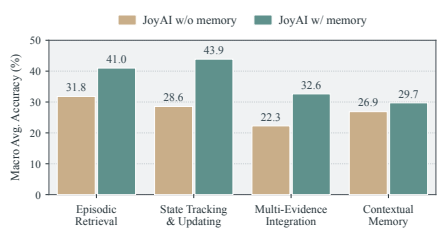
Figure 5 : Effect of memory on JoyAI-VL-Interaction.
出典 · CC BY 4.0 · Zhenqi He, Dunyuan Xu, Yang Bo, Kien T. Pham, Yanghao Wang, Shuhan Li, Xintong Guo, Yuyang He, Fang Liu, Huankang Guan, Jingyan Chen, Rui Liu, Long Chen · MemInStream: Memorizing or Merely Recognizing? Rethinking Streaming Video Memory Evaluation · 論文の図を引用 · 元のPDFの11ページ目から図の部分を抽出しています。長い時間間隔に関する限界
著者らは、現在のベンチマークでは、非常に長い動画ストリームにおいて証拠と質問の間の間隔が大きい場合を十分に扱えていないと述べています。この限界を踏まえ、今後はより長い動画と、より大きな時間間隔を扱えるようにベンチマークを拡張する計画です。
論文情報
- 著者
- Zhenqi He, Dunyuan Xu, Yang Bo, Kien T. Pham, Yanghao Wang, Shuhan Li, Xintong Guo, Yuyang He, Fang Liu, Huankang Guan, Jingyan Chen, Rui Liu, Long Chen
- 学会・ジャーナル
- arXiv · プレプリント
- 公開日
- 2026年11月11日
- 登録日
- 2026年11月13日
- 更新日
- 2026年11月11日
- バージョン
- v1
- arXiv
- 2611.15640
- カテゴリ
- cs.CV · cs.AI
- ライセンス
- CC BY 4.0
- 掲載内容
- 論文情報・解説・論文の図
この解説は、Refivuの韓国語解説をAIで翻訳したものです。不正確な翻訳や誤りが含まれる可能性があります。論文と図の利用条件は各出典に従います。
アブストラクト
Streaming video understanding aims to continuously process incoming visual observations, making the retention and retrieval of relevant information increasingly important as the video history grows. Although existing benchmarks include memory-related questions, question-answering accuracy alone does not reliably measure memory capabilities. Incorrect predictions may arise from failures in visual understanding rather than forgetting, whereas correct predictions may rely on linguistic priors or recent observations without requiring historical memory. To address these ambiguities, we introduce MemInStream, a benchmark dedicated to evaluating memory capabilities in streaming video understanding. We develop an evidence-controlled validation protocol that associates each question with temporally localized evidence intervals. The protocol validates evidence solvability and memory necessity by retaining questions that models can answer from the annotated evidence but cannot resolve using recent observations, post-evidence observations, or textual input alone. This helps disentangle memory limitations from understanding failures while reducing memory-independent shortcuts. MemInStream provides a systematic evaluation of memory capabilities through four major categories, covering Episodic Retrieval, State Tracking \& Updating, Multi-Evidence Integration, and Contextual Memory across diverse video scenarios. Overall, \textsc{MemInStream} provides a comprehensive and reliable benchmark for systematically evaluating memory capabilities in streaming video understanding.
この論文を引用
Zhenqi He, Dunyuan Xu, Yang Bo, Kien T. Pham, Yanghao Wang, Shuhan Li, Xintong Guo, Yuyang He, Fang Liu, Huankang Guan, Jingyan Chen, Rui Liu, Long Chen (2026). MemInStream: Memorizing or Merely Recognizing? Rethinking Streaming Video Memory Evaluation. arXiv:2611.15640v1. https://arxiv.org/abs/2611.15640v1
BibTeX
@misc{he2026meminstream,
  title = {{MemInStream: Memorizing or Merely Recognizing? Rethinking Streaming Video Memory Evaluation}},
  author = {Zhenqi He and Dunyuan Xu and Yang Bo and Kien T. Pham and Yanghao Wang and Shuhan Li and Xintong Guo and Yuyang He and Fang Liu and Huankang Guan and Jingyan Chen and Rui Liu and Long Chen},
  year = {2026},
  eprint = {2611.15640},
  archivePrefix = {arXiv},
  url = {https://arxiv.org/abs/2611.15640v1}
}