論文解説
When Zero Is Competitive: A Descriptive Pilot of Transformer and Gate-Graph Surrogates on Random-Angle Quantum Circuits
Zeroが競争力を持つとき:ランダム角度量子回路におけるTransformerおよびGate-Graph代理モデルの技術的パイロット研究
- 課題 層状のランダム角度CNOT回路におけるZ期待値の多くは0付近にあり、定数予測でも集計誤差が低くなります。
- 手法 RX/RY/RZ–CNOT回路のアンサンブルでTransformerエンコーダとGateDAGを学習し、held-outテンプレートでzeroおよび学習済み定数推定器と比較しました。
- 結果 held-outテンプレートでは、literal zeroのequal-instance MAE 0.193399を下回る最終モデルのスコアは報告されていません。
定数予測が強いベースラインになる理由
層状のランダム角度RX/RY/RZ–CNOT回路では、単一量子ビットの⟨Zi⟩とペアの⟨ZiZj⟩の期待値の多くが0付近に集まっています。Arm Kの学習ラベル226,800個のうち44.89%は絶対値が0.05未満のため、入力をまったく読まない定数予測でも、集計誤差では競争力のあるスコアが得られます。そこで、この研究はモデルの低い平均誤差をそのまま回路入力の学習とは解釈せず、同じ条件のzero推定器と学習型の定数推定器を先にベースラインとして置きました。
回路生成とモデル構成
各回路は|0⟩から始まり、nは4–10、層数rは2·4·6、結線構造はpath、ring、all_to_allのいずれかです。各層では量子ビットごとにRX、RY、RZのいずれかを選び、続けて許可された辺に沿ってn個のCNOTを配置します。回転角はU[−π,π)から独立にサンプリングされます。ラベルはノイズのない状態ベクトルシミュレータで計算し、目標ベクトルy(C,θ)はQ(n)=n(n+1)/2個の期待値で構成されます。Transformerエンコーダは、d=128、4層、4ヘッド、FFN 512を用い、W=0の設定で815,233個の学習パラメータを持ちます。GateDAGは、ゲート種類と量子ビット識別子の埋め込み、回転角のサイン・コサイン特徴量を入力として受け取ります。
そして、ゲートとワイヤーの依存関係に沿って先行ゲートのメッセージを繰り返し伝播させ、GRUセルと観測量クエリのreadoutで出力します。
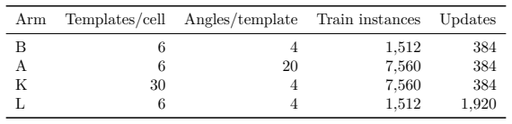
Table 2 :Exploratory transformer data/exposure arms. All rows use the same d = 128, four-layer, four-head, FFN-512,W= 0architecture.
出典 · CC BY 4.0 · Mahesh Reddy Pagadala · When Zero Is Competitive: A Descriptive Pilot of Transformer and Gate-Graph Surrogates on Random-Angle Quantum Circuits · 論文の図を引用 · 元のPDFの4ページ目から図の部分を抽出しています。held-outテンプレートでのMAE比較
評価指標は、例ごとに絶対誤差を先に平均し、その後で例単位に平均するequal-instance MAEです。学習テンプレートと同じゲート順序で新しい角度を抽出したwithin-templateパネルと、学習に使わなかった126個のテンプレートで得たheld-outパネルを併せて設けました。この条件では、literal zeroのheld-out equal-instance MAEは0.193399でした。GateDAGの最終endpointも、深さ12·24·40のいずれの構成でもzeroより高い結果になりました。
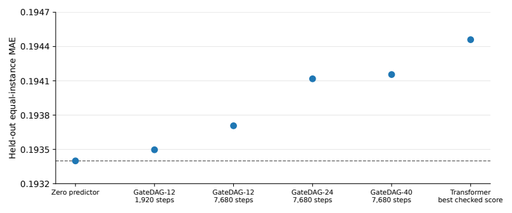
Figure 1 :Descriptive held-out equal-instance MAE. The zero-predictor level is dashed. GateDAG points are the stated run endpoints; the transformer point is the bestevaluatedcheckpoint among 12 exploratory runs. The y-axis shows held-out equal-instance MAE (0.1932–0.1947); this narrow range is intentionally displayed to show small differences. No error bars or uncertainty inference are available for the single-seed GateDAG sweep.
出典 · CC BY 4.0 · Mahesh Reddy Pagadala · When Zero Is Competitive: A Descriptive Pilot of Transformer and Gate-Graph Surrogates on Random-Angle Quantum Circuits · 論文の図を引用 · 元のPDFの5ページ目から図の部分を抽出しています。積状態の対照実験とエンタングル回路の診断
積状態のRY対照実験は、4量子ビット・1層の回路で、目標を⟨Zi⟩=cosθi、⟨ZiZj⟩=cosθi cosθjとし、学習2,048個と保持角度512個を用い、seed 202で1,000アップデート実施しました。GateDAGはheld-out角度のMAEとして0.007755を記録し、zeroの0.514811より低い値でした。これは、学習パイプラインがこの限定された解析的写像を学習できることを示していますが、エンタングル写像の表現力や学習可能性を証明するものではありません。エンタングル回路の診断では、64個の学習インスタンスを1,500アップデート後に評価したところ、学習MAEは0.171882で、zeroの0.402068より低くなりました。
同じテンプレートの新しい角度パネルでは、MAEが0.425408となり、zeroの0.414512より大きくなりました。学習データへの一部の適合と、新しい角度に対する予測の失敗との違いが表れています。
限界
GateDAGの深さスイープは単一seedで実施し、Transformerの実験では3つのseedを用いました。そのため、確定的な優劣や不確実性の推定は難しいです。Transformerのpacked入力フィールドは、形状とハッシュのみローカルで検証し、フィールドごとのトークンの意味は独立に監査していません。学習済みモデルの|y|>0.3または|y|>0.5の区間での条件付き誤差は保存されておらず復元できないため、高振幅領域で部分的な学習があったかどうかは、この結果からは判断できません。また、W=0とW=4のワークスペーストークン介入はテストしていません。
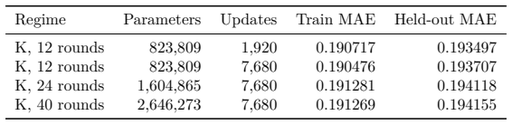
Table 3 :GateDAG endpoint scores, with the same held-out zero MAE of 0.193399 for all rows. These runs are not independent seeds.
出典 · CC BY 4.0 · Mahesh Reddy Pagadala · When Zero Is Competitive: A Descriptive Pilot of Transformer and Gate-Graph Surrogates on Random-Angle Quantum Circuits · 論文の図を引用 · 元のPDFの5ページ目から図の部分を抽出しています。論文情報
- 著者
- Mahesh Reddy Pagadala
- 学会・ジャーナル
- arXiv · プレプリント
- 公開日
- 2026年11月15日
- 登録日
- 2026年11月17日
- 更新日
- 2026年11月15日
- バージョン
- v1
- arXiv
- 2611.19985
- カテゴリ
- cs.LG
- ライセンス
- CC BY 4.0
- 掲載内容
- 論文情報・解説・論文の図
この解説は、Refivuの韓国語解説をAIで翻訳したものです。不正確な翻訳や誤りが含まれる可能性があります。論文と図の利用条件は各出典に従います。
アブストラクト
We examine supervised classical prediction of all one-qubit Z and two-qubit ZZ expectation values on noiseless, layered 4-10-qubit RX/RY/RZ-CNOT circuits. In a 63-cell stratified workload with disjoint circuit-template tests, we evaluate one transformer encoder and gate-dependency graph neural networks against literal-zero and training-derived constant predictors. On the Arm K training labels, 44.89% of scalar targets have absolute magnitude below 0.05. The held-out-template zero predictor has equal-instance mean absolute error 0.193399, and none of the evaluated transformer checkpoints or final graph-network endpoints achieves a lower score. A separate product-state positive control achieves MAE 0.007755 versus 0.514811 for zero, but does not explain the failure on the entangled workload. The difference between zero and a training-fitted mean constant under training MSE is only 0.14%, a descriptive point estimate without uncertainty analysis. The transformer's 815,233-parameter source identity is locally verified; detailed packed-input semantics have not been independently audited. These results constitute a descriptive pilot, not a causal explanation, formal equivalence test, or impossibility claim. Comparable circuits can be regenerated from the workload specification, but exact frozen datasets and model-run evidence remain private.
この論文を引用
Mahesh Reddy Pagadala (2026). When Zero Is Competitive: A Descriptive Pilot of Transformer and Gate-Graph Surrogates on Random-Angle Quantum Circuits. arXiv:2611.19985v1. https://arxiv.org/abs/2611.19985v1
BibTeX
@misc{pagadala2026when,
  title = {{When Zero Is Competitive: A Descriptive Pilot of Transformer and Gate-Graph Surrogates on Random-Angle Quantum Circuits}},
  author = {Mahesh Reddy Pagadala},
  year = {2026},
  eprint = {2611.19985},
  archivePrefix = {arXiv},
  url = {https://arxiv.org/abs/2611.19985v1}
}