論文解説
Before AI Agents Negotiate for Us: A Competitive Tournament of Rule-Based, Search, Optimization, Learned, and Language-Model Negotiators Under Scarcity
AIエージェントが交渉を代行する前に:希少性のもとでのルールベース、探索、最適化、学習、言語モデル交渉者の競争トーナメント
- 課題 複数の競争相手が同時にいるマッチング市場では、交渉戦略の価格面の成果とマッチングの成功が別々に動くことがあります。
- 手法 9種類の交渉エンジンを同じ市場で同時に動かし、Gale-Shapleyマッチングの後のマージンと利益で比較しました。
マッチング市場で交渉戦略が必要な理由
交渉エージェントは2つの問題を同時に解く必要があります。1つは二者間のテーブルで良い価格を得ることです。もう1つは、すべてのテーブルの結果を安定マッチングに入れたときに、実際にペアになることです。この論文では、荷主と運送会社が複数のテーブルで同時に価格を交渉し、Gale-Shapley遅延受諾でマッチングされる市場を設定しています。
従来の比較は、固定された相手との1対1の対戦か、1つの固定された市場条件で複数の手法を比べるものでした。そのため、複数の競争相手が同時にいるときに戦略がどう振る舞うか、需給バランスが希少な側に傾いたときに成果がどう変わるかは分かりません。
この研究では、ルールベース、探索ベース、最適化、模倣学習、強化学習、言語モデルの交渉者を、同じプロトコルで比較しています。
Gale-Shapleyマッチングと交渉距離
各交渉では、荷主の集合と運送会社の集合がすべてのペアでテーブルを開き、ターン単位で進みます。エンジンは自分のテーブルの状態と、同じ交渉内の他の開いているテーブルのスナップショットを見ます。運送会社の合法的な提案バンドは、参照価格の平均から標準偏差の半分を引いた値と、足した値の間です。荷主は、販売価格から物品原価を引いた上限と目標価格の間で提案します。
閉じたテーブルだけがGale-Shapley遅延受諾アルゴリズムに入ります。膠着したテーブルは選好リストから外れます。マッチングされた運送会社のマージンは、実際の価格から経路の参照価格の平均を引いた値です。マッチングされた荷主の利益は、販売価格から価格と物品原価を引いた値です。マッチングされなかった場合、運送会社のマージンは0、荷主の利益は0として記録されます。
中心となる指標である交渉距離は、価格pをバンドの最低値wと目標bの間で正規化します。値が0のときは許容される最悪の取引、1のときは目標の取引です。この指標の上で、R VとISは受諾と継続提案を比べ、OPTとOPT2は候補価格に対する期待交渉距離を最大化し、MLとML2はこの指標で予測した提案を使います。
RLとRL2の学習環境の違い
RLは近接方策最適化で学習され、報酬は隔離された単一テーブルの環境で、合法な取引が閉じたときだけ与えられました。学習中には競争する運送会社はいませんでした。
RL2は同じ行動の仕組みと同じアルゴリズムを使いますが、1人か2人の同じ側の競争相手とともにGale-Shapleyマッチングを通る小さな競争の下位ラウンドで学習されました。膠着には-0.5、自分のテーブルは閉じたものの、マッチングで相手が別の競争相手に移った場合は-0.15、マッチングに勝つと交渉距離の報酬が与えられました。
配備の過程で、RL2の推論経路が占有特性を中立の既定値に固定するという、確認されたバグが見つかりました。学習環境では、この特性は常に中立値でしたが、実際の配備では複数のテーブルを同時に交渉するため、値が変わりうることになります。著者らは、この不一致を修正せず、配備されたままの状態で評価したと説明しています。
希少な市場でのマッチング率の崩壊
均衡市場の上位グループは、ML2、RL、OPTのエンジンで統計的に区別できませんでした。
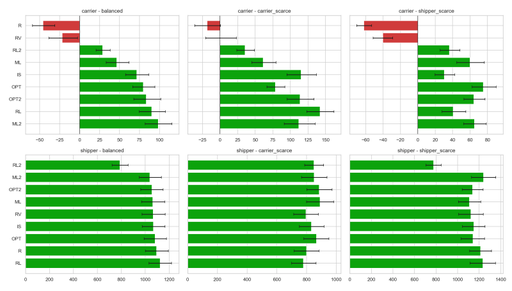
Figure 4 : Bootstrap mean outcome (margin for carriers, profit for shippers) by architecture, for all nine architectures under all three market conditions. Error bars are 95% percentile bootstrap confidence intervals.
出典 · CC BY 4.0 · Eduardo de Avila-Armenta, Raúl Alejandro Aquino-Ibarra, Jorge Octavio Nicolás-Díaz, Umberto Leon-Dominguez · Before AI Agents Negotiate for Us: A Competitive Tournament of Rule-Based, Search, Optimization, Learned, and Language-Model Negotiators Under Scarcity · 論文の図を引用 · 元のPDFの14ページ目から図の部分を抽出しています。RL2のマッチング率は3つの条件で0.92、0.93、0.92と安定していました。ただし、RとR Vも競争訓練なしで同程度に安定していたため、マッチング率の安定性だけではRL2の訓練の効果は実証できません。
均衡市場の荷主側では、RL2は有意な比較8件すべてで負けました。この結果は、競争訓練がマッチング率の崩壊を防いだものの、訓練と配備の特性の不一致により、実現利益では損をしたという解釈を裏付けています。
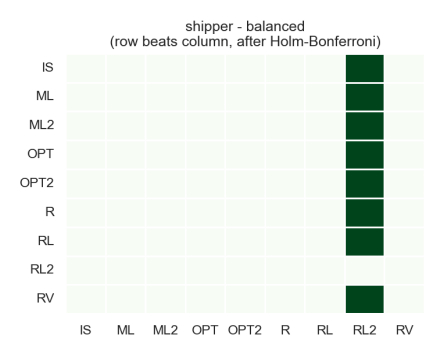
Figure 5 : Shipper-side win matrix, balanced market condition: a filled cell in rowi, columnj means architectureisignificantly outperforms architecturejafter Holm-Bonferroni correction. RL2 wins zero of its eight comparisons.
出典 · CC BY 4.0 · Eduardo de Avila-Armenta, Raúl Alejandro Aquino-Ibarra, Jorge Octavio Nicolás-Díaz, Umberto Leon-Dominguez · Before AI Agents Negotiate for Us: A Competitive Tournament of Rule-Based, Search, Optimization, Learned, and Language-Model Negotiators Under Scarcity · 論文の図を引用 · 元のPDFの15ページ目から図の部分を抽出しています。言語モデル交渉者と固定競争相手の比較
言語モデル交渉者は、R、OPT2、ML2を固定の競争相手として、同じ側の市場に配置されました。モデルは3つの階層にわたる9つのモデルで、役割ごとに40交渉日を使い、呼び出しごとに90秒の制限時間がありました。
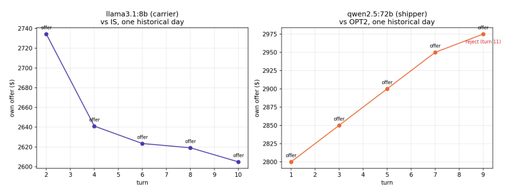
Figure 9 : Two ordinary negotiations, reconstructed from saved per-call logs. Left:llama3.1:8b (carrier) vs. IS, conceding from$2734.31 to$2604.91 over five turns. Right:qwen2.5:72b (shipper) vs. OPT2, conceding from$2800.00 to$2975.00 over five offers before being rejected at the final turn. Only the language model’s own emitted offers are shown; the counterpart’s offers were not separately persisted during data collection.
出典 · CC BY 4.0 · Eduardo de Avila-Armenta, Raúl Alejandro Aquino-Ibarra, Jorge Octavio Nicolás-Díaz, Umberto Leon-Dominguez · Before AI Agents Negotiate for Us: A Competitive Tournament of Rule-Based, Search, Optimization, Learned, and Language-Model Negotiators Under Scarcity · 論文の図を引用 · 元のPDFの21ページ目から図の部分を抽出しています。OPT2とML2を相手にした比較では、言語モデルは36件中32件で有意に負け、勝った比較はありませんでした。Rを相手にしては、有意な敗北が10件、有意な勝利が4件ありました。ただし、このうち2件の勝利は、マッチング率の低いモデルが強制脱落の0点を受けたことによるものだと、著者らは解釈しています。
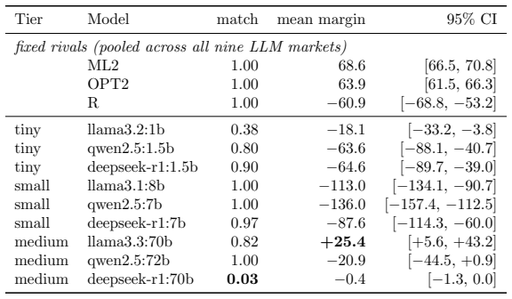
Table 4 : Carrier-side LLM results: match rate and bootstrap mean margin (95% CI), by tier and family, against the three fixed same-side rivals in the same markets.
出典 · CC BY 4.0 · Eduardo de Avila-Armenta, Raúl Alejandro Aquino-Ibarra, Jorge Octavio Nicolás-Díaz, Umberto Leon-Dominguez · Before AI Agents Negotiate for Us: A Competitive Tournament of Rule-Based, Search, Optimization, Learned, and Language-Model Negotiators Under Scarcity · 論文の図を引用 · 元のPDFの18ページ目から図の部分を抽出しています。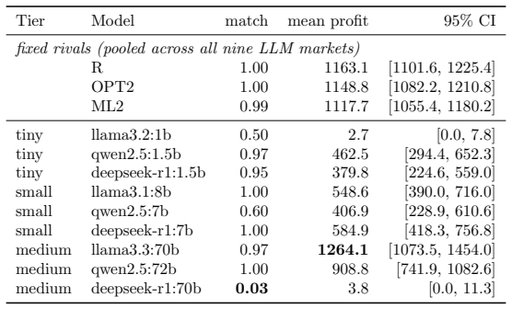
Table 5 : Shipper-side LLM results: match rate and bootstrap mean profit (95% CI).
出典 · CC BY 4.0 · Eduardo de Avila-Armenta, Raúl Alejandro Aquino-Ibarra, Jorge Octavio Nicolás-Díaz, Umberto Leon-Dominguez · Before AI Agents Negotiate for Us: A Competitive Tournament of Rule-Based, Search, Optimization, Learned, and Language-Model Negotiators Under Scarcity · 論文の図を引用 · 元のPDFの18ページ目から図の部分を抽出しています。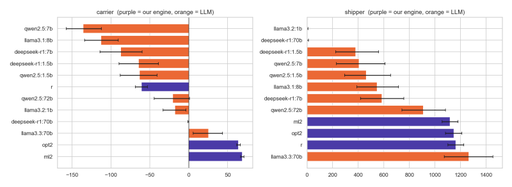
Figure 7 : Each language model’s bootstrap mean outcome against its three fixed same-side rivals (purple), by role. Orange bars are the nine language models.
出典 · CC BY 4.0 · Eduardo de Avila-Armenta, Raúl Alejandro Aquino-Ibarra, Jorge Octavio Nicolás-Díaz, Umberto Leon-Dominguez · Before AI Agents Negotiate for Us: A Competitive Tournament of Rule-Based, Search, Optimization, Learned, and Language-Model Negotiators Under Scarcity · 論文の図を引用 · 元のPDFの18ページ目から図の部分を抽出しています。llama3.3:70bは、両方の役割でRに勝った唯一のモデルでした。deepseek-r1:70bのマッチング率は2.5%にとどまりましたが、呼び出しの遅延が90秒の制限時間にほぼ達していました。著者らは、この結果をこのワークステーションの配備上の制約によるものとみなし、モデル群全体の限界としては一般化していません。
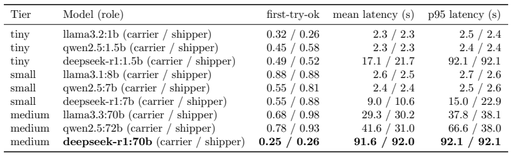
Table 6 : Structured-output compliance and latency, by tier, family, and role (DeepSeek-R1’s thinksetting differs by role; see the methodological note above).
出典 · CC BY 4.0 · Eduardo de Avila-Armenta, Raúl Alejandro Aquino-Ibarra, Jorge Octavio Nicolás-Díaz, Umberto Leon-Dominguez · Before AI Agents Negotiate for Us: A Competitive Tournament of Rule-Based, Search, Optimization, Learned, and Language-Model Negotiators Under Scarcity · 論文の図を引用 · 元のPDFの19ページ目から図の部分を抽出しています。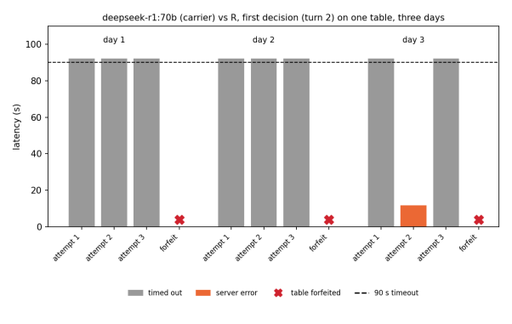
Figure 10 :deepseek-r1:70b(carrier) vs. R, the model’s first decision (turn 2) on one table on three successive logged days. Each bar is one call attempt: grey bars timed out near the 90 s request ceiling (dashed line), the orange bar failed earlier with a server-side error, and the red cross after each group of three attempts marks the table’s forfeit once the retry budget was exhausted. No attempt produced a usable response.
出典 · CC BY 4.0 · Eduardo de Avila-Armenta, Raúl Alejandro Aquino-Ibarra, Jorge Octavio Nicolás-Díaz, Umberto Leon-Dominguez · Before AI Agents Negotiate for Us: A Competitive Tournament of Rule-Based, Search, Optimization, Learned, and Language-Model Negotiators Under Scarcity · 論文の図を引用 · 元のPDFの22ページ目から図の部分を抽出しています。合成市場と統計的仮定の限界
市場モデルの価格は合成データで、実際の運送市場のデータに合わせて較正されていません。そのため、絶対的な大きさは実市場の予測としては使いにくく、同じ合成市場の中での相対比較がこの論文の結果です。
価格の過程は連続する交渉インデックスの間に相関を生みます。対応のあるWilcoxon検定の独立性の仮定はこの相関を扱えず、同順位の処理方法も報告されていません。ペアごとの比較では、Holm-Bonferroni補正後の有意性のみを報告しており、標準化された効果量は示されていません。
各エンジンは固定されたハイパーパラメータで一度だけ設定されたため、報告された順位は各アーキテクチャの最良の性能ではないかもしれません。言語モデルのプロンプトも、1つのシステムプロンプトだけで実行されました。
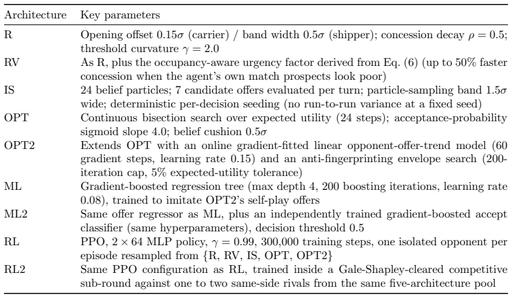
Table 1 : Governing hyperparameters for all nine architectures, held fixed across every market condition and role.
出典 · CC BY 4.0 · Eduardo de Avila-Armenta, Raúl Alejandro Aquino-Ibarra, Jorge Octavio Nicolás-Díaz, Umberto Leon-Dominguez · Before AI Agents Negotiate for Us: A Competitive Tournament of Rule-Based, Search, Optimization, Learned, and Language-Model Negotiators Under Scarcity · 論文の図を引用 · 元のPDFの11ページ目から図の部分を抽出しています。論文情報
- 著者
- Eduardo de Avila-Armenta, Raúl Alejandro Aquino-Ibarra, Jorge Octavio Nicolás-Díaz, Umberto Leon-Dominguez
- 学会・ジャーナル
- arXiv · プレプリント
- 公開日
- 2026年11月11日
- 登録日
- 2026年11月13日
- 更新日
- 2026年11月11日
- バージョン
- v1
- arXiv
- 2611.15838
- カテゴリ
- cs.AI · cs.GT · cs.LG · cs.MA
- ライセンス
- CC BY 4.0
- 掲載内容
- 論文情報・解説・論文の図
この解説は、Refivuの韓国語解説をAIで翻訳したものです。不正確な翻訳や誤りが含まれる可能性があります。論文と図の利用条件は各出典に従います。
アブストラクト
Automated bilateral negotiation underlies two-sided matching markets such as freight brokering, where many shippers and carriers negotiate price before a matching mechanism decides who is paired with whom. Prior strategy comparisons typically use isolated one-on-one duels or a single fixed market, so they cannot show how a strategy behaves against several live rivals under a changing balance of supply and demand. We built nine negotiation architectures spanning rule-based, search-based, optimization-based, imitation-learning, and reinforcement-learning families, and ran all nine simultaneously on both sides of a Gale-Shapley matching market under a balanced condition and two scarcity conditions rotated across all 36 exclusion pairs. In the balanced carrier market, an imitation-learned engine (ML2), a reinforcement-learning policy trained only on isolated negotiations (RL), and an expected-utility optimization engine (OPT) formed a statistically tied top group, and no architecture led in every condition and role. RL beat all eight carrier rivals when carriers were scarce, but its match rate collapsed from 62% to 16% when shippers were scarce and it had to compete with the other carrier agents for demand. A second reinforcement-learning policy trained against rival agents (RL2) kept its match rate above 91% in every condition, yet lost on realized payoff to all eight shipper-side rivals in two of the three conditions, traced to a confirmed train/deployment feature mismatch. We also tested nine large language models (LLMs), from 1 to 72 billion parameters, under the same protocol: they lost significantly to the two strongest engines (OPT2 and ML2) in 32 of 36 comparisons and won none. These results show that isolated or single-condition evaluation can hide failure modes that a many-sided, scarcity-varying, statistically corrected tournament exposes directly.
この論文を引用
Eduardo de Avila-Armenta, Raúl Alejandro Aquino-Ibarra, Jorge Octavio Nicolás-Díaz, Umberto Leon-Dominguez (2026). Before AI Agents Negotiate for Us: A Competitive Tournament of Rule-Based, Search, Optimization, Learned, and Language-Model Negotiators Under Scarcity. arXiv:2611.15838v1. https://arxiv.org/abs/2611.15838v1
BibTeX
@misc{avilaarmenta2026before,
  title = {{Before AI Agents Negotiate for Us: A Competitive Tournament of Rule-Based, Search, Optimization, Learned, and Language-Model Negotiators Under Scarcity}},
  author = {Eduardo de Avila-Armenta and Raúl Alejandro Aquino-Ibarra and Jorge Octavio Nicolás-Díaz and Umberto Leon-Dominguez},
  year = {2026},
  eprint = {2611.15838},
  archivePrefix = {arXiv},
  url = {https://arxiv.org/abs/2611.15838v1}
}