論文解説
On Representational and Functional Alignment of Training Data Attribution Methods for Language Models
言語モデルの学習データ帰属手法における表現的整合と機能的整合
- 課題 学習データ帰属手法は情報源が異なるため、直接比較することが難しいです。既存の比較は、下流タスクの性能か全体の順位相関にとどまっていました。
- 結果 同じパラダイム内では表現整合が高く、機能的整合は中程度でした。パラダイムをまたぐ整合は全体的に低く、タスクによって差がありました。
既存比較の限界
学習データ帰属は、学習文書がモデルの予測にどれだけ寄与したかをスコアで評価する手法です。これらの手法は、勾配、モデル内部の状態、表層的な類似度など異なる情報源に依存するため、手法同士を直接比べる基準が不足していました。既存研究は主に、下流タスクの性能か全体順位の相関によって比較していました。
この論文は、下流タスクの性能に頼らず、帰属手法同士を直接比較しようとしています。下流タスクの性能はタスクの仕組みによって変わるため、転移可能性が限られます。全体順位の相関は、データ選択のように相対的な重要度が合っていればよい場面を十分に捉えられません。そこで整合を、機能的整合、表現整合、クロス手法予測可能性の3つの次元に分けています。
3つの整合指標
機能的整合は、2つの手法がテスト事例ごとに作った帰属ベクトル全体の相関を、Spearmanのρ、Kendallのτ、順位ベースの重なりであるRBOで測り、事例ごとの値を平均したものです。表現整合は、帰属に使われた文書表現の類似性の構造を見るものです。大域的な指標には内積カーネルに基づくCKAを使い、近傍集合に限定した局所指標にはCKNNAを使います。
クロス手法予測可能性は、ある手法のスコア差を特徴量として、別の手法のペアごとの順位の二値ラベルをロジスティック回帰で当てる正解率で測ります。テスト事例ごとに2000個のランダムなペアを作り、80/20に分けます。この指標は、全体の順位がずれていても、局所的な相対的重要度では一致しうることを確認するための仕組みです。
12手法と7モデルの実験設計
論文は、勾配ベース、モデル内部表現、埋め込み類似度、語彙の重なりの4つのパラダイムにまたがる12個の帰属手法を比較しています。実験モデルは、LoRAで1エポックファインチューニングしたQwen3-Base 0.6B、1.7B、4B、8B、Olmo-3-1025-7B、OLMo-2-0425-1B、Llama-3.2-1Bです。データセットはSFT、math、code、squad_v2、ftraceです。テスト文書は、データセットとモデルの組み合わせごとに1000個ずつ使用しました。
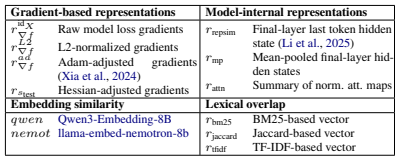
Table 1 : Summary of attribution methods studied.
出典 · CC BY 4.0 · Loris Schoenegger, Benjamin Roth · On Representational and Functional Alignment of Training Data Attribution Methods for Language Models · 論文の図を引用 · 元のPDFの3ページ目から図の部分を抽出しています。
Table 8 :LoRA fine-tuning hyperparameters.We use the default parameters from the Hugging Face documentation, adjusting the target modules and effective batch size for our specific model architectures.
出典 · CC BY 4.0 · Loris Schoenegger, Benjamin Roth · On Representational and Functional Alignment of Training Data Attribution Methods for Language Models · 論文の図を引用 · 元のPDFの29ページ目から図の部分を抽出しています。この値は実験で使った設定であり、すべての手法に対する一般的な設定として一般化することはできません。整合パターンの安定性は、クラスタの共同相関と、混合効果モデルの尤度比検定によって確認しました。
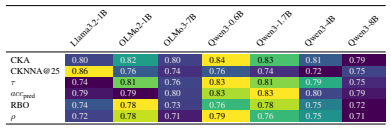
Table 2 : Average cophenetic correlation across tasks per base model.
出典 · CC BY 4.0 · Loris Schoenegger, Benjamin Roth · On Representational and Functional Alignment of Training Data Attribution Methods for Language Models · 論文の図を引用 · 元のPDFの12ページ目から図の部分を抽出しています。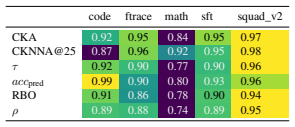
Table 3 : Average cophenetic correlation across base models per task.
出典 · CC BY 4.0 · Loris Schoenegger, Benjamin Roth · On Representational and Functional Alignment of Training Data Attribution Methods for Language Models · 論文の図を引用 · 元のPDFの12ページ目から図の部分を抽出しています。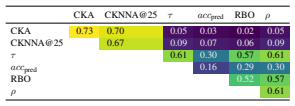
Table 4 : Average cophenetic correlation between align- ment measures.
出典 · CC BY 4.0 · Loris Schoenegger, Benjamin Roth · On Representational and Functional Alignment of Training Data Attribution Methods for Language Models · 論文の図を引用 · 元のPDFの12ページ目から図の部分を抽出しています。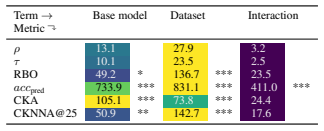
Table 5 :Likelihood-ratio tests.Results of likelihood-ratio tests comparing the full mixed-effects model against reduced variants with base model, dataset, or interaction terms removed. See Section 3.3.3.
出典 · CC BY 4.0 · Loris Schoenegger, Benjamin Roth · On Representational and Functional Alignment of Training Data Attribution Methods for Language Models · 論文の図を引用 · 元のPDFの20ページ目から図の部分を抽出しています。パラダイム内と間の整合の差
結果として、同じパラダイムの手法同士は高い表現整合を示しました。勾配ベースの手法と埋め込みベースの手法では、ブロック対角構造がはっきり見られました。機能的整合は中程度で、このパターンは埋め込みベースの手法でのみ明確でした。パラダイム間の機能的整合は低く、勾配ベースと埋め込みベースの手法の相関はほとんどありませんでした。
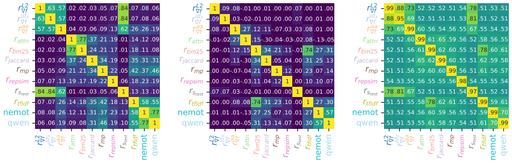
Figure 3 :Pairwise alignment.Left: representational alignment (CKA ∈[0,1] ), center: functional alignment (Spearman’s ρ∈[−1,1] ), and right: cross-method predictability (acc ∈[0,1] ) averaged across tasks and models. Higher values suggest better alignment. For CKNNA@25, RBO, and Kendall’sτ, see Appendix B.
出典 · CC BY 4.0 · Loris Schoenegger, Benjamin Roth · On Representational and Functional Alignment of Training Data Attribution Methods for Language Models · 論文の図を引用 · 元のPDFの7ページ目から図の部分を抽出しています。クロス手法予測可能性は、同じパラダイム内では0.75を超えました。一方、パラダイムをまたぐペアで0.65を超えたのは、語彙ベースと埋め込みベースの間だけでした。この結果は、帰属手法が同じパラダイム内では部分的に代替可能である一方、パラダイム間では信頼できる代替にはならないことを示唆しています。タスクによる違いもあり、パラダイムをまたぐ整合はタスクによって変わりました。
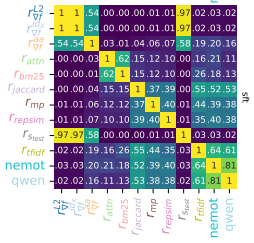
Figure 5 : Per-task CKA results.
出典 · CC BY 4.0 · Loris Schoenegger, Benjamin Roth · On Representational and Functional Alignment of Training Data Attribution Methods for Language Models · 論文の図を引用 · 元のPDFの13ページ目から図の部分を抽出しています。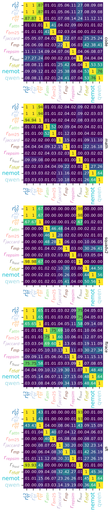
Figure 6 : Per-task CKNNA@25 results.
出典 · CC BY 4.0 · Loris Schoenegger, Benjamin Roth · On Representational and Functional Alignment of Training Data Attribution Methods for Language Models · 論文の図を引用 · 元のPDFの14ページ目から図の部分を抽出しています。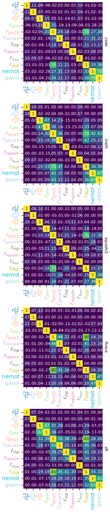
Figure 7 : Per-task Spearman’sρresults.
出典 · CC BY 4.0 · Loris Schoenegger, Benjamin Roth · On Representational and Functional Alignment of Training Data Attribution Methods for Language Models · 論文の図を引用 · 元のPDFの14ページ目から図の部分を抽出しています。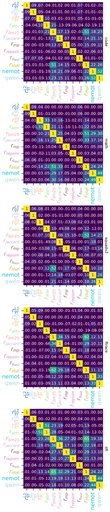
Figure 8 : Per-task Kendall’sτresults.
出典 · CC BY 4.0 · Loris Schoenegger, Benjamin Roth · On Representational and Functional Alignment of Training Data Attribution Methods for Language Models · 論文の図を引用 · 元のPDFの15ページ目から図の部分を抽出しています。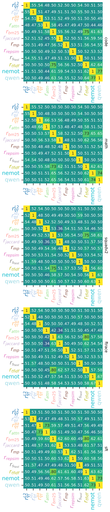
Figure 9 : Per-task RBO results.
出典 · CC BY 4.0 · Loris Schoenegger, Benjamin Roth · On Representational and Functional Alignment of Training Data Attribution Methods for Language Models · 論文の図を引用 · 元のPDFの15ページ目から図の部分を抽出しています。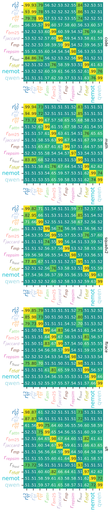
Figure 10 : Per-task cross-method predictability results.
出典 · CC BY 4.0 · Loris Schoenegger, Benjamin Roth · On Representational and Functional Alignment of Training Data Attribution Methods for Language Models · 論文の図を引用 · 元のPDFの16ページ目から図の部分を抽出しています。表現ベースと語彙ベースの手法が異なる理由
著者らは、語彙ベースの手法が表層的な形と指示文の重なりを主に捉えるため、構造や振る舞いは同じでも単語が異なる文書を見逃すと解釈しています。一方、勾配ベースと埋め込みベースの手法は、指示文と応答パターンの構造的な類似性をよく捉えると見ています。この解釈は近傍比較の定性分析に基づくものであり、この論文が原因を直接測定したわけではありません。
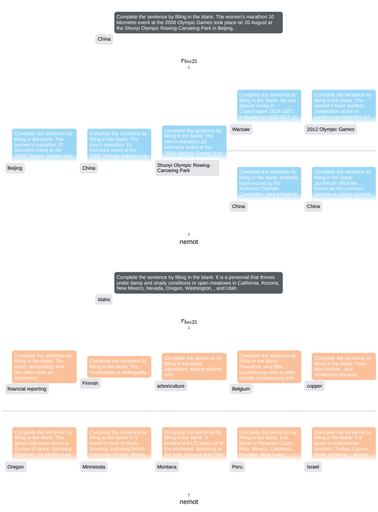
Figure 17 : Instances with highest (top) and lowest (bottom) 5-nearest neighbor overlap across representations rbm25 and nemot forOlmo-3-7B_ftrace_date-lm_conversational.
出典 · CC BY 4.0 · Loris Schoenegger, Benjamin Roth · On Representational and Functional Alignment of Training Data Attribution Methods for Language Models · 論文の図を引用 · 元のPDFの22ページ目から図の部分を抽出しています。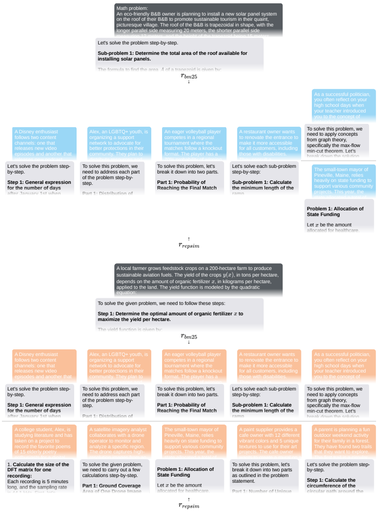
Figure 18 : Instances with highest (top) and lowest (bottom) 5-nearest neighbor overlap across representations rbm25 andr repsim forOlmo-3-7B_tulu-3-sft-personas-math.
出典 · CC BY 4.0 · Loris Schoenegger, Benjamin Roth · On Representational and Functional Alignment of Training Data Attribution Methods for Language Models · 論文の図を引用 · 元のPDFの23ページ目から図の部分を抽出しています。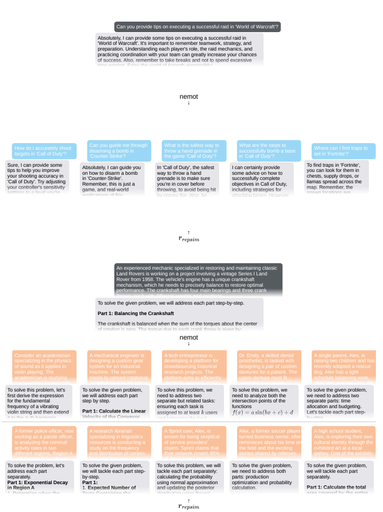
Figure 21 : Instances with highest (top) and lowest (bottom) 5-nearest neighbor overlap across representations nemot andr repsim forOlmo-3-7B_tulu-3-sft-olmo-2-mixture-0225.
出典 · CC BY 4.0 · Loris Schoenegger, Benjamin Roth · On Representational and Functional Alignment of Training Data Attribution Methods for Language Models · 論文の図を引用 · 元のPDFの26ページ目から図の部分を抽出しています。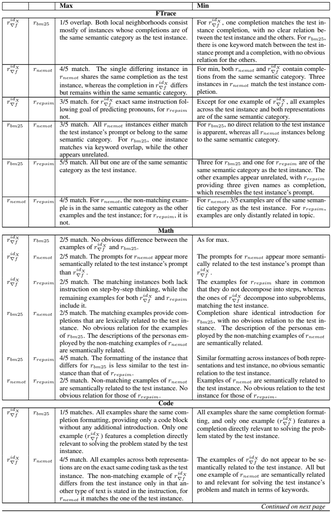
Table 7 : Full observations from the qualitative analysis, grouped by dataset.
出典 · CC BY 4.0 · Loris Schoenegger, Benjamin Roth · On Representational and Functional Alignment of Training Data Attribution Methods for Language Models · 論文の図を引用 · 元のPDFの27ページ目から図の部分を抽出しています。また、平均順位相関が低いことは、代替不可能であることを意味しないという点も強調しています。全体の相関が低くても、ペアごとの一致は高くなりうるため、平均相関だけで手法を除外すると、役立つ手法を見逃すおそれがあります。
テキスト生成タスクに限った範囲
論文では、実験はテキスト生成タスクに限られると述べられています。分類のようにより単純なタスク形式では、パラダイム間の整合が変わる可能性があります。モデルは最大8Bパラメータに制限し、勾配ベースの計算コストのため、LoRAでファインチューニングしたモデルのみを分析しました。全パラメータを対象とした帰属では、パターンが異なる可能性があります。
論文情報
- 著者
- Loris Schoenegger, Benjamin Roth
- 学会・ジャーナル
- arXiv · プレプリント
- 公開日
- 2026年11月14日
- 登録日
- 2026年11月17日
- 更新日
- 2026年11月14日
- バージョン
- v1
- arXiv
- 2611.19286
- カテゴリ
- cs.CL
- ライセンス
- CC BY 4.0
- 掲載内容
- 論文情報・解説・論文の図
この解説は、Refivuの韓国語解説をAIで翻訳したものです。不正確な翻訳や誤りが含まれる可能性があります。論文と図の利用条件は各出典に従います。
アブストラクト
Existing approaches to training data attribution derive influence estimates from different sources of information, including gradients, model-internal states, and surface-level similarity. However, comparisons between attribution methods remain incomplete, often relying on indirect evaluations through downstream task performance. In this work, we introduce a framework for directly comparing methods along three dimensions: functional alignment, which measures correlation between full attribution vectors; representational alignment, which captures structural similarity of the representations underlying attribution; and cross-method predictability, which evaluates agreement on local pairwise ranking decisions. We observe strong representational and moderate functional alignment within paradigms. Alignment across paradigms is low and task-dependent, yet stable across models. Our results suggest that the similar downstream performance observed across paradigms in prior work can be attributed to agreement on the relative importance of documents, rather than to agreement on rankings of the full training data.
この論文を引用
Loris Schoenegger, Benjamin Roth (2026). On Representational and Functional Alignment of Training Data Attribution Methods for Language Models. arXiv:2611.19286v1. https://arxiv.org/abs/2611.19286v1
BibTeX
@misc{schoenegger2026representational,
  title = {{On Representational and Functional Alignment of Training Data Attribution Methods for Language Models}},
  author = {Loris Schoenegger and Benjamin Roth},
  year = {2026},
  eprint = {2611.19286},
  archivePrefix = {arXiv},
  url = {https://arxiv.org/abs/2611.19286v1}
}