論文解説
Shaping Useful Noise: Energy Distributions Predict Visual Pretraining Quality
有用なノイズの設計:エネルギー分布による視覚事前学習の品質予測
- 課題 合成データの事前学習での有用性を評価するには、サンプルの写実性や特徴空間での類似度だけでは不十分で、実画像の尤度水準の分布に合うかどうかが重要だと提案しています。
- 手法 正規化された実画像の密度モデルでサンプルのエネルギーを計算し、実データと合成データのエネルギー分布のWasserstein-1距離をELDと定義しています。あわせて、パーセンタイル変換のpELDと、それを用いたキュレーションも示しています。
- 結果 DINO/ViT-S設定では、ELDは固定したImageNet-1K linear精度と負の相関を示し(ρ=−0.87)、ノイズ型データセットを除いたleave-one-dataset-outの予測MAEでFIDより低い誤差を報告しています。キュレーションは、固定特徴にもとづくオフラインの診断で改善を示しました。
合成データ選択基準の限界
合成データで視覚事前学習を拡張する際、現在の選択基準は、サンプルの写実性や特徴空間での類似度に主に頼っています。この方法では、データセットを距離、近傍構造、低次元の特徴要約に圧縮するため、サンプルが実画像の確率的な地形のどこに位置するかは問われません。著者らは、実画像が単一の典型的な尤度水準に集中せず、広くコンテンツに依存したエネルギー分布を持つ点で、この軸が欠けていると指摘しています。そこで問いは、合成データが実画像の占める尤度水準の分布に合わせるべきかどうかになります。
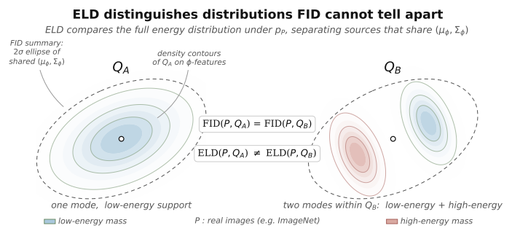
Figure 1 :ELD distinguishes synthetic pretraining datasets FID cannot.Self-supervised pretraining benefits when synthetic data spans the full likelihood spectrum of real images; sources with identical FID can carry very different energy distributions, which ELD detects.
出典 · CC BY 4.0 · Choi, Ching Lam, Torralba, Antonio, Isola, Phillip, Jegelka, Stefanie · Shaping Useful Noise: Energy Distributions Predict Visual Pretraining Quality · 論文の図を引用 · 元のPDFの2ページ目から図の部分を抽出しています。
Table 7 :Simple surrogate energies do not reproduce ELD.Feature- and DCT-based density surrogates fail to recover the ranking induced by the learned ImageNet density model, indicating that ELDis not reducible to generic feature novelty or low-level image-statistics mismatch.
出典 · CC BY 4.0 · Choi, Ching Lam, Torralba, Antonio, Isola, Phillip, Jegelka, Stefanie · Shaping Useful Noise: Energy Distributions Predict Visual Pretraining Quality · 論文の図を引用 · 元のPDFの15ページ目から図の部分を抽出しています。ELDとパーセンタイル変換の計算
ELDは、正規化された実画像の密度モデル pP が定義するエネルギー EP(x)=−log pP(x) を用いて、実データ P と合成データ Q のエネルギー分布を比較します。2つの一次元分布 (EP)#P と (EP)#Q の間の Wasserstein-1 距離が ELD であり、一次元では経験的CDF同士の積分距離として計算されます。元のエネルギーの尺度は密度モデルの較正によって変わるため、著者らは実エネルギーのCDF FPで各エネルギーを順位パーセンタイルに変換した pELD も併用しています。実データの基準分布におけるパーセンタイルは Unif(0, 1) になり、pELD は [0, 1/2] の範囲に収まり、厳密に単調増加する再較正に対して不変です。
ただし有限標本では較正集合で推定した FP を使うため、実標本の一様性は近似的にしか成り立ちません。
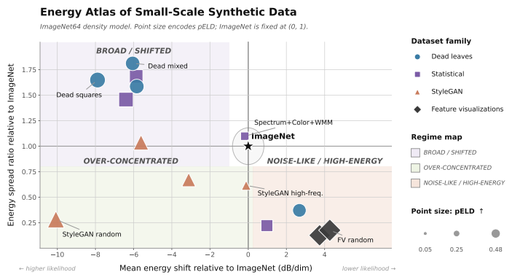
Figure 2 :Small-scale energy audit.Synthetic datasets scored under a grayscale ImageNet64 density model. Axes show mean energy shift and spread relative to ImageNet, while point size denotesPELD. The atlas provides a coarse diagnostic view of the regimes expanded in Figure 3: noise-like sources are shifted toward high-energy regions, over-concentrated sources occupy too narrow a likelihood band, and broad/shifted sources cover a wider range but remain displaced from the real energy profile.
出典 · CC BY 4.0 · Choi, Ching Lam, Torralba, Antonio, Isola, Phillip, Jegelka, Stefanie · Shaping Useful Noise: Energy Distributions Predict Visual Pretraining Quality · 論文の図を引用 · 元のPDFの3ページ目から図の部分を抽出しています。ELDと既存指標の事前学習予測力
DINOとViT-Sを固定ハイパーパラメータで各合成データセットに対して事前学習した設定では、著者らは、ELDが低いほど frozen ImageNet-1K linear の精度が高い傾向を報告しています。このときのSpearman相関は ρ=−0.87、p=0.002と報告されており、ファインチューニングおよびImageNet-C/Aのロバスト性でも負の相関が見られます。この結果はDINOの設定と、このsuiteのデータセット集合についてのものです。また、1つのデータセットを除いて予測する leave-one-dataset-out 回帰で、ノイズ型データセットを除いた条件でのMAEは、ELDが 0.99、FIDが 1.66、LPIPSが 1.47、recallが 3.27 ポイントと報告されています。
これは小規模なsuiteでの予測誤差の比較であり、すべての合成データセットや他のアーキテクチャに一般化された結果とは読めません。
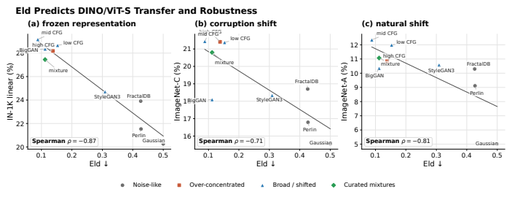
Figure 4 :ELDpredicts DINO/ViT-S downstream quality.Across the self-supervised synthetic pretraining suite, lower ELDis associated with stronger frozen ImageNet-1K linear-probe accuracy and better robustness on ImageNet-C and ImageNet-A. Points are colored by the energy-regime taxonomy, showing that high-ELDnoise-like sources occupy the weak-transfer end of the trend, while lower-ELDdiffusion and mixture sources cluster among the strongest representations.
出典 · CC BY 4.0 · Choi, Ching Lam, Torralba, Antonio, Isola, Phillip, Jegelka, Stefanie · Shaping Useful Noise: Energy Distributions Predict Visual Pretraining Quality · 論文の図を引用 · 元のPDFの6ページ目から図の部分を抽出しています。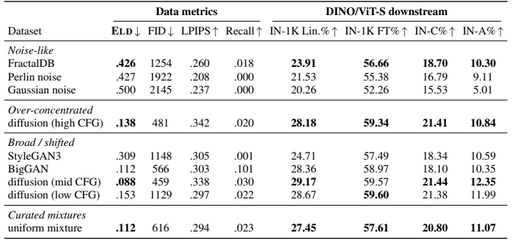
Table 1 :Self-supervised setting.Dataset metrics and DINO/ViT-S accuracy; metrics are computed against ImageNet, and evaluation reports ImageNet-1K linear/FT plus ImageNet-C/A robustness.
出典 · CC BY 4.0 · Choi, Ching Lam, Torralba, Antonio, Isola, Phillip, Jegelka, Stefanie · Shaping Useful Noise: Energy Distributions Predict Visual Pretraining Quality · 論文の図を引用 · 元のPDFの7ページ目から図の部分を抽出しています。
Table 2 : Leave-one-dataset-out DINO prediction MAE (percentage points↓).
出典 · CC BY 4.0 · Choi, Ching Lam, Torralba, Antonio, Isola, Phillip, Jegelka, Stefanie · Shaping Useful Noise: Energy Distributions Predict Visual Pretraining Quality · 論文の図を引用 · 元のPDFの7ページ目から図の部分を抽出しています。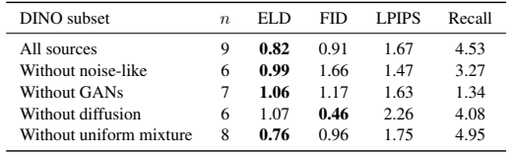
Table 8 : Sensitivity of DINO linear prediction to source exclusion. Each row repeats leave-one- dataset-out fitting within the retained subset. It does not evaluate transfer to the omitted family.
出典 · CC BY 4.0 · Choi, Ching Lam, Torralba, Antonio, Isola, Phillip, Jegelka, Stefanie · Shaping Useful Noise: Energy Distributions Predict Visual Pretraining Quality · 論文の図を引用 · 元のPDFの15ページ目から図の部分を抽出しています。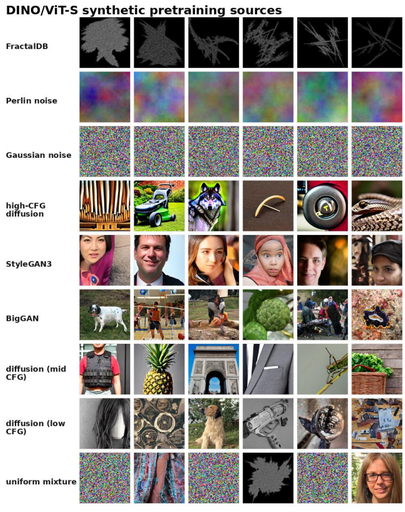
Figure 6 :DINO/ViT-S synthetic pretraining sources.This grid highlights the range from noise and procedural structure to generator samples; ELDmeasures how these sources populate ImageNet likelihood levels.
出典 · CC BY 4.0 · Choi, Ching Lam, Torralba, Antonio, Isola, Phillip, Jegelka, Stefanie · Shaping Useful Noise: Energy Distributions Predict Visual Pretraining Quality · 論文の図を引用 · 元のPDFの16ページ目から図の部分を抽出しています。Learning to See設定と限定的な相関
Learning-to-See設定は、Baradad Jurjo et al. (2021) の小規模な合成データ系列を、CNNベースの対照学習プロトコルで事前学習した実験です。この設定には異質な生成方式が含まれるため、著者らは、pooled相関は方向としては一貫しているものの弱いと報告しています。具体的には、ImageNet-Aでは ρ=−0.26、ImageNet-Cでは ρ=−0.15です。同じ系列内の比較では、より強いシグナルが見られ、dead-leaves の変種内では ELD が低いほど ImageNet の線形精度が高いという結果が報告されています。ImageNet-A の精度は、学習済みの ImageNet100 クラスとの共通部分で計算され、それ以外のサンプルは分母から除かれます。
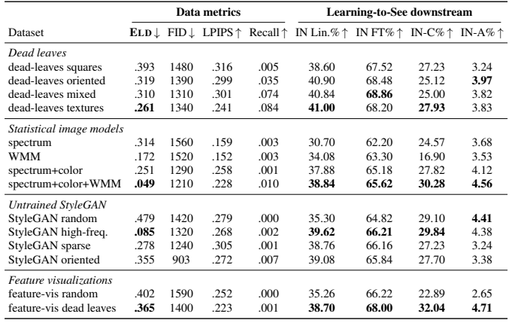
Table 3 :Learning-to-See synthetic-pretraining setting.Dataset metrics and downstream accuracy for the small-scale families from Baradad Jurjo et al. (2021). Evaluation follows the original ImageNet protocol and adds ImageNet-C/A robustness with the same representations.
出典 · CC BY 4.0 · Choi, Ching Lam, Torralba, Antonio, Isola, Phillip, Jegelka, Stefanie · Shaping Useful Noise: Energy Distributions Predict Visual Pretraining Quality · 論文の図を引用 · 元のPDFの8ページ目から図の部分を抽出しています。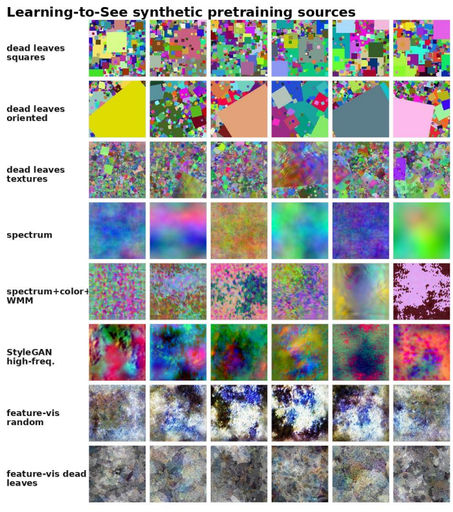
Figure 7 :Learning-to-See synthetic pretraining sources.This grid visualises the range from dead-leaves and statistical textures to untrained StyleGAN and feature-visualization samples; ELD measures how these families populate ImageNet likelihood levels.
出典 · CC BY 4.0 · Choi, Ching Lam, Torralba, Antonio, Isola, Phillip, Jegelka, Stefanie · Shaping Useful Noise: Energy Distributions Predict Visual Pretraining Quality · 論文の図を引用 · 元のPDFの17ページ目から図の部分を抽出しています。推定の選択とscorerの感度
数千個の採点サンプルの後で推定値が安定すると、著者らは報告しています。ニューラルscorerの感度分析では、DINOのソース9個を、各scorerが自前のImageNetで再較正し、Guthによる順位とSpearman 0.89から0.91へ一致すると報告しています。低いpELDが依然としてより強い転移と関連していることも報告されています。この結果は、試したニューラルscorerの構成に対する安定性の根拠であり、任意の密度モデル全般についての証明ではありません。
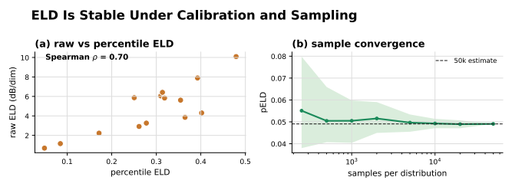
Figure 5 :ELDis robust to estimation choices.Raw and percentile distances agree with a Spearman coefficient of0.7; subsampling shows stable estimates after a few thousand scored samples.
出典 · CC BY 4.0 · Choi, Ching Lam, Torralba, Antonio, Isola, Phillip, Jegelka, Stefanie · Shaping Useful Noise: Energy Distributions Predict Visual Pretraining Quality · 論文の図を引用 · 元のPDFの8ページ目から図の部分を抽出しています。
Table 4 : Neural-scorer sensitivity on the DINO suite. The first column compares dataset rankings; the remaining columns correlate pELD with ImageNet-1K accuracy.
出典 · CC BY 4.0 · Choi, Ching Lam, Torralba, Antonio, Isola, Phillip, Jegelka, Stefanie · Shaping Useful Noise: Energy Distributions Predict Visual Pretraining Quality · 論文の図を引用 · 元のPDFの9ページ目から図の部分を抽出しています。ELDによるオフラインキュレーション
キュレーションの実験では、ELDを評価指標から、サンプル選択の基準へと置き換えます。候補プールのサンプルを実エネルギーのパーセンタイルで分割し、実画像のエネルギーパーセンタイル・ヒストグラムに合うように選択予算を配分します。この方法は、上位尤度フィルタリングと同じ予算で比較されており、上位尤度フィルタリングは最も低いエネルギーの候補だけを残します。著者らは、固定したImageNet事前学習のResNet特徴で評価した結果、ELDによる選択は均一な選択よりも最近傍距離の診断を改善し、有効なクラス数と特徴のrankを高めたと報告しています。ただし、これはmatched pretrainingによる学習ではなく、オフラインのproxy診断であり、転移性能の向上を直接示すものではありません。
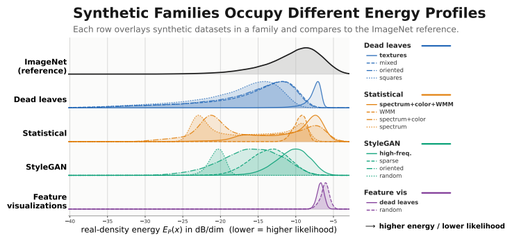
Figure 3 :Energy mismatch is structured.Synthetic sources differ in how they depart from ImageNet: some collapse into narrow high-likelihood bands, others extend into low-likelihood tails, and others remain broad but displaced. Effective synthetic pretraining may require matching the full probability-level profile of natural images, not simply maximising likelihood or feature realism.
出典 · CC BY 4.0 · Choi, Ching Lam, Torralba, Antonio, Isola, Phillip, Jegelka, Stefanie · Shaping Useful Noise: Energy Distributions Predict Visual Pretraining Quality · 論文の図を引用 · 元のPDFの4ページ目から図の部分を抽出しています。
Table 5 : Controlled offline curation from a common source pool at equal selected-set budget. Frozen- feature diagnostics favour ELD-guided selection over uniform and top-likelihood selection. NN denotes the cosine-distance nearest-neighbour diagnostic.
出典 · CC BY 4.0 · Choi, Ching Lam, Torralba, Antonio, Isola, Phillip, Jegelka, Stefanie · Shaping Useful Noise: Energy Distributions Predict Visual Pretraining Quality · 論文の図を引用 · 元のPDFの10ページ目から図の部分を抽出しています。適用範囲と残された課題
ELDは実画像の密度モデルと参照データに依存するため、報告時にはscorerも併せて明記する必要があります。この研究は視覚事前学習に焦点を当てており、教師ありラベルの効率、審美的な忠実度、人間の選好、意味的なcoverageやラベル品質を直接置き換えるものではありません。著者らも、ELDをfeatureベースの指標と併用する補完的な指標として提示しています。キュレーションの結果は固定特徴にもとづくproxyなので、matched pretrainingで転移の利得を確かめる作業が残されています。
論文情報
- 著者
- Choi, Ching Lam, Torralba, Antonio, Isola, Phillip, Jegelka, Stefanie
- 学会・ジャーナル
- arXiv · プレプリント
- 公開日
- 2026年11月9日
- 登録日
- 2026年11月10日
- 更新日
- 2026年11月9日
- バージョン
- v1
- arXiv
- 2611.11962
- カテゴリ
- cs.LG · cs.AI · cs.CV
- ライセンス
- CC BY 4.0
- 掲載内容
- 論文情報・解説・論文の図
この解説は、Refivuの韓国語解説をAIで翻訳したものです。不正確な翻訳や誤りが含まれる可能性があります。論文と図の利用条件は各出典に従います。
アブストラクト
Synthetic data can scale visual pretraining, but current selection criteria only partially explain which datasets train strong representations. We propose using the energy profile of a dataset--the distribution of log-probability levels it occupies under a normalised real-image density model--as an audit and curation principle for synthetic data. To operationalise this view, we introduce Energy-Level Distribution Distance (ELD), which compares real and synthetic energy distributions. Real images span sparse high-likelihood scenes and dense low-likelihood textures, so useful synthetic data should cover this energy range rather than collapse to likely but low-variation samples. Across diverse synthetic datasets, ELD exposes mismatches missed by FID and predicts pretraining performance beyond FID, LPIPS variation, and feature-space recall, including across CNN and ViT self-supervised settings. We then use ELD to resample and mix synthetic sources, matching the real-image energy histogram while preserving diversity and improving downstream transfer.
この論文を引用
Choi, Ching Lam, Torralba, Antonio, Isola, Phillip, Jegelka, Stefanie (2026). Shaping Useful Noise: Energy Distributions Predict Visual Pretraining Quality. arXiv:2611.11962v1. https://arxiv.org/abs/2611.11962v1
BibTeX
@misc{lam2026shaping,
  title = {{Shaping Useful Noise: Energy Distributions Predict Visual Pretraining Quality}},
  author = {Choi, Ching Lam and Torralba, Antonio and Isola, Phillip and Jegelka, Stefanie},
  year = {2026},
  eprint = {2611.11962},
  archivePrefix = {arXiv},
  url = {https://arxiv.org/abs/2611.11962v1}
}