論文解説
A Survey on Accuracy-oriented Neural Recommendation: From Collaborative Filtering to Information-rich Recommendation
精度指向のニューラル推薦に関するサーベイ:協調フィルタリングから情報豊富な推薦まで
- 課題 精度を目標とするニューラル推薦モデルが、データの使い方によってどのように分かれ、発展してきたかを整理しています。
- 手法 推薦モデリングを協調フィルタリング、コンテンツ強化推薦、時間・系列推薦の3つに分け、代表的なモデルの表現学習と相互作用関数を見ていきます。
- 結果 行列分解の限界を越える方向として、アテンション機構、グラフニューラルネットワーク、補助情報の統合、再帰・自己注意モデルが挙げられています。
精度中心のニューラル推薦モデルを整理する必要性
推薦システムは、情報過多を減らし、利用者が求める情報を見つけやすくするための道具として使われています。論文では、行列分解(Matrix Factorization)がNetflixコンペティションの後、2008年から2016年まで主流の推薦モデルだったと説明されています。ただし線形な構造のため、複雑なユーザー・アイテムの相互作用や、テキストや画像のように意味情報の多いアイテムを扱うには限界があるとされています。このサーベイは、こうした背景から、ニューラルネットワークに基づく推薦モデルを精度の目標という観点で体系的に整理しています。特定のトピックや深層学習の手法による分類を中心とした既存のサーベイとは異なり、この論文では推薦モデリングが使うデータの種類によって、協調フィルタリング、コンテンツ強化推薦、時間・系列推薦に分けて見ています。
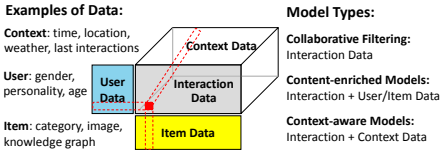
Fig. 1 : An illustration of the data used for recommendation modeling and the three model types.
出典 · CC BY 4.0 · Le Wu, Xiangnan He, Xiang Wang, Kun Zhang, Meng Wang · A Survey on Accuracy-oriented Neural Recommendation: From Collaborative Filtering to Information-rich Recommendation · 論文の図を引用 · 元のPDFの2ページ目から図の部分を抽出しています。協調フィルタリングにおける表現学習と相互作用モデリング
協調フィルタリングの節は、ユーザーとアイテムの埋め込みを学習する表現学習と、学習した表現から選好度を計算する相互作用モデリングに分かれています。表現学習では、ニューラルアテンションモデルのACFが、ユーザーIDの埋め込みと相互作用したアイテムの重み付き和を併用します。各履歴アイテムの重みは、ユーザーとアイテムの関数によって決まります。NAISは重みを対象アイテムに応じて変えるため、同じユーザーでも目的のアイテムごとに異なる表現を作ります。グラフに基づく手法は、ユーザー・アイテム二部グラフ上の埋め込み伝播によって高次の連結性を学習します。NGCFのようなニューラルグラフモデルを経て、LightGCNは不要な非線形変換と活性化関数を取り除いた簡略化モデルとして紹介されています。
相互作用モデリングでは、内積が距離の公理である三角不等式に違反することがあるという限界から、CMLのような距離ベースの指標が登場しました。また、NCFのようにMLPで相互作用関数を近似する方法も併せて紹介されています。
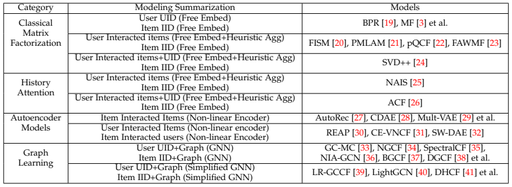
TABLE 1 : Summarization of representation learning approaches for CF
出典 · CC BY 4.0 · Le Wu, Xiangnan He, Xiang Wang, Kun Zhang, Meng Wang · A Survey on Accuracy-oriented Neural Recommendation: From Collaborative Filtering to Information-rich Recommendation · 論文の図を引用 · 元のPDFの4ページ目から図の部分を抽出しています。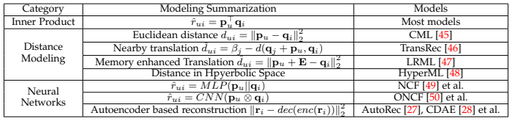
TABLE 2 : Interaction modeling techniques
出典 · CC BY 4.0 · Le Wu, Xiangnan He, Xiang Wang, Kun Zhang, Meng Wang · A Survey on Accuracy-oriented Neural Recommendation: From Collaborative Filtering to Information-rich Recommendation · 論文の図を引用 · 元のPDFの5ページ目から図の部分を抽出しています。コンテンツ強化推薦における補助情報の活用
コンテンツ強化推薦は、協調シグナルのほかに、ユーザープロフィール、テキスト、画像、ソーシャルネットワーク、知識グラフといった補助データを表現学習に取り込みます。テキストの分野では、DeepCoNNがユーザーのレビューとアイテムのレビューをそれぞれTextCNNで符号化したうえで、ファクタライゼーションマシンによって相互作用を学習します。画像の分野では、VBPRがユーザーとアイテムを協調潜在空間とCNNベースの視覚空間の2つの空間に射影し、選好度を足し合わせます。ソーシャル推薦では、DiffNetが社会的影響が複数の段階で再帰的に広がる過程をGNNでモデル化します。知識グラフでは、KGATがユーザー・アイテムの相互作用を協調知識グラフに統合し、アテンション機構で近傍の情報を伝播させます。
論文では、この系列に共通する課題を補助データの選択と統合の方法としてまとめています。

TABLE 3 : Classification of modeling feature-enhanced CF
出典 · CC BY 4.0 · Le Wu, Xiangnan He, Xiang Wang, Kun Zhang, Meng Wang · A Survey on Accuracy-oriented Neural Recommendation: From Collaborative Filtering to Information-rich Recommendation · 論文の図を引用 · 元のPDFの6ページ目から図の部分を抽出しています。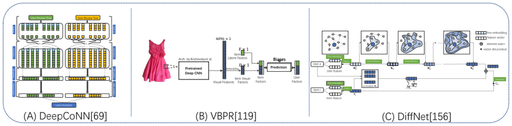
Fig. 2 : The classical methods for content-enriched models
出典 · CC BY 4.0 · Le Wu, Xiangnan He, Xiang Wang, Kun Zhang, Meng Wang · A Survey on Accuracy-oriented Neural Recommendation: From Collaborative Filtering to Information-rich Recommendation · 論文の図を引用 · 元のPDFの8ページ目から図の部分を抽出しています。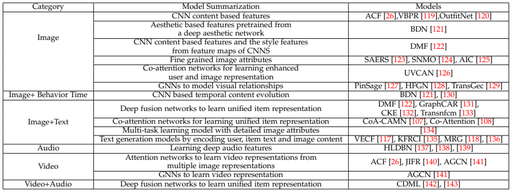
TABLE 4 : Multimedia based recommendation models with different kinds of multimedia input
出典 · CC BY 4.0 · Le Wu, Xiangnan He, Xiang Wang, Kun Zhang, Meng Wang · A Survey on Accuracy-oriented Neural Recommendation: From Collaborative Filtering to Information-rich Recommendation · 論文の図を引用 · 元のPDFの9ページ目から図の部分を抽出しています。時間・セッションベースの系列推薦モデル
時間・系列推薦は、ユーザーの選好が時間とともに変化するという点をモデル化します。RRNは、ユーザーとアイテムの動的埋め込みを2つのRNNで更新し、時点ごとの評価値を予測します。セッションベースの推薦では、GRU4RECがユーザーIDを使わず、セッション内の次のアイテムをRNNで予測します。一方、SASRecは再帰や畳み込みを使わず、自己注意によってユーザーの系列をモデル化します。SR-GNNはセッション内のアイテムをノード、連続するアイテムの組をエッジとするグラフを作り、アイテムの埋め込みを学習します。メモリネットワークは、時間に応じた状態をメモリスロットに保存し、読み出し・書き込み操作で更新する仕組みとして併せて紹介されています。
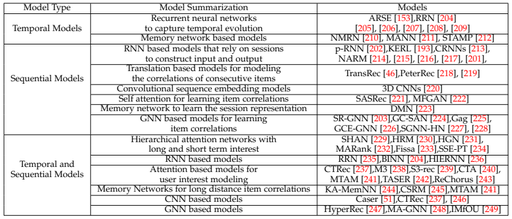
TABLE 5 : A comparison of methods that models the temporal and sequential effects in RS
出典 · CC BY 4.0 · Le Wu, Xiangnan He, Xiang Wang, Kun Zhang, Meng Wang · A Survey on Accuracy-oriented Neural Recommendation: From Collaborative Filtering to Information-rich Recommendation · 論文の図を引用 · 元のPDFの12ページ目から図の部分を抽出しています。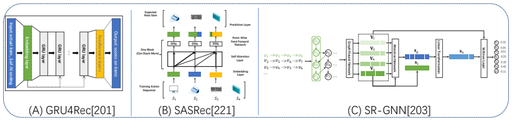
Fig. 3 : The classical methods for temporal/sequential Models
出典 · CC BY 4.0 · Le Wu, Xiangnan He, Xiang Wang, Kun Zhang, Meng Wang · A Survey on Accuracy-oriented Neural Recommendation: From Collaborative Filtering to Information-rich Recommendation · 論文の図を引用 · 元のPDFの13ページ目から図の部分を抽出しています。残された課題と評価の限界
論文では、ニューラル推薦モデルはまだ十分に満足できるものではなく、ベンチマークの構築、グラフ推論と自己教師あり学習、精度以外の多目的評価、再現性の問題が今後の課題だと整理されています。評価については、サンプリングされた指標が全アイテムを対象とした評価と異なる傾向を示すことがある点や、データセットの規模・疎性、ネガティブサンプリング、損失関数の選択によって公正な比較が難しい点が指摘されています。このサーベイ自体は実験を新たに行わず文献を整理したものなので、示された性能上の優位性は、各原論文の条件に従います。
論文情報
- 著者
- Le Wu, Xiangnan He, Xiang Wang, Kun Zhang, Meng Wang
- 学会・ジャーナル
- arXiv · プレプリント
- 公開日
- 2021年4月27日
- 登録日
- 2026年11月6日
- 更新日
- 2021年12月27日
- バージョン
- v3
- arXiv
- 2104.13030
- DOI
- 10.1109/tkde.2022.3145690
- カテゴリ
- cs.IR · cs.LG
- ライセンス
- CC BY 4.0
- 掲載内容
- 論文情報・解説・論文の図
この解説は、Refivuの韓国語解説をAIで翻訳したものです。不正確な翻訳や誤りが含まれる可能性があります。論文と図の利用条件は各出典に従います。
アブストラクト
Influenced by the great success of deep learning in computer vision and language understanding, research in recommendation has shifted to inventing new recommender models based on neural networks. In recent years, we have witnessed significant progress in developing neural recommender models, which generalize and surpass traditional recommender models owing to the strong representation power of neural networks. In this survey paper, we conduct a systematic review on neural recommender models from the perspective of recommendation modeling with the accuracy goal, aiming to summarize this field to facilitate researchers and practitioners working on recommender systems. Specifically, based on the data usage during recommendation modeling, we divide the work into collaborative filtering and information-rich recommendation: 1) collaborative filtering, which leverages the key source of user-item interaction data; 2) content enriched recommendation, which additionally utilizes the side information associated with users and items, like user profile and item knowledge graph; and 3) temporal/sequential recommendation, which accounts for the contextual information associated with an interaction, such as time, location, and the past interactions. After reviewing representative work for each type, we finally discuss some promising directions in this field.
この論文を引用
Le Wu, Xiangnan He, Xiang Wang, Kun Zhang, Meng Wang (2021). A Survey on Accuracy-oriented Neural Recommendation: From Collaborative Filtering to Information-rich Recommendation. arXiv:2104.13030v3. https://doi.org/10.1109/tkde.2022.3145690
BibTeX
@article{wu2021survey,
  title = {{A Survey on Accuracy-oriented Neural Recommendation: From Collaborative Filtering to Information-rich Recommendation}},
  author = {Le Wu and Xiangnan He and Xiang Wang and Kun Zhang and Meng Wang},
  year = {2021},
  eprint = {2104.13030},
  archivePrefix = {arXiv},
  doi = {10.1109/tkde.2022.3145690},
  url = {https://arxiv.org/abs/2104.13030v3}
}