論文解説
A First Look at System One Decision Models for Malware Detection
マルウェア検出のためのSystem One決定モデルの初期検討
- 課題 既存のPE検出器は判定の根拠を示せず、LLMは較正されていない生成回答に依存しています。
- 手法 静的解析の状態をSystem Oneモデルに入力し、A0、A1、A2の判読とS1Malの結合で点数を算出します。
- 結果 BODMASのテスト分割では、S1MalのAUROCは0.9946で、τ1%ではマルウェアファイルの93.47%を検出しました。
静的解析による検出の難しさ
Windows PEマルウェア検出器には、ごく低いFPRでも使える較正済みのスコアと、アナリストが読める根拠の両方が必要です。特徴量エンジニアリングに基づく検出器はスコアを出せますが、根拠は示しません。デコンパイルしたコードを読むLLMは根拠をテキストで示せますが、生成テキストの信頼度は較正されていません。本論文は、System Oneの決定モデルが静的解析の状態の上で、この空白を埋められるかを確認します。評価対象はマルウェアPEファイルの検出であり、実行時の挙動は扱いません。
状態の構成と3つの判読
隔離された仮想マシンでGhidraとcapaが各バイナリを解析し、ホストがその記録をテキストの状態に変換します。モデルは同じtyped質問を受け取り、回答の確率を出力します。A0は、1つのverdict質問のロジットをスコアとして使います。A1は、32個の原子的な行動質問のロジットをgradient-boosted tree結合器でまとめます。A2は、状態の埋め込みの上に学習させたヘッドでスコアを出します。S1Malは、CLM-8Bの原子的な回答とA2のスコアを決定木で結合します。コレクション間の差を生むタイムスタンプやツール名といった手がかりは、正規化により取り除きます。
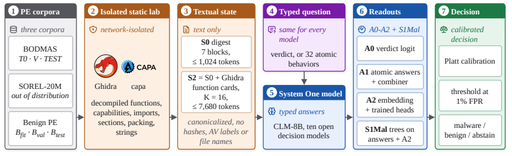
Figure 1 : Overview of the pipeline and of S1Mal.
出典 · CC BY 4.0 · Pier Mattia Basciano, Giovanni Farina, Salvatore Monteleone · A First Look at System One Decision Models for Malware Detection · 論文の図を引用 · 元のPDFの3ページ目から図の部分を抽出しています。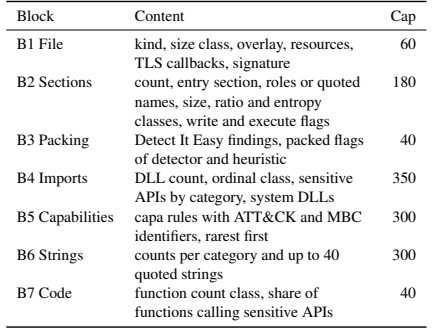
Table 2 : Blocks of the S0 digest.
出典 · CC BY 4.0 · Pier Mattia Basciano, Giovanni Farina, Salvatore Monteleone · A First Look at System One Decision Models for Malware Detection · 論文の図を引用 · 元のPDFの5ページ目から図の部分を抽出しています。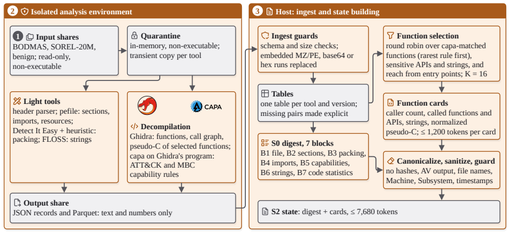
Figure 2 : From the binary to the textual state.
出典 · CC BY 4.0 · Pier Mattia Basciano, Giovanni Farina, Salvatore Monteleone · A First Look at System One Decision Models for Malware Detection · 論文の図を引用 · 元のPDFの6ページ目から図の部分を抽出しています。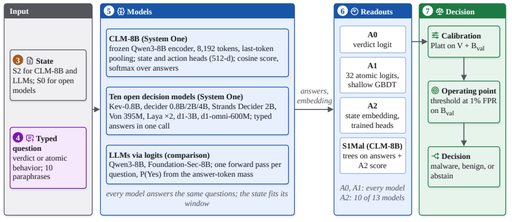
Figure 3 : From the state and the typed question to the decision.
出典 · CC BY 4.0 · Pier Mattia Basciano, Giovanni Farina, Salvatore Monteleone · A First Look at System One Decision Models for Malware Detection · 論文の図を引用 · 元のPDFの7ページ目から図の部分を抽出しています。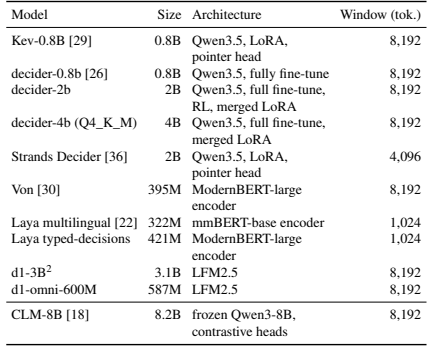
Table 3 : Decision models.
出典 · CC BY 4.0 · Pier Mattia Basciano, Giovanni Farina, Salvatore Monteleone · A First Look at System One Decision Models for Malware Detection · 論文の図を引用 · 元のPDFの7ページ目から図の部分を抽出しています。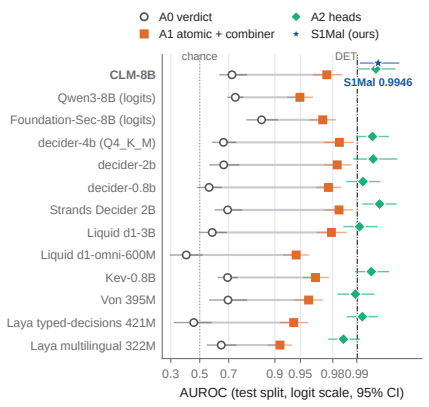
Figure 4 : Readouts of every prompt-reading model.
出典 · CC BY 4.0 · Pier Mattia Basciano, Giovanni Farina, Salvatore Monteleone · A First Look at System One Decision Models for Malware Detection · 論文の図を引用 · 元のPDFの9ページ目から図の部分を抽出しています。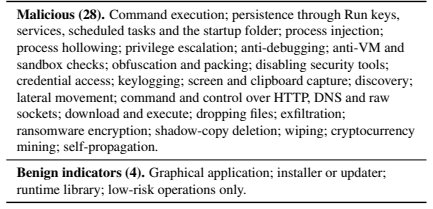
Table 8 : Behaviors of the atomic question set.
出典 · CC BY 4.0 · Pier Mattia Basciano, Giovanni Farina, Salvatore Monteleone · A First Look at System One Decision Models for Malware Detection · 論文の図を引用 · 元のPDFの19ページ目から図の部分を抽出しています。BODMASテスト分割での検出結果
テスト分割では、CLM-8BのA0はAUROC 0.7194、A1は0.9763でした。A2ヘッドは0.9943に上がり、S1Malは0.9946でした。S1Malは固定閾値τ1%でマルウェアファイルの93.47%を検出し、実現したFPRは1.45%でした。同じ条件では、A2は90.90%、DETは88.24%でした。0.1% FPRでは、S1Malは59.15%を維持しました。比較した他の判読は最大46.59%にとどまりました。この数値は、BODMASのテスト分割と固定された検証閾値で得られたものです。
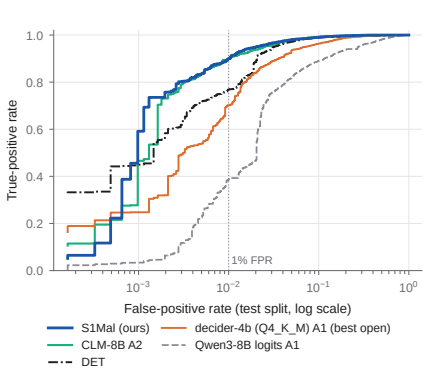
Figure 5 : Detection at low false-positive rates.
出典 · CC BY 4.0 · Pier Mattia Basciano, Giovanni Farina, Salvatore Monteleone · A First Look at System One Decision Models for Malware Detection · 論文の図を引用 · 元のPDFの10ページ目から図の部分を抽出しています。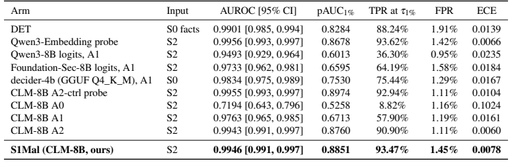
Table 5 : Detection on the test split (E1).
出典 · CC BY 4.0 · Pier Mattia Basciano, Giovanni Farina, Salvatore Monteleone · A First Look at System One Decision Models for Malware Detection · 論文の図を引用 · 元のPDFの11ページ目から図の部分を抽出しています。分布外への転移と静的解析の限界
SOREL-20Mの分布外評価で、固定したτ1%を適用すると、S1Malはマルウェアファイルの54.75%を検出しました。A2は51.87%、DETは66.46%でした。著者らは、この結果は新しいデータ源で閾値を再調整する必要があることを示している、と解釈しています。また、評価は静的解析に基づくため、実行時にのみ現れる挙動は状態に含まれません。1% FPRの運用点は27個の偽陽性に基づくため、0.1% FPRの閾値には、より大きな陽性の検証集合が必要です。
論文情報
- 著者
- Pier Mattia Basciano, Giovanni Farina, Salvatore Monteleone
- 学会・ジャーナル
- arXiv · プレプリント
- 公開日
- 2026年11月16日
- 登録日
- 2026年11月17日
- 更新日
- 2026年11月16日
- バージョン
- v1
- arXiv
- 2611.20699
- カテゴリ
- cs.CR · cs.AI · cs.LG
- ライセンス
- CC BY 4.0
- 掲載内容
- 論文情報・解説・論文の図
この解説は、Refivuの韓国語解説をAIで翻訳したものです。不正確な翻訳や誤りが含まれる可能性があります。論文と図の利用条件は各出典に従います。
アブストラクト
Malware detection needs scores calibrated at a fixed false positive rate (FPR) and decisions an analyst can read: feature-based detectors give the first, large language models (LLMs) on decompiled code the second, through generated text of uncalibrated confidence. System One decision models answer a typed question about a text with a probability over its declared answers in one forward pass. We present the first evaluation of these models for Windows Portable Executable malware detection, analyze how they decide, and propose S1Mal, an ensemble on the typed answers and the embedding of CLM-8B. In an isolated virtual machine, Ghidra and capa decompose each binary, and the host renders the records into a canonical textual state, a digest of headers, imports, MITRE ATT&CK capabilities and strings, optionally with decompiled functions, without class shortcuts. Three readouts score each model on the state: A0, the probability of one verdict question; A1, 32 atomic behavioral questions weighed by gradient-boosted trees; A2, heads on the model's state embedding. S1Mal feeds gradient-boosted trees with the atomic answers and the A2 score of CLM-8B. We evaluate CLM-8B, ten open decision models and two LLMs read through logits on BODMAS temporal splits, SOREL-20M out-of-distribution malware and 14,534 matched benign files. On BODMAS, A0 wastes the static evidence: its area under the receiver operating characteristic curve (AUROC) spans 0.4025-0.8590 across 13 models. A1 recovers it, raising every model's AUROC by +54.61% on average; A2 lifts CLM-8B by +0.2749 to 0.9943, above a combiner on digest facts (0.9901), and reaches 0.9853-0.9948 on nine open models. S1Mal reaches 0.9946 and detects 93.47% of the malware at a realized FPR of 1.45%, and 59.15% at 0.1% FPR on the test ROC curve, against 46.59% with A2. S1Mal gives analysts calibrated decisions, each with the atomic answers behind it.
この論文を引用
Pier Mattia Basciano, Giovanni Farina, Salvatore Monteleone (2026). A First Look at System One Decision Models for Malware Detection. arXiv:2611.20699v1. https://arxiv.org/abs/2611.20699v1
BibTeX
@misc{basciano2026first,
  title = {{A First Look at System One Decision Models for Malware Detection}},
  author = {Pier Mattia Basciano and Giovanni Farina and Salvatore Monteleone},
  year = {2026},
  eprint = {2611.20699},
  archivePrefix = {arXiv},
  url = {https://arxiv.org/abs/2611.20699v1}
}