Paper commentary
A First Look at System One Decision Models for Malware Detection
- Problem Malware scores must hold a fixed low false positive rate and show the evidence behind them, but LLM verdicts arrive as generated text with uncalibrated confidence.
- Method Ghidra and capa outputs are rendered into canonical textual states, and System One models answer typed questions through three readouts (A0, A1, A2); S1Mal fuses the atomic answers with CLM-8B's embedding score.
- Results CLM-8B's A2 heads reached an AUROC of 0.9943 on the test split, and S1Mal reached 0.9946 and detected 93.47% of the malware at a realized FPR of 1.45%.
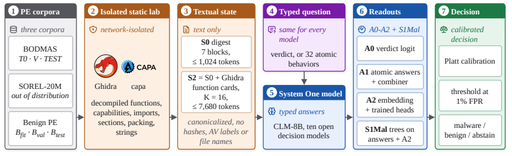
Figure 1 : Overview of the pipeline and of S1Mal.
Original paper · CC BY 4.0 · Pier Mattia Basciano, Giovanni Farina, Salvatore Monteleone · A First Look at System One Decision Models for Malware Detection · Original paper figure · Extracted the figure area from page 3 of the original PDF.Why a single verdict is not enough
Endpoint malware detection has to run at volumes where only very low false positive rates are acceptable, so a detector's score must hold at a threshold fixed before testing.
System One decision models take a different route: a caller sends a textual state and a typed question, and the model returns a probability over the declared answers in one forward pass, without generated text. The study asks whether these models can read static evidence from Windows PE files and how far a single verdict question captures that evidence compared with more specific questions.
From binary to textual state
Each binary is analysed in a virtual machine without a network adapter, where pefile, Detect It Easy, FLOSS, Ghidra and capa extract headers, imports, packing, strings, decompiled functions and capability matches. Only text and numbers leave the virtual machine, and the host replaces embedded executable headers and encoded blobs with placeholders before building the states.
The S0 digest uses seven blocks, covering the file, sections, packing, imports, capabilities, strings and code, within at most 1,024 tokens. S2 adds up to 16 decompiled function cards to the digest, within 7,680 tokens, which is below the 8,192-token window of CLM-8B and the LLMs once the question and a margin are removed. The choice of state was fixed by a rule before the experiments: S2 replaces S0 for CLM-8B and the LLMs only if it raises the validation AUROC of CLM-8B's heads with a 95% paired interval above zero.
Three readouts and the S1Mal ensemble
A0 uses the probability of one verdict question as the score, so it is the identity on the verdict logit. A1 feeds the 32 atomic answers into a gradient-boosted combiner, which learns how the answers combine and so does not assume that behaviours are independent. A2 trains heads on the embedding of the state and the verdict question, so the score comes from the model's internal representation rather than from one answer.
S1Mal feeds gradient-boosted trees with the 32 atomic answers and the mean of five fold heads trained on the embedding, so each decision keeps the atomic answers behind it.
Every score is passed through a calibration map and then compared with a threshold set at a 1% false positive rate on the validation benign files, and a band between two thresholds defers the file. Figure 3 shows how a state and a typed question pass through the models to the readouts and the calibrated decision.
How CLM-8B scores an answer
CLM-8B takes the last-token embedding of a frozen Qwen3-8B, with 36 layers and 4,096 dimensions, and passes the state and the candidate answers through two separate heads that map them into one space. The answer probability is a softmax over the cosine similarities between the state and each candidate, scaled by a learned inverse temperature, as in the following equation.
\[ P(a \mid s,q)=\frac{\exp\big(\lambda\cos(f_S(E(s\oplus q)),\, f_A(E(c_a)))\big)}{\sum_{a'\in A_q}\exp\big(\lambda\cos(f_S(E(s\oplus q)),\, f_A(E(c_{a'})))\big)} \]
Because the encoder is causal and pools on the last token, the cached state can be reused for every question asked about the same state, so the pipeline encodes each state once and encodes only the tokens of each question.
Corpora, splits and evaluation protocol
BODMAS supplies 57,293 disarmed Windows malware files first seen between August 2019 and September 2020, and SOREL-20M supplies 46,918 disarmed files first seen between January and May 2017 that serve only as out-of-distribution data. The benign collection holds 198,461 PE files from several software sources, and deduplication by the hash of the executable sections removed 79.8% of BODMAS, leaving 11,562 files.
The evaluation includes 14,534 matched benign files.
Malware is split by first-seen date: files up to October 2019 fit the trained components, November and December 2019 tune and calibrate, and January to September 2020 is the test period. Benign files are split by software component, so that different versions of one program never fall into two splits.
AUROC comes with 95% cluster-bootstrap intervals over 2,000 resamples, where clusters are malware families and benign software groups. Thresholds are fixed on the validation data and the realized FPR is then read on the test benign files, and paired comparisons use exact McNemar tests and a paired bootstrap, with Holm correction within each family at α=0.05.
Each experiment fixed its hypotheses and endpoints before its runs, and only the frozen thresholds, calibration maps, combiners and heads scored the test, benign-test and OOD sets in a single pass.
Detection on the test split
The single verdict readout A0 reaches an AUROC between 0.4025 and 0.8590 across 13 models, so one question leaves much of the static evidence unused. A1 raises the AUROC of every model, by +54.61% on average, and for CLM-8B the lift is +0.2569 with a 95% interval of [+0.1790, +0.3365].
CLM-8B's A2 heads reach an AUROC of 0.9943 with interval [0.991, 0.997], which is +0.2749 over A0. Against the digest-fact combiner DET, whose AUROC is 0.9901, the A2 gain is +0.0041 with interval [+0.0012, +0.0078] and Holm p = 0.010.
S1Mal reaches an AUROC of 0.9946 with interval [0.991, 0.997], and at the 1% threshold it detects 93.47% of the test malware at a realized FPR of 1.45%. At the same FPR the A2 score reaches 92.15%, so the authors attribute roughly half of the gain to the fused ranking and half to the operating point.
On the nine open models whose runtime exposes the representation, heads on the embedding lift each model over its atomic answers, and the best, Strands Decider 2B, reaches an AUROC of 0.9948.
Operating point at very low false positive rates
At 0.1% FPR, which the six benign test files allowed by this rate correspond to, S1Mal keeps 59.15% of the malware, while the other arms keep at most 46.59%. The authors attribute this tail to the benign files that the embedding scores highest, and to the atomic answers that help separate those files from malware.
Transfer to SOREL-20M
On SOREL-20M, at the frozen 1% threshold, S1Mal detects 54.75% of the malware with interval [53.32%, 56.18%], while A2 detects 51.87% with interval [50.44%, 53.31%]. DET detects 66.46% and A1 detects 22.20%, while A0 detects 2.98%, each at the realized FPR of its threshold on the benign test files. Against the benign test files, the SOREL-20M malware is ranked at an AUROC of 0.9453 by S1Mal, 0.9472 by A2 and 0.9501 by DET.
The thresholds fixed on BODMAS validation malware pass about half of the SOREL-20M malware, so the authors recommend that a new feed use an operating point fitted on its own validation files. Removing the quoted strings from the state moves A2's TPR from 52.63% to 61.34% at the frozen threshold, with FPR rising from 1.17% to 2.58%, so the strings mostly weigh toward benign.
Hallucination, invariance and planted text
CLM-8B never affirms an absent capability, at 0.00%, and the authors connect this to the frequent and co-occurring items, which generative models tend to presume, being where its typed answers hold best.
On the test sub-sample, inverting the verdict question flips 1.31% of CLM-8B's verdicts, while swapping the two options flips none, and 10% padding flips 1.40%, measured on the 712 files whose padded state fits the window. Paraphrasing the verdict question flips on average 26.14% of CLM-8B's verdicts, while the same kind of paraphrase flips 18.81% of S1Mal's decisions, so S1Mal is the decision of CLM-8B that paraphrase moves least.
At the 1% threshold the verdict's malware TPR falls from 6.50% to 0.00%, the atomic readout's from 59.50% to 1.50%, and A2 keeps the highest TPR at 72.00%, down from 88.00%. S1Mal's TPR falls from 89.50% to 52.00% under planted text, and its FPR on benign files containing the text is 9.30%, less than half of A2's, according to the authors.
Canonicalization and shortcut controls
Feeding the raw state, without canonicalization, raises the AUROC of A2 by +0.0012, with Holm p = 0.045.
Drift over the test months
In 2020-03, the lowest month for A2 at 84.02%, S1Mal detects 91.60% of the malware, which the authors attribute to the atomic answers steadying the months where the embedding score dips.
Paper info
- Authors
- Pier Mattia Basciano, Giovanni Farina, Salvatore Monteleone
- Venue
- arXiv · Preprint
- First published
- 2026-11-16
- Added
- 2026-11-17
- Updated
- 2026-11-16
- Version
- v1
- arXiv
- 2611.20699
- Category
- cs.CR · cs.AI · cs.LG
- Original paper terms
- CC BY 4.0
- What we show
- Paper info, commentary and permitted figures from the original paper
AI commentary is a separate explanation from the original paper and may contain errors. The original paper and figures follow each source's terms of use and any rights noted separately.
Abstract
Malware detection needs scores calibrated at a fixed false positive rate (FPR) and decisions an analyst can read: feature-based detectors give the first, large language models (LLMs) on decompiled code the second, through generated text of uncalibrated confidence. System One decision models answer a typed question about a text with a probability over its declared answers in one forward pass. We present the first evaluation of these models for Windows Portable Executable malware detection, analyze how they decide, and propose S1Mal, an ensemble on the typed answers and the embedding of CLM-8B. In an isolated virtual machine, Ghidra and capa decompose each binary, and the host renders the records into a canonical textual state, a digest of headers, imports, MITRE ATT&CK capabilities and strings, optionally with decompiled functions, without class shortcuts. Three readouts score each model on the state: A0, the probability of one verdict question; A1, 32 atomic behavioral questions weighed by gradient-boosted trees; A2, heads on the model's state embedding. S1Mal feeds gradient-boosted trees with the atomic answers and the A2 score of CLM-8B. We evaluate CLM-8B, ten open decision models and two LLMs read through logits on BODMAS temporal splits, SOREL-20M out-of-distribution malware and 14,534 matched benign files. On BODMAS, A0 wastes the static evidence: its area under the receiver operating characteristic curve (AUROC) spans 0.4025-0.8590 across 13 models. A1 recovers it, raising every model's AUROC by +54.61% on average; A2 lifts CLM-8B by +0.2749 to 0.9943, above a combiner on digest facts (0.9901), and reaches 0.9853-0.9948 on nine open models. S1Mal reaches 0.9946 and detects 93.47% of the malware at a realized FPR of 1.45%, and 59.15% at 0.1% FPR on the test ROC curve, against 46.59% with A2. S1Mal gives analysts calibrated decisions, each with the atomic answers behind it.
Quote from the paper
Pier Mattia Basciano, Giovanni Farina, Salvatore Monteleone (2026). A First Look at System One Decision Models for Malware Detection. arXiv:2611.20699v1. https://arxiv.org/abs/2611.20699v1
BibTeX
@misc{basciano2026first,
  title = {{A First Look at System One Decision Models for Malware Detection}},
  author = {Pier Mattia Basciano and Giovanni Farina and Salvatore Monteleone},
  year = {2026},
  eprint = {2611.20699},
  archivePrefix = {arXiv},
  url = {https://arxiv.org/abs/2611.20699v1}
}