論文解説
Latent Feedback Is a Compute and Data Amplifier
計算量とデータを増幅する潜在フィードバック
- 課題 高品質データが不足しているとき、同じ計算量を反復エポックに使う代わりに潜在フィードバックに使うほうがよいかは、これまで確認されていませんでした。
- 手法 潜在フィードバックTransformerを、同じ計算量を使う多エポックのTransformerと比較します。両モデルを同時に当てはめたスケーリング則で、削減量を説明します。
データが不足しているときの問い
高品質なテキストデータが限られた状況では、同じデータを複数エポック繰り返して学習する方法が一般的です。しかし、繰り返すほど新たに得られる価値は減っていきます。この論文では、同じ計算量をより多くのエポックに使う代わりに潜在フィードバックTransformerに使うと、より良くなるかを問います。潜在フィードバックは、各トークンの最上位層の状態を次のトークンの入力へ戻す構造です。比較対象は、同じ計算量をより多くのエポックに使うバニラTransformerです。従来の比較では学習トークンを固定していたため、反復データの条件での公平な比較にはなっていませんでした。
潜在フィードバックの計算と学習
潜在フィードバックTransformerは、位置tの入力を、埋め込みと、前の位置の最上位層の状態を正規化した値をWで写像した値との和として作ります。教師強制学習では、この状態を一度に得られないため、系列全体に対して不動点反復のパスを回します。最初のパスはフィードバックを読まず、以降のパスは前のパスの最上位層の状態を読みます。このため、トークンあたりの学習FLOPsはTransformerのc倍になります。デコーディングでは、前のトークンの最上位層の状態をすでに持っています。そのためトークンごとのコストはTransformerと同程度で、KVキャッシュにはベクトルが1つ加わります。
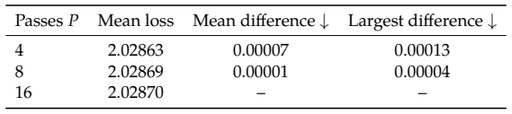
Table 5 : Loss of latent feedback scored withP parallel passes of Equation2, on ten runs of an earlier ladder (one 271M, nine 778M) and a 10M-token Dolma 3 validation slice. Differences are taken per run against 16 passes.
出典 · CC BY 4.0 · Benhao Huang, Chaitanya Dwivedi, Xuezhe Ma, Alexander Moreno, Hector Liu · Latent Feedback Is a Compute and Data Amplifier · 論文の図を引用 · 元のPDFの15ページ目から図の部分を抽出しています。データ制約則の拡張
この論文は、Muennighoffらのデータ制約スケーリング則を拡張します。損失は、容量項A/(vs N)^αとデータ項B/Ds^βsを、q指数で結合した形です。Dsは反復エポックの価値を反映した有効データで、R*を用いてU(1+R*(1−e^{−(R−1)/R*}))で計算します。ここでR=F/csです。潜在フィードバックは、vsの分だけ多くのパラメータを持つTransformerとして扱われます。この形では、容量項の重みwが1に近いとモデルサイズがボトルネックになります。wが小さいとデータがボトルネックになります。したがって、潜在フィードバックが勝つ交差予算F*が存在し、これは定理とその条件として示されています。
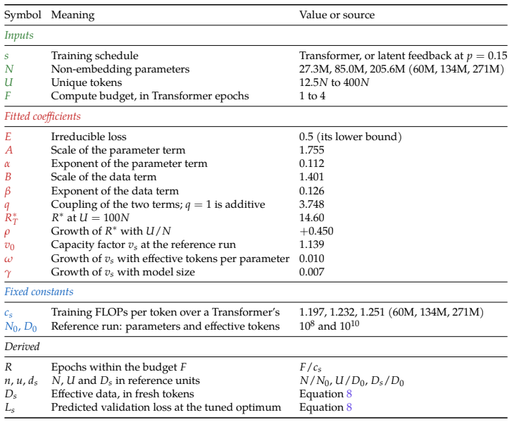
Table 4 : Symbols of Equation8, with the joint fit on the 128 cells. AppendixE gives the equation.
出典 · CC BY 4.0 · Benhao Huang, Chaitanya Dwivedi, Xuezhe Ma, Alexander Moreno, Hector Liu · Latent Feedback Is a Compute and Data Amplifier · 論文の図を引用 · 元のPDFの14ページ目から図の部分を抽出しています。固有データを固定したときの計算量削減
固有データUを固定し、Transformerが同じ損失に到達するのに必要な計算量の倍率κを測定しました。2エポックでは、潜在フィードバックは12.5 UTPPで計算量が8%多くかかりました。同じ条件で、100 UTPPでは15%から18%、400 UTPPでは44%から48%削減しました。削減量は、固有データに対するパラメータ比とエポック数が増えるほど大きくなりました。一例として、271Mモデルと U=200N では、κは1.38でした。この数値は複数のサイズのうち特定のセルでの測定であり、すべてのサイズや予算で同じ値が当てはまるわけではありません。
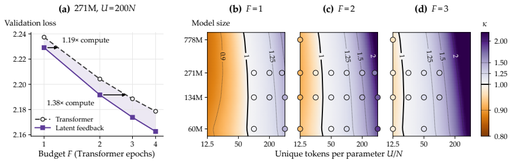
Figure 2 : The compute multiplier κ across unique data and model size. (a) 271M withU = 200N: each arrow runs from a latent feedback cell to the budget at which the Transformer reaches its loss, labelled withκ. (b)–(d) Dots are measured cells, filled with theκ read off the Transformer’s losses atF = 1 to 4 interpolated inlog F; everywhere else the map shows the law of Section5.3. κ grows with unique tokens per parameter and with the budget F, and its contours run nearly vertically: it depends onU/N far more than on size.
出典 · CC BY 4.0 · Benhao Huang, Chaitanya Dwivedi, Xuezhe Ma, Alexander Moreno, Hector Liu · Latent Feedback Is a Compute and Data Amplifier · 論文の図を引用 · 元のPDFの6ページ目から図の部分を抽出しています。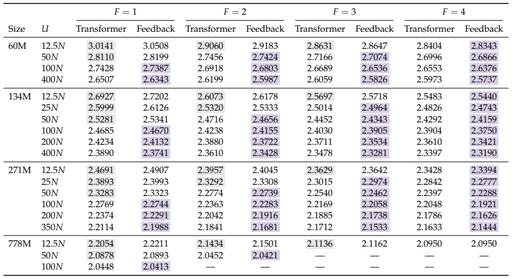
Table 6 : Validation loss ↓ of every cell at F = 1 to 4. Both models, at equal size, unique data and budgetF; Feedback is the latent feedback Transformer. The lower of each pair is shaded: purple where latent feedback leads, grey where the Transformer does. 778M is held out of the law; —: its grid has no such cell.
出典 · CC BY 4.0 · Benhao Huang, Chaitanya Dwivedi, Xuezhe Ma, Alexander Moreno, Hector Liu · Latent Feedback Is a Compute and Data Amplifier · 論文の図を引用 · 元のPDFの16ページ目から図の部分を抽出しています。エポックを固定したときの固有データの削減
エポックを固定し、Transformerが同じ損失に到達するのに必要な固有データの倍率µを測定しました。271Mモデルと2エポックでU=50Nの場合、µは1.34と測定されました。潜在フィードバックは、Transformerより25%少ない固有データで済みました。271Mで最大の削減は、U=100Nと3エポックで現れました。このときµは1.69で、固有データの41%でした。削減はU/Nとエポック数が増えるほど大きくなりました。反復は最大4エポックまで測定しました。
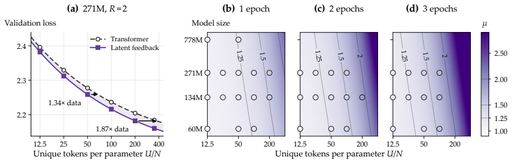
Figure 3 : The data multiplier µ across unique data and model size. (a) 271M at two epochs: each arrow is the unique data latent feedback saves; the arrow atU = 200N is extrapolated. (b)–(d) Dots are measured cells, read off the Transformer’s losses acrossU interpolated inlog U (Appendix D); everywhere else, the map shows the law of Section5.3. µ grows with unique data and with epochs, and depends onU/N far more than on size.
出典 · CC BY 4.0 · Benhao Huang, Chaitanya Dwivedi, Xuezhe Ma, Alexander Moreno, Hector Liu · Latent Feedback Is a Compute and Data Amplifier · 論文の図を引用 · 元のPDFの7ページ目から図の部分を抽出しています。当てはめた法則による保留サイズの予測
60M、134M、271Mのすべてのセルを同時に当てはめた法則は、保留された778Mモデルの損失を予測しました。この法則は、2つのモデル間の差についても、すべての保留行で0.05%以内と予測しました。格子外の予測は、当てはめた法則による外挿です。実際の学習で確認した結果とは区別する必要があります。
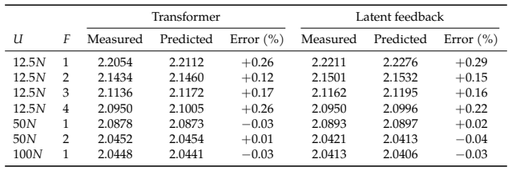
Table 1 : Held-out test of the law at 778M.Fittedon60Mto271Monly. Error: (predicted −measured)/measured.
出典 · CC BY 4.0 · Benhao Huang, Chaitanya Dwivedi, Xuezhe Ma, Alexander Moreno, Hector Liu · Latent Feedback Is a Compute and Data Amplifier · 論文の図を引用 · 元のPDFの8ページ目から図の部分を抽出しています。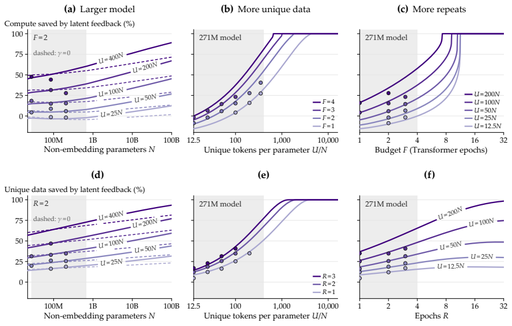
Figure 4 : The savings beyond the grid, as the law of Section 5.3 predicts them. Every curve comes from one fit of the law to all cells; the dots are the few of those cells that lie on each curve. Each panel extends one variable beyond its measured range (shaded), with one curve per value of a second variable; in (a) and (d), dashed curves set γ = 0, so v does not grow with size. Top: compute saved at equal unique data. Bottom: unique data saved at equal epochs. A saving of 100% means the Transformer cannot reach latent feedback’s loss with any number of epochs or any amount of unique data.
出典 · CC BY 4.0 · Benhao Huang, Chaitanya Dwivedi, Xuezhe Ma, Alexander Moreno, Hector Liu · Latent Feedback Is a Compute and Data Amplifier · 論文の図を引用 · 元のPDFの9ページ目から図の部分を抽出しています。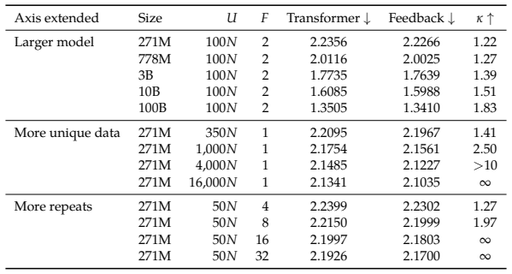
Table 8 : The fitted law beyond the grid: predicted losses along one curve of Figure4 (a) to (c), withκ. Each block extends one axis from a grid cell (its first row); sizes above 778M count non-embedding parameters.∞: no number of epochs lets the Transformer match.
出典 · CC BY 4.0 · Benhao Huang, Chaitanya Dwivedi, Xuezhe Ma, Alexander Moreno, Hector Liu · Latent Feedback Is a Compute and Data Amplifier · 論文の図を引用 · 元のPDFの19ページ目から図の部分を抽出しています。同じFLOPsの大きなTransformosとの比較
潜在フィードバックがc倍のFLOPsを使う点を考慮し、同じ固有データでc倍大きいTransformerと比較しました。このTransformerは、すべての当てはめセルで損失が0.006から0.012低くなりました。ただし、このモデルはデコーディング段階あたりのコストがc倍で、KVキャッシュも大きくなります。したがって、モデルサイズを自由に選べる場合の解釈は、デコーディングコストとあわせて読む必要があります。
反復による過学習と下流タスク
最大4エポックまで、両モデルとも反復による過学習は見られませんでした。最も少ない固有データでも、検証損失は4エポックの間ずっと下がり続けました。下流評価は、Olmo 3 Base Easyセットの109個のタスクと37個のグループを用い、BPBで計算しました。シードの分散の逆数でグループを重み付けしています。F=4では、潜在フィードバックが測定した17個の完了セルすべてでBPBが低くなりました。2つの指標は、71組のうち59組で同じ優位性を示しました。
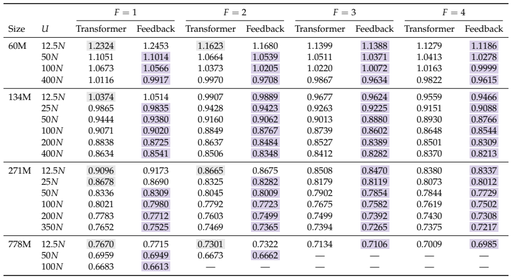
Table 2 : Downstream tasks at equal model size, unique data and compute. Bits per byte (BPB↓) of both models at budgets ofF = 1 to 4 Transformer epochs. The lower of each pair is shaded. BPB averages 37 task suites, each weighted by its inverse seed variance (AppendixH).
出典 · CC BY 4.0 · Benhao Huang, Chaitanya Dwivedi, Xuezhe Ma, Alexander Moreno, Hector Liu · Latent Feedback Is a Compute and Data Amplifier · 論文の図を引用 · 元のPDFの10ページ目から図の部分を抽出しています。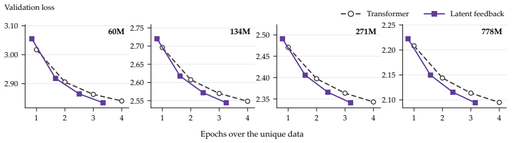
Figure 6 : Repeats up to four epochs do not overfit. Validation loss after one to four epochs at the scarcest unique data, U = 12.5N, one panel per model size; both curves keep falling. Latent feedback costsc > 1 Transformer FLOPs per token, so at equal compute it trains fewer epochs and its points sit to the left.
出典 · CC BY 4.0 · Benhao Huang, Chaitanya Dwivedi, Xuezhe Ma, Alexander Moreno, Hector Liu · Latent Feedback Is a Compute and Data Amplifier · 論文の図を引用 · 元のPDFの15ページ目から図の部分を抽出しています。規模と構造の限界
論文では、実験の規模は比較的小さく、バックボーンは1つだけだと述べられています。より大きなモデルやデータ予算、別の構造では、交差点が変わる可能性があります。潜在フィードバックも単一の固定スケジュールで学習されており、さらなる最適化の余地があります。反復深度モデルとの比較は、まだ行われていません。
論文情報
- 著者
- Benhao Huang, Chaitanya Dwivedi, Xuezhe Ma, Alexander Moreno, Hector Liu
- 学会・ジャーナル
- arXiv · プレプリント
- 公開日
- 2026年11月16日
- 登録日
- 2026年11月17日
- 更新日
- 2026年11月16日
- バージョン
- v1
- arXiv
- 2611.20404
- カテゴリ
- cs.LG
- ライセンス
- CC BY 4.0
- 掲載内容
- 論文情報・解説・論文の図
この解説は、Refivuの韓国語解説をAIで翻訳したものです。不正確な翻訳や誤りが含まれる可能性があります。論文と図の利用条件は各出典に従います。
アブストラクト
When high-quality data runs out, a common practice is to train on it for several epochs, but each repeat is worth less than the last. Latent feedback, which feeds each token's top-layer state into the next token's input, is another way to spend that compute, yet it has not been tested against a vanilla Transformer that spends the same compute on more epochs. We run this test across a ladder of model sizes, unique data and epochs, tuning both models at every size and amount of unique data. Latent feedback makes every FLOP and every token count for more except when unique data is scarce relative to model size, a regime that today's models are far from. We find that latent feedback serves as an amplifier: with unique data fixed, it reaches a Transformer's loss with less compute; with epochs fixed, it reaches that loss with less unique data. Furthermore, both savings grow with unique data per parameter and with repetition, and downstream tasks agree. To go beyond our grid, we fit one scaling law to both models, in which latent feedback enters as a Transformer with more parameters; it predicts that both savings keep growing with unique data and repetition. Fitted on models from 60M to 271M parameters, the law predicts the losses at a held-out 778M size to within 0.3% and the gap between the two models to within 0.05%. At most, latent feedback saves 48% of the compute and 47% of the unique data. When data, not compute, is the limit, latent feedback is the better use of a FLOP for a model of a given size.
この論文を引用
Benhao Huang, Chaitanya Dwivedi, Xuezhe Ma, Alexander Moreno, Hector Liu (2026). Latent Feedback Is a Compute and Data Amplifier. arXiv:2611.20404v1. https://arxiv.org/abs/2611.20404v1
BibTeX
@misc{huang2026latent,
  title = {{Latent Feedback Is a Compute and Data Amplifier}},
  author = {Benhao Huang and Chaitanya Dwivedi and Xuezhe Ma and Alexander Moreno and Hector Liu},
  year = {2026},
  eprint = {2611.20404},
  archivePrefix = {arXiv},
  url = {https://arxiv.org/abs/2611.20404v1}
}