논문 해설
Computer-assisted Pronunciation Training -- Speech synthesis is almost all you need
컴퓨터 보조 발음 훈련 -- 음성 합성이 거의 전부 필요하다
- 연구 문제 비원어민 발음 오류 검출은 잘못 발음된 학습 데이터가 부족해 정확도가 제한됩니다.
- 연구 방법 발음 오류 검출을 음성 생성 문제로 재정식화하고, P2P, T2S, S2S 세 방법으로 발음 오류 음성을 합성해 학습 데이터를 늘립니다.
- 주요 결과 GUT Isle corpus에서 S2S 방법은 P2P보다 AUC를 0.686에서 0.749로 높였고, 최고 S2S 결과는 PR 기준선 대비 41% 향상되었습니다.
발음 오류 검출의 데이터 부족 문제
비원어민 영어 학습자의 발음 오류를 자동으로 찾는 CAPT 방법은 기존 연구에서 60% 정밀도와 40%-80% 재현율 수준에 머물러 있다고 보고됩니다. 이 논문은 그 원인 중 하나로 잘못 발음된 음성 데이터가 부족하다는 점을 듭니다. 발음 오류 검출 모델은 오류 사례로 학습되어야 하는데, 이런 데이터는 수집하기 어렵습니다. 저자들은 이 문제를 발음 오류 음성을 생성하는 문제로 바꾸어 접근합니다. 즉 오류 확률을 직접 예측하는 대신 음성이 생성되는 과정을 학습하고, 생성한 합성 음성으로 검출 모델을 학습합니다.
확률적 재정식화와 세 가지 생성 방법
논문은 음성 신호 s, 사용자가 발음하려는 정준 음소 열 r, 발음 오류 확률 e를 정의합니다. 원래 과제는 e를 p(e|s, r)로 추정하는 것입니다. 저자들은 이를 s를 p(s|e, r)로 생성하는 과정으로 보고, 베이즈 규칙으로 p(e|s, r)을 p(e|r)p(s|e, r)/p(s|r)로 표현합니다. P2P 방법은 음성은 그대로 두고 음소 전사만 치환, 삽입, 삭제하여 오류 예제를 만듭니다. T2S 방법은 음소 열로부터 음성을 합성하여 오류가 있는 음성과 올바른 음성을 함께 만듭니다. S2S 방법은 입력 음성의 음색과 운율을 유지하면서 목표 음소로 바꾸어 오류 음성을 만듭니다. 논문은 S2S가 P2P와 T2S를 일반화한다고 설명하며, 이 해석은 저자들의 확률적 관점에 따른 것입니다.
S2S 모델의 구조와 P2P 연결
S2S 모델은 입력 음성의 멜 스펙트로그램을 정준 음소에 강제 정렬하여 음소 지속 시간을 얻습니다. 화자 식별자는 입력 음성과 함께 제공되어 원래 화자의 음색을 유지합니다. 발음 오류는 P2P 방법으로 정준 음소 r에 도입되며, 변형된 음소 r′, 지속 시간, 화자 식별자를 인코더-디코더가 처리하여 멜 스펙트로그램 s′을 생성합니다. 이후 Universal Vocoder가 이를 음성 신호로 변환합니다. 이 보코더는 LibriTTS의 수백 명 화자를 포함한 음성 생성에 필요하다고 설명됩니다.
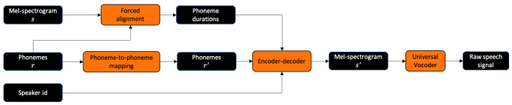
Figure 2 . Architecture of the S2S model to generate mispronounced synthetic speech while maintaining prosody and voice timbre of the input speech. The black rectangles represent the data (tensors) and the orange boxes represent processing blocks. This color notation is used in all machine learning model diagrams throughout the article.
원문 · CC BY 4.0 · Daniel Korzekwa, Jaime Lorenzo-Trueba, Thomas Drugman, Bozena Kostek · Computer-assisted Pronunciation Training -- Speech synthesis is almost all you need · 원문 그림 인용 · 원본 PDF 11쪽에서 그림 영역을 추출했습니다.P2P 기반 절제 실험과 기준선 비교
WEAKLY-S 모델은 단어 단위 발음 오류 e를 검출하는 과제와 음소 ro를 인식하는 과제를 함께 학습하는 다중 과제 모델입니다. 절제 실험에서 L2 미세조정을 제거한 NO-L2-ADAPT의 AUC는 0.517이고, 완전한 WEAKLY-S의 AUC는 0.686입니다. 합성 발음 오류를 제거한 NO-SYNTH-ERR의 AUC는 0.615로, 논문은 이 차이를 합성 데이터의 효과로 보고합니다. 기준선 PR의 GUT Isle AUC는 0.528이고 PR-PM은 0.505입니다. 이 점수들은 같은 실험 설정에서 측정된 값으로 제시되며, PR과 PR-PM의 조건은 원문의 설정표에 따릅니다.
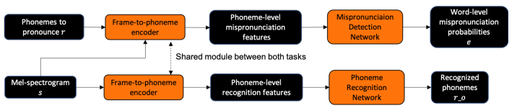
Figure 3 . Architecture of the WEAKLY-S model for word-level pronunciation error detection trained in the multi-task setup. Task 1 - to detect pronunciation errors e. Task 2 - to recognize phonemes ro.
원문 · CC BY 4.0 · Daniel Korzekwa, Jaime Lorenzo-Trueba, Thomas Drugman, Bozena Kostek · Computer-assisted Pronunciation Training -- Speech synthesis is almost all you need · 원문 그림 인용 · 원본 PDF 13쪽에서 그림 영역을 추출했습니다.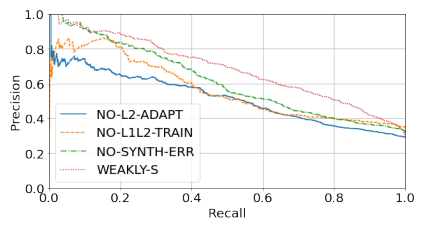
Figure 4 . Precision-recall curve for the ablation study on the GUT Isle corpus, illustrating the effect of using synthetic pronunciation errors generated by the P2P method.
원문 · CC BY 4.0 · Daniel Korzekwa, Jaime Lorenzo-Trueba, Thomas Drugman, Bozena Kostek · Computer-assisted Pronunciation Training -- Speech synthesis is almost all you need · 원문 그림 인용 · 원본 PDF 14쪽에서 그림 영역을 추출했습니다.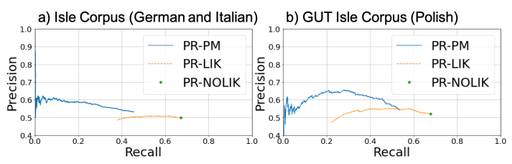
Figure 6 . Precision-recall curves for the evaluated systems to measure the effect of using the PM model in detecting pronunciation errors. PR-PM - full model with the PM enabled. PR-LIK - the PR-PM model with the PM disabled. PR-NOLIK - non-probabilistic variant of the PR-LIK model proposed by Leung et al. [9].
원문 · CC BY 4.0 · Daniel Korzekwa, Jaime Lorenzo-Trueba, Thomas Drugman, Bozena Kostek · Computer-assisted Pronunciation Training -- Speech synthesis is almost all you need · 원문 그림 인용 · 원본 PDF 18쪽에서 그림 영역을 추출했습니다.T2S와 S2S 비교 결과
GUT Isle corpus에서 P2P, T2S, S2S로 학습한 WEAKLY-S 모델을 비교하면 AUC는 각각 0.686, 0.695, 0.749입니다. S2S는 P2P보다 AUC가 9% 높습니다. 중대한 발음 오류만 대상으로 한 표에서는 AUC가 0.815, 0.819, 0.834로 나타납니다. 저자들은 T2S가 P2P와 크게 다르지 않고 S2S의 발화 변이가 중요하다고 해석합니다. 또한 S2S의 가장 높은 AUC 0.749는 기준선 PR의 0.528 대비 41% 향상으로 보고됩니다. 이 41% 수치는 최고 S2S 결과와 PR 기준선의 비교이며, PR-PM 기준선과의 비교가 아닙니다.
S2S의 비용과 실험 범위
S2S 방법은 다중 화자 S2S 모델을 학습하고 Universal Vocoder를 따로 학습해야 하므로 P2P 방법보다 비용이 크게 증가합니다. 논문은 이 비용을 AUC 9% 향상과 함께 제시합니다. 또한 어휘 강세 실험에서 합성 데이터를 추가한 Att TTS의 AUC는 0.62이고, 합성 데이터를 쓰지 않은 Att NoTTS의 AUC는 0.54입니다. 이 결과는 어텐션 모델 구조에서 얻은 것이며, 어텐션이 없는 모델에서는 합성 데이터의 이점이 나타나지 않았습니다. 따라서 이 결과를 모든 모델 구조의 효과로 일반화하지 않습니다.
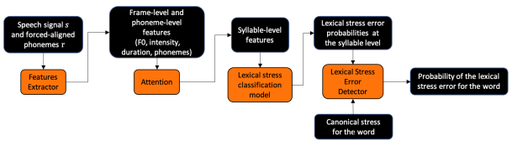
Figure 7 . Attention-based model for the detection of lexical stress errors.
원문 · CC BY 4.0 · Daniel Korzekwa, Jaime Lorenzo-Trueba, Thomas Drugman, Bozena Kostek · Computer-assisted Pronunciation Training -- Speech synthesis is almost all you need · 원문 그림 인용 · 원본 PDF 19쪽에서 그림 영역을 추출했습니다.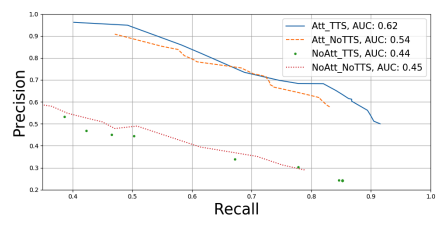
Figure 8 . Precision-recall curves for lexical stress error detection models.
원문 · CC BY 4.0 · Daniel Korzekwa, Jaime Lorenzo-Trueba, Thomas Drugman, Bozena Kostek · Computer-assisted Pronunciation Training -- Speech synthesis is almost all you need · 원문 그림 인용 · 원본 PDF 20쪽에서 그림 영역을 추출했습니다.논문 정보
- 저자
- Daniel Korzekwa, Jaime Lorenzo-Trueba, Thomas Drugman, Bozena Kostek
- 학회·저널
- arXiv · 프리프린트
- 최초 공개일
- 2022년 7월 2일
- 등록일
- 2026년 11월 6일
- 수정일
- 2022년 7월 2일
- 버전
- v1
- arXiv
- 2207.00774
- DOI
- 10.1016/j.specom.2022.06.003
- 분류
- eess.AS · cs.LG
- 원문 이용 조건
- CC BY 4.0
- 제공 범위
- 논문 정보, 해설, 허용된 원문 그림
AI 해설은 논문 원문과 별개의 설명이며 오류가 있을 수 있습니다. 원문과 그림은 각 출처의 이용 조건과 따로 표시된 권리를 따릅니다.
초록
The research community has long studied computer-assisted pronunciation training (CAPT) methods in non-native speech. Researchers focused on studying various model architectures, such as Bayesian networks and deep learning methods, as well as on the analysis of different representations of the speech signal. Despite significant progress in recent years, existing CAPT methods are not able to detect pronunciation errors with high accuracy (only 60\% precision at 40\%-80\% recall). One of the key problems is the low availability of mispronounced speech that is needed for the reliable training of pronunciation error detection models. If we had a generative model that could mimic non-native speech and produce any amount of training data, then the task of detecting pronunciation errors would be much easier. We present three innovative techniques based on phoneme-to-phoneme (P2P), text-to-speech (T2S), and speech-to-speech (S2S) conversion to generate correctly pronounced and mispronounced synthetic speech. We show that these techniques not only improve the accuracy of three machine learning models for detecting pronunciation errors but also help establish a new state-of-the-art in the field. Earlier studies have used simple speech generation techniques such as P2P conversion, but only as an additional mechanism to improve the accuracy of pronunciation error detection. We, on the other hand, consider speech generation to be the first-class method of detecting pronunciation errors. The effectiveness of these techniques is assessed in the tasks of detecting pronunciation and lexical stress errors. Non-native English speech corpora of German, Italian, and Polish speakers are used in the evaluations. The best proposed S2S technique improves the accuracy of detecting pronunciation errors in AUC metric by 41\% from 0.528 to 0.749 compared to the state-of-the-art approach.
원문 인용
Daniel Korzekwa, Jaime Lorenzo-Trueba, Thomas Drugman, Bozena Kostek (2022). Computer-assisted Pronunciation Training -- Speech synthesis is almost all you need. arXiv:2207.00774v1. https://doi.org/10.1016/j.specom.2022.06.003
BibTeX
@article{korzekwa2022computer,
  title = {{Computer-assisted Pronunciation Training -- Speech synthesis is almost all you need}},
  author = {Daniel Korzekwa and Jaime Lorenzo-Trueba and Thomas Drugman and Bozena Kostek},
  year = {2022},
  eprint = {2207.00774},
  archivePrefix = {arXiv},
  doi = {10.1016/j.specom.2022.06.003},
  url = {https://arxiv.org/abs/2207.00774v1}
}