논문 해설
When Zero Is Competitive: A Descriptive Pilot of Transformer and Gate-Graph Surrogates on Random-Angle Quantum Circuits
Zero가 경쟁력을 가질 때: 무작위 각도 양자 회로에서 Transformer 및 Gate-Graph 대리 모델을 다룬 기술적 파일럿 연구
- 연구 문제 층형 랜덤 각도 CNOT 회로의 Z 기대값은 대부분 0 근처에 있어 상수 예측이 낮은 집계 오차를 얻습니다.
- 연구 방법 RX/RY/RZ–CNOT 회로 앙상블에서 Transformer 인코더와 GateDAG를 학습하고 held-out 템플릿에서 zero 및 학습 상수 추정기와 비교했습니다.
- 주요 결과 held-out 템플릿에서 literal zero의 equal-instance MAE 0.193399보다 낮은 최종 모델 점수는 보고되지 않았습니다.
상수 예측이 강한 기준선이 되는 이유
층형 랜덤 각도 RX/RY/RZ–CNOT 회로에서 단일 큐빗 ⟨Zi⟩와 쌍 ⟨ZiZj⟩ 기대값은 대부분 0 근처에 몰려 있습니다. Arm K 학습 라벨 226,800개 중 44.89%의 절댓값이 0.05 미만이어서, 입력을 전혀 읽지 않는 상수 예측도 집계 오차에서는 경쟁력 있는 점수를 얻을 수 있습니다. 그래서 이 연구는 모델의 낮은 평균 오차를 곧바로 회로 입력에 대한 학습으로 해석하지 않고, 같은 조건의 zero 추정기와 학습 기반 상수 추정기를 먼저 기준으로 세웠습니다.
회로 생성과 모델 구성
각 회로는 |0⟩에서 시작하며 n은 4–10, 층 수 r은 2·4·6, 연결 구조는 path·ring·all_to_all 중 하나입니다. 각 층에서는 큐빗마다 RX, RY, RZ 중 하나를 고르고, 이어서 n개의 CNOT을 허용된 간선에 따라 배치합니다. 회전각은 U[−π,π)에서 독립적으로 샘플링됩니다. 라벨은 노이즈 없는 상태벡터 시뮬레이터로 계산하며, 목표 벡터 y(C,θ)는 Q(n)=n(n+1)/2개의 기대값으로 구성됩니다. Transformer 인코더는 d=128, 4개 층, 4개 헤드, FFN 512를 쓰고 W=0 설정에서 815,233개의 학습 파라미터를 가집니다. GateDAG는 게이트 종류와 큐빗 식별자 임베딩, 회전각의 사인·코사인 특징을 입력으로 받아, 게이트-와이어 의존 관계를 따라 선행 게이트 메시지를 반복 전파하고 GRU 셀과 관측량 질의 readout으로 출력합니다.
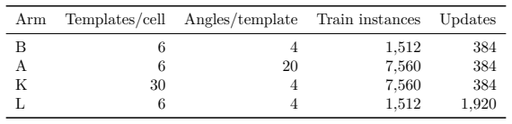
Table 2 :Exploratory transformer data/exposure arms. All rows use the same d = 128, four-layer, four-head, FFN-512,W= 0architecture.
원문 · CC BY 4.0 · Mahesh Reddy Pagadala · When Zero Is Competitive: A Descriptive Pilot of Transformer and Gate-Graph Surrogates on Random-Angle Quantum Circuits · 원문 그림 인용 · 원본 PDF 4쪽에서 그림 영역을 추출했습니다.held-out 템플릿에서의 MAE 비교
평가 지표는 예제마다 절댓값 오차를 먼저 평균한 뒤 예제 단위로 평균하는 equal-instance MAE입니다. 학습 템플릿과 같은 게이트 순서에서 새 각도를 뽑은 within-template 패널과, 학습에 쓰지 않은 템플릿 126개에서 얻은 held-out 패널을 함께 두었습니다. 이 조건에서 literal zero의 held-out equal-instance MAE는 0.193399였습니다. GateDAG 최종 endpoint 역시 깊이 12·24·40 구성 모두 zero보다 높았습니다.
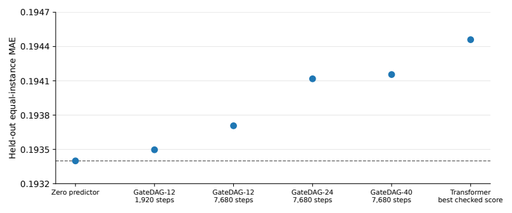
Figure 1 :Descriptive held-out equal-instance MAE. The zero-predictor level is dashed. GateDAG points are the stated run endpoints; the transformer point is the bestevaluatedcheckpoint among 12 exploratory runs. The y-axis shows held-out equal-instance MAE (0.1932–0.1947); this narrow range is intentionally displayed to show small differences. No error bars or uncertainty inference are available for the single-seed GateDAG sweep.
원문 · CC BY 4.0 · Mahesh Reddy Pagadala · When Zero Is Competitive: A Descriptive Pilot of Transformer and Gate-Graph Surrogates on Random-Angle Quantum Circuits · 원문 그림 인용 · 원본 PDF 5쪽에서 그림 영역을 추출했습니다.곱상태 대조와 얽힌 회로 진단
곱상태 RY 대조 실험은 4큐빗, 1층 회로에서 목표를 ⟨Zi⟩=cosθi, ⟨ZiZj⟩=cosθi cosθj로 두고 학습 2,048개와 보유 각도 512개로 seed 202, 1,000 업데이트를 수행했습니다. GateDAG는 held-out 각도 MAE 0.007755를 기록해, zero의 0.514811보다 낮았습니다. 이는 학습 파이프라인이 이 제한된 해석적 사상을 배울 수 있음을 보여 주지만, 얽힌 사상의 표현이나 학습 가능성을 증명하지는 않습니다. 얽힌 회로 진단에서는 64개 학습 인스턴스를 1,500 업데이트 후 평가했을 때 학습 MAE가 0.171882로 zero의 0.402068보다 낮았습니다.
같은 템플릿의 새 각도 패널에서는 MAE가 0.425408로 zero의 0.414512보다 커서, 학습 데이터에 대한 일부 적합과 새 각도에 대한 예측 실패의 차이가 드러났습니다.
한계
GateDAG의 깊이 스윕은 단일 seed로 수행했고, Transformer 실험은 세 seed를 썼습니다. 그래서 확정적 우열이나 불확실성 추정은 어렵습니다. Transformer의 packed 입력 필드는 형태와 해시만 로컬에서 검증했고, 필드별 토큰 의미는 독립적으로 감사하지 않았습니다. 학습된 모델의 |y|>0.3 또는 |y|>0.5 구간 조건부 오차는 보존되지 않아 복원할 수 없으므로, 고진폭 영역에서 부분 학습이 있었는지는 이 결과로 판단할 수 없습니다. 또한 W=0과 W=4의 워크스페이스 토큰 개입은 테스트하지 않았습니다.
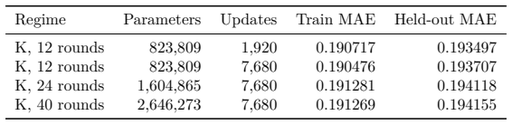
Table 3 :GateDAG endpoint scores, with the same held-out zero MAE of 0.193399 for all rows. These runs are not independent seeds.
원문 · CC BY 4.0 · Mahesh Reddy Pagadala · When Zero Is Competitive: A Descriptive Pilot of Transformer and Gate-Graph Surrogates on Random-Angle Quantum Circuits · 원문 그림 인용 · 원본 PDF 5쪽에서 그림 영역을 추출했습니다.논문 정보
- 저자
- Mahesh Reddy Pagadala
- 학회·저널
- arXiv · 프리프린트
- 최초 공개일
- 2026년 11월 15일
- 등록일
- 2026년 11월 17일
- 수정일
- 2026년 11월 15일
- 버전
- v1
- arXiv
- 2611.19985
- 분류
- cs.LG
- 원문 이용 조건
- CC BY 4.0
- 제공 범위
- 논문 정보, 해설, 허용된 원문 그림
AI 해설은 논문 원문과 별개의 설명이며 오류가 있을 수 있습니다. 원문과 그림은 각 출처의 이용 조건과 따로 표시된 권리를 따릅니다.
초록
We examine supervised classical prediction of all one-qubit Z and two-qubit ZZ expectation values on noiseless, layered 4-10-qubit RX/RY/RZ-CNOT circuits. In a 63-cell stratified workload with disjoint circuit-template tests, we evaluate one transformer encoder and gate-dependency graph neural networks against literal-zero and training-derived constant predictors. On the Arm K training labels, 44.89% of scalar targets have absolute magnitude below 0.05. The held-out-template zero predictor has equal-instance mean absolute error 0.193399, and none of the evaluated transformer checkpoints or final graph-network endpoints achieves a lower score. A separate product-state positive control achieves MAE 0.007755 versus 0.514811 for zero, but does not explain the failure on the entangled workload. The difference between zero and a training-fitted mean constant under training MSE is only 0.14%, a descriptive point estimate without uncertainty analysis. The transformer's 815,233-parameter source identity is locally verified; detailed packed-input semantics have not been independently audited. These results constitute a descriptive pilot, not a causal explanation, formal equivalence test, or impossibility claim. Comparable circuits can be regenerated from the workload specification, but exact frozen datasets and model-run evidence remain private.
원문 인용
Mahesh Reddy Pagadala (2026). When Zero Is Competitive: A Descriptive Pilot of Transformer and Gate-Graph Surrogates on Random-Angle Quantum Circuits. arXiv:2611.19985v1. https://arxiv.org/abs/2611.19985v1
BibTeX
@misc{pagadala2026when,
  title = {{When Zero Is Competitive: A Descriptive Pilot of Transformer and Gate-Graph Surrogates on Random-Angle Quantum Circuits}},
  author = {Mahesh Reddy Pagadala},
  year = {2026},
  eprint = {2611.19985},
  archivePrefix = {arXiv},
  url = {https://arxiv.org/abs/2611.19985v1}
}