논문 해설
High Precision Control of Tracked Field Robots in the Presence of Unknown Traction Coefficients
알려지지 않은 견인 계수가 존재하는 궤도형 현장 로봇의 고정밀 제어
- 연구 문제 미지의 트랙션 계수 때문에 농업용 트랙형 로봇이 작물 열에서 벗어날 수 있으며, 이 논문은 이를 줄이기 위해 트랙션 매개변수를 함께 추정하는 비선형 RHEC 프레임워크를 제시합니다.
- 연구 방법 비선형 RHE가 위치, yaw angle, 속도와 트랙션 매개변수 µ, κ를 추정하고, 비선형 RHC가 이 추정값으로 목표 yaw rate를 계산하여 로봇을 제어합니다.
- 주요 결과 현장 실험에서 비선형 RHE 기반 RHC의 Euclidean 오차 평균은 0.0423 m이며 EKF 기반 RHC의 0.0514 m보다 작았고, 직선 추종에서 RHEC는 0.12 m 허용 오차를 위반하지 않았습니다.
트랙형 현장 로봇의 경로 추종 문제
농업 현장에서 트랙형 로봇은 작물 열 사이를 따라 움직여야 하며, 로봇 폭과 열 간격의 차이로 좌우 여유는 0.12 m에 불과합니다. 이 논문은 토양 상태에 따라 달라지는 트랙션 계수 때문에 생기는 미끄럼과 경로 이탈을 다룹니다. 트랙은 지면과 로봇을 잇는 유일한 연결 경로이므로, 토양 특성이 속도와 조향에 큰 영향을 줍니다. 저자들은 이 문제를 다루기 위해 트랙션 매개변수를 함께 추정하는 방식을 택합니다.
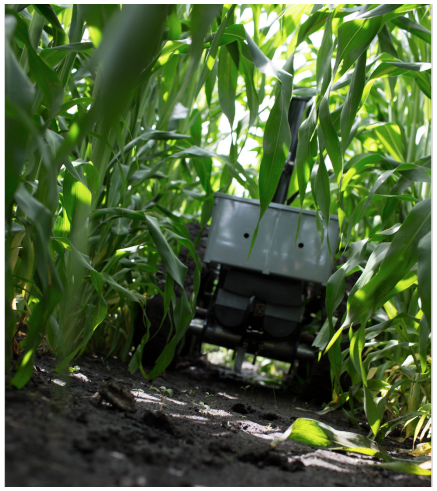
Figure 1 : Field robot in sorhgum plants in Energy Farm, Urbana, IL, USA.
원문 · CC BY 4.0 · Erkan Kayacan, Sierra N. Young, Joshua M. Peschel, Girish Chowdhary · High Precision Control of Tracked Field Robots in the Presence of Unknown Traction Coefficients · 원문 그림 인용 · 원본 PDF 2쪽에서 그림 영역을 추출했습니다.트랙션 매개변수를 포함한 운동학 모델
기존 운동학 모델은 속도와 요레이트만으로 위치와 방향을 갱신합니다. 이 논문은 여기에 트랙션 매개변수 µ와 κ를 곱하여 적응형 비선형 운동학 모델을 도출합니다. 이 두 값은 0과 1 사이에 있어야 하며, 1이면 슬립이 없다고 해석됩니다. 따라서 모델은 측정되지 않는 토양 영향을 추정 대상으로 포함합니다.
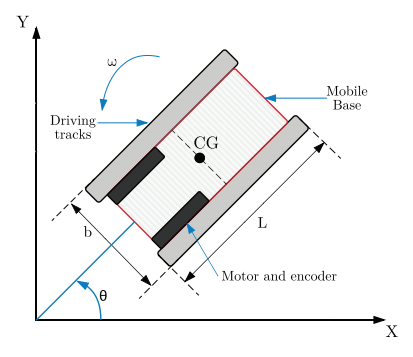
Figure 4 : Schematic illustration of the field robot
원문 · CC BY 4.0 · Erkan Kayacan, Sierra N. Young, Joshua M. Peschel, Girish Chowdhary · High Precision Control of Tracked Field Robots in the Presence of Unknown Traction Coefficients · 원문 그림 인용 · 원본 PDF 6쪽에서 그림 영역을 추출했습니다.비선형 RHE와 RHC의 연결
비선형 RHEC 프레임워크는 먼저 비선형 RHE로 위치, yaw angle, 속도와 트랙션 매개변수를 추정합니다. 추정 결과는 비선형 RHC에 입력되어 목표 yaw rate를 생성하고, 이 명령은 모터 제어기로 전달됩니다. RHE는 고정 길이의 측정 창을 최적화하며, 창 밖의 과거 정보는 도착 비용 항으로 반영합니다. 논문은 이 도착 비용이 비선형 RHE의 안정성에 필요하다고 설명합니다.
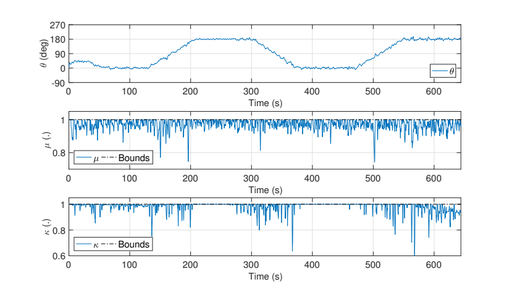
Figure 10 : Nonlinear RHE output: The yaw angle and traction parameters estimates
원문 · CC BY 4.0 · Erkan Kayacan, Sierra N. Young, Joshua M. Peschel, Girish Chowdhary · High Precision Control of Tracked Field Robots in the Presence of Unknown Traction Coefficients · 원문 그림 인용 · 원본 PDF 15쪽에서 그림 영역을 추출했습니다.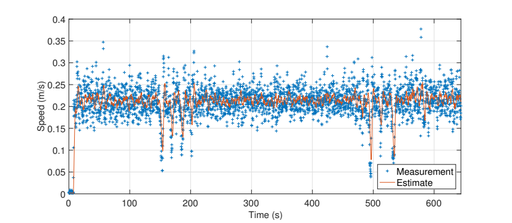
Figure 11 : Actual and estimated speeds
원문 · CC BY 4.0 · Erkan Kayacan, Sierra N. Young, Joshua M. Peschel, Girish Chowdhary · High Precision Control of Tracked Field Robots in the Presence of Unknown Traction Coefficients · 원문 그림 인용 · 원본 PDF 15쪽에서 그림 영역을 추출했습니다.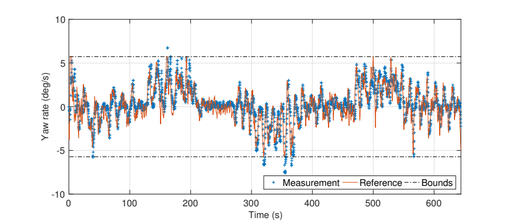
Figure 12 : Reference and actual yaw rates
원문 · CC BY 4.0 · Erkan Kayacan, Sierra N. Young, Joshua M. Peschel, Girish Chowdhary · High Precision Control of Tracked Field Robots in the Presence of Unknown Traction Coefficients · 원문 그림 인용 · 원본 PDF 16쪽에서 그림 영역을 추출했습니다.단일 Gauss-Newton 반복과 실시간 계산
비선형 RHEC의 최적화는 샘플링 시점마다 다시 풀어야 합니다. 논문은 다중 슈팅과 일반화 Gauss-Newton 방법을 결합하고, Gauss-Newton 반복 수를 시점마다 1회로 제한합니다. 이전 해를 다음 문제의 초기값으로 쓰며, 준비 단계와 피드백 단계를 나누어 측정이 도착한 뒤에는 단일 이차계획 문제만 풀도록 합니다. 최적화 코드는 ACADO 도구로 생성된 C 코드를 사용합니다.
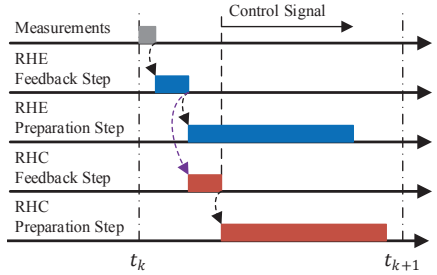
Figure 5 : Illustration of the solution method
원문 · CC BY 4.0 · Erkan Kayacan, Sierra N. Young, Joshua M. Peschel, Girish Chowdhary · High Precision Control of Tracked Field Robots in the Presence of Unknown Traction Coefficients · 원문 그림 인용 · 원본 PDF 11쪽에서 그림 영역을 추출했습니다.기준 궤적 추종 정확도 비교
비선형 RHE 기반 RHC와 EKF 기반 RHC를 같은 공간 기반 기준 궤적에서 비교했습니다. 원시 GNSS 데이터로 계산한 Euclidean 오차의 평균은 RHE 기반 RHC에서 0.0423 m, EKF 기반 RHC에서 0.0514 m입니다. 이 비교에서 예측 및 추정 지평은 3초로 설정되었습니다. 이 결과는 해당 현장 실험에서 얻은 것이며, 트랙션 매개변수 추정이 오차 감소에 기여했다는 해석은 저자들의 해석입니다.
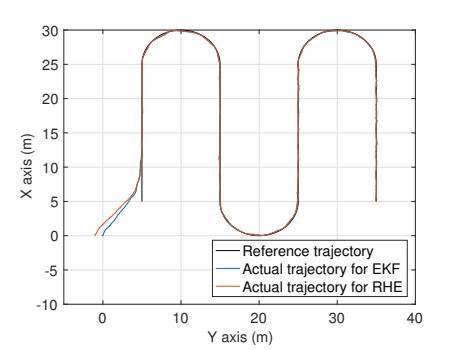
Figure 7 : Reference and actual trajectories. The Euclidian errors are plotted in Fig. 8.
원문 · CC BY 4.0 · Erkan Kayacan, Sierra N. Young, Joshua M. Peschel, Girish Chowdhary · High Precision Control of Tracked Field Robots in the Presence of Unknown Traction Coefficients · 원문 그림 인용 · 원본 PDF 13쪽에서 그림 영역을 추출했습니다.허용 오차 위반 횟수
직선 추종 실험에서는 로봇 좌우 여유인 0.12 m를 허용 오차로 두고 위반 횟수를 셌습니다. 원문은 RHEC 프레임워크가 이 제한을 위반하지 않았으며, EKF 기반 RHC는 17회 위반했다고 보고합니다. 이 횟수는 직선 추종 여러 실험을 합친 결과이며, 곡선 구간의 위반 횟수는 같은 방식으로 보고되지 않았습니다.
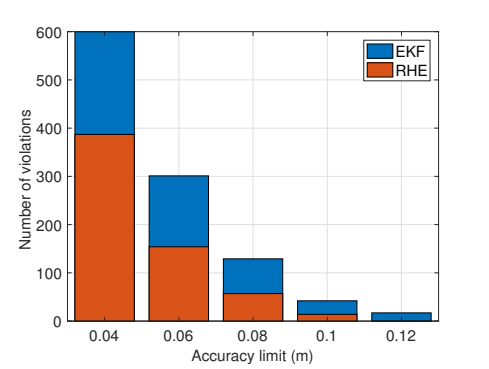
Figure 9 : Number of violations for straight lines tracking. The available space on either side of the field robot is restricted to 0.12 m. The field robot controlled by the RHEC framework does not violate this limit; therefore, it does not cause crop damage.
원문 · CC BY 4.0 · Erkan Kayacan, Sierra N. Young, Joshua M. Peschel, Girish Chowdhary · High Precision Control of Tracked Field Robots in the Presence of Unknown Traction Coefficients · 원문 그림 인용 · 원본 PDF 14쪽에서 그림 영역을 추출했습니다.yaw angle 가중치의 역할
yaw angle 가중치를 0으로 두면 로봇은 기준 궤적 주변에서 진동합니다. 가중치를 위치 가중치와 같게 두면 로봇은 기준 궤적에 도달하고 그 위에 머무릅니다. 이 결과는 공간 기반 궤적 추종에서 yaw 오차를 목적함수에 명시적으로 넣는 것이 중요함을 보여 줍니다.
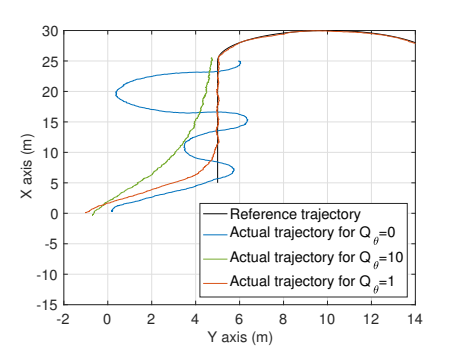
Figure 6 : Reference and actual trajectories for different weighting of the yaw angle. These results clearly demonstrate that the penalization of yaw angle error is extremely important in RHC formulation. The presented approach in the paper should be contrasted with the typical approach of choosing small coefficients for R matrix, which essentially leads to low-gain control. By minimizing yaw angle error in the cost function in RHC formulation explicitly, large coefficients for R matrix can be employed, which leads to better tracking performance.
원문 · CC BY 4.0 · Erkan Kayacan, Sierra N. Young, Joshua M. Peschel, Girish Chowdhary · High Precision Control of Tracked Field Robots in the Presence of Unknown Traction Coefficients · 원문 그림 인용 · 원본 PDF 13쪽에서 그림 영역을 추출했습니다.계산 비용과 최적성의 한계
단일 Gauss-Newton 반복은 최적해의 근사일 뿐이며, 실험 초기처럼 오차가 큰 구간에서 KKT tolerance가 커집니다. 원문은 평균 계산 시간이 RHE 0.48 ms, RHC 0.40 ms이고 전체 평균이 0.88 ms라고 보고하며, 최대 계산 시간은 2.8534 ms입니다. 또한 hard-coding은 더 정확할 수 있지만 토양 상태가 정상상태여야 하고 매개변수 식별이 시간 소모적이라고 원문은 설명합니다.
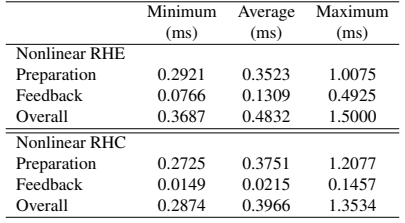
Table 1 : Computation times of the nonlinear RHEC.
원문 · CC BY 4.0 · Erkan Kayacan, Sierra N. Young, Joshua M. Peschel, Girish Chowdhary · High Precision Control of Tracked Field Robots in the Presence of Unknown Traction Coefficients · 원문 그림 인용 · 원본 PDF 16쪽에서 그림 영역을 추출했습니다.논문 정보
- 저자
- Erkan Kayacan, Sierra N. Young, Joshua M. Peschel, Girish Chowdhary
- 학회·저널
- arXiv · 프리프린트
- 최초 공개일
- 2021년 3월 21일
- 등록일
- 2026년 11월 6일
- 수정일
- 2021년 3월 21일
- 버전
- v1
- arXiv
- 2103.11294
- DOI
- 10.1002/rob.21794
- 분류
- cs.RO
- 원문 이용 조건
- CC BY 4.0
- 제공 범위
- 논문 정보, 해설, 허용된 원문 그림
AI 해설은 논문 원문과 별개의 설명이며 오류가 있을 수 있습니다. 원문과 그림은 각 출처의 이용 조건과 따로 표시된 권리를 따릅니다.
초록
Accurate steering through crop rows that avoids crop damage is one of the most important tasks for agricultural robots utilized in various field operations, such as monitoring, mechanical weeding, or spraying. In practice, varying soil conditions can result in off-track navigation due to unknown traction coefficients so that it can cause crop damage. To address this problem, this paper presents the development, application, and experimental results of a real-time receding horizon estimation and control (RHEC) framework applied to a fully autonomous mobile robotic platform to increase its steering accuracy. Recent advances in cheap and fast microprocessors, as well as advances in solution methods for nonlinear optimization problems, have made nonlinear receding horizon control (RHC) and receding horizon estimation (RHE) methods suitable for field robots that require high frequency (milliseconds) updates. A real-time RHEC framework is developed and applied to a fully autonomous mobile robotic platform designed by the authors for in-field phenotyping applications in Sorghum fields. Nonlinear RHE is used to estimate constrained states and parameters, and nonlinear RHC is designed based on an adaptive system model which contains time-varying parameters. The capabilities of the real-time RHEC framework are verified experimentally, and the results show an accurate tracking performance on a bumpy and wet soil field. The mean values of the Euclidean error and required computation time of the RHEC framework are respectively equal to $0.0423$ m and $0.88$ milliseconds.
원문 인용
Erkan Kayacan, Sierra N. Young, Joshua M. Peschel, Girish Chowdhary (2021). High Precision Control of Tracked Field Robots in the Presence of Unknown Traction Coefficients. arXiv:2103.11294v1. https://doi.org/10.1002/rob.21794
BibTeX
@article{kayacan2021high,
  title = {{High Precision Control of Tracked Field Robots in the Presence of Unknown Traction Coefficients}},
  author = {Erkan Kayacan and Sierra N. Young and Joshua M. Peschel and Girish Chowdhary},
  year = {2021},
  eprint = {2103.11294},
  archivePrefix = {arXiv},
  doi = {10.1002/rob.21794},
  url = {https://arxiv.org/abs/2103.11294v1}
}