논문 해설
Normalization Layers Are All That Sharpness-Aware Minimization Needs
정규화 계층이 샤프니스 인식 최소화에 필요한 전부다
- 연구 문제 정규화 레이어만 SAM 섭동에 포함하면 기존 SAM보다 일반화 성능이 좋아지는지가 연구 질문입니다.
- 연구 방법 SAM 섭동을 정규화 레이어의 affine 파라미터에만 적용하는 SAM-ON을 제안하고 SAM-all과 비교합니다.
- 주요 결과 CIFAR-100과 ImageNet 등 여러 설정에서 SAM-ON이 SAM-all보다 높은 테스트 정확도를 보였다고 보고합니다.
SAM의 효과는 정말 sharpness 감소에서 오는가
Sharpness-aware minimization(SAM)은 손실 함수의 이웃 영역에서 최악의 손실 증가를 줄이도록 학습하는 방법으로, 여러 설정에서 일반화 성능을 높인다고 알려져 있습니다. 그러나 SAM은 기울기 계산이 한 번 더 필요해 계산 비용을 늘리며, 여러 변형들이 연산 비용을 줄이거나 성능을 높이려는 방향으로 제안되었습니다. 이 논문은 SAM 섭동을 정규화 레이어의 affine 파라미터에만 적용하는 SAM-ON이 전체 파라미터를 섭동하는 SAM-all보다 나은 경우가 많다는 관찰에서 출발합니다. 따라서 질문은 이 성능 향상이 단순히 sharpness 감소 때문인지, 아니면 정규화 레이어 파라미터의 역할 때문인지입니다.
SAM-ON의 섭동 범위와 수식
SAM은 식 (2)와 같이 min-max 목적을 풀며, p=2에서는 한 번의 기울기 단계로 섭동 ϵ을 근사합니다. SAM-ON은 이 섭동 모델에서 정규화 레이어의 학습 가능한 γ와 β에 해당하는 파라미터에만 섭동을 허용하고, 나머지 파라미터의 섭동은 0으로 둡니다. 원문은 SAM-ON을 정규화 연산자의 원소를 정규화 파라미터에 대해서만 0이 아닌 값으로 두는 ASAM 형식으로 설명합니다. 반대로 no-norm은 정규화 파라미터를 적대적 SAM 단계에서 제외하는 비교 설정입니다. 정규화 파라미터는 전체의 약 0.1% 수준으로 보고됩니다.
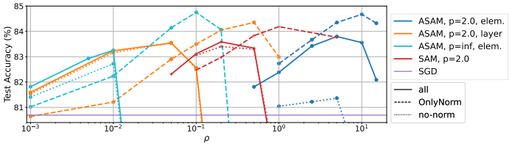
Figure 1 : The interplay of normalization layers with SAM: Perturbing only normalization layers (OnlyNorm, dashed) improves generalization performance, while omitting them in the perturbation (no-norm, dotted) can harm training. WideResNet-28-10 trained with different SAM-variants on CIFAR-100. Best seen in color.
원문 · CC BY 4.0 · Maximilian Mueller, Tiffany Vlaar, David Rolnick, Matthias Hein · Normalization Layers Are All That Sharpness-Aware Minimization Needs · 원문 그림 인용 · 원본 PDF 2쪽에서 그림 영역을 추출했습니다.CIFAR와 ImageNet에서 SAM-ON과 SAM-all 비교
CIFAR-100에서 RN-56, RNxT, WRN-28 모델을 3개 시드의 평균과 표준편차로 비교했을 때, SAM-ON은 평균적으로 SAM-all보다 높은 테스트 정확도를 보였다고 원문은 보고합니다. 다만 layerwise-ℓ2 변형이 대부분의 설정에서 가장 높았으며, 일부 변형에서는 SAM-all이 더 높은 경우도 있었습니다. ImageNet에서는 ResNet-50을 사용해 layerwise-ℓ2 SAM-ON이 SAM-all보다 높은 결과를 보였고, 나머지 SAM-ON 변형도 SGD, SAM, ASAM 기준선을 앞섰습니다. ViT 실험에서는 AdamW 기본 옵티마이저와 ViT-S 구조에서 SAM-ON이 SAM-all과 비교되었습니다.
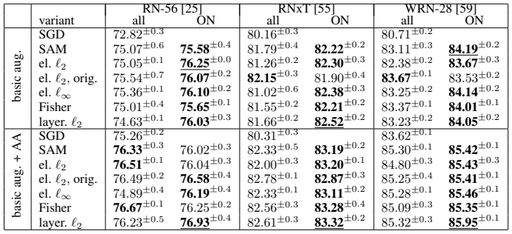
Table 1 : SAM-ON improves over SAM-all for BatchNorm and ResNets: Test accuracy for ResNet- like models on CIFAR-100. Bold values mark the better performance between SAM-ON and SAM-all within a SAM-variant, and underline highlights the overall best method per model and augmentation.
원문 · CC BY 4.0 · Maximilian Mueller, Tiffany Vlaar, David Rolnick, Matthias Hein · Normalization Layers Are All That Sharpness-Aware Minimization Needs · 원문 그림 인용 · 원본 PDF 5쪽에서 그림 영역을 추출했습니다.
Table 2 : ImageNet top-1 accuracy for a ResNet-50. ESAM [20] and GSAM [61] values are taken from the respective papers.
원문 · CC BY 4.0 · Maximilian Mueller, Tiffany Vlaar, David Rolnick, Matthias Hein · Normalization Layers Are All That Sharpness-Aware Minimization Needs · 원문 그림 인용 · 원본 PDF 5쪽에서 그림 영역을 추출했습니다.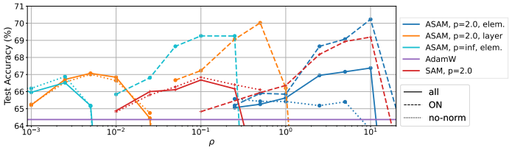
Figure 2 : The interplay of normalization layers with SAM for ViT training : ViT-S trained with different SAM-variants on CIFAR-100. Like for ResNets, perturbing only normalization layers (OnlyNorm) improves generalization performance, while omitting them in the perturbation (no-norm) can harm training.
원문 · CC BY 4.0 · Maximilian Mueller, Tiffany Vlaar, David Rolnick, Matthias Hein · Normalization Layers Are All That Sharpness-Aware Minimization Needs · 원문 그림 인용 · 원본 PDF 6쪽에서 그림 영역을 추출했습니다.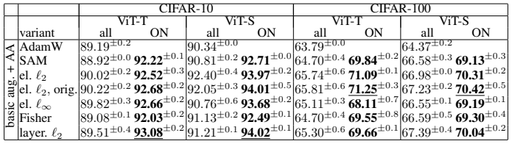
Table 3 : SAM-ON improves over SAM-all for LayerNorm and ViTs: Shown are ViT models on CIFAR-10 and CIFAR-100. Bold values mark the better performance betweenSAM-ON and SAM-all within a SAM-variant, and underline highlights the overall best method per model.
원문 · CC BY 4.0 · Maximilian Mueller, Tiffany Vlaar, David Rolnick, Matthias Hein · Normalization Layers Are All That Sharpness-Aware Minimization Needs · 원문 그림 인용 · 원본 PDF 6쪽에서 그림 영역을 추출했습니다.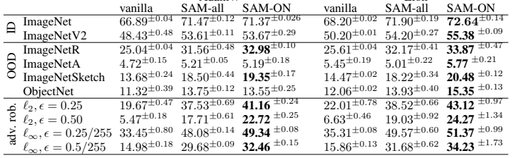
Table 4 : SAM-ON performs well on ImageNet: Training a ViT-S/32 from scratch.
원문 · CC BY 4.0 · Maximilian Mueller, Tiffany Vlaar, David Rolnick, Matthias Hein · Normalization Layers Are All That Sharpness-Aware Minimization Needs · 원문 그림 인용 · 원본 PDF 6쪽에서 그림 영역을 추출했습니다.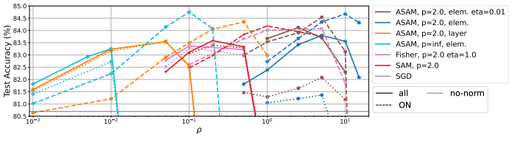
Figure 6 : All considered SAM-variants and their SAM-ON counterpart for a WRN-28 on CIFAR-100.
원문 · CC BY 4.0 · Maximilian Mueller, Tiffany Vlaar, David Rolnick, Matthias Hein · Normalization Layers Are All That Sharpness-Aware Minimization Needs · 원문 그림 인용 · 원본 PDF 18쪽에서 그림 영역을 추출했습니다.희소 섭동 대조군과 SAM-ON의 차이
SSAM-F는 Fisher 정보 기반 마스크로 일부 파라미터에만 섭동을 적용하는 희소 방법입니다. 원문은 SSAM-F가 중간 수준의 희소도에서는 SAM-all과 비슷하거나 더 나을 수 있다고 보고하지만, SAM-ON 설정의 99.95% 희소도에서는 무작위 마스크가 낮은 성능을 보였다고 설명합니다. 이 비교는 희소성만으로 SAM-ON의 효과를 설명하기 어렵다는 근거로 제시됩니다. 이 실험은 WRN-28과 CIFAR-100의 설정에서 보고된 결과이며, 다른 희소 방법이나 데이터에 그대로 확대한 결과는 아닙니다.

Table 5 : SAM-ON outperforms other sparse perturbation approaches: Although SSAM-F [42] with different sparsity levels can outperformSAM-all on CIFAR-100 with WRN-28, it is less effective than SAM-ON, especially when probed at very high sparsity levels.
원문 · CC BY 4.0 · Maximilian Mueller, Tiffany Vlaar, David Rolnick, Matthias Hein · Normalization Layers Are All That Sharpness-Aware Minimization Needs · 원문 그림 인용 · 원본 PDF 8쪽에서 그림 영역을 추출했습니다.샤프니스와 일반화의 분리
Table 6에서 저자들은 WRN-28을 CIFAR-100에서 SGD, SAM, ASAM-el.-ℓ∞의 all 및 ON 변형으로 학습하고, logit 정규화 ℓ∞ m-sharpness와 feature rank를 비교합니다. SAM-ON 모델은 SAM-all보다 테스트 정확도가 높지만 샤프니스 값은 더 큽니다. 이는 SAM-all이 더 평평한 최소점을 찾을 수 있음을 보여 주면서도, 평평함만으로 일반화 이득을 설명하기 어렵다는 저자들의 해석을 뒷받침합니다. Feature rank는 SAM-ON도 SGD보다 낮추지만 SAM-all과 뚜렷한 차이는 보고되지 않았습니다.
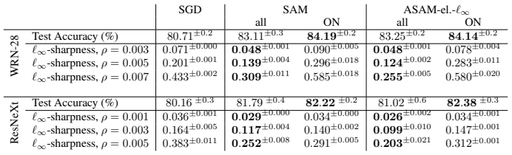
Table 18 : Sharpness evaluation of both a WRN-28 and a ResNeXt. SAM-ON is sharper than SAM-all in all cases. Shown is 20-step logit-normalized ℓ∞ sharpness from [2], averaged over three models per method. Dataset considered is CIFAR-100.
원문 · CC BY 4.0 · Maximilian Mueller, Tiffany Vlaar, David Rolnick, Matthias Hein · Normalization Layers Are All That Sharpness-Aware Minimization Needs · 원문 그림 인용 · 원본 PDF 23쪽에서 그림 영역을 추출했습니다.적용 범위와 한계
원문은 주로 비전 데이터에 집중했으며, 언어 과제에서는 기계 번역 IWSLT' DE-EN 실험처럼 제한된 예비 결과만 제시합니다. 따라서 SAM-ON이 다른 영역에서도 같은 효과를 보인다고 일반화하기는 어렵습니다. 수렴 분석은 함수가 L-smooth이고 확률적 기울기 분산이 M 이하라는 가정에서 전개된 결과이므로, 그 가정 밖의 결론으로 확장할 수 없습니다. 또한 SAM-ON은 일반화 성능을 높이지만 샤프니스 감소라는 SAM의 특성을 일부 잃는다는 점을 저자들이 밝혔습니다.
논문 정보
- 저자
- Maximilian Mueller, Tiffany Vlaar, David Rolnick, Matthias Hein
- 학회·저널
- arXiv · 프리프린트
- 최초 공개일
- 2023년 6월 7일
- 등록일
- 2026년 11월 5일
- 수정일
- 2023년 11월 17일
- 버전
- v2
- arXiv
- 2306.04226
- 분류
- cs.LG · cs.CV
- 원문 이용 조건
- CC BY 4.0
- 제공 범위
- 논문 정보, 해설, 허용된 원문 그림
AI 해설은 논문 원문과 별개의 설명이며 오류가 있을 수 있습니다. 원문과 그림은 각 출처의 이용 조건과 따로 표시된 권리를 따릅니다.
초록
Sharpness-aware minimization (SAM) was proposed to reduce sharpness of minima and has been shown to enhance generalization performance in various settings. In this work we show that perturbing only the affine normalization parameters (typically comprising 0.1% of the total parameters) in the adversarial step of SAM can outperform perturbing all of the parameters.This finding generalizes to different SAM variants and both ResNet (Batch Normalization) and Vision Transformer (Layer Normalization) architectures. We consider alternative sparse perturbation approaches and find that these do not achieve similar performance enhancement at such extreme sparsity levels, showing that this behaviour is unique to the normalization layers. Although our findings reaffirm the effectiveness of SAM in improving generalization performance, they cast doubt on whether this is solely caused by reduced sharpness.
원문 인용
Maximilian Mueller, Tiffany Vlaar, David Rolnick, Matthias Hein (2023). Normalization Layers Are All That Sharpness-Aware Minimization Needs. arXiv:2306.04226v2. https://arxiv.org/abs/2306.04226v2
BibTeX
@misc{mueller2023normalization,
  title = {{Normalization Layers Are All That Sharpness-Aware Minimization Needs}},
  author = {Maximilian Mueller and Tiffany Vlaar and David Rolnick and Matthias Hein},
  year = {2023},
  eprint = {2306.04226},
  archivePrefix = {arXiv},
  url = {https://arxiv.org/abs/2306.04226v2}
}