논문 해설
Sada-ASR: A Production Multidialectal Arabic Speech Recognition System
Sada-ASR: 운영 환경을 위한 다방언 아랍어 음성 인식 시스템
- 연구 문제 아랍어 방언 음성은 MSA 중심으로 만들어진 인식기에서 잘못 인식되기 쉬우며, 인식 오류는 음성 에이전트 전체의 첫 실패가 됩니다.
- 연구 방법 웹 약한 레이블과 사내 주석 음성을 병합해 어텐션 기반 인코더-디코더를 학습하고, 모든 테스트에서 plain greedy search로 디코딩합니다.
- 주요 결과 120시간 비공개 테스트 세트에서 WER 11.69%를 기록해 MAI-Transcribe-2의 13.51%보다 낮았으며, 레바논 방언에서는 뒤졌습니다.
방언 음성이 인식을 어렵게 만드는 이유
아랍어 고객 상담 전화의 발신자는 현대 표준 아랍어(MSA)가 아니라 자신의 지역 방언으로 말합니다. 그런데 음성 인식기는 주로 MSA로 만들어지고 평가되어 왔습니다. 방언 음성은 어휘, 발음, 형태가 MSA와 다르고 표준 철자도 없어서, 인식 단계에서 잘못 들은 내용은 이후 단계가 아무리 잘해도 되돌릴 수 없습니다.
이 논문은 EchoNova의 음성 에이전트에 들어가는 Sada-ASR를 대상으로, 걸프, 이집트, 레반트 방언과 MSA를 포함한 비공개 테스트 세트에서 외부 상용 API와 오픈 웨이트 모델 열한 개와 비교합니다. 평가 범위는 음성 인식기 자체이며, 에이전트 전체나 TTS는 평가하지 않습니다.
두 갈래 학습 데이터 구축
방언 음성의 정답 전사는 부족합니다. 전사하려면 해당 방언을 아는 주석자가 필요하고, 방언에는 표준 철자도 없습니다. 웹 음성은 찾기 쉽지만 레이블이 약합니다. Sada-ASR는 이 두 흐름을 하나의 학습 세트로 합쳐 학습했습니다. 한 흐름은 사내 주석 플랫폼에서 전사된 음성이고, 다른 흐름은 웹에서 모은 약한 레이블 음성입니다.
사내 플랫폼은 세 층으로 구성됩니다. 100명이 넘는 주석자가 음성을 전사하고, 검토자가 제출물을 지속적으로 검토하며, 전문 작가와 도메인 전문가가 어려운 사례를 맡습니다. 같은 평가 샘플을 모든 주석자의 큐에 넣어 공통 기준선을 만들고, 중복 샘플을 몰래 넣어 서로 다른 주석자의 일관성을 측정했습니다. 통제 샘플은 데이터셋을 만들기 전에 모두 제거했습니다. 병합 단계에서는 두 흐름 사이의 중복 음성을 제거하고, 오염된 기록과 음성과 레이블이 맞지 않는 기록, 음성 아티팩트를 걸러낸 뒤 형식과 메타데이터를 표준화했습니다.
인코더-디코더 학습과 탐색 방식
Sada-ASR는 어텐션 기반 인코더-디코더 구조로, 전사문을 토큰 단위로 생성합니다. 학습 목표는 전사문과 종료 토큰에 대한 다음 토큰 교차 엔트로피이며, 레이블 스무딩과 CTC 보조 손실은 쓰지 않았습니다. 데이터 증강도 적용하지 않고, 음성은 16 kHz 모노로 리샘플링만 했습니다.
에포크마다 클립의 절반은 영어에서 뽑고, 영어 음성은 반복하며 아랍어는 부분 추출합니다. 아랍어 안에서는 각 변종의 시간 비율에 따라 클립을 뽑습니다. 아랍어 타깃은 발음 구별 부호 없이 쓰고, 숫자는 단어로 씁니다. 체크포인트는 1,482개 발화의 검증 부분집합에서 탐욕 탐색으로 계산한 WER로 골랐으며, 이 부분집합은 학습과 모든 테스트 세트에서 분리되어 있습니다.
디코딩은 모든 테스트 세트에서 같은 설정을 씁니다. 빔 서치, 반복 패널티, n-gram 제약은 없고, 반복 루프를 막는 가드와 출력 길이 상한을 둡니다. 30초를 넘는 음성은 2초 겹침을 둔 30초 창으로 나눠 디코딩합니다.
비공개 테스트 세트의 비교 결과
비공개 테스트 세트는 MSA와 여덟 개 방언으로 구성된 120시간 규모입니다. 클립은 모두 30초 이하이며, 모든 시스템이 같은 오디오를 받았습니다. WER과 CER은 말뭉치 단위 마이크로 평균으로 계산했습니다. 모든 API는 아랍어로 설정했고, 가능한 경우 축자 전사와 형식 옵션을 껐습니다.
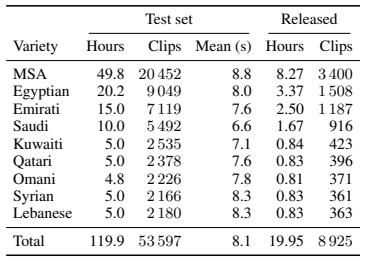
Table 1 : Composition of the private test set and of its released subset. Mean is the mean clip length; totals are computed before rounding.
원문 · CC BY 4.0 · Mahmoud Khaled, Mohammed Abd-Elnaser, Mahmoud Mohsen, Hazem Ahmed, Abdelrahman Hafez · Sada-ASR: A Production Multidialectal Arabic Speech Recognition System · 원문 그림 인용 · 원본 PDF 4쪽에서 그림 영역을 추출했습니다.전체 WER은 Sada-ASR 11.69%, Microsoft MAI-Transcribe-2 13.51%로, 차이는 1.83포인트였습니다(95% CI 1.72–1.93, 녹음 단위 부트스트랩). 변종별로 보면 Sada-ASR는 아홉 개 가운데 일곱 개에서 가장 낮았습니다. 레바논 방언에서는 MAI-Transcribe-2보다 1.91포인트 뒤졌습니다. 숫자, 숫자 단어, 라틴 문자가 없는 통제 클립에서는 전체 차이가 0.74포인트(95% CI 0.65–0.83)로 줄었습니다. 저자들은 MAI-Transcribe-2의 숫자 표기 출력이 전체 차이의 일부를 만든다고 해석합니다.
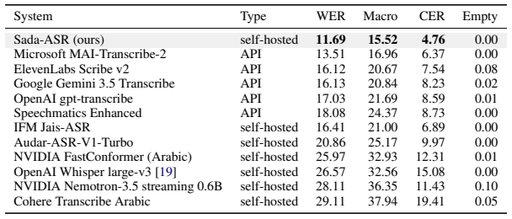
Table 2 : Private test set. WER and CER in %, corpus micro-averaged; Macro is the unweighted mean of the nine per-variety WERs in Table 3; Empty is the % of clips with an empty transcript.
원문 · CC BY 4.0 · Mahmoud Khaled, Mohammed Abd-Elnaser, Mahmoud Mohsen, Hazem Ahmed, Abdelrahman Hafez · Sada-ASR: A Production Multidialectal Arabic Speech Recognition System · 원문 그림 인용 · 원본 PDF 5쪽에서 그림 영역을 추출했습니다.
Table 3 : WER (%) by variety on the private test set. MAI-2: Microsoft MAI-Transcribe-2; Scribe v2: ElevenLabs Scribe v2; Gemini: Google Gemini 3.5 Transcribe; gpt-tr.: OpenAI gpt-transcribe; Speechm.: Speechmatics Enhanced; Jais: IFM Jais-ASR; FastConf.: NVIDIA FastConformer (Arabic); Nemotron: NVIDIA Nemotron-3.5 streaming 0.6B; Cohere: Cohere Transcribe Arabic. ∆ MAI-2: Sada-ASR’s margin over MAI-Transcribe-2 in points (positive = Sada-ASR lower), with a 95% CI from 2 000 bootstrap resamples of source recordings; †the only CI including zero. ∆ ctrl.: the same margin on clips with no digit, number word or Latin script in the reference or in either system’s output. Differences are computed before rounding. CER: Appendix A.1.
원문 · CC BY 4.0 · Mahmoud Khaled, Mohammed Abd-Elnaser, Mahmoud Mohsen, Hazem Ahmed, Abdelrahman Hafez · Sada-ASR: A Production Multidialectal Arabic Speech Recognition System · 원문 그림 인용 · 원본 PDF 6쪽에서 그림 영역을 추출했습니다.공개 테스트 세트와 발표값 비교
공개 여섯 세트의 평균 WER은 Sada-ASR 17.17%로, Falcon-ASR 20.92%, Jais-ASR 22.85%, Audar-ASR-V1-Turbo 23.17%보다 낮게 나타났습니다. 다만 이 수치는 리더보드가 2026년 7월 27일 개정한 채점 기준으로 계산한 값이고, 비교 대상 발표값 대부분은 그 개정 이전에 나왔습니다. 발표 측이 현재 채점 기준을 썼다고 명시하지 않아 비교는 지시적입니다.
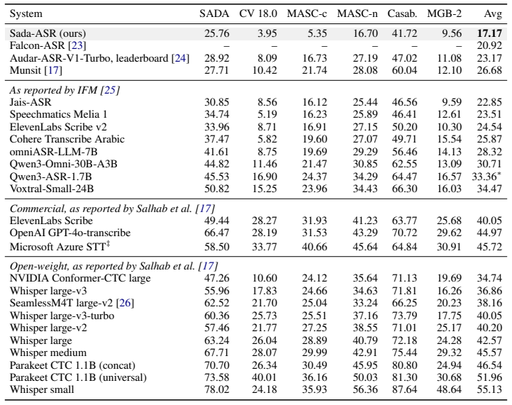
Table 4 : WER (%) on the six public test sets; Avg is their unweighted mean. Rows other than ours are published figures: Audar-ASR-V1-Turbo is the leaderboard’s best entry (10 October 2026), and Falcon-ASR reports only an average over the same six test lists. IFM measured Jais-ASR with the leaderboard’s evaluation script, without stating its version, measured Melia 1 and Scribe v2 itself, and lists the other five from the leaderboard. ElevenLabs Scribe, GPT-4o-transcribe and Azure STT in the Salhab rows are earlier models than those we measured. ‡Mean of Azure’s Saudi and Jordanian models. ∗As published by IFM; its six per-set values average 33.69. Our row uses the leaderboard’s current scoring, revised on 27 July 2026; most published rows predate that revision, so the comparison is indicative (CER: Appendix A.2).
원문 · CC BY 4.0 · Mahmoud Khaled, Mohammed Abd-Elnaser, Mahmoud Mohsen, Hazem Ahmed, Abdelrahman Hafez · Sada-ASR: A Production Multidialectal Arabic Speech Recognition System · 원문 그림 인용 · 원본 PDF 7쪽에서 그림 영역을 추출했습니다.레바논 방언에서 지는 이유
레바논 방언에서는 71개 원천 녹음 중 55개에서 MAI-Transcribe-2보다 오류가 많았습니다. 저자들은 두 가지 원인을 제시합니다. 첫째, Sada-ASR는 MSA와 철자가 공유되는 레바논 단어를 MSA 형태로 씁니다. 둘째, 덜 축자적이어서 거짓 시작, 반복어, 짧은 단어를 빼는 경향이 있습니다. 어휘 치환을 같은 것으로 간주하면 차이는 0.51포인트로 줄어 통계적으로 유의하지 않습니다.
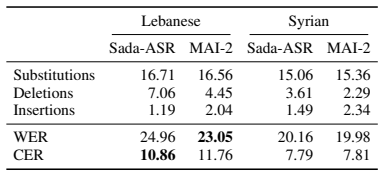
Table 5 : Levantine errors (%). Substitutions, deletions and insertions are shares of the reference words and sum to WER before rounding.
원문 · CC BY 4.0 · Mahmoud Khaled, Mohammed Abd-Elnaser, Mahmoud Mohsen, Hazem Ahmed, Abdelrahman Hafez · Sada-ASR: A Production Multidialectal Arabic Speech Recognition System · 원문 그림 인용 · 원본 PDF 6쪽에서 그림 영역을 추출했습니다.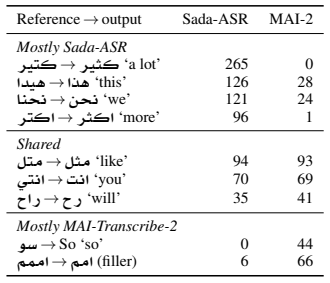
Table 6 : Frequent Lebanese substitutions and how often each system makes them.
원문 · CC BY 4.0 · Mahmoud Khaled, Mohammed Abd-Elnaser, Mahmoud Mohsen, Hazem Ahmed, Abdelrahman Hafez · Sada-ASR: A Production Multidialectal Arabic Speech Recognition System · 원문 그림 인용 · 원본 PDF 8쪽에서 그림 영역을 추출했습니다.남은 제약
비공개 테스트 세트는 MSA와 여덟 개 방언을 다루며, 마그레브, 이라크, 수단, 예멘 아랍어는 포함하지 않습니다. 공개 세트와의 비교는 채점 기준과 발표 시점이 달라 지시적입니다. 또 Sada-ASR의 TTS나 에이전트 전체는 평가하지 않았습니다.
논문 정보
- 저자
- Mahmoud Khaled, Mohammed Abd-Elnaser, Mahmoud Mohsen, Hazem Ahmed, Abdelrahman Hafez
- 학회·저널
- arXiv · 프리프린트
- 최초 공개일
- 2026년 11월 14일
- 등록일
- 2026년 11월 17일
- 수정일
- 2026년 11월 14일
- 버전
- v1
- arXiv
- 2611.19512
- 분류
- cs.CL · cs.SD · eess.AS
- 원문 이용 조건
- CC BY 4.0
- 제공 범위
- 논문 정보, 해설, 허용된 원문 그림
AI 해설은 논문 원문과 별개의 설명이며 오류가 있을 수 있습니다. 원문과 그림은 각 출처의 이용 조건과 따로 표시된 권리를 따릅니다.
초록
Callers to Arabic customer-service lines speak their own dialect, while speech recognizers are built and evaluated mainly on Modern Standard Arabic (MSA). A recognizer that mishears the dialect breaks the call before anything else can help. We present Sada-ASR, the speech recognizer of EchoNova's production Arabic voice agent. On a 120-hour test set of MSA and eight dialects, it has the lowest word and character error rates of twelve systems, against eleven from Microsoft, ElevenLabs, Google, OpenAI, Speechmatics, IFM, Cohere, NVIDIA and Audar: 11.69% word error rate against 13.51% for the strongest, Microsoft's MAI-Transcribe-2 (a lead of 0.74 points on clips unaffected by that system's fixed number and script conventions), and 15.52% against 16.96% averaged over varieties. Its largest margins are on Omani (4.30 points), Egyptian (3.78) and Saudi (2.19) speech; it is level on Syrian and loses on Lebanese (24.96% against 23.05%), mostly because it writes Lebanese words in MSA forms and is less verbatim. On six public test sets its average word error rate under the leaderboard's current scoring is 17.17%, below every published figure we found, among them Falcon-ASR (20.92%), Jais-ASR (22.85%) and Audar-ASR-V1-Turbo (23.17%), though none of these states that it used that scoring, so the comparison is indicative. We describe the data pipeline and methodology behind Sada-ASR and release a 20-hour subset of the test set with our scoring code.
원문 인용
Mahmoud Khaled, Mohammed Abd-Elnaser, Mahmoud Mohsen, Hazem Ahmed, Abdelrahman Hafez (2026). Sada-ASR: A Production Multidialectal Arabic Speech Recognition System. arXiv:2611.19512v1. https://arxiv.org/abs/2611.19512v1
BibTeX
@misc{khaled2026sada,
  title = {{Sada-ASR: A Production Multidialectal Arabic Speech Recognition System}},
  author = {Mahmoud Khaled and Mohammed Abd-Elnaser and Mahmoud Mohsen and Hazem Ahmed and Abdelrahman Hafez},
  year = {2026},
  eprint = {2611.19512},
  archivePrefix = {arXiv},
  url = {https://arxiv.org/abs/2611.19512v1}
}