논문 해설
ProcessPrefBench: Evaluating Cross-Task Transfer of Individual Process Preferences from Naturalistic Human-AI Interaction
ProcessPrefBench: 자연스러운 인간-AI 상호작용에서 얻은 개인별 과정 선호의 과제 간 전이 평가
- 연구 문제 사용자가 대화에서 드러낸 개별 프로세스 선호를 다른 과제에 적용할 수 있는지, 그리고 그 과정이 근거 조작을 늘리는지를 검증합니다.
- 연구 방법 소스 대화와 같은 사용자의 대상 과제를 짝짓고, target-only, full-history, distilled-preference 메모리 조건에서 답변을 생성해 대상별 rubric과 별도 task gate로 평가합니다.
- 주요 결과 관련 대화 이력은 선호 실현을 높였습니다. Imperative distillation은 target-only 대비 0.244점 높았지만 full history 대비 유의한 이점은 확인되지 않았고, 두 메모리 조건 모두 근거 조작 실패를 늘렸습니다.
사용자 선호를 다른 과제로 옮기는 문제
사용자는 자신이 일을 어떤 기준으로 해야 하는지 매번 미리 말하지 않습니다. 대화 중의 정정, 후속 요청, 자기 설명에서 이런 기준이 드러나며, 이것을 개별 프로세스 선호라고 부릅니다. 이 논문은 한 대화에서 드러난 선호가 사용자가 그 선호를 다시 말하지 않는 다른 과제의 답변을 바꿀 수 있는지를 묻습니다. 기존 벤치마크는 대화 정보를 나중에 검색할 수 있는지, 또는 선호 기록을 직접 주는지를 주로 시험하여, 자연 대화에서 선호를 추출하고 다른 과제에 적용하는 과정을 함께 시험하지 못합니다. ProcessPrefBench는 두 명의 지식 노동자가 3개월 동안 Margin에서 남긴 자연 대화로 66개의 소스-대상 사례를 구성해 이 질문을 다룹니다.
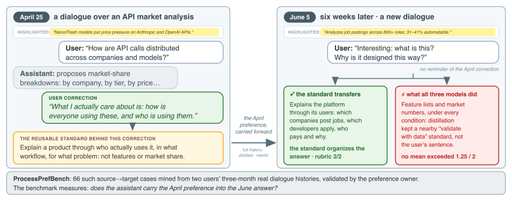
Figure 1 : A ProcessPrefBench case (translated from Chinese). An April dialogue establishes a reusable analysis standard; six weeks later, the same user asks about a different product in a new dialogue without restating it. Appendix D audits this case end to end.
원문 · CC BY 4.0 · Yiwen Yang, Guanming Liu · ProcessPrefBench: Evaluating Cross-Task Transfer of Individual Process Preferences from Naturalistic Human-AI Interaction · 원문 그림 인용 · 원본 PDF 2쪽에서 그림 영역을 추출했습니다.소스-대상 구성과 판정 방식
각 사례는 사용자가 정정, 처방 또는 자기 설명으로 드러낸 재사용 가능한 기준을 담은 소스 대화와, 같은 사용자의 다른 대상 과제로 짝지어집니다. 사용자는 자신의 상호작용에 주석을 달며, 사실 수정이나 현재 과제에만 해당하는 요청은 제외됩니다. 대상은 선호를 반복하지 않으면서 소스 기준을 적용하면 답변이 나아져야 하는 경우만 유지됩니다. 평가 rubric은 대상마다 최대 세 개의 atom을 두고, not applicable, 0, 1, 2를 부여합니다. 0은 선호가 없거나 모순됨, 1은 국소적이거나 형식적인 실현, 2는 추론·구성·결론·전달의 기능적 변화를 뜻합니다. 별도의 task gate는 심각한 누락, 중대한 사실 오류, 근거 조작, 제약 위반, 외부 실행의 허위 주장을 표시하며 선호 점수를 덮어쓰지 않습니다.
메모리 조건과 시험 모델
모든 조건은 같은 시스템 프롬프트, 페이지 제목, 강조 문맥, 검증된 자료와 사용자 질문을 공유합니다. target-only 조건은 메모리를 추가하지 않고, full-history 조건은 소스 상호작용 전체를 추가합니다. distilled-preference 조건에서는 시험 모델이 소스마다 한 번 선호를 증류하고 그 결과를 재사용합니다. imperative 조건은 증류 결과를 항상 적용하고, conditional 조건은 관련이 있을 때만 적용하는 저자의 변형입니다. mem0는 소스에서 정보를 추출하고 대상에 대해 검색하는 외부 메모리 시스템입니다. 시험 모델은 DeepSeek V4 Flash, Qwen-Max, GPT-4o이며, Claude Sonnet 4.6은 선호 판정과 task gate 역할에만 쓰입니다.
선호 실현 결과
Imperative distilled-preference 조건은 target-only 조건보다 선호 점수를 0.244점 높였습니다(95% CI [0.177,0.313]; 48/8/9 승/무/패; exact sign p<.0001). 모델별로는 DeepSeek V4 Flash에서 +0.427, Qwen-Max에서 +0.114, GPT-4o에서 +0.192였습니다. Full-history 조건은 target-only 대비 0.204점을 높였습니다(95% CI [0.143,0.269]; 44/12/9; p<.0001). Distillation과 full history의 차이는 +0.026(95% CI [−0.034,+0.087]; p=.451)으로, 이 결과는 두 표현의 동등성을 확인한 것이 아니라 유의한 차이를 찾지 못했다는 뜻입니다.
이 점수 비교는 66개 사례 중 target-only 점수가 적용 가능한 65개 사례의 공통 부분집합 차이와 구분해 읽어야 합니다.
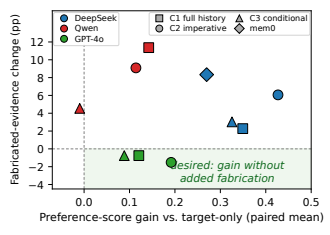
Figure 2 : Preference-score and fabricated-evidence changes from target-only prompting across model– condition pairs.
원문 · CC BY 4.0 · Yiwen Yang, Guanming Liu · ProcessPrefBench: Evaluating Cross-Task Transfer of Individual Process Preferences from Naturalistic Human-AI Interaction · 원문 그림 인용 · 원본 PDF 4쪽에서 그림 영역을 추출했습니다.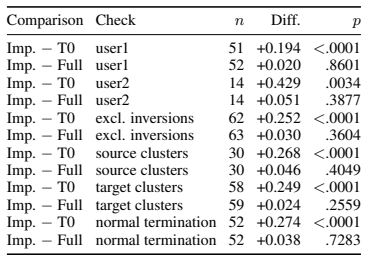
Table 3 : Sensitivity analyses for the primary imperative distilled-preference comparisons. T0 denotes target- only prompting and Full denotes full-history prompting.
원문 · CC BY 4.0 · Yiwen Yang, Guanming Liu · ProcessPrefBench: Evaluating Cross-Task Transfer of Individual Process Preferences from Naturalistic Human-AI Interaction · 원문 그림 인용 · 원본 PDF 7쪽에서 그림 영역을 추출했습니다.근거 조작과 과제 실패
선호 점수가 오르는 동시에 사실성 문제도 늘었습니다. Target-only 조건의 fabricated-evidence 실패율은 5.8%였고, imperative 조건에서는 10.4%였습니다. 차이는 4.5퍼센트포인트이며 exact McNemar p=.006입니다. Full-history 조건에서는 10.1%로 올라갔고, 두 메모리 조건의 차이는 0.3포인트였습니다. 전체 과제 실패율은 target-only 15.2%에서 imperative 18.9%로 올랐지만, 원문은 exact McNemar p=.086으로 통상적 유의수준에 이르지 않는다고 보고합니다. 근거 조작은 대상 자료가 뒷받침하지 않는 구체적 출처나 수치를 확정된 증거처럼 제시한 경우이며, 소스에서 옮겨 온 세부와 새로 만든 세부를 구분하지 않고 같은 표지를 받습니다.
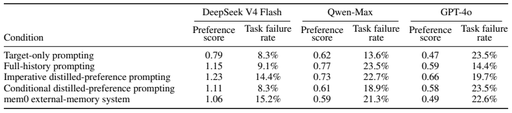
Table 1 : Preference score (higher is better) and task-failure rate (lower is better).
원문 · CC BY 4.0 · Yiwen Yang, Guanming Liu · ProcessPrefBench: Evaluating Cross-Task Transfer of Individual Process Preferences from Naturalistic Human-AI Interaction · 원문 그림 인용 · 원본 PDF 5쪽에서 그림 영역을 추출했습니다.판정자 검증과 한계
판정 모델은 인간 평가와 비교해 선호 점수를 더 보수적으로 매기는 경향이 있었습니다. 30개 답변의 진단 표본에서 과제 실패 판정은 두 주석자 사이 29/30(97%) 일치를 보였고, 선호 atom은 정확 일치 80.0%, linear-weighted κ=.72였습니다. 같은 atom에서 인간과 판정자 사이의 κ는 .52와 .53이었습니다. 이 표본은 판정에 의심이 큰 답변을 과대 표집하므로 벤치마크 전체의 유병률을 추정하지 않으며, 주요 효과는 벤치마크 판정 기준 아래의 추정치로 읽어야 합니다. Bootstrap 구간도 벤치마크 내부의 변동을 반영할 뿐 모집단 불확실성을 포함하지 않습니다.
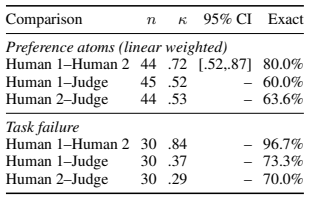
Table 2 : Agreement on post-calibration ratings. Task- failure positive counts are 4 (Human 1), 3 (Human 2), and 12 (judge). These values are not held-out inter-rater reliability.
원문 · CC BY 4.0 · Yiwen Yang, Guanming Liu · ProcessPrefBench: Evaluating Cross-Task Transfer of Individual Process Preferences from Naturalistic Human-AI Interaction · 원문 그림 인용 · 원본 PDF 7쪽에서 그림 영역을 추출했습니다.논문 정보
- 저자
- Yiwen Yang, Guanming Liu
- 학회·저널
- arXiv · 프리프린트
- 최초 공개일
- 2026년 11월 4일
- 등록일
- 2026년 11월 6일
- 수정일
- 2026년 11월 4일
- 버전
- v1
- arXiv
- 2611.06065
- DOI
- 10.18653/2026.lmplayschool-1.3
- 분류
- cs.CL
- 원문 이용 조건
- CC BY 4.0
- 제공 범위
- 논문 정보, 해설, 허용된 원문 그림
AI 해설은 논문 원문과 별개의 설명이며 오류가 있을 수 있습니다. 원문과 그림은 각 출처의 이용 조건과 따로 표시된 권리를 따릅니다.
초록
In natural human-AI dialogue, users' corrections, requests, and self-descriptions carry reusable signals about how they want work to be done. These signals reveal individual process preferences, user-specific standards for evidence, depth, analytical focus, procedure, and delivery. We ask whether a preference revealed in one dialogue can shape an assistant's later answer when the task does not restate it. ProcessPrefBench uses three months of natural dialogues from two knowledge workers to build 66 source-target cases separately judged for source evidence and target applicability. Sources are preselected, so the benchmark tests application rather than retrieval. We test three models with target-only, full-history, and distilled-preference prompts. Target-specific 0-2 rubrics score preference realization, and a task gate flags severe failures. Compared with target-only prompting, full-history and imperative distilled-preference prompting raise preference realization by 0.204 and 0.244 points on the 0-2 scale, respectively, with no reliable advantage from distillation. Fabricated-evidence failures rise from 5.8% under target-only prompting to 10.1% under full-history and 10.4% under imperative prompting. ProcessPrefBench highlights a tension in learning from dialogue, where drawing on prior interactions can improve preference realization yet also invite fabricated evidence. We hope it helps build assistants that honor a user's process preferences without sacrificing factual reliability.
원문 인용
Yiwen Yang, Guanming Liu (2026). ProcessPrefBench: Evaluating Cross-Task Transfer of Individual Process Preferences from Naturalistic Human-AI Interaction. arXiv:2611.06065v1. https://doi.org/10.18653/2026.lmplayschool-1.3
BibTeX
@article{yang2026processprefbench,
  title = {{ProcessPrefBench: Evaluating Cross-Task Transfer of Individual Process Preferences from Naturalistic Human-AI Interaction}},
  author = {Yiwen Yang and Guanming Liu},
  year = {2026},
  eprint = {2611.06065},
  archivePrefix = {arXiv},
  doi = {10.18653/2026.lmplayschool-1.3},
  url = {https://arxiv.org/abs/2611.06065v1}
}