논문 해설
Deep Learning Object Detection Methods for Ecological Camera Trap Data
생태 카메라 트랩 데이터를 위한 딥러닝 객체 탐지 방법
- 연구 문제 생태 카메라 트랩 이미지에서 종과 개체 수를 사람이 세는 작업은 비용이 큽니다. 이 연구는 제한된 규모의 데이터에서 객체 탐지가 이를 자동화할 수 있는지 확인합니다.
- 연구 방법 Faster R-CNN과 YOLO v2.0을 ResNet-101 구조와 COCO pre-training 가중치로 초기화하여 RCT와 GSSS에서 비교합니다.
- 주요 결과 Faster R-CNN은 RCT에서 93.0%, GSSS에서 76.7%의 정확도를 보였고, YOLO v2.0은 각각 73.0%와 40.3%였습니다.
카메라 트랩 이미지 분석의 병목과 연구 질문
생태 카메라 트랩은 동물 개체군을 방해 없이 지속적으로 관찰하는 데 널리 쓰이지만, 수천 장의 이미지에서 종과 개체 수를 사람이 세는 작업은 비용이 크고 시간이 많이 듭니다. 저자들은 이 작업을 자동화하려고 딥러닝 객체 탐지를 적용할 수 있는지 묻습니다.
핵심 어려움은 이미지가 흔들리거나 동물이 일부 가려지고, 거리가 다양하며, 낮과 밤의 조명이 달라 학습 데이터가 충분하지 않은 경우가 많다는 점입니다. 기존 딥러닝 성과는 대규모 라벨 데이터에서 나온 것이 많아, 연구자가 자기 생태계에서 직접 모은 제한된 데이터로 같은 수준을 얻을 수 있는지는 분명하지 않습니다.
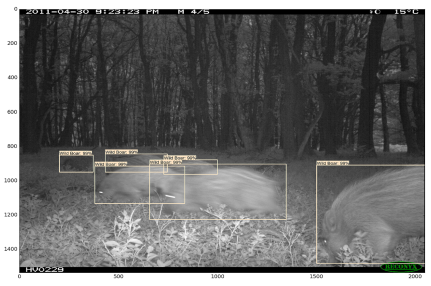
Fig. 2 . Faster R-CNN output returning 6 wild boar classifications from the RCT data set in an image taken at night.
원문 · CC BY 4.0 · Stefan Schneider, Graham W. Taylor, Stefan C. Kremer · Deep Learning Object Detection Methods for Ecological Camera Trap Data · 원문 그림 인용 · 원본 PDF 6쪽에서 그림 영역을 추출했습니다.이 논문은 Reconyx Camera Trap(RCT) 데이터셋과 저자들이 bounding box를 새로 주석한 Gold Standard Snapshot Serengeti(GSSS) 데이터셋을 사용해 두 객체 탐지 방법을 비교합니다. 범위는 한 이미지에 여러 종이 있을 때 종 분류와 위치 추정을 함께 수행하는 것입니다.
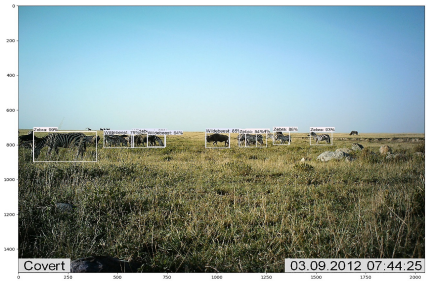
Fig. 5 . Faster R-CNN output returning 4 Zebra and 4 Wildebeest from the GSSS data set, demonstrating two species within one image.
원문 · CC BY 4.0 · Stefan Schneider, Graham W. Taylor, Stefan C. Kremer · Deep Learning Object Detection Methods for Ecological Camera Trap Data · 원문 그림 인용 · 원본 PDF 6쪽에서 그림 영역을 추출했습니다.두 탐지 방법과 전이 학습 설정
비교 대상은 Faster R-CNN과 YOLO v2.0입니다. Faster R-CNN은 Region Proposal Network(RPN)을 프레임워크에 넣어 영역 제안을 거의 비용 없이 만드는 방식입니다. YOLO는 이미지를 격자로 나누고 각 격자 셀에서 분류 대상 크기에 맞춘 미리 정의된 anchor를 사용하며, 한 번의 반복에서 모든 anchor에 대한 분류를 출력합니다.
두 방법 모두 ResNet-101 구조를 사용합니다. 학습은 COCO 2017로 사전 학습된 모델을 초기화하여 시작합니다. 최종 층의 가중치는 Xavier 초기화로 설정하고, adaptive momentum optimizer로 학습합니다. 학습은 손실이 3 epoch 연속 개선되지 않을 때 종료하도록 설정되어 있습니다. 이는 제한된 데이터에서 공개 가중치의 필터를 재사용하는 전이 학습 방식입니다.
객체 탐지 학습에는 bounding box 좌표가 필요합니다. 그래서 저자들은 GSSS의 bounding box를 직접 주석했습니다. 학습에 쓴 박스 중 750 pixel 미만의 박스는 정확도를 높이기 위해 제외되었습니다.
IOU 기반 정확도 평가 방식
평가는 80/20 학습·테스트 분할을 다섯 번 반복하는 교차 검증으로 수행되었고, 평균과 표준편차가 보고되었습니다. 원문은 두 데이터셋 모두 bounding box 좌표가 일부 이미지에만 있어 표준화된 학습·테스트 분할이 없었다고 설명하며, 그래서 반복 교차 검증을 택했다고 밝힙니다.
정확도는 이미지마다 계산됩니다. 각 예측 박스와 테스트 박스의 IOU를 구하고, 테스트 박스마다 가장 높은 IOU를 가진 예측 박스를 골라 그 분류 결과를 실제 분류와 비교합니다. 이미 짝지어진 박스는 이후 비교에서 제외합니다. IOU는 두 영역이 겹치는 면적을 두 영역의 전체 면적으로 나눈 값이며, 0.70 이상을 좋은 성능으로 봅니다.
Faster R-CNN과 YOLO의 비교 결과
Faster R-CNN은 RCT에서 정확도 93.0%, IOU 0.804를 보였고 GSSS에서는 정확도 76.7%, IOU 0.722를 보였습니다. YOLO는 RCT에서 정확도 73.0%, IOU 0.570이며 GSSS에서는 정확도 40.3%, IOU 0.221입니다. 본문 수치와 Table I의 평균±표준편차 표기 사이에는 RCT 및 GSSS의 YOLO 정확도에서 차이가 보입니다. 이 글은 본문 보고 수치를 기준으로 읽습니다.
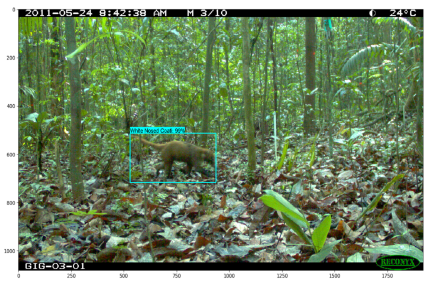
Fig. 1 . Faster R-CNN output returning 1 White Nosed Agouti from the RCT data set in a highly camouflaged environment.
원문 · CC BY 4.0 · Stefan Schneider, Graham W. Taylor, Stefan C. Kremer · Deep Learning Object Detection Methods for Ecological Camera Trap Data · 원문 그림 인용 · 원본 PDF 6쪽에서 그림 영역을 추출했습니다.종별로 보면 Faster R-CNN은 RCT의 18개 종 중 13개 종에서 100% 정확도를 보였습니다. GSSS에서는 이미지가 100장 이상인 11개 종 중 5개 종에서 80% 정확도를 보였습니다. 이는 두 데이터셋에서 Faster R-CNN이 상대적으로 더 잘 작동했다는 관찰이며, 다른 데이터나 모델에서도 같은 결과가 나온다는 뜻은 아닙니다.
성능 차이의 해석과 적용 범위
저자들은 YOLO의 낮은 성능을 제한된 데이터 때문일 가능성이 있다고 해석합니다. 이 해석은 저자의 해석이며, 학습 예산과 수렴 조건을 달리한 추가 실험으로 확인된 원인은 아닙니다.
GSSS의 성능이 RCT보다 낮은 이유로 저자들은 극심한 클래스 불균형과 더 복잡한 이미지 조건을 듭니다. 예를 들어 동물이 아주 멀리 있거나 잘리거나 가려지거나 카메라에 매우 가까운 이미지가 많다고 설명합니다. 이것도 저자의 해석이며, 클래스별 불균형 실험으로 분리해 검증한 내용은 아닙니다.
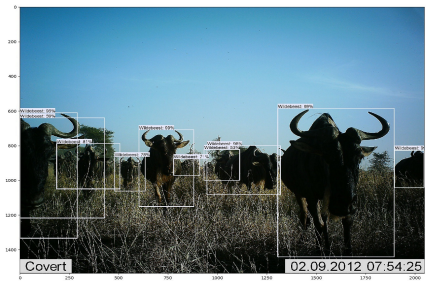
Fig. 4 . Faster R-CNN output returning 10 Wildebeest from the GSSS data set, demonstrating one example of the high levels of obstruction within the data set.
원문 · CC BY 4.0 · Stefan Schneider, Graham W. Taylor, Stefan C. Kremer · Deep Learning Object Detection Methods for Ecological Camera Trap Data · 원문 그림 인용 · 원본 PDF 6쪽에서 그림 영역을 추출했습니다.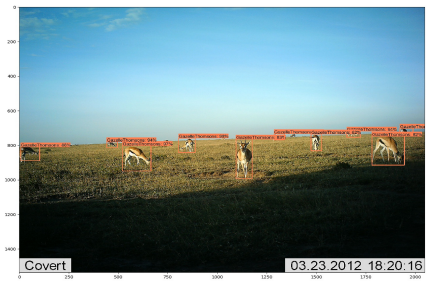
Fig. 6 . Faster R-CNN output returning 10 Gazelle Thomsons from the GSSS data set, demonstrating the difficulties of distances.
원문 · CC BY 4.0 · Stefan Schneider, Graham W. Taylor, Stefan C. Kremer · Deep Learning Object Detection Methods for Ecological Camera Trap Data · 원문 그림 인용 · 원본 PDF 6쪽에서 그림 영역을 추출했습니다.결과는 한 번의 학습 설정과 두 데이터셋에 국한됩니다. 또한 원문은 bounding box가 있는 부분 집합만 사용했다고 명시합니다. 개체 재식별이나 개체군 추정은 논문의 주요 실험이 아니며, 저자들도 이를 향후 가능성으로 제시합니다.
논문 정보
- 저자
- Stefan Schneider, Graham W. Taylor, Stefan C. Kremer
- 학회·저널
- arXiv · 프리프린트
- 최초 공개일
- 2018년 3월 28일
- 등록일
- 2026년 11월 5일
- 수정일
- 2018년 3월 28일
- 버전
- v1
- arXiv
- 1803.10842
- 분류
- cs.CV
- 원문 이용 조건
- CC BY 4.0
- 제공 범위
- 논문 정보, 해설, 허용된 원문 그림
AI 해설은 논문 원문과 별개의 설명이며 오류가 있을 수 있습니다. 원문과 그림은 각 출처의 이용 조건과 따로 표시된 권리를 따릅니다.
초록
Deep learning methods for computer vision tasks show promise for automating the data analysis of camera trap images. Ecological camera traps are a common approach for monitoring an ecosystem's animal population, as they provide continual insight into an environment without being intrusive. However, the analysis of camera trap images is expensive, labour intensive, and time consuming. Recent advances in the field of deep learning for object detection show promise towards automating the analysis of camera trap images. Here, we demonstrate their capabilities by training and comparing two deep learning object detection classifiers, Faster R-CNN and YOLO v2.0, to identify, quantify, and localize animal species within camera trap images using the Reconyx Camera Trap and the self-labeled Gold Standard Snapshot Serengeti data sets. When trained on large labeled datasets, object recognition methods have shown success. We demonstrate their use, in the context of realistically sized ecological data sets, by testing if object detection methods are applicable for ecological research scenarios when utilizing transfer learning. Faster R-CNN outperformed YOLO v2.0 with average accuracies of 93.0\% and 76.7\% on the two data sets, respectively. Our findings show promising steps towards the automation of the labourious task of labeling camera trap images, which can be used to improve our understanding of the population dynamics of ecosystems across the planet.
원문 인용
Stefan Schneider, Graham W. Taylor, Stefan C. Kremer (2018). Deep Learning Object Detection Methods for Ecological Camera Trap Data. arXiv:1803.10842v1. https://arxiv.org/abs/1803.10842v1
BibTeX
@misc{schneider2018deep,
  title = {{Deep Learning Object Detection Methods for Ecological Camera Trap Data}},
  author = {Stefan Schneider and Graham W. Taylor and Stefan C. Kremer},
  year = {2018},
  eprint = {1803.10842},
  archivePrefix = {arXiv},
  url = {https://arxiv.org/abs/1803.10842v1}
}