논문 해설
Real-time monitoring of driver drowsiness on mobile platforms using 3D neural networks
3D 신경망을 이용한 모바일 플랫폼에서의 운전자 졸음 실시간 모니터링
- 연구 문제 운전자 졸음은 충돌 위험을 높이지만 모바일 기기에서 실시간으로 탐지하는 방법은 드뭅니다.
- 연구 방법 MobileNetV2_1.4 기반 모델의 첫 층에 3D 합성곱을, 둘째 층에 깊이별 분리 3D 합성곱 블록을 두어 공간과 시간 정보를 초기에 융합합니다.
- 주요 결과 DDD 평가 데이터셋에서 제안 모델은 73.9%로 MobileNetV2_1.4의 71.8%보다 2.1% 높고, 10프레임 입력으로 모바일 실행이 가능했습니다.
운전자 졸음 탐지의 모바일 실시간 문제
운전자 졸음은 충돌 위험을 높이며, 졸음 탐지 방법은 많이 연구되었지만 모바일 전화에 구현한 사례는 드뭅니다. 기존 컴퓨터 비전 기법은 눈꺼풀 감김이나 머리 위치 같은 특징을 한 프레임씩 추출한 뒤 다른 단계에서 졸음과 연결하는 다단계 방식이 일반적입니다. 이 방식은 깜빡임과 잠깐의 졸음, 말하기와 하품처럼 시간 흐름이 필요한 구분을 단일 프레임만으로 하기 어렵습니다. 한편 행동 인식에서 높은 성능을 내는 3D 합성곱이나 광학 흐름은 연산량이 커서 모바일 실시간 경고에는 부담이 됩니다. 이 논문은 이러한 간극에서 깊이별 분리 3D 합성곱과 초기 공간·시간 정보 융합을 사용해 정확도와 모바일 추론 시간의 균형을 찾는 문제를 다룹니다.
깊이별 분리 3D 합성곱 기반 초기 융합 구조
제안 모델은 MobileNetV2_1.4를 기반으로 하며, 첫 층에 표준 3D 합성곱을, 둘째 층에 bottleneck3d 블록을 둡니다. bottleneck3d는 깊이별 분리 3D 합성곱을 사용하는 3D 병목 잔차 블록이며, 시간 방향 커널은 [3, 3, 5]로 설정되어 남은 시간 정보를 통합합니다. 이 구조는 네트워크의 첫 몇 개 층에서 공간과 시간 정보를 합치는 초기 융합을 만들고, 그 뒤의 층은 모바일 추론에 맞춘 경량 구조를 유지합니다. 입력은 224×224 공간 해상도의 10프레임 시퀀스이며, 광학 흐름은 모바일 실행 비용 때문에 사용하지 않았습니다.
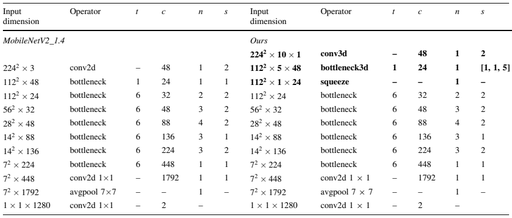
Table 2 MobileNetV2 [ 37] with width multiplier 1.4 (left) and our model architecture (right)
원문 · CC BY 4.0 · Jasper S. Wijnands, Jason Thompson, Kerry A. Nice, Gideon D. P. A. Aschwanden, Mark Stevenson · Real-time monitoring of driver drowsiness on mobile platforms using 3D neural networks · 원문 그림 인용 · 원본 PDF 7쪽에서 그림 영역을 추출했습니다.데이터 전처리와 pre-training 및 fine-tuning
학습 데이터는 DDD 데이터셋의 훈련 분할로 구성되며, 영상은 240×320으로 축소되고 학습에는 100프레임 기록에서 무작위로 고른 10개 연속 프레임을 사용합니다. 좌우 반전, 밝기 변화, 이동과 확대, 비율 변형을 적용해 좌우 주행과 밝기 변화, 얼굴 위치와 형태의 차이에 대한 강건성을 높입니다. 학습은 먼저 ImageNet으로 공간 정보를 학습한 뒤 Kinetics-400의 일부로 영상 기반 pre-training을 수행합니다. 이후 DDD 데이터셋으로 모든 층을 미세 조정하며, 이때 초기 학습률과 가중치 감쇠를 pre-training보다 낮춥니다. 이 학습 설정은 제안 모델의 설정이며 다른 모델의 학습 조건과 같은 것으로 볼 수 없습니다.
2D와 3D, 모바일과 고연산 모델의 정확도 비교
DDD 평가 데이터셋에서 고연산 범주의 InceptionV1은 69.6%, I3D는 75.4%의 정확도를 보입니다. 같은 224×224 해상도에서 3D 합성곱을 쓴 I3D가 2D 모델보다 5.8% 높았습니다. 모바일 범주에서는 MobileNetV2_1.4가 71.8%, 제안 모델이 73.9%로, 제안 모델은 2.1% 높습니다. 이 결과는 DDD 평가 데이터셋과 제시된 모델 조건에서 얻은 것이며, 정확도 차이는 시간 정보 사용과 모델 구조가 함께 반영된 결과입니다. 인간 라벨링 정확도는 80.8%로 보고되며 제안 모델의 주간 조건 일부는 이에 근접하는 것으로 나타납니다.

Table 4 Accuracy on the DDD evaluation dataset per deployment category and modelling approach
원문 · CC BY 4.0 · Jasper S. Wijnands, Jason Thompson, Kerry A. Nice, Gideon D. P. A. Aschwanden, Mark Stevenson · Real-time monitoring of driver drowsiness on mobile platforms using 3D neural networks · 원문 그림 인용 · 원본 PDF 8쪽에서 그림 영역을 추출했습니다.
Table 5 Accuracy (%) of various methodologies and human labelling on the DDD evaluation dataset
원문 · CC BY 4.0 · Jasper S. Wijnands, Jason Thompson, Kerry A. Nice, Gideon D. P. A. Aschwanden, Mark Stevenson · Real-time monitoring of driver drowsiness on mobile platforms using 3D neural networks · 원문 그림 인용 · 원본 PDF 8쪽에서 그림 영역을 추출했습니다.입력 길이와 추론 시간의 절충
입력 샘플 길이를 5, 10, 30, 60 프레임으로 바꾸어 측정했을 때 정확도는 65.9%, 73.9%, 77.6%, 75.2%였습니다. 다만 30 fps 기준 녹화 시간은 각각 0.17, 0.33, 1.0, 2.0 초이며, 30프레임과 60프레임 입력은 테스트 기기 앱에서 원활히 실행되지 않았습니다. 추론 시간 표에서 60프레임 항목은 측정값이 없습니다. 저자들은 10프레임이 시간성과 예측 품질 사이의 좋은 균형이라고 판단했습니다. 따라서 30프레임의 높은 정확도는 실시간 모바일 조건에서 채택되지 않은 설정입니다.
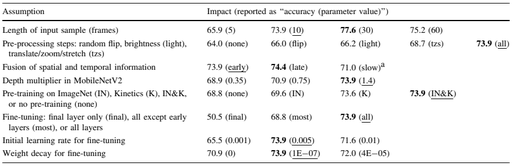
Table 6 Accuracy (%) on the DDD evaluation dataset, highlighting the highest accuracy and selected parameter value
원문 · CC BY 4.0 · Jasper S. Wijnands, Jason Thompson, Kerry A. Nice, Gideon D. P. A. Aschwanden, Mark Stevenson · Real-time monitoring of driver drowsiness on mobile platforms using 3D neural networks · 원문 그림 인용 · 원본 PDF 9쪽에서 그림 영역을 추출했습니다.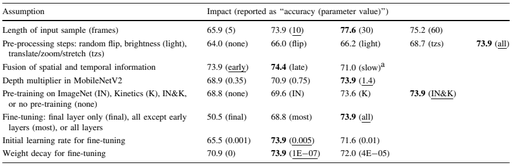
Table 7 Inference time (s) on Samsung Galaxy S7, highlighting the shortest inference time and selected parameter value
원문 · CC BY 4.0 · Jasper S. Wijnands, Jason Thompson, Kerry A. Nice, Gideon D. P. A. Aschwanden, Mark Stevenson · Real-time monitoring of driver drowsiness on mobile platforms using 3D neural networks · 원문 그림 인용 · 원본 PDF 9쪽에서 그림 영역을 추출했습니다.공간·시간 융합 방식과 추론 시간
초기 융합 구조는 late fusion이나 slow fusion과 비교되었습니다. late fusion은 가중치를 공유하는 MobileNetV2로 각 프레임을 처리한 뒤 마지막 층에서 합치며, 정확도는 74.4%로 초기 융합의 73.9%보다 약간 높았습니다. 그러나 추론 시간은 late fusion이 5.6 초, 초기 융합이 1.1 초로 보고되어 모바일 배포에는 초기 융합이 선택되었습니다. slow fusion은 전반적으로 3D 깊이별 분리 합성곱을 사용하며 Samsung Galaxy S7에서 31.7 초가 걸렸습니다. 이 구현은 TensorFlow에 native 지원이 없어 직접 구현되었고, pre-training 범위도 다른 실험보다 제한되었으므로 이 실시간 비교 결과에만 적용해야 합니다.
데이터와 정확도 한계
저자들이 밝힌 한계는 학술 DDD 데이터셋의 훈련 데이터가 18명에서 얻어졌고 프레임이 한 장씩 라벨링되지 않았다는 점입니다. 또한 모바일 배포를 위한 구조 변경으로 전체 정확도는 I3D 기준 대비 1.5% 낮아졌습니다. 야간에 안경을 쓴 조건에서는 제안 모델이 가장 낮은 성능을 보였다고 보고됩니다. 이러한 결과는 DDD 평가 데이터셋에서 얻은 것이며, 실제 주행 데이터에서의 성능은 이 논문의 실험 범위 밖입니다.
논문 정보
- 저자
- Jasper S. Wijnands, Jason Thompson, Kerry A. Nice, Gideon D. P. A. Aschwanden, Mark Stevenson
- 학회·저널
- arXiv · 프리프린트
- 최초 공개일
- 2019년 10월 15일
- 등록일
- 2026년 11월 6일
- 수정일
- 2019년 10월 15일
- 버전
- v1
- arXiv
- 1910.06540
- DOI
- 10.1007/s00521-019-04506-0
- 분류
- cs.CV · stat.ML
- 원문 이용 조건
- CC BY 4.0
- 제공 범위
- 논문 정보, 해설, 허용된 원문 그림
AI 해설은 논문 원문과 별개의 설명이며 오류가 있을 수 있습니다. 원문과 그림은 각 출처의 이용 조건과 따로 표시된 권리를 따릅니다.
초록
Driver drowsiness increases crash risk, leading to substantial road trauma each year. Drowsiness detection methods have received considerable attention, but few studies have investigated the implementation of a detection approach on a mobile phone. Phone applications reduce the need for specialised hardware and hence, enable a cost-effective roll-out of the technology across the driving population. While it has been shown that three-dimensional (3D) operations are more suitable for spatiotemporal feature learning, current methods for drowsiness detection commonly use frame-based, multi-step approaches. However, computationally expensive techniques that achieve superior results on action recognition benchmarks (e.g. 3D convolutions, optical flow extraction) create bottlenecks for real-time, safety-critical applications on mobile devices. Here, we show how depthwise separable 3D convolutions, combined with an early fusion of spatial and temporal information, can achieve a balance between high prediction accuracy and real-time inference requirements. In particular, increased accuracy is achieved when assessment requires motion information, for example, when sunglasses conceal the eyes. Further, a custom TensorFlow-based smartphone application shows the true impact of various approaches on inference times and demonstrates the effectiveness of real-time monitoring based on out-of-sample data to alert a drowsy driver. Our model is pre-trained on ImageNet and Kinetics and fine-tuned on a publicly available Driver Drowsiness Detection dataset. Fine-tuning on large naturalistic driving datasets could further improve accuracy to obtain robust in-vehicle performance. Overall, our research is a step towards practical deep learning applications, potentially preventing micro-sleeps and reducing road trauma.
원문 인용
Jasper S. Wijnands, Jason Thompson, Kerry A. Nice, Gideon D. P. A. Aschwanden, Mark Stevenson (2019). Real-time monitoring of driver drowsiness on mobile platforms using 3D neural networks. arXiv:1910.06540v1. https://doi.org/10.1007/s00521-019-04506-0
BibTeX
@article{wijnands2019real,
  title = {{Real-time monitoring of driver drowsiness on mobile platforms using 3D neural networks}},
  author = {Jasper S. Wijnands and Jason Thompson and Kerry A. Nice and Gideon D. P. A. Aschwanden and Mark Stevenson},
  year = {2019},
  eprint = {1910.06540},
  archivePrefix = {arXiv},
  doi = {10.1007/s00521-019-04506-0},
  url = {https://arxiv.org/abs/1910.06540v1}
}