논문 해설
Generative Latent Priors for Interpreting and Steering Protein Language Models
단백질 언어 모델의 해석과 조종을 위한 생성적 잠재 사전분포
- 연구 문제 pLM 활성값을 희소 사전 가정 없이 해석하고 편집하는 방법이 필요하며, 이 논문은 GLP를 ESM-2 활성값에 적용해 평가합니다.
- 연구 방법 GLP는 동결된 ESM-2 활성값의 분포를 흐름 매칭 확산 모델로 학습하고, 메타 뉴런 프로빙과 SDEdit 보정 두 방식으로 쓰입니다.
- 주요 결과 GLP 메타 뉴런은 이산 개념 프로빙에서 SAE 등 기준선보다 높은 AUC를 보였지만 이는 주로 집중 효과로 해석됩니다. 보정은 속성 조종의 분리를 높였으나 디코딩 후 구조 타당성은 개선되지 않았습니다.
기존 희소 사전 방식의 한계
대규모 모델을 해석하는 주류 방법은 희소 오토인코더(SAE)처럼 강한 구조적 가정을 둡니다. 단백질 언어 모델(pLM)의 활성값에서도 SAE는 Swiss-Prot 주석과 맞는 특징을 찾아 왔지만, 활성값을 희소한 사전으로 분해하고 선형성을 가정하는 방식이라는 한계가 있습니다. 이 논문은 그런 가정 없이 활성값의 분포 자체를 학습하는 Generative Latent Priors(GLP)를 ESM-2 활성값에 옮겨 적용합니다. GLP는 동결된 호스트 모델의 활성값을 흐름 매칭으로 학습한 확산 모델이며, 프로빙 렌즈와 편집 사전분포라는 두 역할로 평가됩니다.
ESM-2 활성값 위의 GLP 학습
호스트 모델인 ESM-2-8M과 ESM-2-650M은 학습 중 동결되며, 각각 4번과 18번 층의 잔차 흐름을 읽습니다. 표준화된 잔기별 활성값 h를 노이즈 ϵ과 선형 보간한 h_t = (1−t)h + tϵ에서, 속도 목표 ϵ−h를 예측하는 네트워크 u_θ를 다음 손실로 학습합니다: L(θ) = E_{h,ϵ,t} ||u_θ(h_t, t) − (ϵ−h)||². 이 식에서 손실은 최소화 대상입니다. 생성할 때는 −u_θ를 t=1에서 t=0까지 적분해 노이즈를 제거하며, 중간 수준 t_0로 손상된 편집 활성값을 넣으면 같은 과정으로 매니폴드 위로 되돌릴 수 있습니다. u_θ는 SwiGLU MLP 블록을 쌓은 구조이고, 고정 노이즈 수준 t=τ에서 블록별 게이트 활성값을 읽은 값이 메타 뉴런입니다.
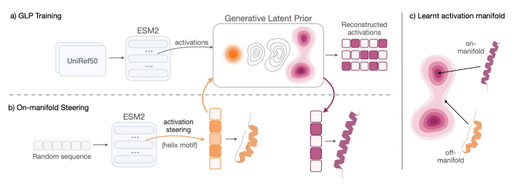
Figure 1 : Pipeline overview. (a) GLP trains by flow matching on ESM-2 activations from UniRef50 to learn their manifold. (b) Steering pushes an activation off that manifold toward a target property. (c) GLP correction re-noises and denoises the edit back onto the manifold.
원문 · CC BY 4.0 · Daniel Hinjos, Lucía Urcelay · Generative Latent Priors for Interpreting and Steering Protein Language Models · 원문 그림 인용 · 원본 PDF 2쪽에서 그림 영역을 추출했습니다.메타 뉴런 프로빙 설정
메타 뉴런이 생물학적 개념을 단일 유닛으로 분리하는지 보기 위해, 프로빙에 쓰는 개념 집합은 GLP 출력을 보기 전에 고정됩니다. 잔기 수준 이산 개념은 110개, 연속 전체 서열 속성은 10개입니다. 음성은 양성과 같은 단백질에서 가져오므로 단백질 정체성으로는 이길 수 없습니다. 연속 속성은 평균 풀링한 활성값과 속성 간 절댓값 피어슨 상관으로 후보를 고르고, 선형 프로브의 Spearman ρ를 씁니다.
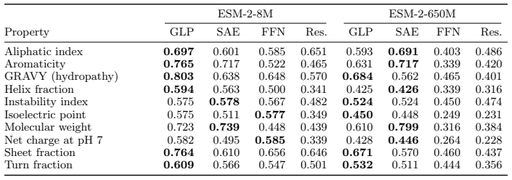
Table 9 : Per-property test Spearmanρ, all 10 continuous properties, both hosts. The shaded row is the mean, with the Wilcoxonpfor the leader against the runner-up.
원문 · CC BY 4.0 · Daniel Hinjos, Lucía Urcelay · Generative Latent Priors for Interpreting and Steering Protein Language Models · 원문 그림 인용 · 원본 PDF 22쪽에서 그림 영역을 추출했습니다.메타 뉴런 프로빙 결과와 집중 여부
8M 호스트에서 GLP 메타 뉴런은 이산 개념의 평균 테스트 AUC 0.903으로 SAE의 0.845, ESM FFN의 0.877, 잔차 스트림의 0.833보다 높았습니다. 이 우위가 새로운 정보인지 확인하기 위해, 8M에서 승리한 메타 뉴런의 대부분은 SAE 사전에 대한 선형 읽기 값으로 설명되었습니다(중앙값 R² 0.76). 또 SAE 상위 20개 특징을 결합한 프로브는 GLP가 이긴 104개 개념 중 94개에서 같은 테스트 AUC에 도달했습니다. 저자들은 이를 정보의 새로움보다 집중(concentration)으로 해석합니다.

Table 1 : 1-D probing: mean test AUC or Spearmanρ[95% bootstrap CI]. Bold: highest per column; ∗:p<0.05vs. all baselines (two-sided paired Wilcoxon).
원문 · CC BY 4.0 · Daniel Hinjos, Lucía Urcelay · Generative Latent Priors for Interpreting and Steering Protein Language Models · 원문 그림 인용 · 원본 PDF 4쪽에서 그림 영역을 추출했습니다.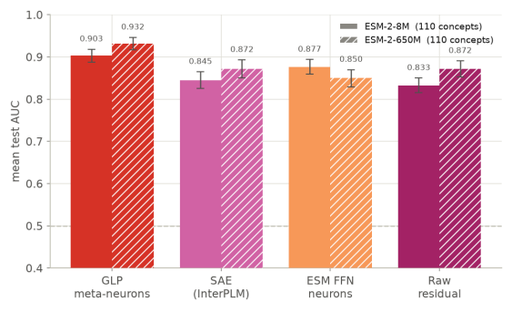
Figure 9 : 1-D probing mean test AUC by method and host (ESM-2-8M solid, ESM-2-650M hatched; 95% bootstrap CI). GLP meta-neurons lead at both host sizes.
원문 · CC BY 4.0 · Daniel Hinjos, Lucía Urcelay · Generative Latent Priors for Interpreting and Steering Protein Language Models · 원문 그림 인용 · 원본 PDF 19쪽에서 그림 영역을 추출했습니다.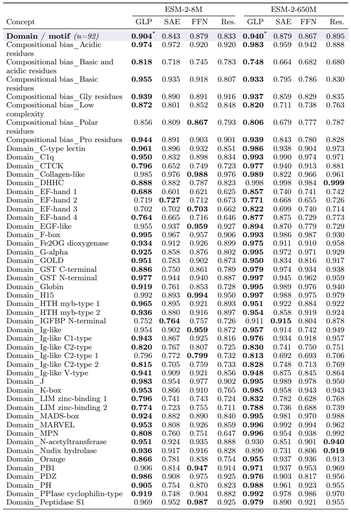
Table 8 : Per-concept test AUC, all 110 concepts, both hosts. Bold marks the highest value in each row within a host. Shaded rows are category means; * marks a lead over the runner- up withp<0.05(two-sided paired Wilcoxon over the category’s concepts, uncorrected). Categories withn≤4cannot reach this threshold even if the leader wins every concept.
원문 · CC BY 4.0 · Daniel Hinjos, Lucía Urcelay · Generative Latent Priors for Interpreting and Steering Protein Language Models · 원문 그림 인용 · 원본 PDF 20쪽에서 그림 영역을 추출했습니다.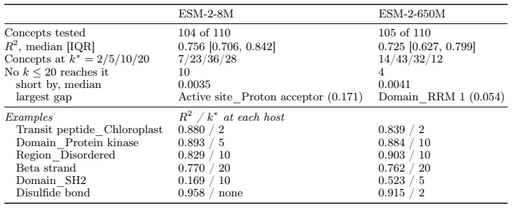
Table 10 : Falsification tests on the concepts GLP wins.R2: meta-neuron regressed on the full SAE dictionary (held-out).k ∗: fewest top-kSAE features whose joint probe matches its test AUC (“none” if nok≤20does).
원문 · CC BY 4.0 · Daniel Hinjos, Lucía Urcelay · Generative Latent Priors for Interpreting and Steering Protein Language Models · 원문 그림 인용 · 원본 PDF 22쪽에서 그림 영역을 추출했습니다.DiffMean 조종과 SDEdit 보정
조종 실험에서 DiffMean 방향 v는 상위 및 하위 UniRef50 사분위 사이의 평균 활성값 차이로 얻습니다. 방향 노름은 활성값 평균 노름 ∥h∥에 맞춰 v̂ = ∥h∥v/∥v∥로 재스케일되며, 편집 h̃ = ∥h∥(h+αv̂)/∥h+αv̂∥로 다시 활성값 노름을 유지합니다. 보정 arm에서는 편집된 잔기 활성값을 SDEdit로 t_0까지 노이즈화하고 K 단계 디노이징하여 GLP 매니폴드 위로 되돌립니다. 두 arm은 이 보정 연산 실행 여부만 다르며, 전체 루프는 무작위로 뽑은 잔기 10%를 30 라운드 동안 마스크드 Gibbs로 다시 샘플링합니다. 속성은 GRAVY, 순전하 나누기 길이, Guruprasad 불안정 지수로 서열에서 직접 계산합니다.
보정이 속성 분리를 높이지만 구조는 유지하지 못함
세 생화학 속성에서 보정 arm은 상향과 하향 방향을 naive arm보다 더 분명히 나눕니다. naive arm은 대부분의 α에서 두 방향을 거의 분리하지 못했지만, 보정 arm은 격자의 대부분에서 세 속성을 분리했습니다. α=0 실행에서 보정 arm도 방향성 편향을 보였으나, 이는 보정 연산 자체의 오프셋으로 따로 측정되어 발산도에서 뺍니다. 보정 자체는 분포 손실을 되돌립니다. 단일 활성값에서 SDEdit 한 번은 α 증가에 따라 올라간 확산 손실을 대부분 회복합니다. 그러나 디코딩 후 재임베딩한 서열에서는 보정 arm이 naive arm보다 더 매니폴드 위에 있지 않았고, 구조 타당성인 ESMFold pTM도 개선되지 않았습니다.
저자들은 이를 디코딩 루프가 보정 효과를 잃게 한다고 해석합니다.

Figure 2 : Property steering naive vs GLP correction, both directions. Change vs.α=0
원문 · CC BY 4.0 · Daniel Hinjos, Lucía Urcelay · Generative Latent Priors for Interpreting and Steering Protein Language Models · 원문 그림 인용 · 원본 PDF 4쪽에서 그림 영역을 추출했습니다.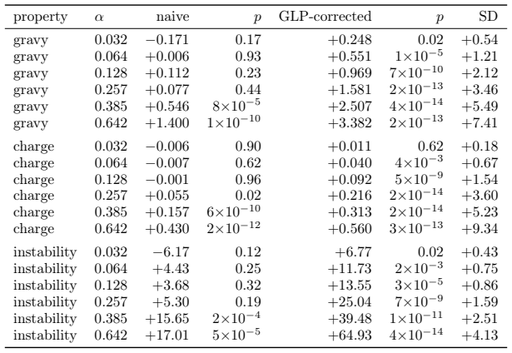
Table 3 : Steering-attributable divergence (up − down); α in units of ∥h∥, SD = divergence over the property’s UniRef50 spread. Unpaired Mann–Whitney, n=40 per direction.
원문 · CC BY 4.0 · Daniel Hinjos, Lucía Urcelay · Generative Latent Priors for Interpreting and Steering Protein Language Models · 원문 그림 인용 · 원본 PDF 13쪽에서 그림 영역을 추출했습니다.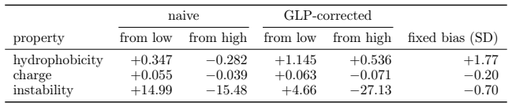
Table 4 : Concept change withnosteering applied (α=0), by arm and starting set, in each property’s own units. A fixed bias adds the same amount from both sets; mean reversion flips sign with the set and cancels in the corrected−naive difference, which is the last column.
원문 · CC BY 4.0 · Daniel Hinjos, Lucía Urcelay · Generative Latent Priors for Interpreting and Steering Protein Language Models · 원문 그림 인용 · 원본 PDF 14쪽에서 그림 영역을 추출했습니다.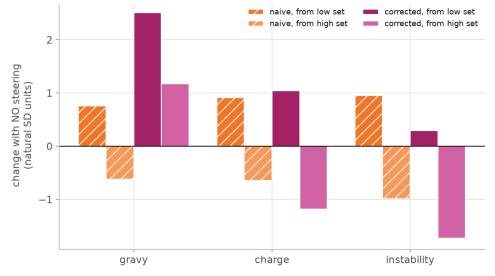
Figure 6 : Theα=0arms, in units of each property’s spread. Hatched: naive. A bias that reverses with the starting set is mean reversion; one that does not comes from the correction.
원문 · CC BY 4.0 · Daniel Hinjos, Lucía Urcelay · Generative Latent Priors for Interpreting and Steering Protein Language Models · 원문 그림 인용 · 원본 PDF 14쪽에서 그림 영역을 추출했습니다.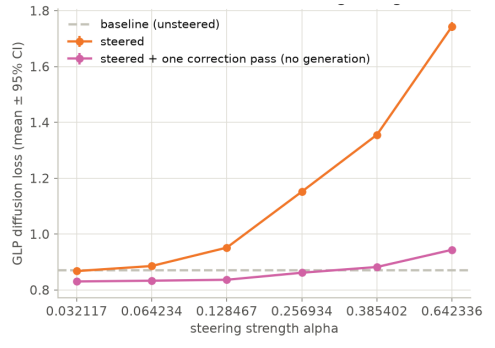
Figure 7 : GLP diffusion loss against steering strength, before and after a single correction pass applied directly to the steered activation (no generation), for hydrophobicity
원문 · CC BY 4.0 · Daniel Hinjos, Lucía Urcelay · Generative Latent Priors for Interpreting and Steering Protein Language Models · 원문 그림 인용 · 원본 PDF 14쪽에서 그림 영역을 추출했습니다.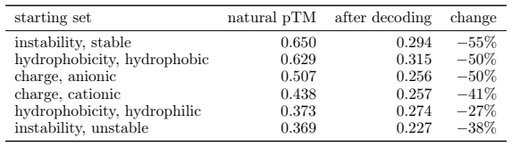
Table 5 : Foldability before and after the decoding loop, with no steering and no correction (α=0, naive arm), for all six held-out sets.
원문 · CC BY 4.0 · Daniel Hinjos, Lucía Urcelay · Generative Latent Priors for Interpreting and Steering Protein Language Models · 원문 그림 인용 · 원본 PDF 15쪽에서 그림 영역을 추출했습니다.SAE 클램프 구조 조종의 개념별 차이
SAE 특징을 c 값으로 클램프하는 구조 조종에서 네 개념의 결과는 서로 다릅니다. Helix 특징 5355는 DSSP helix fraction을 보정 arm에서 naive arm보다 높였고, 보정 arm은 클램프가 없을 때도 이 비율을 올렸습니다. Beta strand는 거의 움직이지 않았고 보정 arm의 strand fraction은 대부분의 c에서 naive보다 낮았습니다. Coiled coil은 pepcoil이 긴 단일 나선을 heptad 반복으로 점수화한 결과일 수 있다고 원문이 밝힙니다. Zinc finger는 PROSITE와 Pfam zf-C2H2 정렬로 확인했을 때 완전한 C2H2 모티프를 만들지 못했으며, 연속 HMM 점수에서만 보정 arm이 높았습니다.
이 결과는 잔기별 편향이 국소 나선 성향은 바꾸지만 β-sheet, 코일드 코일, 징크 핑거처럼 먼 잔기 쌍의 배열은 만들기 어렵다는 저자들의 해석과 함께 읽어야 합니다.
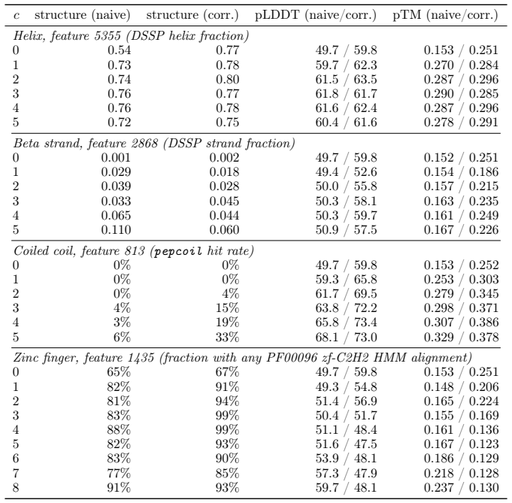
Table 7 : Structural steering byc, naive/GLP-corrected,n=100per cell. Structural column: DSSP secondary-structure fraction (per-chain residue fraction in that class) for Helix and Beta strand; EMBOSSpepcoilhit rate for Coiled coil; and, for Zinc finger, the fraction of sequences with any PF00096 zf-C2H2 profile-HMM alignment (a graded measure, no complete motif forms).
원문 · CC BY 4.0 · Daniel Hinjos, Lucía Urcelay · Generative Latent Priors for Interpreting and Steering Protein Language Models · 원문 그림 인용 · 원본 PDF 18쪽에서 그림 영역을 추출했습니다.적용 범위와 남은 질문
이 연구는 호스트마다 하나의 hook 층만 학습했고, 프로빙은 도메인과 모티프가 많은 풀에서 상관 분석으로 이뤄졌으며, 조종은 한 층과 마스크된 위치에만 적용되었습니다. 생성 품질의 FD는 샘플러 단계 수에 따라 달라지므로, 본 결과의 FD는 1,000 단계에서 측정한 값으로 한정됩니다. 디코딩 루프에서 구조 타당성이 떨어지는 현상은 마스크드 Gibbs 디코딩의 전면 재작성과 관련되며, 빔 서치처럼 편집 수를 제한한 디코더는 자연스러움을 더 잘 유지했지만 조종 효과가 약했습니다. 따라서 이 결과는 연속 사전분포로 단백질 서열 생성을 조종할 때의 구조적 한계로 읽어야 하며, 다른 디코더나 조종 방식의 가능성은 아직 검증되지 않았습니다.
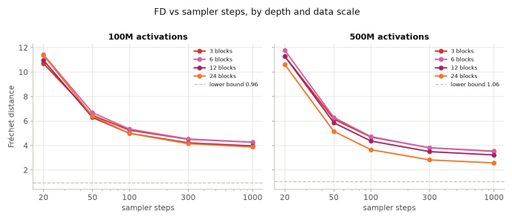
Figure 4 : Fréchet Distance vs. sampler steps, by GLP depth and data scale (sharedy-axis). FD falls with sampler steps everywhere. Depth lowers FD monotonically and the gain is larger at500M than at100M: more data lets extra depth pay off. The shallowest cells (3 vs.6blocks) are near-identical at both scales; separation appears at12–24blocks. Dashed lines: real-vs-real lower bound.
원문 · CC BY 4.0 · Daniel Hinjos, Lucía Urcelay · Generative Latent Priors for Interpreting and Steering Protein Language Models · 원문 그림 인용 · 원본 PDF 10쪽에서 그림 영역을 추출했습니다.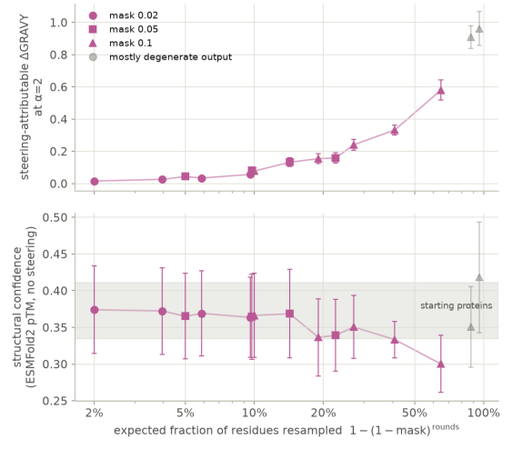
Figure 8 : Steering effect (top) and foldability (bottom) against how much of the protein the decoder rewrites,T=0.5. Marker shape distinguishes mask fraction; the three series fall on a single curve, i.e. mask fraction and round count act only through their product. Shaded band: the starting proteins’ own pTM (±SEM). Grey points are settings whose output is mostly degenerate and are excluded from the trend. This budget sweep predates the relative-αparameterisation and its axis label is in raw units; for the hydrophobicity vector itsα=2is the same perturbation as theα=0.257used elsewhere in this paper.
원문 · CC BY 4.0 · Daniel Hinjos, Lucía Urcelay · Generative Latent Priors for Interpreting and Steering Protein Language Models · 원문 그림 인용 · 원본 PDF 16쪽에서 그림 영역을 추출했습니다.논문 정보
- 저자
- Daniel Hinjos, Lucía Urcelay
- 학회·저널
- arXiv · 프리프린트
- 최초 공개일
- 2026년 11월 6일
- 등록일
- 2026년 11월 9일
- 수정일
- 2026년 11월 6일
- 버전
- v1
- arXiv
- 2611.09818
- 분류
- cs.AI · cs.LG
- 원문 이용 조건
- CC BY 4.0
- 제공 범위
- 논문 정보, 해설, 허용된 원문 그림
AI 해설은 논문 원문과 별개의 설명이며 오류가 있을 수 있습니다. 원문과 그림은 각 출처의 이용 조건과 따로 표시된 권리를 따릅니다.
초록
Dominant methods for interpreting large models impose strong structural assumptions. Generative Latent Priors (GLP) are a complementary approach: a diffusion model that learns the distribution of a frozen model's activations directly, imposing no assumptions. We port GLP to ESM-2 activations (UniRef50) and evaluate it at two host scales (ESM-2-8M and -650M), both as a lens for protein representations and as a prior for editing them. Generation quality scales smoothly with depth and compute. As a lens, single GLP "meta-neurons" are the strongest probes of discrete Swiss-Prot concepts at both hosts, beating InterPLM's released SAE features, and lead on continuous properties at 8M though not at 650M; falsification tests show this is mostly concentration, not new information. As an editing prior, the on-manifold correction makes DiffMean steering of three biochemical properties effective and restores on-manifoldness, but only in isolation: re-embedding the sequences actually produced after several rounds of decoding, the structural plausibility is compromised. This is mainly reproduced in additional SAE-based clamping structural steering experiments, where only Helix motif succeeds. The naturalness failure is traced to the rewriting coverage and the decoder rather than the prior, highlighting what the method must clear before it can serve for both discovery-by-editing and discovery-by-exploration. Trained GLPs are released on huggingface.co/collections/HPAI-BSC/glprot.
원문 인용
Daniel Hinjos, Lucía Urcelay (2026). Generative Latent Priors for Interpreting and Steering Protein Language Models. arXiv:2611.09818v1. https://arxiv.org/abs/2611.09818v1
BibTeX
@misc{hinjos2026generative,
  title = {{Generative Latent Priors for Interpreting and Steering Protein Language Models}},
  author = {Daniel Hinjos and Lucía Urcelay},
  year = {2026},
  eprint = {2611.09818},
  archivePrefix = {arXiv},
  url = {https://arxiv.org/abs/2611.09818v1}
}