논문 해설
Slow and Steady Wins the Race: Maintaining Plasticity with Hare and Tortoise Networks
느리고 꾸준하면 경주에서 이긴다: 토끼와 거북이 네트워크로 가소성 유지하기
- 연구 문제 신경망이 새 데이터를 학습하는 가소성이 손실될 때, 학습 가능성을 높이는 방법이 미학습 데이터의 일반화도 개선하는지 검증합니다.
- 연구 방법 Hare 네트워크가 빠르게 갱신되고 Tortoise 네트워크가 지수 이동 평균으로 지식을 통합하며, 일정 주기마다 Hare를 Tortoise 가중치로 재설정하는 방법입니다.
- 주요 결과 웜스타트 조건에서 학습 가능성 향상 방법은 일반화를 개선하지 못했고, Shrink & Perturb와 Hare & Tortoise는 일부 설정에서 일반화를 개선했습니다. 강화학습과 지속 학습에서도 Hare & Tortoise의 효과가 보고되었지만, Tiny ImageNet과 BBF의 일부 지표에서는 한계가 있었습니다.
재초기화의 비용과 일반화 손실
신경망은 새 데이터를 학습하는 능력을 점차 잃는 가소성 손실을 겪을 수 있습니다. 이 논문은 그중 학습 손실을 줄이는 능력(trainability)과 미학습 데이터에 일반화하는 능력(generalizability)을 나누어 봅니다. 기존 연구에서는 가소성을 높이는 방법이 주로 학습 가능성을 개선한다고 여겨졌지만, 저자들은 웜스타트(warm-starting) 설정에서 이것이 일반화 손실을 해결하지 못하는지 검증합니다. 또한 주기적 재초기화는 효과적이지만 이전에 학습한 지식을 잃을 위험이 있어, 이 두 문제를 함께 다룰 방법이 필요하다고 봅니다.
Hare와 Tortoise 네트워크의 갱신 방식
Hare & Tortoise는 빠르게 적응하는 Hare 네트워크와 느리게 지식을 통합하는 Tortoise 네트워크로 구성됩니다. 각 학습 단계에서 Hare 네트워크의 파라미터는 그래디언트 기반 최적화로 갱신됩니다. 이후 Tortoise 네트워크의 파라미터는 지수 이동 평균으로 갱신되며, 이때 모멘텀 값이 이전 Tortoise 가중치를 유지하는 비율을 정합니다. 일정 주기마다 Hare 네트워크의 파라미터는 Tortoise 네트워크의 파라미터로 재설정되어, 과적합된 지역을 벗어나면서도 일반화된 지식을 보존하도록 합니다. 예측에는 Tortoise 네트워크를 사용합니다.
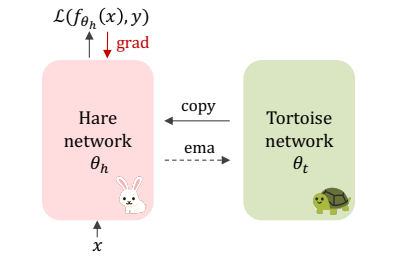
Figure 1 . Hare & Tortoise architecture . The Hare Network rapidly updates its weights for new data, while the Tortoise Net- work slowly integrates knowledge through an exponential moving average (ema) of the Hare’s weights. Periodic reinitialization of the Hare Network to the Tortoise Network’s weights ensures a balance between fast, fleeting adaptation and slow, steady generalization.
원문 · CC BY 4.0 · Hojoon Lee, Hyeonseo Cho, Hyunseung Kim, Donghu Kim, Dugki Min, Jaegul Choo, Clare Lyle · Slow and Steady Wins the Race: Maintaining Plasticity with Hare and Tortoise Networks · 원문 그림 인용 · 원본 PDF 1쪽에서 그림 영역을 추출했습니다.웜스타트 실험과 비교 조건
웜스타트 실험은 부분 데이터 서브셋과 레이블 잡음으로 먼저 학습한 뒤 잡음 없는 전체 데이터로 재학습하는 설정입니다. 서브셋 비율과 잡음 비율을 달리하며 일반화 손실을 관찰했고, 여러 방법은 가장 어려운 조건인 서브셋 비율 0.1과 레이블 잡음 비율 0.5에서 비교했습니다. 이 비교에서 바닐라 웜스타트 네트워크는 하한, 처음부터 학습한 네트워크는 상한으로 사용되었습니다. Shrink & Perturb의 축소 비율은 0.8로 고정되었습니다. 대부분의 실험은 5개 랜덤 시드를 사용했고 Tiny ImageNet에는 3개 시드를 사용했습니다.
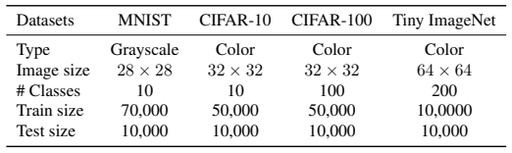
Table 2 . Description of Dataset.
원문 · CC BY 4.0 · Hojoon Lee, Hyeonseo Cho, Hyunseung Kim, Donghu Kim, Dugki Min, Jaegul Choo, Clare Lyle · Slow and Steady Wins the Race: Maintaining Plasticity with Hare and Tortoise Networks · 원문 그림 인용 · 원본 PDF 14쪽에서 그림 영역을 추출했습니다.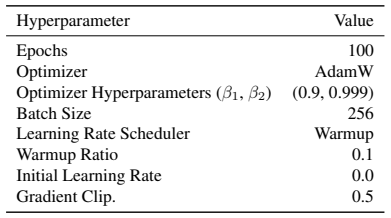
Table 3 . Base Hyperparameters for Warm-Starting.
원문 · CC BY 4.0 · Hojoon Lee, Hyeonseo Cho, Hyunseung Kim, Donghu Kim, Dugki Min, Jaegul Choo, Clare Lyle · Slow and Steady Wins the Race: Maintaining Plasticity with Hare and Tortoise Networks · 원문 그림 인용 · 원본 PDF 15쪽에서 그림 영역을 추출했습니다.웜스타트 비교 결과와 적용 범위
웜스타트 실험에서 서브셋 크기와 레이블 잡음이 커질수록 전체 데이터 재학습 뒤의 테스트 정확도가 낮아졌습니다. 학습 가능성 향상 방법인 Spectral Decoupling, Regenerative regularization, ReDo, CReLU는 학습 손실 감소를 유지했지만 미학습 데이터의 일반화를 향상하지 않았습니다. 반면 Shrink & Perturb는 모든 데이터셋에서 가소성 손실을 크게 줄이고 일반화를 향상했으며, L2와 데이터 증강을 함께 쓰면 처음부터 학습한 모델의 성능에 더 가까워졌습니다. Hare & Tortoise는 CIFAR-10의 ResNet-18과 CIFAR-100의 ViT-Tiny에서 재초기화 방법보다 나은 결과를 보였지만, Tiny ImageNet의 VGG-16에서는 효과가 덜 뚜렷했습니다.
이 결과는 해당 모델과 데이터 조합에서의 관찰입니다.
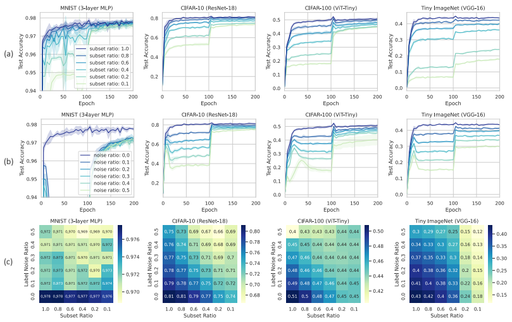
Figure 2 . Impact of Warm-Starting on Generalization. (a) Shows a negative correlation between test accuracy and subset ratio without label noise. (b) Presents a negative correlation between test accuracy and label noise ratio, with a full dataset. (c) Presents the combined impact, indicating both reduced data size and increased label noise detrimentally affect generalization.
원문 · CC BY 4.0 · Hojoon Lee, Hyeonseo Cho, Hyunseung Kim, Donghu Kim, Dugki Min, Jaegul Choo, Clare Lyle · Slow and Steady Wins the Race: Maintaining Plasticity with Hare and Tortoise Networks · 원문 그림 인용 · 원본 PDF 4쪽에서 그림 영역을 추출했습니다.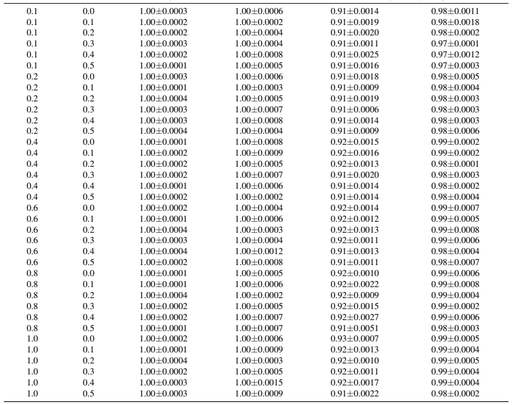
Table 4 . Final Train Accuracy. The overall train accuracy is similar regardless of the subset ratio and label noise ratio.
원문 · CC BY 4.0 · Hojoon Lee, Hyeonseo Cho, Hyunseung Kim, Donghu Kim, Dugki Min, Jaegul Choo, Clare Lyle · Slow and Steady Wins the Race: Maintaining Plasticity with Hare and Tortoise Networks · 원문 그림 인용 · 원본 PDF 17쪽에서 그림 영역을 추출했습니다.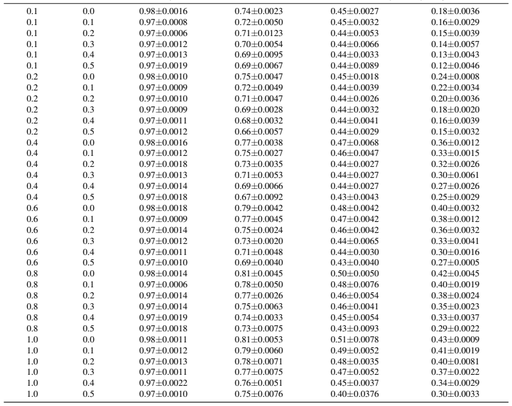
Table 5 . Final Test Accuracy. Unlike train accuracy, test accuracy showed different results depending on the subset ratio and label noise ratio, indicating the existence of loss of generalizability.
원문 · CC BY 4.0 · Hojoon Lee, Hyeonseo Cho, Hyunseung Kim, Donghu Kim, Dugki Min, Jaegul Choo, Clare Lyle · Slow and Steady Wins the Race: Maintaining Plasticity with Hare and Tortoise Networks · 원문 그림 인용 · 원본 PDF 18쪽에서 그림 영역을 추출했습니다.
Table 7 . Final Test Accuracy. While trainability enhancements can yield high training accuracies, the best test performance is achieved by combining Shrink & Perturb with generalization techniques..
원문 · CC BY 4.0 · Hojoon Lee, Hyeonseo Cho, Hyunseung Kim, Donghu Kim, Dugki Min, Jaegul Choo, Clare Lyle · Slow and Steady Wins the Race: Maintaining Plasticity with Hare and Tortoise Networks · 원문 그림 인용 · 원본 PDF 19쪽에서 그림 영역을 추출했습니다.지속 학습과 강화학습 검증
지속 학습 실험에서는 데이터를 10개 단계로 나누고 각 단계에서 100 에포크 학습했습니다. 각 단계의 서브셋 비율은 0.1이며 레이블 잡음은 0.5에서 0으로 줄었습니다. 전체 데이터 접근에서는 CIFAR-10과 CIFAR-100에서 Hare & Tortoise가 재초기화의 급격한 성능 저하를 피했고, Tiny ImageNet에서는 일반화 손실이 심해 재초기화가 더 효과적이었습니다. 강화학습에서는 DrQ와 BBF의 온라인 네트워크를 목표 네트워크로 재설정하는 방식으로 Atari-100k 벤치마크에서 평가했습니다. DrQ에서는 중앙값 점수가 약간 개선되었고, BBF에서는 IQM과 OG 점수가 개선되었습니다.
BBF에서는 자기지도 학습 목표를 제외하고 재설정만 사용했습니다.
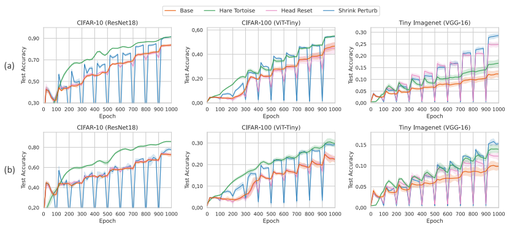
Figure 6 . Continual Learning Results. The dataset was divided into 10 chunks, each undergoing 100 epochs of training with label noise decreasing from 0.5 to 0.0. (a) Shows outcomes with full dataset access, where Hare & Tortoise consistently outperform Shrink & Perturb in CIFAR-10 and CIFAR-100, but are less effective in Tiny ImageNet with significant generalization loss.(b) Illustrates results under limited access, with a buffer size of 5000. Here, Hare & Tortoise shows strong performance in CIFAR-10 and CIFAR-100 and narrows the gap with Shrink & Perturb in Tiny ImageNet, demonstrating its effective knowledge retention.
원문 · CC BY 4.0 · Hojoon Lee, Hyeonseo Cho, Hyunseung Kim, Donghu Kim, Dugki Min, Jaegul Choo, Clare Lyle · Slow and Steady Wins the Race: Maintaining Plasticity with Hare and Tortoise Networks · 원문 그림 인용 · 원본 PDF 8쪽에서 그림 영역을 추출했습니다.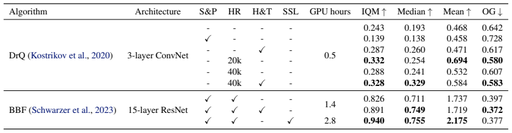
Table 1 . Atari-100k Results. BBF results without Hare & Tortoise come from the original paper (Schwarzer et al., 2023). All the other experiments, including DrQ, were conducted based on their original code and averaged over 5 random seeds with a replay ratio of 2.
원문 · CC BY 4.0 · Hojoon Lee, Hyeonseo Cho, Hyunseung Kim, Donghu Kim, Dugki Min, Jaegul Choo, Clare Lyle · Slow and Steady Wins the Race: Maintaining Plasticity with Hare and Tortoise Networks · 원문 그림 인용 · 원본 PDF 9쪽에서 그림 영역을 추출했습니다.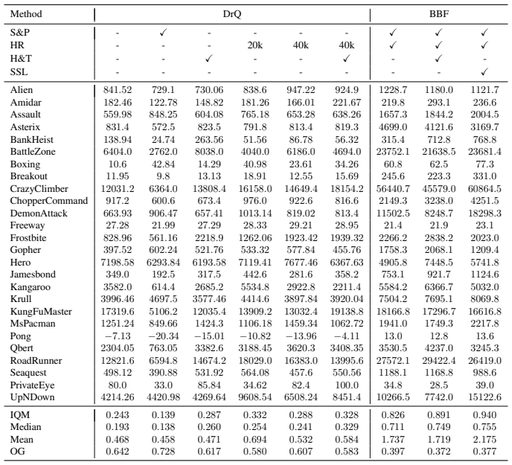
Table 8 . Mean trajectory scores on Atari-100k Benchmark. We report the individual scores on the 26 Atari games. All the other experiments, including DrQ, were conducted based on their original code and averaged over 5 random seeds with a replay ratio of 2.
원문 · CC BY 4.0 · Hojoon Lee, Hyeonseo Cho, Hyunseung Kim, Donghu Kim, Dugki Min, Jaegul Choo, Clare Lyle · Slow and Steady Wins the Race: Maintaining Plasticity with Hare and Tortoise Networks · 원문 그림 인용 · 원본 PDF 23쪽에서 그림 영역을 추출했습니다.한계와 아직 남은 질문
Hare & Tortoise는 IQM과 Mean 점수에서 BBF의 자기지도 학습 목표보다 낮았으며, Tiny ImageNet과 VGG-16 설정에서는 효과가 덜 뚜렷했습니다. 저자들은 이 방법이 하이퍼파라미터에 대해 대체로 안정적이라고 보고하지만, 절제 실험은 모멘텀과 재설정 간격의 일부 값 범위에서 수행되었습니다. 또한 논문은 웜스타트 모델이 새로운 과제를 일반화하지 못하는 이유를 완전히 설명하지 않으며, 저자들은 향후 과제로 강한 재초기화를 줄이는 방향을 제시합니다.
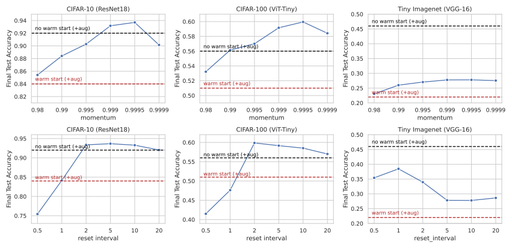
Figure 9 . Ablation Study. The figure illustrates the robust performance of our method under variations in (a) momentum value and (b) reset interval.
원문 · CC BY 4.0 · Hojoon Lee, Hyeonseo Cho, Hyunseung Kim, Donghu Kim, Dugki Min, Jaegul Choo, Clare Lyle · Slow and Steady Wins the Race: Maintaining Plasticity with Hare and Tortoise Networks · 원문 그림 인용 · 원본 PDF 22쪽에서 그림 영역을 추출했습니다.논문 정보
- 저자
- Hojoon Lee, Hyeonseo Cho, Hyunseung Kim, Donghu Kim, Dugki Min, Jaegul Choo, Clare Lyle
- 학회·저널
- arXiv · 프리프린트
- 최초 공개일
- 2024년 6월 1일
- 등록일
- 2026년 10월 29일
- 수정일
- 2025년 2월 4일
- 버전
- v2
- arXiv
- 2406.02596
- 분류
- cs.LG · cs.AI
- 원문 이용 조건
- CC BY 4.0
- 제공 범위
- 논문 정보, 해설, 허용된 원문 그림
AI 해설은 논문 원문과 별개의 설명이며 오류가 있을 수 있습니다. 원문과 그림은 각 출처의 이용 조건과 따로 표시된 권리를 따릅니다.
초록
This study investigates the loss of generalization ability in neural networks, revisiting warm-starting experiments from Ash & Adams. Our empirical analysis reveals that common methods designed to enhance plasticity by maintaining trainability provide limited benefits to generalization. While reinitializing the network can be effective, it also risks losing valuable prior knowledge. To this end, we introduce the Hare & Tortoise, inspired by the brain's complementary learning system. Hare & Tortoise consists of two components: the Hare network, which rapidly adapts to new information analogously to the hippocampus, and the Tortoise network, which gradually integrates knowledge akin to the neocortex. By periodically reinitializing the Hare network to the Tortoise's weights, our method preserves plasticity while retaining general knowledge. Hare & Tortoise can effectively maintain the network's ability to generalize, which improves advanced reinforcement learning algorithms on the Atari-100k benchmark. The code is available at https://github.com/dojeon-ai/hare-tortoise.
원문 인용
Hojoon Lee, Hyeonseo Cho, Hyunseung Kim, Donghu Kim, Dugki Min, Jaegul Choo, Clare Lyle (2024). Slow and Steady Wins the Race: Maintaining Plasticity with Hare and Tortoise Networks. arXiv:2406.02596v2. https://arxiv.org/abs/2406.02596v2
BibTeX
@misc{lee2024slow,
  title = {{Slow and Steady Wins the Race: Maintaining Plasticity with Hare and Tortoise Networks}},
  author = {Hojoon Lee and Hyeonseo Cho and Hyunseung Kim and Donghu Kim and Dugki Min and Jaegul Choo and Clare Lyle},
  year = {2024},
  eprint = {2406.02596},
  archivePrefix = {arXiv},
  url = {https://arxiv.org/abs/2406.02596v2}
}