논문 해설
Data-driven control of spatiotemporal chaos with reduced-order neural ODE-based models and reinforcement learning
축소차수 신경 ODE 기반 모델과 강화학습을 이용한 시공간 카오스의 데이터 기반 제어
- 연구 문제 제한된 무작위 작동 데이터로 학습한 축소차원 Neural ODE 모델을 대리 환경으로 써서 KSE의 소산을 줄이는 강화학습 정책을 얻을 수 있는지 검증합니다.
- 연구 방법 오토인코더로 다양체 좌표를 학습하고 Neural ODE로 벡터장을 모델링한 NODE-ROM을 만든 뒤, 그 안에서 DDPG 정책을 학습하여 실제 KSE에 전이합니다.
- 주요 결과 NODE-ROM 안에서 학습된 정책은 실제 KSE에서도 같은 저소산 평형 상태로 수렴하며, 이 상태는 KSE의 기존 평형해 E1과 연결됩니다.
강화학습 제어의 데이터 비용 문제
강화학습은 복잡한 고차원 시스템의 제어 전략을 찾는 데 유망하지만, 학습에 많은 상호작용 데이터가 필요합니다. 원문은 게임 학습과 유체 제어 사례를 들어 이 비용이 계산 또는 실험 장비 측면에서 매우 크다고 설명합니다. 이 논문은 실제 시스템과 상호작용하는 횟수를 줄이기 위해, 제한된 무작위 작동 데이터로 축소차원 동역학 모델을 만들고 그 모델을 강화학습의 대리 환경으로 사용하는 문제를 다룹니다. 연구 대상은 난류의 대리 시스템으로 쓰이는 Kuramoto-Sivashinsky 방정식(KSE)입니다.
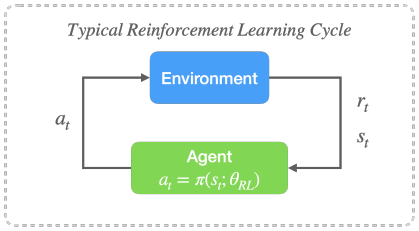
FIG. 1 : Typical reinforcement learning cycle.
원문 · CC BY 4.0 · Kevin Zeng, Alec J. Linot, Michael D. Graham · Data-driven control of spatiotemporal chaos with reduced-order neural ODE-based models and reinforcement learning · 원문 그림 인용 · 원본 PDF 11쪽에서 그림 영역을 추출했습니다.DManD-RL의 다섯 단계
DManD-RL은 먼저 KSE에 무작위 jet 작동을 주어 상태 u(t), 작동 신호 a(t), τ 시간 뒤 상태로 이루어진 전이 스냅샷을 모읍니다. 다음으로 undercomplete 오토인코더가 상태를 병목층을 거쳐 다양체 좌표 h로 압축하고 복원합니다. 이때 평균 제곱 재구성 손실을 최소화하며, KSE에서는 학습 데이터의 주성분 기저로 먼저 변환한 뒤 인코더에 입력합니다. 세 번째로 Neural ODE가 다양체 좌표에서 작동을 받는 벡터장을 학습하고, 예측 손실을 최소화합니다. 네 번째로 이 NODE-ROM을 환경으로 삼아 DDPG 정책을 학습하며, 보상은 r_t=−(D(t)+P_f(t))로 정의됩니다.
마지막으로 학습된 정책을 인코더와 함께 실제 KSE에 적용합니다. 저자들은 Neural ODE를 쓰면 가변 시간 간격의 데이터를 사용할 수 있고 시간 간격을 강화학습에서 조절할 수 있다고 설명합니다.
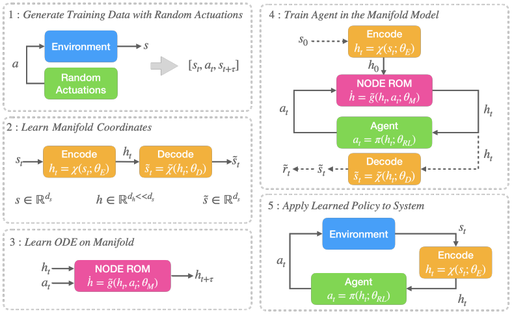
FIG. 2 : Procedure for learning a NODE-ROM from data, combining it with RL to approximate a control
원문 · CC BY 4.0 · Kevin Zeng, Alec J. Linot, Michael D. Graham · Data-driven control of spatiotemporal chaos with reduced-order neural ODE-based models and reinforcement learning · 원문 그림 인용 · 원본 PDF 12쪽에서 그림 영역을 추출했습니다.NODE-ROM의 예측과 자기상관 검증
NODE-ROM은 τ=0.25 시간 단위의 40,000개 전이 스냅샷으로 학습되며, 이 스냅샷은 10,000 시간 단위에 걸쳐 수집됩니다. 원문은 무작위 작동 데이터만 사용했음에도 비작동 KSE의 다양체 차원이 dM=8로 결정되어 기존 연구와 일치한다고 보고합니다. 작동 데이터에서는 재구성 오차의 급격한 감소가 dh=9로 늦춰지며, 저자들은 이를 작동 궤적이 다양체 바깥으로 퍼져 추가 자유도가 필요하기 때문이라고 해석합니다. 이 분석을 바탕으로 dh=12 NODE-ROM을 사용합니다. 예측 궤적은 실제 KSE와 약 20-30 시간 단위, 즉 1-1.5 Lyapunov 시간 동안 정성적으로 일치합니다. 50쌍의 앙상블에서 공간 자기상관은 잘 일치하고 시간 자기상관에는 약한 시간 팽창이 나타납니다.
비작동 KSE 궤적에서도 같은 모델이 공간 자기상관을 잘 맞춥니다.
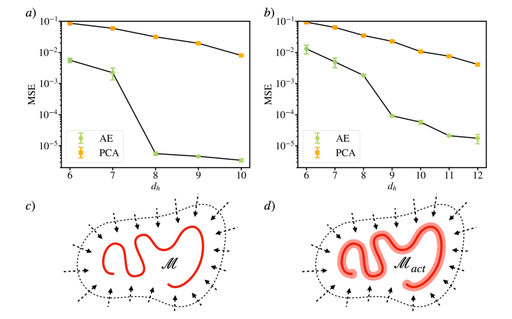
FIG. 3 : Mean squared reconstruction error for autoencoders trained on a) unactuated and b) actuated
원문 · CC BY 4.0 · Kevin Zeng, Alec J. Linot, Michael D. Graham · Data-driven control of spatiotemporal chaos with reduced-order neural ODE-based models and reinforcement learning · 원문 그림 인용 · 원본 PDF 15쪽에서 그림 영역을 추출했습니다.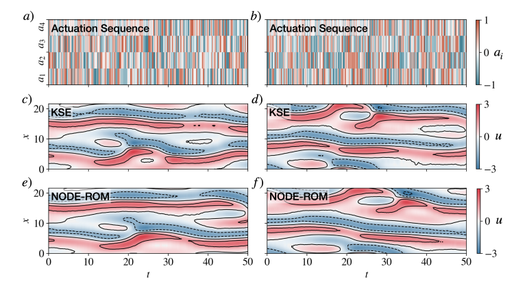
FIG. 5 : (a) random actuation sequences ai(t) (c) ground truth KSE trajectory starting from a random
원문 · CC BY 4.0 · Kevin Zeng, Alec J. Linot, Michael D. Graham · Data-driven control of spatiotemporal chaos with reduced-order neural ODE-based models and reinforcement learning · 원문 그림 인용 · 원본 PDF 16쪽에서 그림 영역을 추출했습니다.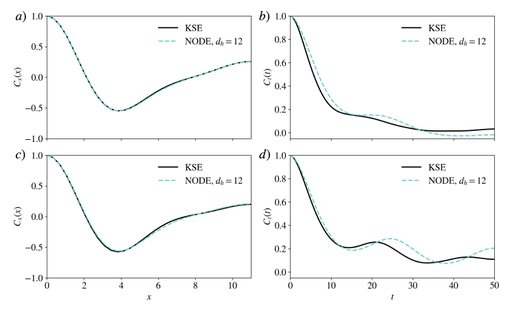
FIG. 6 : a) Spatial and b) temporal autocorrelation computed from an ensemble of trajectories
원문 · CC BY 4.0 · Kevin Zeng, Alec J. Linot, Michael D. Graham · Data-driven control of spatiotemporal chaos with reduced-order neural ODE-based models and reinforcement learning · 원문 그림 인용 · 원본 PDF 17쪽에서 그림 영역을 추출했습니다.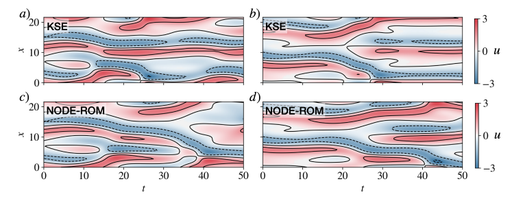
FIG. 7 : Example unactuated trajectories of the KSE in a) and b) and their corresponding decoded
원문 · CC BY 4.0 · Kevin Zeng, Alec J. Linot, Michael D. Graham · Data-driven control of spatiotemporal chaos with reduced-order neural ODE-based models and reinforcement learning · 원문 그림 인용 · 원본 PDF 18쪽에서 그림 영역을 추출했습니다.정책의 ROM 학습과 실제 KSE 전이
NODE-ROM 안에서 학습된 정책은 무작위 초기 조건에서 시작해 제어 후 저소산 평형 상태로 수렴합니다. 이 정책을 실제 KSE에 같은 초기 조건으로 적용하면 과도 거동과 최종 저소산 상태가 거의 같게 나타납니다. 저자들은 학습 중 평형 상태의 존재를 알려 주지 않았다는 점을 강조합니다. 발견된 상태는 안정화된 불안정 상태이며 제어를 제거하면 자연 혼돈 동역학으로 돌아갑니다. 15개의 무작위 시험 초기 조건에서도 실제 KSE의 소산 궤적은 약 150 시간 단위 안에 같은 상태에 도달하며, 한 초기 조건은 약 200 시간 단위가 필요합니다. 학습 지평은 100 시간 단위였지만 더 긴 시간까지 제어를 유지합니다.
강제 크기를 연속적으로 줄이는 연속법으로 이 평형 상태는 KSE의 기존 평형해 E1과 연결됩니다.
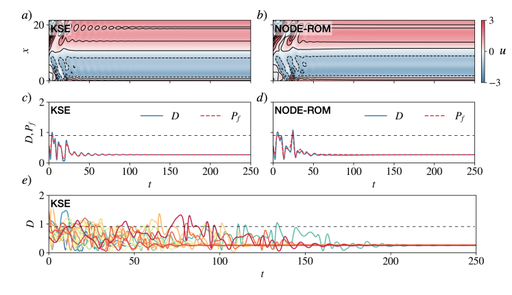
FIG. 8 : ROM-based RL agent applied to the same initial condition in the a) true KSE and b) data-driven
원문 · CC BY 4.0 · Kevin Zeng, Alec J. Linot, Michael D. Graham · Data-driven control of spatiotemporal chaos with reduced-order neural ODE-based models and reinforcement learning · 원문 그림 인용 · 원본 PDF 21쪽에서 그림 영역을 추출했습니다.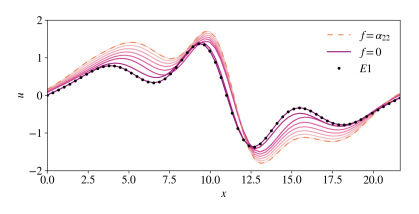
FIG. 10 : Forcing continuation from the forced equilibrium state (under forcing f =α22) discovered by
원문 · CC BY 4.0 · Kevin Zeng, Alec J. Linot, Michael D. Graham · Data-driven control of spatiotemporal chaos with reduced-order neural ODE-based models and reinforcement learning · 원문 그림 인용 · 원본 PDF 22쪽에서 그림 영역을 추출했습니다.DMDc 기반 비교와 선형 모델의 한계
저자들은 데이터 기반 모델의 종류가 결과에 중요하다고 보고, 같은 학습 데이터로 얻은 DMDc 모델을 RL 환경으로 사용하는 비교를 수행합니다. DMDc 모델 안에서는 정책이 소산과 전력 값을 빠르게 줄이지만, 실제 KSE에 적용하면 목표를 최소화하지 못합니다. 원문은 이때의 성능이 시간 평균 비제어 시스템보다 나쁘며, 제어기가 높은 에너지 영역에 머문다고 보고합니다. 저자들은 이 불일치가 선형 모델이 KSE의 비선형 동역학을 기술하지 못하기 때문이라고 해석합니다.
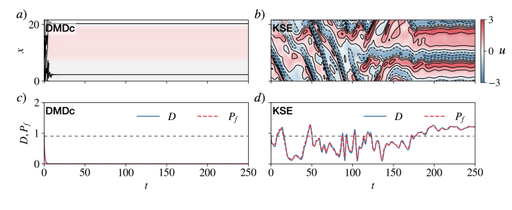
FIG. 9 : DMDc control policy applied to the same initial condition in the (a) DMDc model and (b) True
원문 · CC BY 4.0 · Kevin Zeng, Alec J. Linot, Michael D. Graham · Data-driven control of spatiotemporal chaos with reduced-order neural ODE-based models and reinforcement learning · 원문 그림 인용 · 원본 PDF 22쪽에서 그림 영역을 추출했습니다.적용 범위와 남은 질문
이 연구의 결과는 길이 L=22의 KSE, 4개의 Gaussian jet 작동, dh=12 NODE-ROM, DDPG 정책이라는 조건에서 얻어진 것입니다. 원문은 무작위 작동 데이터만으로 학습하는 방식이 더 복잡한 시스템에서는 충분하지 않을 수 있다고 밝히며, 이 경우 학습된 제어 전략을 실제 시스템에 적용하여 얻은 데이터로 모델을 반복 개선할 수 있다고 제안합니다. 또한 DManD-RL은 정책을 Dyna 방식으로 쓰는 가능성을 언급하지만, 이 논문에서 그 방식을 검증하지는 않습니다. 난류 Navier-Stokes 시스템에 대한 일반화도 이 연구에서 직접 검증되지 않았습니다.
논문 정보
- 저자
- Kevin Zeng, Alec J. Linot, Michael D. Graham
- 학회·저널
- arXiv · 프리프린트
- 최초 공개일
- 2022년 5월 1일
- 등록일
- 2026년 11월 6일
- 수정일
- 2022년 5월 1일
- 버전
- v1
- arXiv
- 2205.00579
- DOI
- 10.1098/rspa.2022.0297
- 분류
- cs.LG · nlin.CD
- 원문 이용 조건
- CC BY 4.0
- 제공 범위
- 논문 정보, 해설, 허용된 원문 그림
AI 해설은 논문 원문과 별개의 설명이며 오류가 있을 수 있습니다. 원문과 그림은 각 출처의 이용 조건과 따로 표시된 권리를 따릅니다.
초록
Deep reinforcement learning (RL) is a data-driven method capable of discovering complex control strategies for high-dimensional systems, making it promising for flow control applications. In particular, the present work is motivated by the goal of reducing energy dissipation in turbulent flows, and the example considered is the spatiotemporally chaotic dynamics of the Kuramoto-Sivashinsky equation (KSE). A major challenge associated with RL is that substantial training data must be generated by repeatedly interacting with the target system, making it costly when the system is computationally or experimentally expensive. We mitigate this challenge in a data-driven manner by combining dimensionality reduction via an autoencoder with a neural ODE framework to obtain a low-dimensional dynamical model from just a limited data set. We substitute this data-driven reduced-order model (ROM) in place of the true system during RL training to efficiently estimate the optimal policy, which can then be deployed on the true system. For the KSE actuated with localized forcing ("jets") at four locations, we demonstrate that we are able to learn a ROM that accurately captures the actuated dynamics as well as the underlying natural dynamics just from snapshots of the KSE experiencing random actuations. Using this ROM and a control objective of minimizing dissipation and power cost, we extract a control policy from it using deep RL. We show that the ROM-based control strategy translates well to the true KSE and highlight that the RL agent discovers and stabilizes an underlying forced equilibrium solution of the KSE system. We show that this forced equilibrium captured in the ROM and discovered through RL is related to an existing known equilibrium solution of the natural KSE.
원문 인용
Kevin Zeng, Alec J. Linot, Michael D. Graham (2022). Data-driven control of spatiotemporal chaos with reduced-order neural ODE-based models and reinforcement learning. arXiv:2205.00579v1. https://doi.org/10.1098/rspa.2022.0297
BibTeX
@article{zeng2022data,
  title = {{Data-driven control of spatiotemporal chaos with reduced-order neural ODE-based models and reinforcement learning}},
  author = {Kevin Zeng and Alec J. Linot and Michael D. Graham},
  year = {2022},
  eprint = {2205.00579},
  archivePrefix = {arXiv},
  doi = {10.1098/rspa.2022.0297},
  url = {https://arxiv.org/abs/2205.00579v1}
}