논문 해설
Field Matching: an Electrostatic Paradigm to Generate and Transfer Data
필드 매칭: 데이터를 생성하고 전이하기 위한 정전기 패러다임
- 연구 문제 노이즈에서 데이터로의 생성과 데이터에서 데이터로의 변환을 전기장 선 기반으로 하나의 틀에서 다루는 문제를 다룹니다.
- 연구 방법 두 분포를 커패시터의 두 평면에 전하로 배치하고, 학습된 정규화 전기장의 field line을 따라 샘플을 이동시킵니다.
- 주요 결과 토이 실험에서 평면 간 거리 L이 작을 때 목표 분포를 정확히 근사했고, 이미지 실험에서는 정성적 변환과 생성 결과를 보고했습니다.
연구 문제: 노이즈 생성과 데이터 간 변환의 분리
기존 생성 모델은 노이즈에서 데이터로 가는 생성 문제에 주로 쓰였습니다. Diffusion 모델과 PFGM은 데이터를 물리 원리로 단순한 분포로 바꾸는 방식이라 주로 noise-to-data 과제에 사용됩니다. 반면 데이터 간 변환은 Diffusion Bridge Matching이나 Flow Matching처럼 SDE 또는 ODE 기반 방법이 다뤄 왔으며, 전기장 이론에 기반한 데이터 간 변환 방법은 이 논문 이전에는 제시되지 않았습니다. 이 논문은 Electrostatic Field Matching을 제안해 두 과제를 같은 틀에서 다룹니다.
방법의 핵심 아이디어: 두 분포를 커패시터의 두 평면에 배치
Electrostatic Field Matching은 각 분포를 전하의 밀도로 간주합니다. 첫 번째 분포 P(x+)에는 양전하를, 두 번째 분포 Q(x−)에는 음전하를 부여하고, 이를 D+1차원 공간의 두 평면 z=0과 z=L에 배치합니다. 두 평면 사이에는 양전하에서 시작해 음전하에서 끝나는 electric field lines가 생기며, 이 선을 따라 한 평면의 샘플을 다른 평면으로 이동시킵니다. 두 전하 분포는 전체 전하가 0이 되도록 정규화되어 있어 선이 대부분 목표 평면에서 종료됩니다.
이론적 정당화: 확률적 사상과 flux 보존
forward map TF는 P 평면에서 출발해 forward-oriented field line을 따라 Q 평면으로 보내는 확률적 사상입니다. 선이 z=L을 지나 계속 진행할 수 있는 경우에는 교차 지점에서 확률 ν로 멈추고 확률 1−ν로 이동을 이어 갑니다. 여기서 ν는 교차 지점 양쪽 전기장의 z 성분으로 정해집니다. 전체 사상 T는 forward 사상과 backward 사상을 확률 μ로 섞어 정의됩니다. Theorem 3.1은 P와 Q가 compact support를 가질 때 x+가 P를 따르면 T(x+)가 거의 확실하게 Q를 따른다고 주장합니다. 증명은 Gauss’s theorem과 flux 보존을 이용해 샘플 개수의 극한을 전기장 flux로 바꾸는 방식입니다.
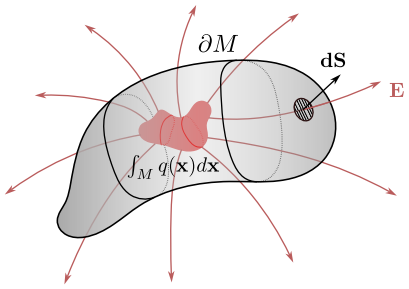
Figure 2 . An illustration of the Gauss’s theorem.
원문 · CC BY 4.0 · Alexander Kolesov, Manukhov Stepan, Vladimir V. Palyulin, Alexander Korotin · Field Matching: an Electrostatic Paradigm to Generate and Transfer Data · 원문 그림 인용 · 원본 PDF 3쪽에서 그림 영역을 추출했습니다.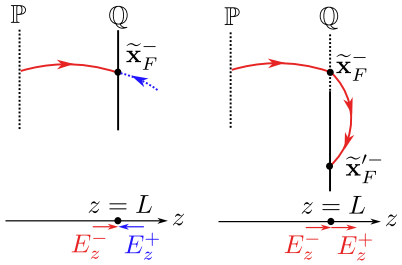
Figure 5 . An illustration of the forward map TF .
원문 · CC BY 4.0 · Alexander Kolesov, Manukhov Stepan, Vladimir V. Palyulin, Alexander Korotin · Field Matching: an Electrostatic Paradigm to Generate and Transfer Data · 원문 그림 인용 · 원본 PDF 5쪽에서 그림 영역을 추출했습니다.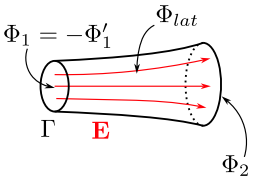
Figure 13 . The electric field flux through an arbitrary stream tube.
원문 · CC BY 4.0 · Alexander Kolesov, Manukhov Stepan, Vladimir V. Palyulin, Alexander Korotin · Field Matching: an Electrostatic Paradigm to Generate and Transfer Data · 원문 그림 인용 · 원본 PDF 11쪽에서 그림 영역을 추출했습니다.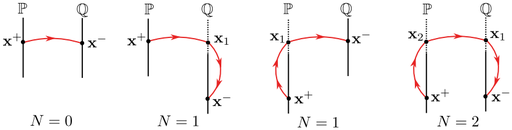
Figure 18 . Intersection points.
원문 · CC BY 4.0 · Alexander Kolesov, Manukhov Stepan, Vladimir V. Palyulin, Alexander Korotin · Field Matching: an Electrostatic Paradigm to Generate and Transfer Data · 원문 그림 인용 · 원본 PDF 16쪽에서 그림 영역을 추출했습니다.학습과 추론 절차
학습에서는 t를 U(0,L)에서 뽑고 P와 Q의 샘플을 보간한 뒤 노이즈를 더해 두 평면 사이의 training volume을 구성합니다. 참값 전기장은 Monte Carlo로 추정하고, 신경망 fθ는 정규화된 전기장 E/||E||를 근사하도록 제곱오차를 최소화합니다. 정규화된 값을 쓰는 이유는 저자들이 실험적으로 비정규화 전기장보다 잘 학습된다고 확인했기 때문입니다. 추론에서는 z를 시간 변수로 바꾼 ODE를 z=0의 샘플에서 출발해 z=L까지 적분합니다. 이 구현은 z=L을 처음 넘는 지점에서 이동을 멈춥니다. 확률 ν를 정확히 추정하기 어렵기 때문입니다.

Table 1 . Hyper-parameters of Algorithm 1 for different experiments, where D is the dimensionality of task, L is the distance betwenn plates and σ is used for the definition points between plates (see §3.3).
원문 · CC BY 4.0 · Alexander Kolesov, Manukhov Stepan, Vladimir V. Palyulin, Alexander Korotin · Field Matching: an Electrostatic Paradigm to Generate and Transfer Data · 원문 그림 인용 · 원본 PDF 21쪽에서 그림 영역을 추출했습니다.토이 실험: Gaussian에서 Swiss Roll로의 변환
2차원 zero-centered Gaussian을 Swiss Roll 분포로 옮기는 실험에서 평면 간 거리 L을 6과 30으로 두고 비교했습니다. L=6에서는 학습된 맵이 목표 분포를 정확하게 근사했습니다. L=30에서는 목표 밀도 Q(x−)를 잘 복원하지 못했습니다. 저자들은 이를 큰 L에서 전기장을 학습하기 어려워지고, z 범위를 벗어난 선도 고려해야 하기 때문으로 해석합니다. 이 결과는 이 토이 설정에서 본 관찰이며 결과 점수가 아닌 시각화에 근거합니다.
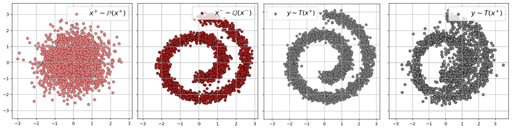
Figure 6 . Illustrative 2D Gaussian→Swiss Roll experiment: input and target distributions P(x+) and Q(x−) together with the result of the distribution transfer learned with our EFM method for distances L = 6 and L = 30 between the capacitor plates.
원문 · CC BY 4.0 · Alexander Kolesov, Manukhov Stepan, Vladimir V. Palyulin, Alexander Korotin · Field Matching: an Electrostatic Paradigm to Generate and Transfer Data · 원문 그림 인용 · 원본 PDF 7쪽에서 그림 영역을 추출했습니다.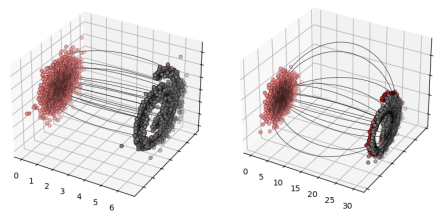
Figure 8 . Electric field line structure for the Gaussian→Swiss Roll experiment with L = 6 and L = 30. It can be seen that at large distances, the field lines are more curved than at small distances.
원문 · CC BY 4.0 · Alexander Kolesov, Manukhov Stepan, Vladimir V. Palyulin, Alexander Korotin · Field Matching: an Electrostatic Paradigm to Generate and Transfer Data · 원문 그림 인용 · 원본 PDF 7쪽에서 그림 영역을 추출했습니다.이미지 실험: 색칠된 MNIST 변환과 생성
색칠된 숫자 3을 숫자 2로 바꾸는 비지도 이미지 변환 실험에서는 z=0 평면에 3, z=10 평면에 2를 배치했습니다. 이 실험은 FM과 시각적으로 비교되었고, 저자들은 FM이 숫자 3의 형태와 색을 항상 정확히 옮기지 못한다고 보고합니다. 색칠된 MNIST 생성 실험은 백색 노이즈를 z=0에, 색칠된 숫자를 z=30에 배치해 forward-oriented 선만 사용했습니다. CIFAR-10 생성 실험은 z=500 평면을 사용했으며 PFGM과 정성적으로 비교되었습니다. 이 이미지 실험들은 정량 지표 없이 시각적 결과로 보고됩니다.
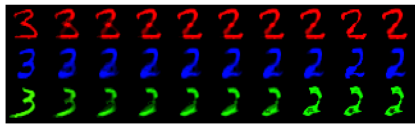
Figure 7 . The sampling trajectories of our EFM method in image- to-image translation experiment, see §4.2.
원문 · CC BY 4.0 · Alexander Kolesov, Manukhov Stepan, Vladimir V. Palyulin, Alexander Korotin · Field Matching: an Electrostatic Paradigm to Generate and Transfer Data · 원문 그림 인용 · 원본 PDF 7쪽에서 그림 영역을 추출했습니다.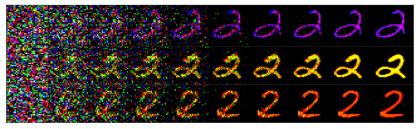
Figure 9 . The sampling trajectories of our EFM method in noise- to-image generation experiment, see §4.3.
원문 · CC BY 4.0 · Alexander Kolesov, Manukhov Stepan, Vladimir V. Palyulin, Alexander Korotin · Field Matching: an Electrostatic Paradigm to Generate and Transfer Data · 원문 그림 인용 · 원본 PDF 7쪽에서 그림 영역을 추출했습니다.
Figure 10 . Image-to-Image translation. Pictures from the initial distribution, the result of applying our EFM method as well as the Flow Matching method are presented respectively.
원문 · CC BY 4.0 · Alexander Kolesov, Manukhov Stepan, Vladimir V. Palyulin, Alexander Korotin · Field Matching: an Electrostatic Paradigm to Generate and Transfer Data · 원문 그림 인용 · 원본 PDF 8쪽에서 그림 영역을 추출했습니다.
Figure 11 . Noise-to-Image generation. Pictures from the initial distribution (Fig. 11a), the result of our EFM method (Fig. 11b) as well as the PFGM method (Fig. 11c) are presented.
원문 · CC BY 4.0 · Alexander Kolesov, Manukhov Stepan, Vladimir V. Palyulin, Alexander Korotin · Field Matching: an Electrostatic Paradigm to Generate and Transfer Data · 원문 그림 인용 · 원본 PDF 8쪽에서 그림 영역을 추출했습니다.
Figure 12 . Noise-to-Image generation. Pictures from the initial distribution (Fig. 12a), the result of our EFM method (Fig. 12b) as well as the PFGM method (Fig. 12c) are presented.
원문 · CC BY 4.0 · Alexander Kolesov, Manukhov Stepan, Vladimir V. Palyulin, Alexander Korotin · Field Matching: an Electrostatic Paradigm to Generate and Transfer Data · 원문 그림 인용 · 원본 PDF 8쪽에서 그림 영역을 추출했습니다.한계와 적용 범위
저자들은 차원이 커지면 1/||x−x′||^D 항이 기계 정밀도 수준의 값을 만들어 학습이 불안정해질 수 있다고 밝힙니다. 평면 간 거리 L은 전기장의 곡률과 학습 volume을 바꾸므로 신중히 골라야 합니다. 이론은 z=L을 넘는 선을 고려하지만 구현은 첫 교차에서 멈춥니다. backward-oriented 선은 더 큰 곡률과 학습 volume을 요구해 실제 구현에서 사용하지 않습니다. 부록의 CIFAR-10 실험에서는 L=5000에서 생성 품질이 크게 낮아졌습니다.

Figure 19 . The influence of the interplate distance L on the performance of the Noise-to-Image generation of CIFAR-10 dataset. Pictures EFM method with L = 50 (Fig. 19a), L = 500 (Fig. 19b) as well as L = 5000 (Fig. 19c) are presented.
원문 · CC BY 4.0 · Alexander Kolesov, Manukhov Stepan, Vladimir V. Palyulin, Alexander Korotin · Field Matching: an Electrostatic Paradigm to Generate and Transfer Data · 원문 그림 인용 · 원본 PDF 18쪽에서 그림 영역을 추출했습니다.논문 정보
- 저자
- Alexander Kolesov, Manukhov Stepan, Vladimir V. Palyulin, Alexander Korotin
- 학회·저널
- arXiv · 프리프린트
- 최초 공개일
- 2025년 2월 4일
- 등록일
- 2026년 10월 29일
- 수정일
- 2025년 8월 25일
- 버전
- v3
- arXiv
- 2502.02367
- 분류
- cs.LG · cs.AI · cs.CV
- 원문 이용 조건
- CC BY 4.0
- 제공 범위
- 논문 정보, 해설, 허용된 원문 그림
AI 해설은 논문 원문과 별개의 설명이며 오류가 있을 수 있습니다. 원문과 그림은 각 출처의 이용 조건과 따로 표시된 권리를 따릅니다.
초록
We propose Electrostatic Field Matching (EFM), a novel method that is suitable for both generative modeling and distribution transfer tasks. Our approach is inspired by the physics of an electrical capacitor. We place source and target distributions on the capacitor plates and assign them positive and negative charges, respectively. Then we learn the electrostatic field of the capacitor using a neural network approximator. To map the distributions to each other, we start at one plate of the capacitor and move the samples along the learned electrostatic field lines until they reach the other plate. We theoretically justify that this approach provably yields the distribution transfer. In practice, we demonstrate the performance of our EFM in toy and image data experiments. Our code is available at https://github.com/justkolesov/FieldMatching
원문 인용
Alexander Kolesov, Manukhov Stepan, Vladimir V. Palyulin, Alexander Korotin (2025). Field Matching: an Electrostatic Paradigm to Generate and Transfer Data. arXiv:2502.02367v3. https://arxiv.org/abs/2502.02367v3
BibTeX
@misc{kolesov2025field,
  title = {{Field Matching: an Electrostatic Paradigm to Generate and Transfer Data}},
  author = {Alexander Kolesov and Manukhov Stepan and Vladimir V. Palyulin and Alexander Korotin},
  year = {2025},
  eprint = {2502.02367},
  archivePrefix = {arXiv},
  url = {https://arxiv.org/abs/2502.02367v3}
}