論文解説
SLICES: A Benchmark and Evaluation Framework for Self-Supervised Learning on Sparse ICU Time Series
SLICES:疎なICU時系列における自己教師あり学習のベンチマークと評価フレームワーク
- 課題 疎なICU時系列では、自己教師あり学習の手法を入力、エンコーダ、評価条件を固定したまま公平に比較することが難しいです。
- 手法 ICU時系列の値と観測マスクに対し、MAE、JEPA、対照学習を同じTransformerエンコーダで事前学習し、凍結プローブと全体のファインチューニングで評価します。
- 結果 完全ラベルの凍結分類では、MAEが9つのセルすべてで平均AUPRCが最も高く、GRU-DとXGBoostは一部のタスクでベースラインの中で最高でした。
疎なICU時系列でSSLを比較しにくい理由
ICUの記録は測定頻度がまちまちで、患者の状態に応じて測定時点が決まるため、疎です。測定が行われたかどうかとその時点自体が、生理状態と診療過程に関する情報を含みます。そのため、ラベルのない測定値は多い一方で、何を学習シグナルにするかが難しいです。既存の臨床SSL研究は、再構成、予測、対照学習を、それぞれ異なるコホート、表現、エンコーダ、データ拡張、評価方法とともに用いてきました。そのため、性能差が目的関数によるものか実験条件によるものかを切り分けにくいです。この論文は、この問題を減らすために、入力、エンコーダ、患者単位の分割、タスクを固定したベンチマークを提案しています。
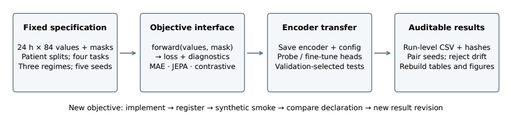
Figure 8 : SLICES benchmark. The reusable path from fixed specification through objective extension and
出典 · CC BY 4.0 · Hannes Ill, Dimitrios Proios, Leo Anthony Celi, Peter J. Schüffler · SLICES: A Benchmark and Evaluation Framework for Self-Supervised Learning on Sparse ICU Time Series · 論文の図を引用 · 元のPDFの21ページ目から図の部分を抽出しています。固定された値とマスクの入力および評価の取り決め
SLICESは、MIMIC-IV v3.1とeICU-CRD v2.0の最初の24時間を入力に使い、時間ごとに84個の変数について正規化された値と観測マスクを置きます。観測マスクは1時間以内に値が1つでもあったかどうかだけを記録するため、時間内の測定頻度は失われます。分割は患者単位の70/15/15に固定され、入力の正規化は学習データのみで計算します。エンコーダは、2層のpre-layer-normalized層と4つのヘッドをもつ小型のTransformerで、3つの目的関数が同じエンコーダ構造を共有します。補助ネットワークとパラメータ数は目的関数ごとに異なり、この違いも結果の解釈に含める必要があります。
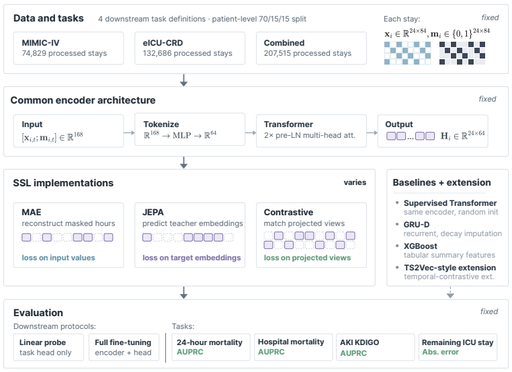
Figure 1 : Benchmark overview. Cohorts, hourly inputs, encoder architecture, patient splits, tasks, and
出典 · CC BY 4.0 · Hannes Ill, Dimitrios Proios, Leo Anthony Celi, Peter J. Schüffler · SLICES: A Benchmark and Evaluation Framework for Self-Supervised Learning on Sparse ICU Time Series · 論文の図を引用 · 元のPDFの2ページ目から図の部分を抽出しています。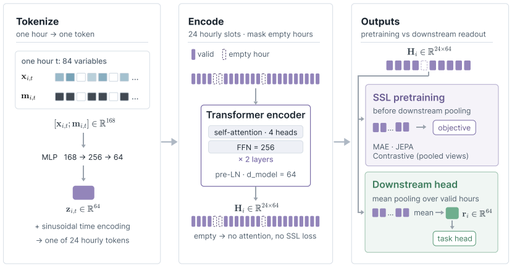
Figure 4 : Shared hourly tokenization and encoder. Values and masks form 168 inputs per hour, projected to
出典 · CC BY 4.0 · Hannes Ill, Dimitrios Proios, Leo Anthony Celi, Peter J. Schüffler · SLICES: A Benchmark and Evaluation Framework for Self-Supervised Learning on Sparse ICU Time Series · 論文の図を引用 · 元のPDFの13ページ目から図の部分を抽出しています。
Table 3 : Downstream task contract. All tasks use hours 0–24 as model input.
出典 · CC BY 4.0 · Hannes Ill, Dimitrios Proios, Leo Anthony Celi, Peter J. Schüffler · SLICES: A Benchmark and Evaluation Framework for Self-Supervised Learning on Sparse ICU Time Series · 論文の図を引用 · 元のPDFの14ページ目から図の部分を抽出しています。MAE、JEPA、対照学習の学習シグナル
MAEは観測された時間ステップの一部をマスクし、見えているトークンをエンコードした後、2層のTransformerデコーダでマスクされた時間ステップの観測済み正規化値を再構成します。欠測セルは損失に含まれません。JEPAは、オンラインエンコーダと予測器により、EMAのターゲットエンコーダが作ったlayer-normalizedな埋め込みを予測し、損失はマスクされた有効な時間ステップにのみ適用されます。対照学習では、相補的な2つのマスクビューをそれぞれエンコードして平均プーリングし、NT-Xent損失で同じ滞在のビューを近づけます。学習後は共有エンコーダのみを下流タスクに渡し、補助モジュールは破棄します。
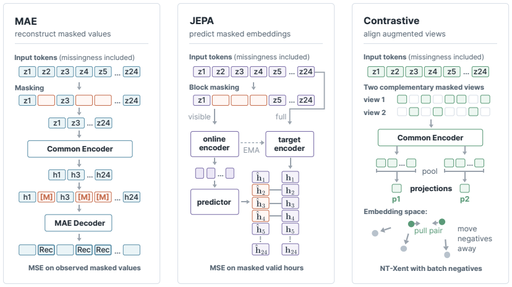
Figure 2 : Core objective geometries. MAE reconstructs observed values at masked hours. JEPA’s online
出典 · CC BY 4.0 · Hannes Ill, Dimitrios Proios, Leo Anthony Celi, Peter J. Schüffler · SLICES: A Benchmark and Evaluation Framework for Self-Supervised Learning on Sparse ICU Time Series · 論文の図を引用 · 元のPDFの5ページ目から図の部分を抽出しています。
Table 6 : Objective-specific modules and transferred capacity. Shared settings are listed in Section 4.
出典 · CC BY 4.0 · Hannes Ill, Dimitrios Proios, Leo Anthony Celi, Peter J. Schüffler · SLICES: A Benchmark and Evaluation Framework for Self-Supervised Learning on Sparse ICU Time Series · 論文の図を引用 · 元のPDFの16ページ目から図の部分を抽出しています。凍結プローブと全体のファインチューニングの違い
下流タスクの評価は2つのプロトコルに分かれます。2つのプロトコルは、学習範囲、ヘッドの容量、学習率、エポック数の上限が異なります。分類のチェックポイントは検証AUPRCで選び、LOSは二乗誤差で学習しますが、評価は絶対誤差で行います。この違いは、異なる表現の性質を見ている点で重要です。凍結プローブはタスク情報が線形に取り出せるかを、ファインチューニングは事前学習の初期値がラベルへの適応後も役立つかを確かめます。
分類結果とプローブ収束の影響
完全ラベルの分類結果では、基本のキャッププローブで比べると、MAEが9つのセルすべてで平均AUPRCが最も高くなりました。この順位は、JEPAおよび対照学習との90件の一致したシード比較でも維持されました。一方、ファインチューニングではMAEが7つのセルで上回り、残りの比較の多くは0をまたぐ差でした。したがって、プローブの最適化が凍結時の順位を変えることはありませんでした。
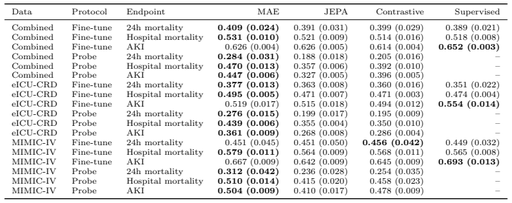
Table 8 : Core classification AUPRC, mean (sample SD) over five matched seeds. Probe rows use the capped
出典 · CC BY 4.0 · Hannes Ill, Dimitrios Proios, Leo Anthony Celi, Peter J. Schüffler · SLICES: A Benchmark and Evaluation Framework for Self-Supervised Learning on Sparse ICU Time Series · 論文の図を引用 · 元のPDFの16ページ目から図の部分を抽出しています。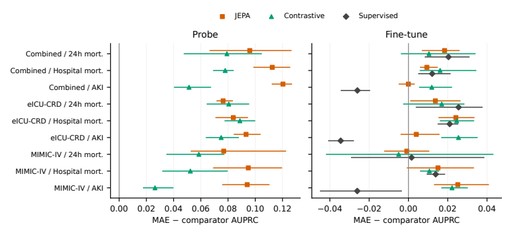
Figure 6 : Matched-seed classification AUPRC differences, MAE minus comparator. Positive values favor
出典 · CC BY 4.0 · Hannes Ill, Dimitrios Proios, Leo Anthony Celi, Peter J. Schüffler · SLICES: A Benchmark and Evaluation Framework for Self-Supervised Learning on Sparse ICU Time Series · 論文の図を引用 · 元のPDFの17ページ目から図の部分を抽出しています。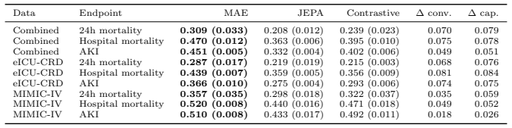
Table 17 : Converged frozen probe. Test AUPRC, mean (sample SD) over five seeds, on the same frozen
出典 · CC BY 4.0 · Hannes Ill, Dimitrios Proios, Leo Anthony Celi, Peter J. Schüffler · SLICES: A Benchmark and Evaluation Framework for Self-Supervised Learning on Sparse ICU Time Series · 論文の図を引用 · 元のPDFの25ページ目から図の部分を抽出しています。教師あり学習と古典的ベースラインとの比較
完全ラベルでは、ベースラインが十二個のセルのうち6個で最も高い値でした。GRU-Dは24時間死亡率で、XGBoostは3つの領域すべてでAKIの最高AUPRCを示しました。ファインチューニングされたMAEは、病院死亡率で3つの領域すべてを上回りましたが、差は小さいものでした。LOSでは、最良のSSLモデルの絶対誤差が3つの領域すべてで最も低くなりました。この比較は、同じコホート、分割、指標を共有していますが、入力の要約と帰納バイアスが異なるベースラインとの結果です。
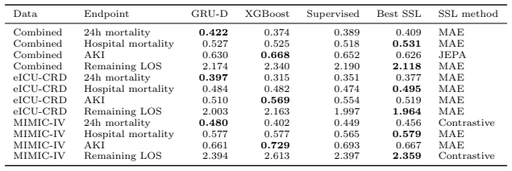
Table 7 : Full-data contextual baselines and the best SSL mean. Classification rows report AUPRC (higher
出典 · CC BY 4.0 · Hannes Ill, Dimitrios Proios, Leo Anthony Celi, Peter J. Schüffler · SLICES: A Benchmark and Evaluation Framework for Self-Supervised Learning on Sparse ICU Time Series · 論文の図を引用 · 元のPDFの16ページ目から図の部分を抽出しています。残りのICU滞在期間と損失の整合
LOSプローブは二乗誤差で学習されましたが、評価とチェックポイントの選択は絶対誤差で行われました。結果の分布は右に偏っているため、絶対誤差では学習データの中央値の定数が強い基準になります。損失を絶対誤差に合わせると、3つの目的関数すべてが中央値の定数を上回りましたが、目的関数間の差は小さいものでした。キャッププローブで対照学習が最も低かった順位は、損失を合わせた後には維持されませんでした。したがって、LOSの順位は評価損失とプローブ設定に影響されやすいと考えられます。
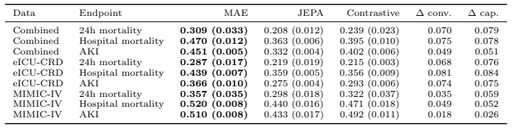
Table 18 : Capped-probe LOS results from the archived results, superseded for probing by Table 2. Absolute
出典 · CC BY 4.0 · Hannes Ill, Dimitrios Proios, Leo Anthony Celi, Peter J. Schüffler · SLICES: A Benchmark and Evaluation Framework for Self-Supervised Learning on Sparse ICU Time Series · 論文の図を引用 · 元のPDFの25ページ目から図の部分を抽出しています。ラベル削減と事前学習の効果
ラベル効率の実験では、学習ラベルだけを減らし、検証とテストはそのままにしました。ただし、24時間死亡率のMIMIC-IVでは、5%以上の差で符号が逆転しました。したがって、事前学習がいつから役立つかは、ラベルの割合だけでなく、エンドポイントとコホートによって異なります。
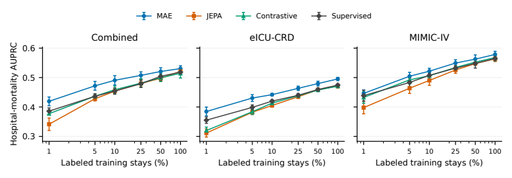
Figure 7 : Hospital-mortality label efficiency under full fine-tuning, including the supervised Transformer at
出典 · CC BY 4.0 · Hannes Ill, Dimitrios Proios, Leo Anthony Celi, Peter J. Schüffler · SLICES: A Benchmark and Evaluation Framework for Self-Supervised Learning on Sparse ICU Time Series · 論文の図を引用 · 元のPDFの17ページ目から図の部分を抽出しています。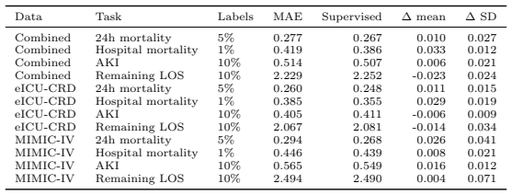
Table 9 : Lowest exported label fractions, full fine-tuning. MAE and supervised means use AUPRC for
出典 · CC BY 4.0 · Hannes Ill, Dimitrios Proios, Leo Anthony Celi, Peter J. Schüffler · SLICES: A Benchmark and Evaluation Framework for Self-Supervised Learning on Sparse ICU Time Series · 論文の図を引用 · 元のPDFの18ページ目から図の部分を抽出しています。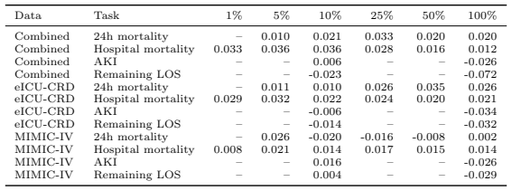
Table 10 : Mean paired difference between fine-tuned MAE and the supervised Transformer at each label
出典 · CC BY 4.0 · Hannes Ill, Dimitrios Proios, Leo Anthony Celi, Peter J. Schüffler · SLICES: A Benchmark and Evaluation Framework for Self-Supervised Learning on Sparse ICU Time Series · 論文の図を引用 · 元のPDFの19ページ目から図の部分を抽出しています。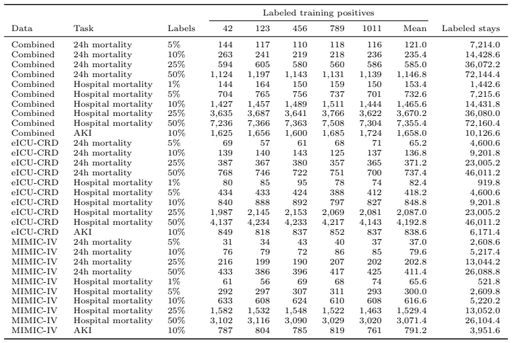
Table 11 : Positive training labels in each reduced-label subset, by seed, with the mean number of labeled
出典 · CC BY 4.0 · Hannes Ill, Dimitrios Proios, Leo Anthony Celi, Peter J. Schüffler · SLICES: A Benchmark and Evaluation Framework for Self-Supervised Learning on Sparse ICU Time Series · 論文の図を引用 · 元のPDFの19ページ目から図の部分を抽出しています。限界と残された課題
この結果は、3つの目的関数の実装を比較したものであり、目的関数の系列全体を代表するものではありません。補助ヘッド、ターゲットネットワーク、エンコーダの通過回数、パラメータ数が異なるため、統制された損失関数の比較ではありません。5つの一致したシードは少なく、互いに重なる元の集団を使っているため、統計的な同等性や一般的な不確実性を証明するものではありません。未知の病院への一般化は検証していません。Combinedは2つのデータベースの和集合であり、外部コホートではありません。クロスデータベースの実験も、ターゲットのラベルでファインチューニングしているため、ドメイン外の検証ではありません。
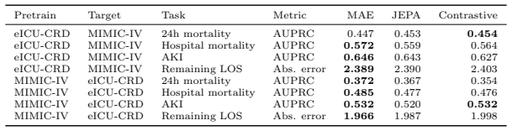
Table 13 : Fine-tuned MAE on each target database, by pretraining source, beside the supervised Transformer
出典 · CC BY 4.0 · Hannes Ill, Dimitrios Proios, Leo Anthony Celi, Peter J. Schüffler · SLICES: A Benchmark and Evaluation Framework for Self-Supervised Learning on Sparse ICU Time Series · 論文の図を引用 · 元のPDFの20ページ目から図の部分を抽出しています。
Table 19 : Combined-regime models scored separately on the two source portions of the Combined test split.
出典 · CC BY 4.0 · Hannes Ill, Dimitrios Proios, Leo Anthony Celi, Peter J. Schüffler · SLICES: A Benchmark and Evaluation Framework for Self-Supervised Learning on Sparse ICU Time Series · 論文の図を引用 · 元のPDFの25ページ目から図の部分を抽出しています。
Table 20 : Pretraining cost per objective. FLOPs are forward FLOPs per sample. Wall-clock hours are W&B
出典 · CC BY 4.0 · Hannes Ill, Dimitrios Proios, Leo Anthony Celi, Peter J. Schüffler · SLICES: A Benchmark and Evaluation Framework for Self-Supervised Learning on Sparse ICU Time Series · 論文の図を引用 · 元のPDFの27ページ目から図の部分を抽出しています。論文情報
- 著者
- Hannes Ill, Dimitrios Proios, Leo Anthony Celi, Peter J. Schüffler
- 学会・ジャーナル
- arXiv · プレプリント
- 公開日
- 2026年11月13日
- 登録日
- 2026年11月17日
- 更新日
- 2026年11月13日
- バージョン
- v1
- arXiv
- 2611.18868
- カテゴリ
- cs.LG
- ライセンス
- CC BY 4.0
- 掲載内容
- 論文情報・解説・論文の図
この解説は、Refivuの韓国語解説をAIで翻訳したものです。不正確な翻訳や誤りが含まれる可能性があります。論文と図の利用条件は各出典に従います。
アブストラクト
Self-supervised learning (SSL) results for intensive care unit (ICU) time series are hard to compare when data processing, encoders, and adaptation vary together. We present SLICES, a benchmark and evaluation framework for comparing and extending SSL methods under a shared clinical setup. It fixes 24-hour value and observation-mask inputs, a Transformer encoder, patient-level splits, four endpoints, two adaptation protocols, and five matched seeds across MIMIC-IV, eICU-CRD, and their pooled union. Masked autoencoding (MAE), joint-embedding prediction (JEPA), and contrastive learning provide reference implementations. Among these objectives, MAE leads mean AUPRC in all nine frozen classification comparisons, also under converged probes, and in seven of nine fine-tuning comparisons. Fine-tuned MAE leads hospital mortality at full labels and scores higher than a supervised Transformer of the same architecture at every label fraction, and SSL fine-tuning gives the lowest length-of-stay error. Supervised baselines remain strong elsewhere: GRU-D leads 24-hour mortality and XGBoost leads acute kidney injury in all three regimes. Rankings depend on the adaptation protocol, the comparator set, and whether the probe loss matches the metric. A two-seed MIMIC-IV rerun with the maintained code stays within two across-seed SDs of the reference in all 48 downstream runs. The code repository supports new objectives, shared downstream evaluation, and regeneration of the reference results, so new SSL methods can be compared with these references under the same conditions. Generalization to unseen hospitals is not tested here and is the natural next extension.
この論文を引用
Hannes Ill, Dimitrios Proios, Leo Anthony Celi, Peter J. Schüffler (2026). SLICES: A Benchmark and Evaluation Framework for Self-Supervised Learning on Sparse ICU Time Series. arXiv:2611.18868v1. https://arxiv.org/abs/2611.18868v1
BibTeX
@misc{ill2026slices,
  title = {{SLICES: A Benchmark and Evaluation Framework for Self-Supervised Learning on Sparse ICU Time Series}},
  author = {Hannes Ill and Dimitrios Proios and Leo Anthony Celi and Peter J. Schüffler},
  year = {2026},
  eprint = {2611.18868},
  archivePrefix = {arXiv},
  url = {https://arxiv.org/abs/2611.18868v1}
}