論文解説
PROPS: Can Visual Generators Keep the Current Look of a Prop?
PROPS:双子の履歴で、画像生成が登場物の現在の見た目を保てるかを測る評価基準
- 課題 既存の評価は、生成器が履歴から物の現在の見た目を回収できたかを分けて測れず、履歴のコピーを高く評価してしまいます。
- 手法 PROPSは、同じ依頼で終わり、物の見た目だけが異なる双子の履歴を組にして、各側で正しい見た目が描けたかを確かめます。
- 結果 PROPS-Trainで微調整したSenseNova-U1.5は、全PROPSで通過率が26.7%から47.0%に上がりました。
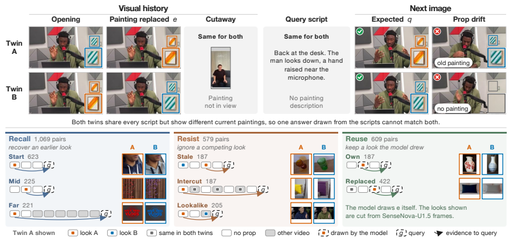
Figure 3 .Prop drift and twin histories.Top: a Resist-Stale pair. The twins share every script and differ only in how the painting looks, so one answer drawn from the scripts cannot match both. SenseNova-U1.5 keeps the old painting in twin A and draws no painting in twin B. Bottom: the history of twin A in each subtype, with the evidence frame linked to the query, and the two looks of one pair. The Reuse looks shown come from SenseNova-U1.5, and each system is scored on its owne. Numbers count pairs.
出典 · CC BY 4.0 · Xiangzhao Hao, Dianyi Wang, Keyan Zhou, Yiqian Zhang, Zefeng Zhang, Bailin Li, Kun Zhan, Junchi Yan · PROPS: Can Visual Generators Keep the Current Look of a Prop? · 論文の図を引用 · 元のPDFの4ページ目から図の部分を抽出しています。履歴からpropの見た目を取り戻せない理由
画像を連続して生成する場面では、依頼文が次に起きることを書いていても、登場するモノの見た目までは書かれないことがよくあります。図1の例では、壁の額縁は2つ前のショットで差し替えられていますが、依頼はヘッドホンをつけたことしか述べていません。この状況で生成器は、依頼文だけから額縁を描き直すか、0フレーム目の古い額縁を戻してしまいます。こうして生じた誤りは生成画像が次の履歴に入るため、後続のステップにも引き継がれます。本研究は、この失敗をprop driftと呼んでいます。
既存の評価は、この失敗を単独で測ることがまれでした。履歴との類似度で測ると、履歴の画像をコピーするほど高く評価されてしまい、152組の検証ではCLIP、SigLIP、DINOv2、DreamSimのいずれも、開始フレームのコピーを正解より上位に置きました。1つの履歴だけを見せる判定用VLMも、履歴から取った見た目と生成器が好む見た目を区別できません。そのため、評価は見た目が履歴のどこから来たかを縛る必要があります。
双子の履歴で正しい見た目を一つに定める
PROPSの鍵は、同じ依頼で終わり、1つのpropの見た目だけが異なる2つの履歴(twin histories)を組にすることです。各側で正しい見た目は、もう一方の側では誤りになるため、生成器がどちらか一方の見た目を好むだけでは両方に通りません。依頼に見た目の記述がないときは、2つの履歴が台本をすべて共有するため、台本だけに従う生成器や共有フレームをコピーする生成器は両側で同じ画像を出し、両方の見た目を満たせません。
要件はRecall、Resist、Reuseの3つで、8つのサブタイプに分かれます。Recallは数枚前に示された見た目を回収し、Resistは古い版、交互に現れる別のストーリー、似た別の物がある履歴から現在の見た目を選びます。Reuseは、生成器自身が描いた見た目を、台本が一度だけ名前を付けた見た目から保つ要件です。2,257組は11の動画ソースと合成チェーンから作られ、同じキーフレームの中でpropを2つの見た目に編集して双子を作っています。図2は、要件とサブタイプ別の組数、そしてトラック別のチェーン構成を並べて示しています。
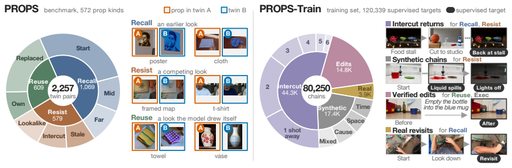
Figure 2 .PROPS and PROPS-Train.Left: pairs by requirement and subtype, and the two looks of the prop in two pairs per requirement, with Reuse crops cut from frames drawn by SenseNova-U1.5. Right: chains by track, with intercut chains split by the number of shots cut away and synthetic chains by kind of change, and the keyframes of one chain per track with its supervised targets marked.
出典 · CC BY 4.0 · Xiangzhao Hao, Dianyi Wang, Keyan Zhou, Yiqian Zhang, Zefeng Zhang, Bailin Li, Kun Zhan, Junchi Yan · PROPS: Can Visual Generators Keep the Current Look of a Prop? · 論文の図を引用 · 元のPDFの2ページ目から図の部分を抽出しています。FollowとExecで見た目と台本を判定する
PROPSは正解画像を使わず、2つの判定で評価します。Followでは、判定器に2つの切り取りと生成画像とpropの名前を渡し、画像中のpropが切り取り1か2か、またはどちらでもないかを答えさせます。質問は切り取りの順序を入れ替えて2回行い、両方の答えが自分側の見た目を指したときだけ通過します。
Execは、台本で指定された変化について、はい・いいえで答える質問を生成画像だけに対して行います。質問はpropに触れないため、台本の変化だけを確かめられ、不確かな答えは誤りとして数えます。ペアは両側でFollowとExecの両方を満たしたときだけ通るため、見た目と動作の両方が必要になります。
PROPS-Trainで見た目の回収を学習する
キーフレームのチェーンの多くは前のフレームから描けるため、そのまま学習すると直前の画像を続けるだけになりやすいです。そこでPROPS-Trainは、過去の状態を取り戻す目標と、台本どおりの変化を後へ引き継ぐ目標だけを集めており、80,250チェーンと120,339の教師付き目標から成ります。トラックは4つで、実映像の再訪、intercut returns、合成チェーン、検証済みの編集からなります。
合成チェーンは時間、空間、原因の変化を2から5つ含み、古い見た目が必ず誤りになるように作られています。Qwen-Image-2.1は4,000ステップ、Qwen-Image-EditはLoRAでランク64、2,000ステップで微調整しました。
全体の成績と見た目保持の差
評価した34システムは、いずれもprop driftを示しました。微調整前の公開モデルでは、FLUX.3-kleinが全PROPSで30.4%と最も高く、25のopenシステムのうち20は10%を下回りました。閉じたシステムは、共有の600組(phase A)で画像生成器が39.3から50.4%、閉じたプランナーを持つエージェントが71.0%に達しましたが、最良のシステムでも正解との差は29.0ポイント残りました。
SenseNova-U1.5は、phase Aで台本の動作を88.5%の側で実行しても、現在の見た目を保てたのは47.6%の側にとどまりました。動作を実行することと見た目を保つことは別の能力だと分かります。同じモデルでも、Recall-Startは45.9%で通るのに、Resist-Staleは2.1%しか通らず、古い版から差し替えられた見た目を選ぶことが難しいと読めます。
履歴のどのフレームが見た目を支えるか
重みを固定したまま履歴だけを変えると、0フレーム目を取り除いたときにResist-Staleが4.0%から25.3%に上がりました。一方、全体は29.8%から13.7%に下がり、Recall-Startは0になりました。0フレーム目は古い見た目を運ぶ画像であると同時に、開始時点の見た目を回収する根拠にもなっていると考えられます。
直前のフレームだけを与えると全体は0.4%、台本だけでは0.1%まで下がり、Execは86から89%で保たれました。フレーム0と直前のフレームだけを残すと18.1%、4枚を残すと31.6%で、全枚数の29.8%を上回りました。
失敗の内訳では、SenseNova-U1.5は台本の動作を実行しながら、どちらの見た目も示さない側が39.5%あります。表4は、失敗の内訳をシステムごとに、双子の見た目を示すか、どちらも示さないかで分けて示しています。
プランナーとエディタを入れ替えて制限を調べる
エージェントはプランナーとエディタを別々に入れ替えられるため、理解と生成の寄与を分けて調べられます。Qwen3.8とQwen-Image-Editの組み合わせは19.1%ですが、プランナーをGPT-5.6にすると55.7%へ、エディタをGPT Image 2.5にすると29.3%へ上がりました。両方を組み合わせると71.0%に達します。著者らは、このopenエージェントでは理解の差が生成の差より大きいと見ています。
Qwen3.8プランナーは、証拠フレームeをエディタに渡せた側が60.4%にとどまります。eを渡せた側ではFollowが57から65%ですが、渡せなかった側では5から6%です。エディタに画像を渡さずにQwen-Image-Editだけを使うと、2.7%しか通りませんでした。GPT Image 2.5に替えると、GPT-5.6プランナーの寄与は41.6ポイントで、区間は36.9から46.3です。
PROPS-Trainによる微調整の効果
PROPS-Trainで微調整すると、4モデルすべてで改善幅の信頼区間が0を含まなくなりました。SenseNova-U1.5は全PROPSで26.7%から47.0%に上がり、その差は20.2ポイント(区間は+17.1から+23.4)です。BAGELと2つのLoRA微調整は、9.0から10.8ポイント改善しました。
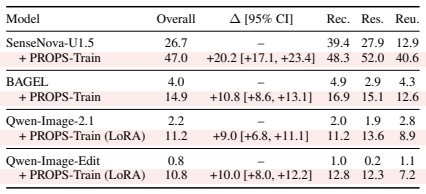
Table 6 .Fine-tuning on PROPS-Train, full PROPS. ∆ is the paired cluster-bootstrap difference to the base model before round- ing, with one training run per row.
出典 · CC BY 4.0 · Xiangzhao Hao, Dianyi Wang, Keyan Zhou, Yiqian Zhang, Zefeng Zhang, Bailin Li, Kun Zhan, Junchi Yan · PROPS: Can Visual Generators Keep the Current Look of a Prop? · 論文の図を引用 · 元のPDFの9ページ目から図の部分を抽出しています。Followは46.3%から71.2%に上がり、Execは87.8%から86.1%とほぼ変わりません。この改善は、台本の動作を保ったまま見た目を保つ力が上がったことによると読めます。更新された見た目では、Resist-Staleが49.2ポイント、Reuse-Replacedが46.7ポイント上がりました。
トラックを1つずつ外すと、intercut returnsを除いた場合のOverallは33.3%まで下がり、最も効いていました。ほかの学習データで微調整したBAGELは、phase Aで5.0%から6.4%にとどまり、PROPS-Trainの14.9%には届きません。
既存指標と判定器の信頼性
152組、7本の実行で比べると、CLIP、SigLIP、DINOv2、DreamSimは自分側の履歴を双子より高く評価する割合が60から68%にとどまり、4つとも0フレーム目のコピーを正解より上位に置きました。VLM評価は52から61%、軌跡全体の評価は55.1から58.3%にとどまりました。PROPSの双子の切り取りは、人手のFollowラベルに対してAUCが0.85で、他の指標の0.53から0.74を上回りました。
人手の注釈者は判定器の答えを見ずに240件を注釈し、側の結果での一致は86.2%、κは0.68となりました。通過率は判定器が31.2%、人手が30.0%で近く、5つのシステムの順位もSpearman ρ 0.80で揃いました。Qwen3.8-27Bを第二の判定器にしても、両方で採点された16システムの順位はKendall τ 0.97で高い一致を示しました。
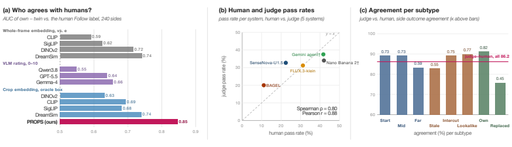
Figure 12 .Agreement with human labelson 240 sides of five systems.aAUC of the own minus twin score of each metric at predicting the human Follow label.bPass rate of each system by human and judge.cAgreement of judge and human on the side outcome per subtype, withκabove the bars.
出典 · CC BY 4.0 · Xiangzhao Hao, Dianyi Wang, Keyan Zhou, Yiqian Zhang, Zefeng Zhang, Bailin Li, Kun Zhan, Junchi Yan · PROPS: Can Visual Generators Keep the Current Look of a Prop? · 論文の図を引用 · 元のPDFの18ページ目から図の部分を抽出しています。判定の範囲と限界
人手との一致は、Reuse-Replacedで最も低く、κは0.45にとどまりました。このサブタイプではpropが小さいか一部隠れていることが多く、判定が難しいためと考えられます。判定器は5つのシステム間の通過率の差を狭めている点も、併せて読む必要があります。
人手の注釈は240件で、そのうち2人目が注釈したのは77件にとどまります。人手で注釈した側は判定器の全体評価と通過率の分布が異なるため、通過率は全体の数値と直接比べられません。閉じたシステムはphase Aの600組でしか評価されていないため、全PROPSとの直接比較はできません。微調整の効果は、試した4モデルでの結果です。
論文情報
- 著者
- Xiangzhao Hao, Dianyi Wang, Keyan Zhou, Yiqian Zhang, Zefeng Zhang, Bailin Li, Kun Zhan, Junchi Yan
- 学会・ジャーナル
- arXiv · プレプリント
- 公開日
- 2026年11月22日
- 登録日
- 2026年11月24日
- 更新日
- 2026年11月22日
- バージョン
- v1
- arXiv
- 2611.29665
- カテゴリ
- cs.CV
- ライセンス
- CC BY 4.0
- 掲載内容
- 論文情報・解説・論文の図
この解説は、Refivuの韓国語解説をAIで翻訳したものです。不正確な翻訳や誤りが含まれる可能性があります。論文と図の利用条件は各出典に従います。
アブストラクト
Many generation tasks draw the next image from a visual history, such as storyboards, illustrated stories and multi-turn editing. A new request often states what happens next without restating how earlier objects look. Instead of recovering an object's current look from the history, generators often redraw it from the request alone or bring back an outdated look, and the error can carry into later steps. We call this failure prop drift. Existing evaluations rarely isolate it, because similarity to the history rewards copying and a judge that sees a single history cannot tell a look recovered from that history from one the generator happens to prefer. We introduce PROPS, a benchmark of 2,257 pairs of twin histories that end on the same request but show one prop in two different looks. A pair passes only if the generator draws the matching look on each side and carries out the request, so a look preferred by the generator or the judge passes at most one side. All 34 open and closed systems we test show prop drift, and even systems that carry out the requested action on most sides often lose the current look of the prop. Swapping the planners and editors of agents further shows that both history understanding and image generation limit agent performance. We also build PROPS-Train, 80,250 training chains in four tracks whose targets recover an earlier state or carry scripted changes forward, and fine-tuning on it clearly improves all four tested models. Both datasets will be publicly released.
論文の図
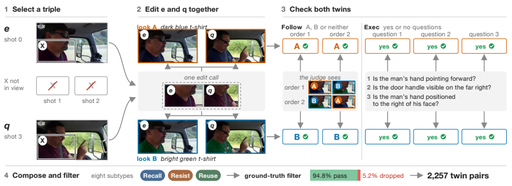
Figure 4 .Building PROPS, shown on one Recall-Start pair. 1The t-shirt X is seen in e and q but not in between.2One edit call changes X in both frames, once per look.3On the true q of both twins the judge must pick the right look in both orders and answer every kept question abouts q.4Each pair is laid out as one subtype, and the 5.2% of candidates whose true frames fail are dropped.
出典 · CC BY 4.0 · Xiangzhao Hao, Dianyi Wang, Keyan Zhou, Yiqian Zhang, Zefeng Zhang, Bailin Li, Kun Zhan, Junchi Yan · PROPS: Can Visual Generators Keep the Current Look of a Prop? · 論文の図を引用 · 元のPDFの6ページ目から図の部分を抽出しています。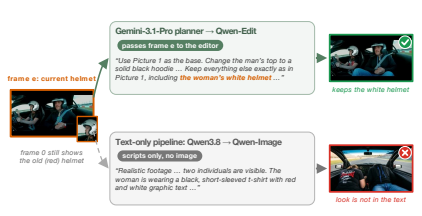
Figure 9 .One Resist-Stale history through two pipelines.The closed planner passes the evidence frame e to the editor and names the look to keep, while no script describes this look.
出典 · CC BY 4.0 · Xiangzhao Hao, Dianyi Wang, Keyan Zhou, Yiqian Zhang, Zefeng Zhang, Bailin Li, Kun Zhan, Junchi Yan · PROPS: Can Visual Generators Keep the Current Look of a Prop? · 論文の図を引用 · 元のPDFの9ページ目から図の部分を抽出しています。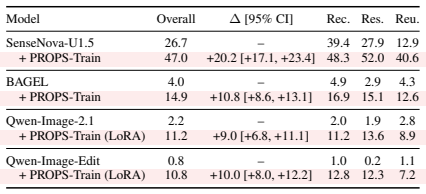
Table 7 .Removing one trackof PROPS-Train, SenseNova-U1.5 on the full PROPS with the same recipe for every run.
出典 · CC BY 4.0 · Xiangzhao Hao, Dianyi Wang, Keyan Zhou, Yiqian Zhang, Zefeng Zhang, Bailin Li, Kun Zhan, Junchi Yan · PROPS: Can Visual Generators Keep the Current Look of a Prop? · 論文の図を引用 · 元のPDFの9ページ目から図の部分を抽出しています。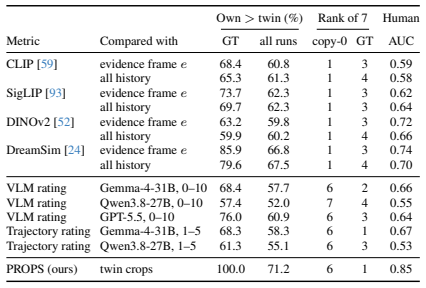
Table 8 .Existing consistency metricson 152 pairs and 7 runs, including the ground truth and the two copy baselines. Own > twin is the share of sides scored higher against the own history than against the twin, with chance at 50, and for PROPS the share of sides whose Follow picks the own crop. Rank places the copy of frame 0 and the ground truth among the 7 runs, using the side pass rate for PROPS, and Human AUC measures how well own minus twin separates the 240 human-labelled sides by whether they follow their own look.
出典 · CC BY 4.0 · Xiangzhao Hao, Dianyi Wang, Keyan Zhou, Yiqian Zhang, Zefeng Zhang, Bailin Li, Kun Zhan, Junchi Yan · PROPS: Can Visual Generators Keep the Current Look of a Prop? · 論文の図を引用 · 元のPDFの10ページ目から図の部分を抽出しています。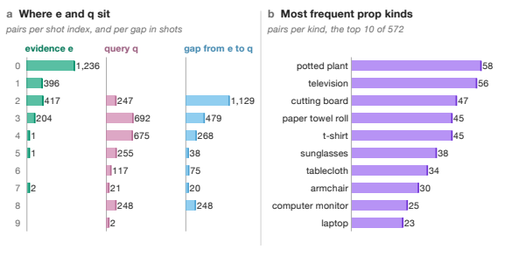
Figure 11 .PROPS statistics. aPairs per shot index of the evidence e and of the query q, and per gap between them.bThe ten most frequent of the 572 prop kinds.
出典 · CC BY 4.0 · Xiangzhao Hao, Dianyi Wang, Keyan Zhou, Yiqian Zhang, Zefeng Zhang, Bailin Li, Kun Zhan, Junchi Yan · PROPS: Can Visual Generators Keep the Current Look of a Prop? · 論文の図を引用 · 元のPDFの15ページ目から図の部分を抽出しています。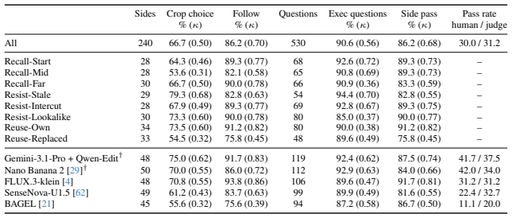
Table 13 .Human annotation against the judgeper subtype and system, 240 labelled sides, with κ after each agreement. Every row has between 28 and 50 sides.
出典 · CC BY 4.0 · Xiangzhao Hao, Dianyi Wang, Keyan Zhou, Yiqian Zhang, Zefeng Zhang, Bailin Li, Kun Zhan, Junchi Yan · PROPS: Can Visual Generators Keep the Current Look of a Prop? · 論文の図を引用 · 元のPDFの18ページ目から図の部分を抽出しています。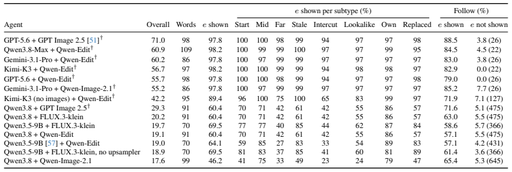
Table 14 .Planner outputs passed to the editoron the 600 pairs of phase A. All columns except Overall cover the sides with a stored plan. Words is the median length of the edit instruction, and e shown is the share of sides on which e is among the images given to the editor. Follow is split by whetherewas shown, with the number of sides withoutein the last column.
出典 · CC BY 4.0 · Xiangzhao Hao, Dianyi Wang, Keyan Zhou, Yiqian Zhang, Zefeng Zhang, Bailin Li, Kun Zhan, Junchi Yan · PROPS: Can Visual Generators Keep the Current Look of a Prop? · 論文の図を引用 · 元のPDFの19ページ目から図の部分を抽出しています。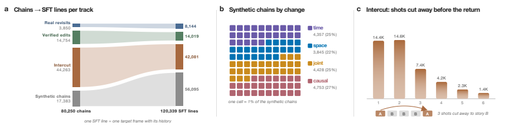
Figure 27 .PROPS-Train. aChains and supervised targets per track.bSynthetic chains per change class.cNumber of shots between leaving and returning to a storyline in intercut chains.
出典 · CC BY 4.0 · Xiangzhao Hao, Dianyi Wang, Keyan Zhou, Yiqian Zhang, Zefeng Zhang, Bailin Li, Kun Zhan, Junchi Yan · PROPS: Can Visual Generators Keep the Current Look of a Prop? · 論文の図を引用 · 元のPDFの34ページ目から図の部分を抽出しています。この論文を引用
Xiangzhao Hao, Dianyi Wang, Keyan Zhou, Yiqian Zhang, Zefeng Zhang, Bailin Li, Kun Zhan, Junchi Yan (2026). PROPS: Can Visual Generators Keep the Current Look of a Prop?. arXiv:2611.29665v1. https://arxiv.org/abs/2611.29665v1
BibTeX
@misc{hao2026props,
  title = {{PROPS: Can Visual Generators Keep the Current Look of a Prop?}},
  author = {Xiangzhao Hao and Dianyi Wang and Keyan Zhou and Yiqian Zhang and Zefeng Zhang and Bailin Li and Kun Zhan and Junchi Yan},
  year = {2026},
  eprint = {2611.29665},
  archivePrefix = {arXiv},
  url = {https://arxiv.org/abs/2611.29665v1}
}