論文解説
Straight to the Product: What Online Retailers Miss When Shoppers Ask AI First
Straight to the Product:ショッパーがAIに最初に尋ねたとき、オンライン小売業者が見落とすもの
- 課題 AIアシスタントが製品を明示した後の訪問は参照リンクでは捉えられないため、店舗は回答の影響を検索経由の訪問だけで見ています。
- 手法 同じ人の会話とその後のブラウジングを結びつけ、回答が明示した製品ページへの訪問率を製品追随率として測定しています。
回答後の訪問が記録されない問題
ショッピングアシスタントが特定の製品を推薦した後、ユーザーが実際に何をするのかは、店舗側からはよく見えません。既存の評価の多くは回答の品質で止まっており、参照リンクのレポートはアシスタントのリンクを経由した訪問しか捉えません。この論文では、同じ人のアシスタントとの会話とその後のブラウジングを20の大手オンラインリテーラーで結びつけ、回答が製品の閲覧につながるかを測定しました。著者らは、ユーザーは会話中にアシスタントのリンクをほとんど使わず、ウェブ検索から店舗に到着するため、店舗の分析には検索経由の訪問しか残らないと説明しています。
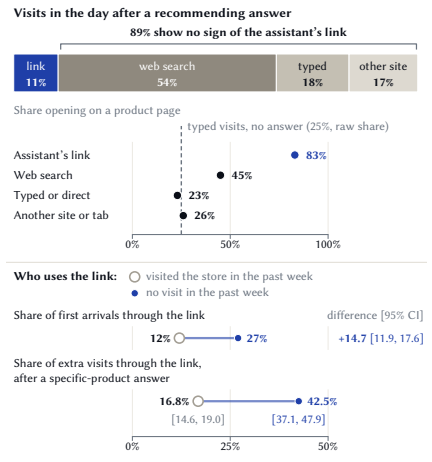
Figure 3 : Most visits after a recommending answer arrive by web search; only a thin slice comes through the assistant’s link, and the link is used more by shoppers who had not vis- ited the store in the past week. Raw shares of visits, February to October; the bottom block counts first arrivals and extra visits above each person’s earlier weeks.
出典 · CC BY 4.0 · Michael Iannelli, Alan Ai · Straight to the Product: What Online Retailers Miss When Shoppers Ask AI First · 論文の図を引用 · 元のPDFの4ページ目から図の部分を抽出しています。製品追随率の測定方法
中心となる指標は製品追随率です。特定の製品を明示した回答のうち、24時間以内に、その回答が明示した製品のページを同じ店舗で訪問につなげた割合を指します。分母はそのような回答すべてで、ユーザーが店舗を訪問したかどうかに関係なく、すべての回答を数えます。訪問したページが回答の製品を示しているかは、製品一致判定器がページのタイトルとアドレスを読んで判断します。サイズ、色、容量のバリエーションや同じ品目の別のリストは一致として扱い、同じ種類の別の製品や判断できないページは一致ではありません。回答のタイプは回答タイプ判定器が、特定の製品の明示、店舗の推薦、店舗の言及に分類します。比較対象は、同じ人の14、21、28日前の訪問を平均した前週のベースライン、同じ店舗や月などの条件をそろえた別の人の回答、そして回答がなかった同じ時間帯の時点で構成されます。
この指標は、参照リンクやプロバイダーのログを使わず、回答のテキストとその後のページ閲覧だけで計算します。
製品追随と店舗訪問の結果
同じ製品を24時間以内に閲覧した訪問は回答あたり2.07%で、前週のベースラインの0.02%より2.0ポイント[1.7, 2.4]高くなりました。回答後の店舗訪問は前週のベースラインより大きく増え、特に推薦の回答が単なる言及より訪問を大きく動かしました。製品追随率は、ChatGPTの回答後に2.2ポイント[1.8, 2.7]、Geminiの回答後に1.0ポイント[0.5, 1.6]でした。価格が一緒に引用された回答は、そうでない回答より0.93ポイント[0.19, 1.63]多くつながりました。著者らは、これらの差は実験ではなく回答同士の比較によるものなので、回答の内容との関係として読むべきだとみています。
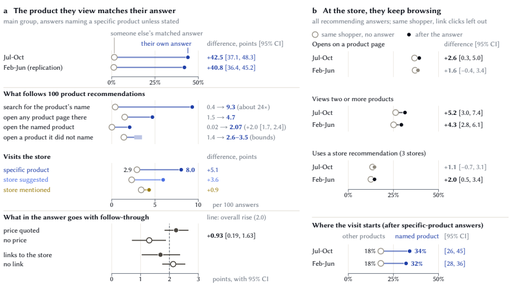
Figure 2 : (a) People view the product from their own answer, not someone else’s, in both periods; the more specific the step, the larger the ratio to the baseline; recommendations move store visits far more than mentions; a quoted price goes with a larger rise. (b) At the store, visits open on a product page only slightly more often than usual, shoppers browse a little more, and the named product often opens the visit. Rings and dots are the groups labeled in each block; the pale bar for products the answer did not name spans the lower and upper bounds.
出典 · CC BY 4.0 · Michael Iannelli, Alan Ai · Straight to the Product: What Online Retailers Miss When Shoppers Ask AI First · 論文の図を引用 · 元のPDFの2ページ目から図の部分を抽出しています。精度の補正とラベルの検証
判定器の信頼性は、2つの別のフロンティアモデルがサンプルを再ラベル付けし、盲検の読み手が160件の製品一致の項目を監査する方法で確認しました。回答後の一致判定は96%、前週のベースラインでは64%が再ラベルと一致しました。監査では、回答後の一致の93%[86, 97]と、前週の一致39件のうち54%[39, 68]が確認され、判定が却下した24ページのうち4%を一致と見ました。精度を反映すると、名指しされた製品の上昇幅は2.0ポイントから1.9ポイントに減ります。著者らは、見逃された一致は補正していないと述べています。回答タイプの判定は盲検の読み手と83%一致し、クラス均衡のサンプルでは75%[65, 82]でした。
店舗内でつながる回遊
回答後の訪問は検索経路から多く入ってきます。訪問前30分以内に検索があった場合、検索語が回答の製品を指していた割合は28%で、前週の1%より高くなりました。回答後には2つ以上の製品を見る訪問が31.4%で、ほかの訪問の26.2%より5.2ポイント[3.0, 7.4]多くなりました。名指しされていない製品の閲覧も、回答あたり1.4件から2.6~3.5件に増えましたが、この値はラベル判定の性質上、下限と上限として読むべきです。
観察の前提と適用範囲
この研究は観察研究です。因果として読める上昇は、回答がなかったら訪問は前週と活動が似ていて回答のない時点に従っただろうという前提に基づいています。主要な集団は最初の結果を見た後に選ばれており、その集団の店舗訪問の上昇5.1ポイントは、名指しされた店舗を含む全回答の10.5ポイントより小さくなりました。店舗内の経路と経路ごとの結果は技術的な分析で、観察されたのは購入ではなく訪問です。購入の効果は注文データがあれば確認できます。
論文情報
- 著者
- Michael Iannelli, Alan Ai
- 学会・ジャーナル
- arXiv · プレプリント
- 公開日
- 2026年11月16日
- 登録日
- 2026年11月17日
- 更新日
- 2026年11月16日
- バージョン
- v1
- arXiv
- 2611.20378
- カテゴリ
- cs.IR · cs.CY · cs.HC
- ライセンス
- CC BY 4.0
- 掲載内容
- 論文情報・解説・論文の図
この解説は、Refivuの韓国語解説をAIで翻訳したものです。不正確な翻訳や誤りが含まれる可能性があります。論文と図の利用条件は各出典に従います。
アブストラクト
When people ask an AI assistant what to buy, what happens next at the store? We link the same people's assistant conversations to their later browsing at twenty large online retailers. People go to the product the assistant named: among shoppers who had not visited the store in the past week, visits to the named product within a day rise from 0.02 to 2.07 per 100 answers (+2.0 points [1.7, 2.4]), and on days with a product-page visit at the store, 44% show a product from their own answer, against 1.5% for a matched answer given to someone else. The result replicates in a separate five-month period. Few arrive through the assistant's link: 89% of visits carry no sign of it, and 54% follow a web search, the same share as their usual visits. When a search comes just before the first visit, it names the answer's product 28% of the time (1% in earlier weeks), as if the search box were an address bar. The chat names the product; the store logs a search. Once there, shoppers keep browsing. We propose product follow-through, the share of answers followed by a visit to the product they named, as a way to evaluate shopping assistants and agents by what people do next: it needs no referral data or provider logs and can be computed for each assistant.
この論文を引用
Michael Iannelli, Alan Ai (2026). Straight to the Product: What Online Retailers Miss When Shoppers Ask AI First. arXiv:2611.20378v1. https://arxiv.org/abs/2611.20378v1
BibTeX
@misc{iannelli2026straight,
  title = {{Straight to the Product: What Online Retailers Miss When Shoppers Ask AI First}},
  author = {Michael Iannelli and Alan Ai},
  year = {2026},
  eprint = {2611.20378},
  archivePrefix = {arXiv},
  url = {https://arxiv.org/abs/2611.20378v1}
}