論文解説
Improving Analytic Constants via Interpretable AI-Guided Lean Proof Refinement
解釈可能なAI誘導Lean証明精緻化による解析的定数の改善
- 課題 解釈可能な方法で、Grothendieck定数とKorenblum定数の定量的な境界を改善する問題を扱います。
- 手法 証明を部分的に形式化されたLeanブループリントとして表し、Planner、Generator、Evaluatorに分かれたAIエージェントが局所的な推定を繰り返し改善します。
- 結果 Grothendieck定数の上界とKorenblum定数の下界を改善しました。一方、部分形式化を取り除いたアブレーション設定では改善は見られなかったと報告しています。
既存の定数境界改善の難しさ
Grothendieck定数K_GとKorenblum定数K_Kは正確な値が分かっておらず、境界を狭める作業が続けられてきました。既存の証明は緩いものの扱いやすい中間推定を多く含み、これを洗練させるには大きな数学的洞察が必要です。論文では、こうした中間推定の余裕(slack)をAIエージェントが局所的に減らしつつ、証明全体の構造は人が解釈できる状態に保つことを目標としています。
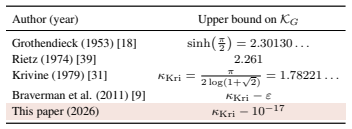
Table 1 : Historical upper bounds on the Grothendieck constant KG. Braverman et al. prove strict inequality, with ε not made explicit.
出典 · CC BY 4.0 · Rahul Saha, Alan Li, Anton Xue, Swarat Chaudhuri, Adam Klivans, Pravesh K. Kothari, Raghu Meka · Improving Analytic Constants via Interpretable AI-Guided Lean Proof Refinement · 論文の図を引用 · 元のPDFの3ページ目から図の部分を抽出しています。この過程で生じる主な問題は3つです。エージェントの修正は解釈可能な証明構造を保たなければならず、各改善は記号的な演繹と数値推定の両方で厳密に検証される必要があります。さらに、元の証明を完全に形式化しなくても、探索を導く中間目標とフィードバックが必要です。
部分形式化されたLeanブループリントとエージェントのループ
論文では、証明を定義・補題・定理の依存グラフと対応するLean形式化として表す、部分形式化されたLeanブループリントを使います。背景となる事実は明示的な仮定またはLeanの証明として置き、その間の演繹はLeanが検査します。数値推定はArb区間算術ライブラリで認証します。数値補題は、Leanでの計算の非効率を避けるために公理として置き、Arbの証明書で裏付けます。
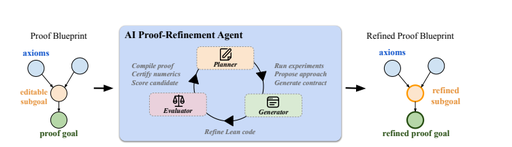
Figure 1 : AI-guided proof refinement. A human-seeded proof blueprint exposes editable lemmas and numerical certificates. An AI agent proposes local edits, the verifier checks Lean obligations and interval arithmetic certificates, and the result is fed back as the optimization signal.
出典 · CC BY 4.0 · Rahul Saha, Alan Li, Anton Xue, Swarat Chaudhuri, Adam Klivans, Pravesh K. Kothari, Raghu Meka · Improving Analytic Constants via Interpretable AI-Guided Lean Proof Refinement · 論文の図を引用 · 元のPDFの2ページ目から図の部分を抽出しています。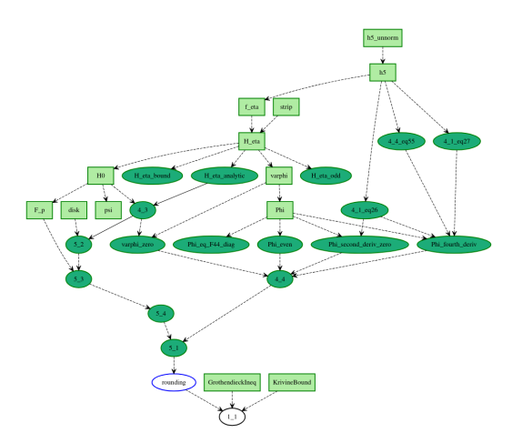
Figure 9 : Lean Blueprint for Grothendieck’s constant
出典 · CC BY 4.0 · Rahul Saha, Alan Li, Anton Xue, Swarat Chaudhuri, Adam Klivans, Pravesh K. Kothari, Raghu Meka · Improving Analytic Constants via Interpretable AI-Guided Lean Proof Refinement · 論文の図を引用 · 元のPDFの17ページ目から図の部分を抽出しています。エージェントはPlanner、Generator、Evaluatorの3つの構成要素に分かれます。Plannerは次の局所的な改善を選び、Sprint Contractを作成します。Generatorは契約を実行してLean証明を編集し、コンパイルします。Evaluatorは契約の遵守、Leanの検査、数値境界を独立に確認し、編集を受理するか却下します。このように探索と検証を分けることで、改善された中間推定が依存グラフを通じて最終的な境界まで自動的に伝わるようにしています。
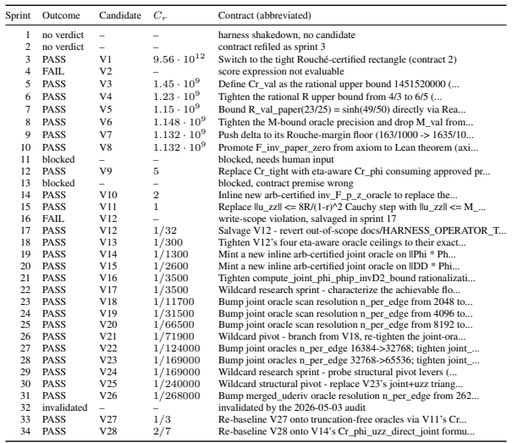
Table 9 : The Lemma 5.4 run, one row per numbered sprint. Contract titles are truncated; the full contracts and verdicts are in the repository underProofRefinement/Lemma54/.
出典 · CC BY 4.0 · Rahul Saha, Alan Li, Anton Xue, Swarat Chaudhuri, Adam Klivans, Pravesh K. Kothari, Raghu Meka · Improving Analytic Constants via Interpretable AI-Guided Lean Proof Refinement · 論文の図を引用 · 元のPDFの29ページ目から図の部分を抽出しています。GrothendieckタイプとKorenblum定数への適用
Grothendieck定数の事例では、Braverman等の証明を出発点とし、補題5.4の定数C_rを編集対象とします。元の論文ではC_rを小さくするとK_Gの上界が直接下がるため、エージェントはC_rの上界をより細かく探します。
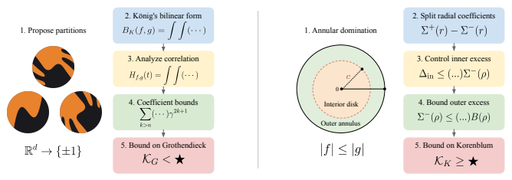
Figure 6 : The high-level strategies for bounding Grothendieck’s constant KG in Braverman et al. [9] (left) and Korenblum’s constant KK in Wang [47] (right). In each case, the final constant bound is dependent on a number of prior steps with analytical slack, which our framework tightens.
出典 · CC BY 4.0 · Rahul Saha, Alan Li, Anton Xue, Swarat Chaudhuri, Adam Klivans, Pravesh K. Kothari, Raghu Meka · Improving Analytic Constants via Interpretable AI-Guided Lean Proof Refinement · 論文の図を引用 · 元のPDFの7ページ目から図の部分を抽出しています。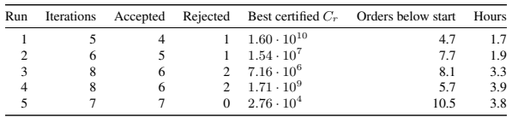
Table 8 : Five independent restarts of the Lemma 5.4 loop from the seed Cr ≈8.20·10 14. “Orders below start” islog 10 of the ratio between the starting and the best certifiedC r.
出典 · CC BY 4.0 · Rahul Saha, Alan Li, Anton Xue, Swarat Chaudhuri, Adam Klivans, Pravesh K. Kothari, Raghu Meka · Improving Analytic Constants via Interpretable AI-Guided Lean Proof Refinement · 論文の図を引用 · 元のPDFの29ページ目から図の部分を抽出しています。Korenblum定数の事例では、Wangの下界0.3554をベースラインとし、内部超過量(inner excess)を制御する推定を改善します。その結果、K_K ≥ 0.356565を報告しています。2つの事例は同じブループリント構造を共有していますが、編集対象とベースラインが異なります。
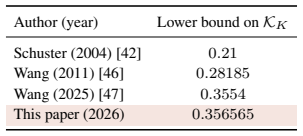
Table 2 : Historical lower bounds on the Korenblum constant KK.
出典 · CC BY 4.0 · Rahul Saha, Alan Li, Anton Xue, Swarat Chaudhuri, Adam Klivans, Pravesh K. Kothari, Raghu Meka · Improving Analytic Constants via Interpretable AI-Guided Lean Proof Refinement · 論文の図を引用 · 元のPDFの3ページ目から図の部分を抽出しています。部分形式化とエージェント構成要素のアブレーション結果
アブレーション実験では、フレームワーク全体、基本エージェント(ツールなしのフィードバックループ)、エージェント除去(独立サンプリング)、部分形式化の除去を比較します。部分形式化を取り除いた設定では、公開された境界を公理として与え、ブループリントやそれ以外の足場は置かないため、改善は見られなかったと報告されています。エージェントの構成要素を除くと、改善の度合いはフレームワーク全体より小さくなります。
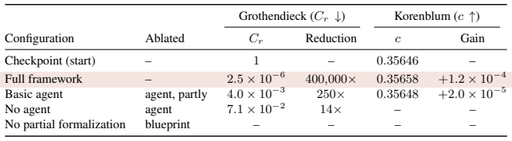
Table 3 : Ablations at a matched budget, one run per configuration, against the full framework (shaded). Arrows give the direction of improvement. Cr enters the KG multiplicatively, so we report its ratio to the checkpoint. A dash in a result column means no accepted candidate improved on the checkpoint.
出典 · CC BY 4.0 · Rahul Saha, Alan Li, Anton Xue, Swarat Chaudhuri, Adam Klivans, Pravesh K. Kothari, Raghu Meka · Improving Analytic Constants via Interpretable AI-Guided Lean Proof Refinement · 論文の図を引用 · 元のPDFの8ページ目から図の部分を抽出しています。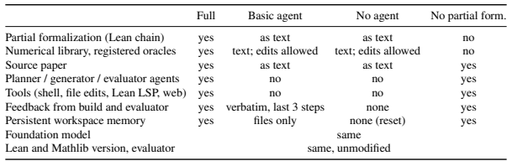
Table 5 : Inputs and capabilities by configuration.
出典 · CC BY 4.0 · Rahul Saha, Alan Li, Anton Xue, Swarat Chaudhuri, Adam Klivans, Pravesh K. Kothari, Raghu Meka · Improving Analytic Constants via Interpretable AI-Guided Lean Proof Refinement · 論文の図を引用 · 元のPDFの25ページ目から図の部分を抽出しています。この結果は、決められた予算の中で得られた単一実行の観察であり、結果の差がすべての条件で同じ大きさに保たれることを意味するわけではありません。したがって、この設定でその構成要素が効果を示したという根拠として読むのが適切です。
適用範囲と専門知識の必要性
このフレームワークでは、新しい問題ごとに、どの証明構成要素を編集可能とするか、どの改善を有効とみなすか、候補をどのように認証するかを定める専門知識が必要です。著者らは、この設定作業がフレームワークの負担だと述べています。
また、この論文の結果は2つの定数と特定のブループリントに関する事例研究であり、他の問題への一般化は主張の範囲外です。論文から確認できる範囲は、2つの事例と示されたアブレーション設定に限られます。
論文情報
- 著者
- Rahul Saha, Alan Li, Anton Xue, Swarat Chaudhuri, Adam Klivans, Pravesh K. Kothari, Raghu Meka
- 学会・ジャーナル
- arXiv · プレプリント
- 公開日
- 2026年11月7日
- 登録日
- 2026年11月10日
- 更新日
- 2026年11月7日
- バージョン
- v1
- arXiv
- 2611.10961
- カテゴリ
- cs.AI · cs.LG · math.NA
- ライセンス
- CC BY 4.0
- 掲載内容
- 論文情報・解説・論文の図
この解説は、Refivuの韓国語解説をAIで翻訳したものです。不正確な翻訳や誤りが含まれる可能性があります。論文と図の利用条件は各出典に従います。
アブストラクト
AI agents are increasingly capable of discovering new mathematical results, yet their reasoning and generated proofs can be difficult to understand and verify. We introduce an interpretable framework for AI-guided mathematical discovery, focused on improving quantitative bounds on analytic constants. Our key insight is that existing proofs often contain slack in intermediate lemmas, which can be tightened without reconstructing the entire argument. To exploit this structure, we represent proofs as partially-formalized Lean blueprints: human-interpretable dependency graphs of definitions, lemmas, and theorems. An AI agent then iteratively refines the Lean code while preserving the blueprint's dependency structure, allowing local improvements to automatically propagate to a verified final bound. This interpretable structure allows humans to inspect the agent's refinements and understand how local improvements propagate to the final theorem. For Grothendieck's constant ($\mathcal{K}_G$), we obtain $$ \mathcal{K}_G \leq \fracπ{2\log(1+\sqrt{2})} - 10^{-17}, $$ an explicit numerical improvement over Krivine's 1977 bound. For Korenblum's constant ($\mathcal{K}_K$), we obtain $$ \mathcal{K}_K \geq 0.356565, $$ improving Wang's 2025 bound of $0.3554$. Our experiments demonstrate the potential of both partial formalization and iterative agentic refinement for interpretable mathematical discovery.
この論文を引用
Rahul Saha, Alan Li, Anton Xue, Swarat Chaudhuri, Adam Klivans, Pravesh K. Kothari, Raghu Meka (2026). Improving Analytic Constants via Interpretable AI-Guided Lean Proof Refinement. arXiv:2611.10961v1. https://arxiv.org/abs/2611.10961v1
BibTeX
@misc{saha2026improving,
  title = {{Improving Analytic Constants via Interpretable AI-Guided Lean Proof Refinement}},
  author = {Rahul Saha and Alan Li and Anton Xue and Swarat Chaudhuri and Adam Klivans and Pravesh K. Kothari and Raghu Meka},
  year = {2026},
  eprint = {2611.10961},
  archivePrefix = {arXiv},
  url = {https://arxiv.org/abs/2611.10961v1}
}