論文解説
BODYinTRANSIT-Lab: A Multimodal Dataset for Investigating Sensory-Driven Transformations in Body Perception and Affective Experiences
BODYinTRANSIT-Lab:身体知覚と感情体験における感覚駆動の変換を調べるマルチモーダルデータセット
- 課題 自分の足音を変調するFootsteps Illusionを使い、体重知覚と感情体験を歩行運動学、生理信号、主観的な報告、参加者の特性とともに記録したマルチモーダルデータセットです。
- 手法 事前学習された動作特徴抽出器を固定し、17個の身体部位の加速度特徴をattention poolingと分類ヘッドでまとめます。聴覚条件と相対的な主観評定を歩行単位で分類します。
研究課題とデータセットの必要性
BODYinTRANSIT-Labは、身体知覚と感情体験を、歩行中の感覚変調、生理信号、主観的な報告とともに記録することを目指したマルチモーダルデータセットです。既存のデータは、生理信号と感情評定、または歩行運動学と心理特性のうち一部だけを扱うことが多くありました。本論文では、自分の足音をリアルタイムで変調するFootsteps Illusionを使い、体重知覚が実際の動きとどのようにつながるかを検討できる資料を作ることを目標としています。同じフィードバックでも、参加者の摂食障害の症状や身体活動量によって受け止め方が異なる可能性があるため、参加者の特性と反復測定が同時に必要になります。
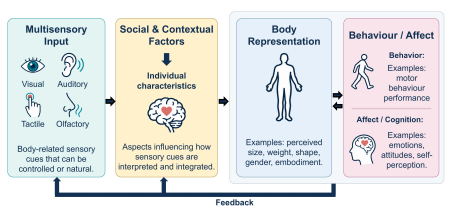
Fig. 1 . Conceptual framework for Body Transformation Experiences (BTEs), linking multisensory input, social and contextual factors, individ- ual characteristics, body representation, and behavioural and affective responses. Arrows depict conceptual relationships and feedback, rather than causal pathways established by the present dataset.
出典 · CC BY 4.0 · 元のPDFの3ページ目から図の部分を抽出しています。聴覚条件と反復試行の設計
実験では、参加者の足音を録音し、周波数スペクトルを変えてリアルタイムに再生しました。LF条件はそれとは逆に、83–250 Hzを増幅し、1 kHz以上を減衰させます。各参加者は6回の主要な歩行試行を行い、3つの条件がそれぞれ2回ずつ、つり合いの取れた順序で提示されます。この設計により、同じ参加者の中で条件ごとの観測が得られると同時に、参加者レベルの特性も別に記録されます。
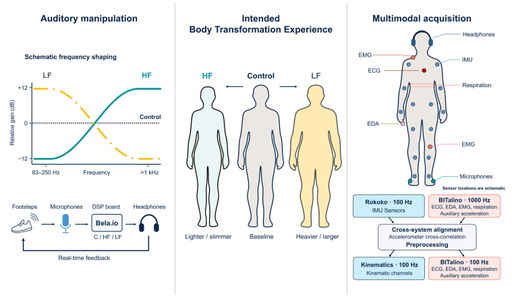
Fig. 2 .Left:real-time footstep feedback under control (C), high-frequency (HF), and low-frequency (LF) conditions; curves indicate frequency shaping.Centre:intended perceptual changes relative to the physical body, assessed subjectively.Right:kinematic and physiological acquisition, aligned by accelerometer cross-correlation, with start/stop coordinated by Node-RED [40]. Sensor locations are schematic.
出典 · CC BY 4.0 · 元のPDFの6ページ目から図の部分を抽出しています。主観報告と身体データの収集
1回の試行で評定は計7回得られ、6回の試行では42回の試行のうち評定が得られます。試行後には、身体感覚に関する質問紙、SAMに基づく価値・覚醒・支配性の評定、アバターの体重調整、身体マップが収集されます。運動学はRokokoスーツで100 Hzに記録され、17個のセグメントにわたる306チャンネルを提供します。生理信号はBITalinoで1000 Hzに記録されました。加速度の軸は、センサーの故障によって試行ごとに軸の数が異なる場合があるため、補助資料として保存されています。
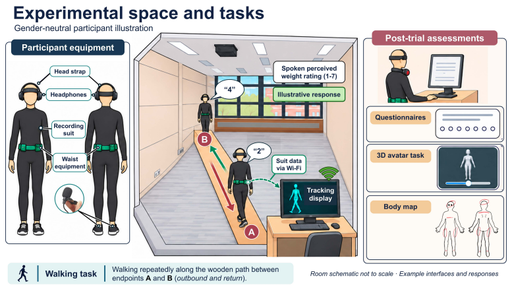
Fig. 3 . Experimental setting and tasks. Left: participant equipment. Centre: walking between A and B with spoken perceived-weight ratings. Right: post-trial questionnaires, avatar adjustment, and body maps. The sensor locations are shown in Fig.2
出典 · CC BY 4.0 · 元のPDFの7ページ目から図の部分を抽出しています。歩行運動学ベンチマークのラベルと分割
ベンチマークでは、歩行の加速度だけを入力として、聴覚条件、相対的な体重知覚、相対的な感情価値を分類します。主観タスクの基準は、参加者の2つの対照試行の評定平均で、対照試行は定義上0のラベルを受け取ります。分割は参加者ごと、乱数シードごとに歩行単位で行われ、学習・検証・テストを60%、20%、20%に分けます。そのため、同じ試行の別の歩行が別の部分集合に入ることがあり、結果は同じセッション内の予測としてのみ解釈されます。
事前学習済み特徴量とattention poolingの構造
モデルでは、自己教師あり方式で事前学習された動作特徴抽出器を固定し、その上にattention poolingと分類ヘッドを参加者ごと・タスクごとに学習させます。17個の身体部位それぞれの3軸加速度チャンネル51本を個別に処理し、部位ごとに512次元の特徴を作ります。共有された線形射影が各特徴にスコアを与え、17部位に対するsoftmaxが、入力に応じて変化する注意重みを作ります。この重みで17個の特徴を1つの512次元ベクトルにまとめ、その後、256次元の線形層、ReLU、3クラスのロジットを出す線形層が分類を行います。固定されるのは特徴抽出器で、学習されるのはattention poolingと分類ヘッドです。
入力は100 Hzの信号を3:1でダウンサンプリングして150サンプルの窓に合わせ、軸ごとのダイナミックレンジが基準区間を外れたら0に設定したうえで、[−1, 1]に正規化します。
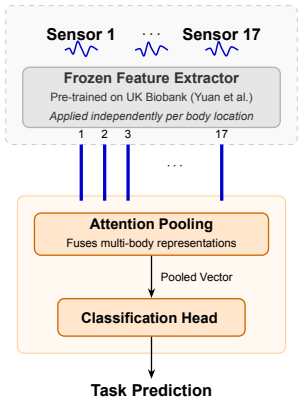
Fig. 4 . The network architecture used for the computational benchmark.
出典 · CC BY 4.0 · 元のPDFの11ページ目から図の部分を抽出しています。学習手順と評価指標
学習は参加者とタスクごとに別々に行い、クラス頻度の逆数で作った重み付き交差エントロピー損失を、Adamで最適化します。検証損失が10エポックのあいだ改善しない場合、または検証のbalanced accuracyが1.0に達した場合に学習を止め、検証損失が最も低いチェックポイントをテストに使います。評価では、個々の窓の予測に対して、balanced accuracy、macro F1、精度を計算します。balanced accuracyはクラスごとの再現率の平均で、macro F1はクラスごとの適合率と再現率の調和平均の平均です。その後、参加者ごとに10個のシードの平均を求め、参加者間の平均と標準偏差を報告します。
そのため、各参加者は同じ重みを持ちます。
分類結果と注意分布
聴覚条件の分類では、balanced accuracy 36.6%を得ました。これは名目上の3クラスの場合の33.3%に近い値です。相対的な体重知覚は44.5±11.5%、相対的な感情価値は45.9±12.7%でした。参加者ごとのbalanced accuracyが33.3%を超えた割合は、聴覚条件で61.6%、体重知覚で81.5%、感情価値で84.3%です。注意分布では、足の位置に最も大きな平均重みが与えられ、手と大腿がそれに続きました。ただし、誤差バーが多くの部位で重なっているため、精密な順位よりも大まかな重みの配分として読むのが適切です。この結果は、同じセッション内の歩行単位の分割から得られたものです。
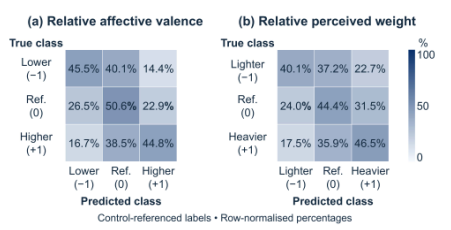
Fig. 5 . Confusion matrices for relative (a) affective valence and (b) perceived weight. Window-level predictions and targets were pooled across participants and 10 random seeds. Ref. (0) includes control trials and manipulated-feedback trials rated equal to the participant-specific control mean. Negative/positive labels indicate lower/higher valence or lighter/heavier perceived weight relative to that mean.
出典 · CC BY 4.0 · 元のPDFの12ページ目から図の部分を抽出しています。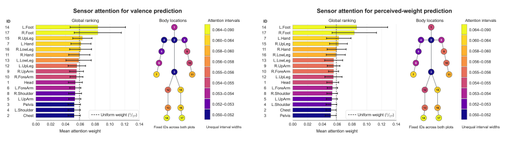
Fig. 6 . Attention profiles for (a) relative affective valence and (b) relative perceived weight. Weights were averaged within participants across test windows and then across 10 seeds. Bars show participant-level means averaged across participants, and error bars show population standard deviations across participants.
出典 · CC BY 4.0 · 元のPDFの13ページ目から図の部分を抽出しています。適用範囲と限界
このベンチマークは、同じ試行から得られた歩行が学習とテストの両方に入りうるため、未観測の試行、セッション、参加者への汎化は確認していません。主観タスクは2つの対照試行の平均をもとに定めるため、クラスは差の方向だけを表し、差の大きさは保存していません。主観評定は歩行全体に対して試行後に1つのラベルとして割り当てられるため、歩行の瞬間の状態を直接表すものではありません。参加者は主にマドリードの若年成人で、聴覚への曝露は短時間のみを扱ったため、他の年齢、文化圏、健康状態、長期的な効果に当てはめるには追加の検証が必要です。
論文情報
- 著者
- Mohammad Mahdi Dehshibi, Tomás Martínez Cortés, Amar D'Adamo, Daniel de la Prida, Luis-Antonio Azpicueta-Ruíz, Laia Turmo Vidal, Marte Roel Lesur, Joaquín R. Díaz-Durán, Alexander Väljamäe, Angel Sánchez, Temitayo Olugbade, Nadia Bianchi-Berthouze, Fernando Díaz-de-María, Ana Tajadura-Jiménez
- 学会・ジャーナル
- arXiv · プレプリント
- 公開日
- 2026年11月10日
- 登録日
- 2026年11月11日
- 更新日
- 2026年11月10日
- バージョン
- v1
- arXiv
- 2611.14093
- カテゴリ
- cs.HC · cs.LG
- ライセンス
- CC BY 4.0
- 掲載内容
- 論文情報・解説・論文の図
この解説は、Refivuの韓国語解説をAIで翻訳したものです。不正確な翻訳や誤りが含まれる可能性があります。論文と図の利用条件は各出典に従います。
アブストラクト
Multimodal datasets that combine synchronised behavioural and physiological signals with subjective affective and body perception measures are still rare. This limits both the understanding of embodied experience and the development of computational models that infer subjective states from sensor data. We introduce BODYinTRANSIT-Lab, a multimodal dataset that addresses this gap by capturing affective, perceptual, and behavioural responses to the Footsteps Illusion. In this closed-loop paradigm, participants perform walking tasks while receiving real-time manipulated auditory feedback of their own footsteps intended to alter perceived body weight. The dataset comprises synchronised recordings from 101 participants recruited through systematic stratification by eating-disorder symptomatology and physical activity level. BODYinTRANSIT-Lab combines full-body kinematics with electromyography, electrocardiography, respiration, and electrodermal activity. Its annotations capture both immediate and post-trial experience, including within-trial perceived-weight ratings, post-trial assessments of body feelings and affective experience, 3D avatar body visualisations, and quantitative body maps. Psychological, behavioural, demographic, and social measures provide further information about factors that may influence individual responses. We provide a deep learning benchmark that uses walking kinematics to classify relative affective valence and perceived weight within subjects. On within-session, segment-level splits, the baseline model achieved mean balanced accuracies of 45.9% for affective valence and 44.5% for perceived weight. The BODYinTRANSIT-Lab dataset provides an experimentally controlled resource for cognitive neuroscience and affective computing research, with potential applications in affect-aware interactive systems, health and well-being technologies, and creative embodied experiences.
この論文を引用
Mohammad Mahdi Dehshibi, Tomás Martínez Cortés, Amar D'Adamo, Daniel de la Prida, Luis-Antonio Azpicueta-Ruíz, Laia Turmo Vidal, Marte Roel Lesur, Joaquín R. Díaz-Durán, Alexander Väljamäe, Angel Sánchez, Temitayo Olugbade, Nadia Bianchi-Berthouze, Fernando Díaz-de-María, Ana Tajadura-Jiménez (2026). BODYinTRANSIT-Lab: A Multimodal Dataset for Investigating Sensory-Driven Transformations in Body Perception and Affective Experiences. arXiv:2611.14093v1. https://arxiv.org/abs/2611.14093v1
BibTeX
@misc{dehshibi2026bodyintransit,
  title = {{BODYinTRANSIT-Lab: A Multimodal Dataset for Investigating Sensory-Driven Transformations in Body Perception and Affective Experiences}},
  author = {Mohammad Mahdi Dehshibi and Tomás Martínez Cortés and Amar D'Adamo and Daniel de la Prida and Luis-Antonio Azpicueta-Ruíz and Laia Turmo Vidal and Marte Roel Lesur and Joaquín R. Díaz-Durán and Alexander Väljamäe and Angel Sánchez and Temitayo Olugbade and Nadia Bianchi-Berthouze and Fernando Díaz-de-María and Ana Tajadura-Jiménez},
  year = {2026},
  eprint = {2611.14093},
  archivePrefix = {arXiv},
  url = {https://arxiv.org/abs/2611.14093v1}
}