論文解説
Who Counts as Exposed? Measurement Choices in an Open, Re-estimable Index of Occupational AI Exposure
- 課題 既存のベンチマークにおける露出ラベルは単一の独自モデルの判定に依存しているため、再現や根拠の検証が難しいです。
- 手法 関連するニュースや学術の段落を検索し、7個のオープンウェイトモデルに文脈として与えたうえで、Anthropicの利用データに合わせたシンプレックス重みでスコアを補正します。
- 結果 アンサンブルは課題の順位付けでベンチマークを上回りました。統合依存の露出重みδによって、ベンチマークとの露出労働者数の比較結果が変わりました。
既存の露出指数における測定選択の問題
職業別のAI露出指数は経済分析や労働政策の入力として使われていますが、どの課題を露出として数えるかは測定設計次第です。この論文は、O*NETの18,796個の職業-課題ペアを対象に、文脈の提供とAnthropicの利用データに基づく補正という2つの設計上の決定が、露出の水準と順位をどの程度変えるかを検証します。2023年のEloundou et al.のベンチマークは、単一の独自モデルであるGPT-4の判定を根拠にしているため、同じ測定を再実行したり根拠を検討したりすることが難しいです。この論文は、この限界を出発点としています。
根拠の検索とアンサンブルによる判定
手法は、課題をクエリにしてニュースと学術の段落を検索するパイプラインから始まります。クエリは職業名、説明、IWAとDWA、課題文をつないで作られます。密ベクトル検索で40個の候補を見つけたあと、ハイブリッドスコアで並べ替え、クロスエンコーダで再順位付けして、最大5段落を選びます。その後、7個のオープンウェイト推論モデルが、課題、検索された段落、O*NETの文脈descriptor、E0–E3の判定手順を受け取り、課題を分割して、ボトルネックに応じてラベルを付けます。出力は文法制約デコーディングにより、JSONスキーマに合わせて固定します。この手順の鍵は、ラベルが課題の時間的ボトルネックに従うよう強制する点にあります。
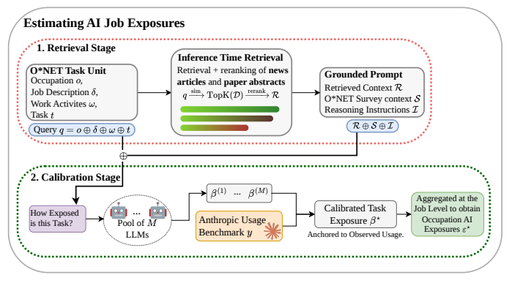
Fig. 2 . The evidence-grounded exposure pipeline, from an O*NET occupation–task pair through corpus construction, hybrid retrieval and reranking, grounded multi-model inference, behavioral calibration, and task-share-weighted aggregation to an occupation-level score.
出典 · CC BY 4.0 · Mouchel, Luca, Bouquet, Pierre, Sheffi, Yossi · Who Counts as Exposed? Measurement Choices in an Open, Re-estimable Index of Occupational AI Exposure · 論文の図を引用 · 元のPDFの24ページ目から図の部分を抽出しています。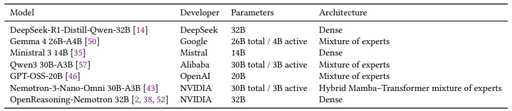
Table 4 . The seven open-weight reasoning models in the ensemble. All run in their reasoning or thinking configuration, and within an arm every model sees identical prompts.
出典 · CC BY 4.0 · Mouchel, Luca, Bouquet, Pierre, Sheffi, Yossi · Who Counts as Exposed? Measurement Choices in an Open, Re-estimable Index of Occupational AI Exposure · 論文の図を引用 · 元のPDFの25ページ目から図の部分を抽出しています。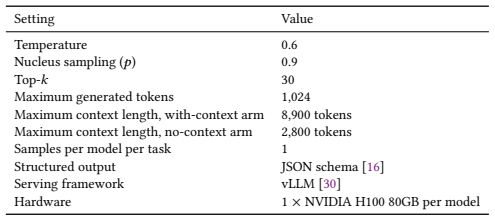
Table 5 . Decoding and serving configuration, applied to every model in the ensemble and to both arms.
出典 · CC BY 4.0 · Mouchel, Luca, Bouquet, Pierre, Sheffi, Yossi · Who Counts as Exposed? Measurement Choices in an Open, Re-estimable Index of Occupational AI Exposure · 論文の図を引用 · 元のPDFの25ページ目から図の部分を抽出しています。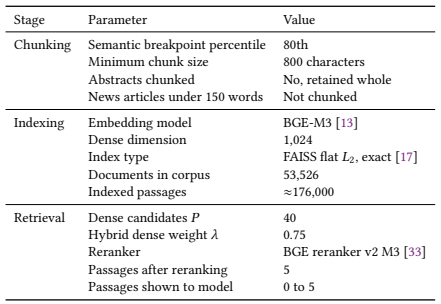
Table 6 . Retrieval configuration. Queries are formed per occupation–task pair from the occupation title, the occupation description, the intermediate and detailed work activities, and the task statement.
出典 · CC BY 4.0 · Mouchel, Luca, Bouquet, Pierre, Sheffi, Yossi · Who Counts as Exposed? Measurement Choices in an Open, Re-estimable Index of Occupational AI Exposure · 論文の図を引用 · 元のPDFの25ページ目から図の部分を抽出しています。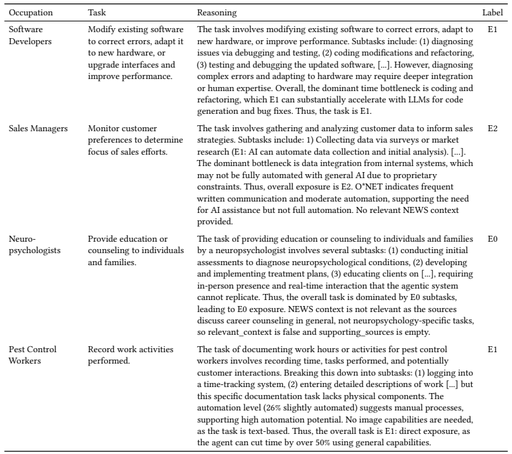
Table 17 . Selected occupation–task reasoning traces from OpenReasoning-Nemotron 32B with predicted exposure labels.
出典 · CC BY 4.0 · Mouchel, Luca, Bouquet, Pierre, Sheffi, Yossi · Who Counts as Exposed? Measurement Choices in an Open, Re-estimable Index of Occupational AI Exposure · 論文の図を引用 · 元のPDFの35ページ目から図の部分を抽出しています。Anthropicの利用に基づくシンプレックス補正
補正では、モデルのスコアの加重平均がAnthropicの課題penetrationに合うように、重みを学習します。重みは非負で総和が1となるシンプレックス制約を受け、切片はありません。そのため、補正後のスコアは各モデルの既存の値を混ぜ合わせた値にとどまり、目標平均の0.067に合わせることができません。目標値の92%が0であるため、損失関数は最も保守的なモデル側へ重みを寄せます。著者らは、ゼロ目標の重みをモデルの平均に応じて下げる式4も導入し、この偏りを減らそうとしました。ただし、その重み自体もアンサンブル予測に依存するため循環性が残ると考えています。
ベンチマークとの課題レベルでの比較
共通の保留フォールドにある3,391個の課題で、5つの設定を比較しました。アンサンブルのすべての設定は、ベンチマークよりAUCが高く、その差は+0.025から+0.055でした。ただし、A2の全課題でのAUCの差は有意ではありませんでした(p=0.055)。ベンチマークは3つの値しか持たないため、解像度の違いが一部を説明します。そこで、ベンチマークが実行可能と判定した1,863個の課題に絞ると、ベンチマークのAUCは0.543で、アンサンブルの設定は0.642から0.670でした。文脈の追加は、補正なしではAUCを0.015、補正ありでは0.030下げました。この順位の差は、アンサンブルそのものから生じています。

Table 7 . Fold sizes for the two calibration samples. Both are 80/20 splits stratified on whether penetration is positive, which holds the positive rate at 7.6% in each fold. The held-out positive count for𝐴0 is reported over the tasks also present in the with-context sample.
出典 · CC BY 4.0 · Mouchel, Luca, Bouquet, Pierre, Sheffi, Yossi · Who Counts as Exposed? Measurement Choices in an Open, Re-estimable Index of Occupational AI Exposure · 論文の図を引用 · 元のPDFの26ページ目から図の部分を抽出しています。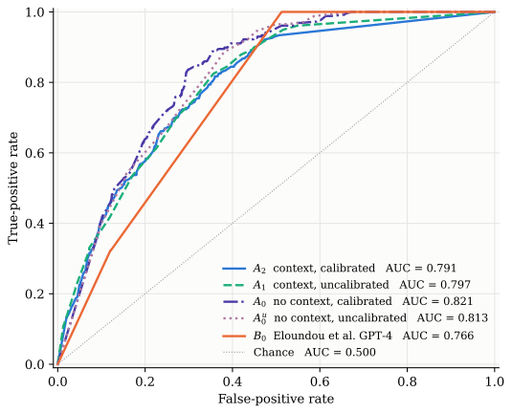
Fig. 3 . Held-out task-level ROC curves for detecting positive Anthropic task penetration, for all five arms on the common fold. The benchmark curve reaches a true-positive rate of 1.0 at a false-positive rate near 0.5. This is because the feasibility gate in Equation 3 means that no positive-penetration task can have𝛽 E =0, so the benchmark cannot produce a false negative on this target.
出典 · CC BY 4.0 · Mouchel, Luca, Bouquet, Pierre, Sheffi, Yossi · Who Counts as Exposed? Measurement Choices in an Open, Re-estimable Index of Occupational AI Exposure · 論文の図を引用 · 元のPDFの28ページ目から図の部分を抽出しています。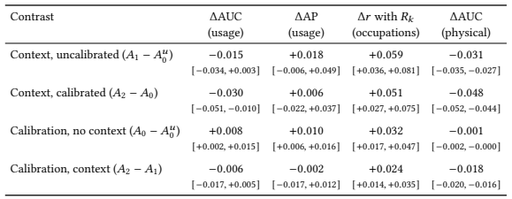
Table 10 . Paired differences between arms that differ in context only or in calibration only, with bootstrap 95% confidence intervals. Usage outcomes are on the common held-out fold,𝑟 is the occupation-level Pearson correlation with𝑅𝑘 (𝑛= 756), and the physical outcome is on all matched occupation–task pairs.
出典 · CC BY 4.0 · Mouchel, Luca, Bouquet, Pierre, Sheffi, Yossi · Who Counts as Exposed? Measurement Choices in an Open, Re-estimable Index of Occupational AI Exposure · 論文の図を引用 · 元のPDFの29ページ目から図の部分を抽出しています。職業レベルの整合と露出労働者数
職業レベルでは、Anthropicの職業露出R_kとのPearson相関を比較しました。文脈は、補正なしで相関を+0.059、補正ありで+0.051高めました。補正は、文脈なしで+0.032、文脈ありで+0.024を上乗せしました。A2は0.686で、ベンチマークの0.640より高かったものの、Δr=+0.046の信頼区間は0に近いです。クロスフィッティングでも相関は0.686のまま維持されました。したがって、この結果は順位よりもスコア間隔の整合を示しています。統合依存の露出重みδが0から1に変わると、補正指数がベンチマークより多くの、またはより少ない露出労働者を数えるかどうかも変わります。
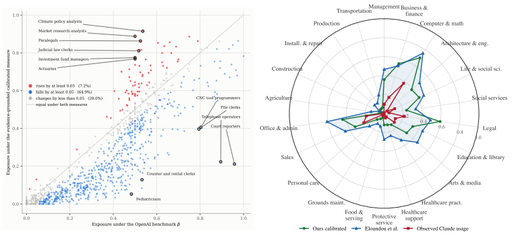
Fig. 1 .Left:detailed-occupation exposure under the benchmark𝛽and the calibrated grounded measure. Red points rise by at least 0.05, blue points fall by at least 0.05, and grey points change by less. Labeled occupations are the largest movers.Right:major-group exposure by source (equal-weighted means over six-digit SOC occupations): the Eloundou et al. benchmark (blue), the calibrated index𝐴2 (green), and observed Claude usage (red). The index lies below the benchmark in 20 of the 22 groups and above it in legal and in business and financial operations.
出典 · CC BY 4.0 · Mouchel, Luca, Bouquet, Pierre, Sheffi, Yossi · Who Counts as Exposed? Measurement Choices in an Open, Re-estimable Index of Occupational AI Exposure · 論文の図を引用 · 元のPDFの11ページ目から図の部分を抽出しています。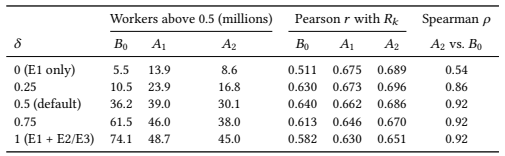
Table 2 . Headline numbers under alternative weights𝛿 for the E2/E3 class in Equation 1. Workers are U.S. employment in occupations with exposure above 0.5 [ 53]. Pearson𝑟 is against Anthropic’s occupation-level exposure (𝑛= 756). The last column is the rank correlation between the calibrated index and the benchmark across occupations. Calibration weights are held at their fitted values. Benchmark values combine the released lower and upper boundsℓand𝑢asℓ+𝛿(𝑢−ℓ).
出典 · CC BY 4.0 · Mouchel, Luca, Bouquet, Pierre, Sheffi, Yossi · Who Counts as Exposed? Measurement Choices in an Open, Re-estimable Index of Occupational AI Exposure · 論文の図を引用 · 元のPDFの12ページ目から図の部分を抽出しています。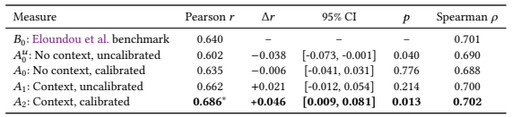
Table 11 . Occupation-level alignment with observed Anthropic exposure 𝑅𝑘 over the𝑛= 756six-digit SOC groups matched to Anthropic occupation data, of the 923 scored. Pearson differences are computed relative to𝐵0 using 5,000 paired bootstrap resamples.
出典 · CC BY 4.0 · Mouchel, Luca, Bouquet, Pierre, Sheffi, Yossi · Who Counts as Exposed? Measurement Choices in an Open, Re-estimable Index of Occupational AI Exposure · 論文の図を引用 · 元のPDFの29ページ目から図の部分を抽出しています。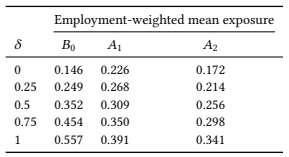
Table 14 . Employment-weighted mean occupational exposure under alternative weights𝛿for the E2/E3 class.
出典 · CC BY 4.0 · Mouchel, Luca, Bouquet, Pierre, Sheffi, Yossi · Who Counts as Exposed? Measurement Choices in an Open, Re-estimable Index of Occupational AI Exposure · 論文の図を引用 · 元のPDFの31ページ目から図の部分を抽出しています。限界
補正の目標であるAnthropicの利用データは、1つのプラットフォームでの観測であり、penetrationは現在のシステムの能力そのものを直接測るものではありません。著者らは、この目標によって、プラットフォーム利用者の偏りが指数に持ち込まれうると考えています。δ=1/2は、Eloundou et al.と比較するために定めた値であり、経験的に決めた量ではありません。外部の人手による検証は行っておらず、開発中に実施したペア単位の判定結果は、キュレーションされた項目だったため、根拠としては使いませんでした。
論文情報
- 著者
- Mouchel, Luca, Bouquet, Pierre, Sheffi, Yossi
- 学会・ジャーナル
- arXiv · プレプリント
- 公開日
- 2026年11月13日
- 登録日
- 2026年11月16日
- 更新日
- 2026年11月13日
- バージョン
- v1
- arXiv
- 2611.18168
- カテゴリ
- cs.IR
- ライセンス
- CC BY 4.0
- 掲載内容
- 論文情報・解説・論文の図
この解説は、Refivuの韓国語解説をAIで翻訳したものです。不正確な翻訳や誤りが含まれる可能性があります。論文と図の利用条件は各出典に従います。
アブストラクト
Occupational AI exposure indices are used as inputs to economic analysis, workforce planning, and policy, and the choices built into them decide which workers are described as exposed. We build an open, re-estimable task-level index and vary its two main design decisions, context and calibration, to show how much the answer depends on them. For each of the 18,796 occupation--task pairs in \onet, seven open-weight reasoning models rate exposure under a common rubric. Each model rates with or without a context of retrieved news and research passages, workplace descriptors, and a bottleneck-based reasoning protocol, and the ensemble is combined with or without simplex-constrained calibration to observed Claude usage. The largest difference from the dominant 2023 benchmark is not a disagreement about what AI can do but about how much credit to give exposure that depends on software integrations not yet built, a choice that no data can settle. At the benchmark's own weight, the calibrated index counts fewer exposed workers than the benchmark, and when only direct exposure counts it counts more. At full score resolution, the ensemble ranks tasks better than the benchmark against observed usage and an independent physical-task classification. Adding context mainly shifts the level of exposure rather than improving the ranking. Context and calibration both relocate exposure toward higher-wage occupations, and calibration, which anchors the index to one platform's users, does more of it, so we also release the uncalibrated arm. Exposure indices used as policy inputs should state such choices, report their numbers under the alternatives, and be re-estimated as systems change.
この論文を引用
Mouchel, Luca, Bouquet, Pierre, Sheffi, Yossi (2026). Who Counts as Exposed? Measurement Choices in an Open, Re-estimable Index of Occupational AI Exposure. arXiv:2611.18168v1. https://arxiv.org/abs/2611.18168v1
BibTeX
@misc{luca2026counts,
  title = {{Who Counts as Exposed? Measurement Choices in an Open, Re-estimable Index of Occupational AI Exposure}},
  author = {Mouchel, Luca and Bouquet, Pierre and Sheffi, Yossi},
  year = {2026},
  eprint = {2611.18168},
  archivePrefix = {arXiv},
  url = {https://arxiv.org/abs/2611.18168v1}
}