論文解説
OmniScore-Bench: Evaluating Vision-Language Models on Musical Score Reading
OmniScore-Bench:楽譜読解におけるVision-Language Modelsの評価
- 課題 VLMの楽譜判読を、記号認識、構造、関係、転写、音楽的解釈に分けて測定するのは難しいです。
- 手法 6つの側面、24のサブタイプ、3,000問の質問と参照回答、厳格な採点を組み合わせたベンチマークを作りました。
楽譜読解を段階ごとに分けて評価する理由
VLMに楽譜についての質問へ答えさせると、最終的な答えだけでは、記号を見つけられなかったのか、記号のつながりを見落としたのか、音楽的な意味を誤って解釈したのかを区別できません。既存のOMR資源であるDeepScoresV2、MUSCIMA++、SMB、MSU-Benchなどは、検出、転写、楽譜全体の理解をそれぞれ測定しますが、あるVLMがどの楽譜読解の演算に強く、どに弱いかを一度に示すことはできません。この論文では、要求された演算ごとに個別に観察できるように質問を設計します。
6つの側面と3,000問の構成
OmniScore-Benchは、記号、構造、関係、転写、音楽的一貫性、楽譜質問応答の6つの側面と24のサブタイプから成ります。質問はRendered、Printed scan、Handwrittenの入力からそれぞれ1,000問ずつ取られ、サブタイプごとに125問です。質問は見える範囲、参照注釈、回答スキーマを明示し、回答を自動採点できるように設計されています。
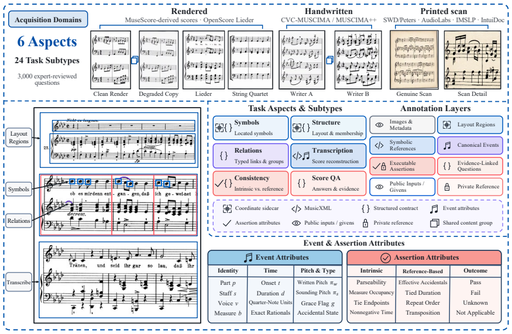
Figure 1 .Six aspects of musical score reading for vision-language models.The evaluation comprises 3,000 questions, with 1,000 each from Rendered, Printed scan and Handwritten inputs and 125 per subtype. The tasks connect visible symbols to structure, relations, transcription, musical consistency and evidence-linked answers. Event and assertion attributes describe reference annotations.
出典 · CC BY 4.0 · Dai, Congren, Guo, Zhancheng, Zhao, Danni, Wang, Wenchu, Li, Xiaobing, Sun, Maosong · OmniScore-Bench: Evaluating Vision-Language Models on Musical Score Reading · 論文の図を引用 · 元のPDFの2ページ目から図の部分を抽出しています。参照回答の検証と範囲の固定
質問は画像と注釈の対応から出発し、記号と配置の注釈は幾何学的な質問を、記号エンコーディングは音高・長さ・構造の参照を支えます。自動検査により、回答が適切に定義されているかと、画像の範囲と参照の範囲が一致しているかを確認します。2名のドメイン専門家が3,000問を独立して検討し、初期一致度は92.50%でした。不一致は3人目の専門家が判定しました。
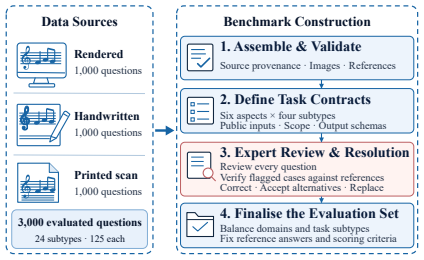
Figure 2 .References are bound to visible task scope.Sources and annotations define candidate questions; automatic checks and source-based resolution of flagged cases precede the final evaluation set. The evaluation uses one question per request.
出典 · CC BY 4.0 · Dai, Congren, Guo, Zhancheng, Zhao, Danni, Wang, Wenchu, Li, Xiaobing, Sun, Maosong · OmniScore-Bench: Evaluating Vision-Language Models on Musical Score Reading · 論文の図を引用 · 元のPDFの3ページ目から図の部分を抽出しています。同一条件でのモデル回答と集計方法
十二個のVLMに、すべての質問を同じ入力と指示文で独立して提示しました。厳格な評価器はJSONまたはMusicXMLの契約を適用し、切断、拒否、形式エラーは出力失敗として数えます。非転写指標は、質問をソース内容のグループ内で平均したのち、グループ間で等しく平均します。転写指標はコーパス比率で計算し、値が低いほど良い指標です。
演算ごとに異なるモデルのプロファイル
視覚的事実の抽出は、複数のモデルで音高の解釈より強いものでした。Opusは T6.1 joint success 99.0% を記録しましたが、T5.2 exact answer は56.0%でした。位置特定では、SolとAstraがT1.1 F1 91.0%と89.8%を記録し、Opusは7.9%でした。一方でOpusは、関係の接続精度が他のタスクでより高いという結果でした。転写でも、単一ページT4.3の最低NEDは、ドメインによって異なるモデルに現れました。
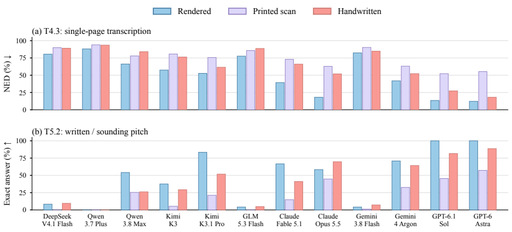
Figure 4 .Model profiles vary across domains.Each panel evaluates the same task across three domains for all twelve VLMs. T4.3 uses corpus NED (lower is better); T5.2 uses group-macro exact answer (higher is better). Model order stays fixed across panels.
出典 · CC BY 4.0 · Dai, Congren, Guo, Zhancheng, Zhao, Danni, Wang, Wenchu, Li, Xiaobing, Sun, Maosong · OmniScore-Bench: Evaluating Vision-Language Models on Musical Score Reading · 論文の図を引用 · 元のPDFの7ページ目から図の部分を抽出しています。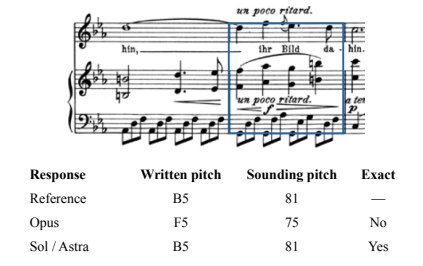
Figure 5 .A valid format can contain a musical error.T5.2 asks for the highest written pitch on the upper piano staff in the marked measure, with sounding pitch defined as written pitch minus two semitones (C4=60). The crop shows part of the fifth input page; the models receive all five pages. The blue outline reproduces the public measure scope.
出典 · CC BY 4.0 · Dai, Congren, Guo, Zhancheng, Zhao, Danni, Wang, Wenchu, Li, Xiaobing, Sun, Maosong · OmniScore-Bench: Evaluating Vision-Language Models on Musical Score Reading · 論文の図を引用 · 元のPDFの8ページ目から図の部分を抽出しています。複数ページの転写順位の逆転
単一ページまではAstraがT4.1、T4.2、T4.3で最も低いcorpus NEDを記録しましたが、複数ページのT4.4ではOpusが39.9を記録し、Astraの50.6より低くなりました。この逆転は、均等な質問の重みづけと均等なグループの重みづけでも維持されました。ただし両モデルとも有効な80問だけで見ると、NEDは33.3と34.6となり、差は小さくなります。著者らは、この順序がページ数だけで生じたとは見ておらず、ソース内容の違いも併せて考慮すべきだと考えています。
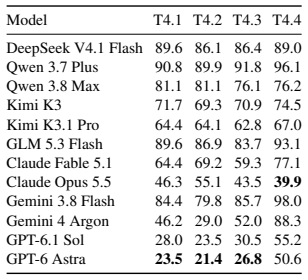
Table 5 .Transcription rankings depend on scope.Corpus NED multiplied by 100, lower is better; bold marks the best complete- population value. Every model/subtype NED aggregate covers all 125 questions. Corpus ratios combine edit counts and symbol counts across the subtype. All five metrics appear in SM Table S9.
出典 · CC BY 4.0 · Dai, Congren, Guo, Zhancheng, Zhao, Danni, Wang, Wenchu, Li, Xiaobing, Sun, Maosong · OmniScore-Bench: Evaluating Vision-Language Models on Musical Score Reading · 論文の図を引用 · 元のPDFの8ページ目から図の部分を抽出しています。画像除去から見える視覚への依存
画像除去実験では、SolとDeepSeek Flashを同じ270問のサブセットで比較します。テキスト、座標、与えられた情報、出力スキーマはそのままにし、楽譜画像だけを取り除きました。Solの書き取り・響きの音高スコアは83.3%から0に落ち、反復走査は92.0%から0に落ちました。ただし、いくつかのスコアはすでに低いため、小さな差は診断力が限られます。構造の所属と断片変換は、除去後もそれぞれ53.3%と60.0%残っており、公開テキストや座標、モデルの事前知識が一部の答えを支えていることを示しています。
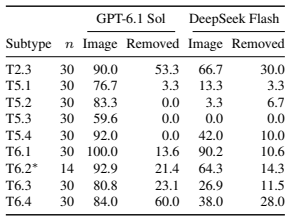
Table 4 .Score-image removal has task-dependent effects.Strict group-macro percentages on identical selected questions; higher is better. Image retains all inputs; Removed omits every image part. Metrics follow Table 2. ∗T6.2 shows retrieval; the 16 counting questions and all paired intervals appear in SM Table S15.
出典 · CC BY 4.0 · Dai, Congren, Guo, Zhancheng, Zhao, Danni, Wang, Wenchu, Li, Xiaobing, Sun, Maosong · OmniScore-Bench: Evaluating Vision-Language Models on Musical Score Reading · 論文の図を引用 · 元のPDFの7ページ目から図の部分を抽出しています。補助入力とページ文脈の統制実験
補助入力の実験では、画像は維持したまま、特定の補助フィールドを1つだけ取り除きます。SolはT5.2で95.0%を維持し、DeepSeekは15.0%から5.0%に下がりました。ページ文脈の実験では、対象の抜粋と参照XMLを固定したうえで、同じソースのページを追加します。Opusのcorpus NEDは、T4.1で6.3ポイント、T4.2で3.4ポイント上がり、Astraは0.6ポイントと8.6ポイント下がりました。すべてのペアの信頼区間は0を含むため、方向を確定するのは難しいです。
集計の仮定と未完成の指標の限界
グループはソース識別子による集計単位であり、検証済みの異なる作品構成とはみなされていません。T4.4 TEDnはすべてのモデルでカバレッジが不完全なため、完全な十二モデルのランキングは作れません。また、形式の遵守がスコアを大きく左右します。Qwen 3.7 Plusは厳格な基準では341問しか採点されませんでしたが、外側のコードフェンスを取り除くと2,824問が採点されました。したがって、厳格なスコアだけで、モデルの楽譜理解能力を断定するのは難しいです。
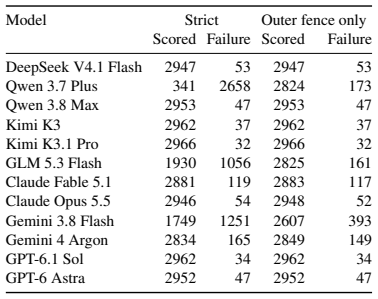
Table 6 .Removing a code fence changes scoreability.Counts out of 3,000, not correct-answer counts. “Scored” denotes task- level scoreability; “Failure” denotes model-output failure. The remaining items have partially unresolved metrics. SM Tables S9 and S10 report native metric availability.
出典 · CC BY 4.0 · Dai, Congren, Guo, Zhancheng, Zhao, Danni, Wang, Wenchu, Li, Xiaobing, Sun, Maosong · OmniScore-Bench: Evaluating Vision-Language Models on Musical Score Reading · 論文の図を引用 · 元のPDFの8ページ目から図の部分を抽出しています。論文情報
- 著者
- Dai, Congren, Guo, Zhancheng, Zhao, Danni, Wang, Wenchu, Li, Xiaobing, Sun, Maosong
- 学会・ジャーナル
- arXiv · プレプリント
- 公開日
- 2026年11月13日
- 登録日
- 2026年11月16日
- 更新日
- 2026年11月13日
- バージョン
- v1
- arXiv
- 2611.17870
- カテゴリ
- cs.AI
- ライセンス
- CC BY 4.0
- 掲載内容
- 論文情報・解説・論文の図
この解説は、Refivuの韓国語解説をAIで翻訳したものです。不正確な翻訳や誤りが含まれる可能性があります。論文と図の利用条件は各出典に従います。
アブストラクト
Vision-language models (VLMs) can answer questions about musical scores, but their ability to recognise notation, recover its structure and interpret its musical meaning requires separate evaluation. Existing optical music recognition (OMR) resources establish detection and transcription measurements; a transcription score alone leaves the strengths and bottlenecks of a VLM score reader unresolved. We introduce OmniScore-Bench, an evaluation of OMR capabilities in VLMs through 3,000 questions spanning six aspects and 24 task subtypes. Each question specifies a visible scope, reference annotations and an answer schema, enabling automatic evaluation from symbol localisation to musical consistency and evidence-linked question answering. Our assessment of twelve VLMs reveals operation-specific capability profiles and different transcription leaders across excerpt, single-page and multipage tasks. Controlled analyses examine the roles of score images, auxiliary givens and additional page context. On the tested subset, image removal exposes visual dependence in pitch and repeat interpretation while measuring how much performance remains with public context alone. Separate format and content analyses distinguish answer-format violations from musical errors. OmniScore-Bench supports diagnosing which score-reading operations VLMs perform reliably and which require improvement.
この論文を引用
Dai, Congren, Guo, Zhancheng, Zhao, Danni, Wang, Wenchu, Li, Xiaobing, Sun, Maosong (2026). OmniScore-Bench: Evaluating Vision-Language Models on Musical Score Reading. arXiv:2611.17870v1. https://arxiv.org/abs/2611.17870v1
BibTeX
@misc{congren2026omniscore,
  title = {{OmniScore-Bench: Evaluating Vision-Language Models on Musical Score Reading}},
  author = {Dai, Congren and Guo, Zhancheng and Zhao, Danni and Wang, Wenchu and Li, Xiaobing and Sun, Maosong},
  year = {2026},
  eprint = {2611.17870},
  archivePrefix = {arXiv},
  url = {https://arxiv.org/abs/2611.17870v1}
}