論文解説
CIFAKE: Image Classification and Explainable Identification of AI-Generated Synthetic Images
CIFAKE:AI生成合成画像の画像分類と説明可能な識別
- 課題 AIが生成した写真のような画像は人が実際の写真と見分けにくいため、データの真偽を判別する自動化された方法が必要です。
- 手法 CIFAR-10のクラスに対応する合成画像をStable Diffusion 1.4で作り、実画像と合成画像をCNNで二値分類します。Grad-CAMで判断領域も可視化します。
- 結果 最適な構成の精度は92.98%でした。Grad-CAMでは、合成画像の判断が背景の視覚的な欠陥領域に集中する傾向が確認されました。
AI生成画像の識別が必要な理由
生成モデルの品質が上がり、人が実際の写真とAIが作った画像を目視で見分けることが難しくなりました。この論文は、こうした状況ではデータの真偽を確かめられるコンピュータビジョンの方法が必要だと考えています。研究の対象は、CIFAR-10のような10クラスの小型画像に限られています。実画像と潜在拡散モデル(Latent Diffusion Models)で生成した画像を二値分類する問題として扱われています。
著者らはこの問題を解決するために、2つの要素を提示しています。1つは実画像と合成画像をまとめたCIFAKEデータセットです。もう1つは、畳み込みニューラルネットワーク(CNN)で2種類を区別し、Grad-CAMで判断の根拠を可視化する方法です。
実画像と合成画像のデータ構成
実画像クラス(REAL、陽性値1)は、CIFAR-10の32×32 RGB画像から取得します。CIFAR-10は10クラスで、クラスあたり6,000枚、計60,000枚です。本研究では学習画像50,000枚をREALの学習に使い、テスト画像10,000枚を評価に使います。
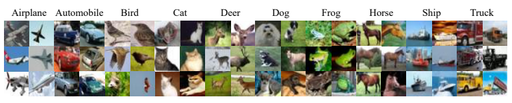
Figure 1 : Examples of images from the CIFAR-10 image classification dataset [24].
出典 · CC BY 4.0 · Jordan J. Bird, Ahmad Lotfi · CIFAKE: Image Classification and Explainable Identification of AI-Generated Synthetic Images · 論文の図を引用 · 元のPDFの4ページ目から図の部分を抽出しています。合成画像(FAKE、値0)はStable Diffusion 1.4を使って生成します。各クラスについて、"a photograph of {a/an}"で始まるプロンプトにクラスごとの修飾語を付け、多様性を高めます。修飾語は6,000枚の生成に均等に使われます。生成した合成画像は512pxで作成した後、CIFAR-10と同じ32pxにバイリニア補間で縮小します。そのため、2つの集合の解像度は揃えられています。
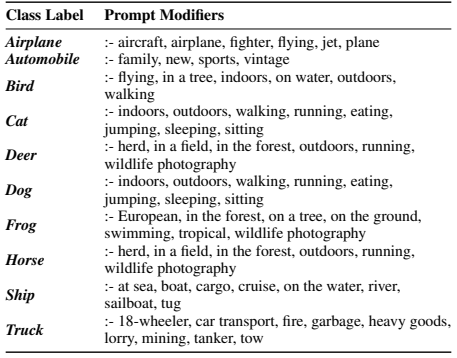
Table 1 : Latent Diffusion prompt modifiers for generating the 10-class synthetic dataset. All prompts are preceded by “a photograph of {a/an}” and modifiers are used equally for the 6000 images.
出典 · CC BY 4.0 · Jordan J. Bird, Ahmad Lotfi · CIFAKE: Image Classification and Explainable Identification of AI-Generated Synthetic Images · 論文の図を引用 · 元のPDFの4ページ目から図の部分を抽出しています。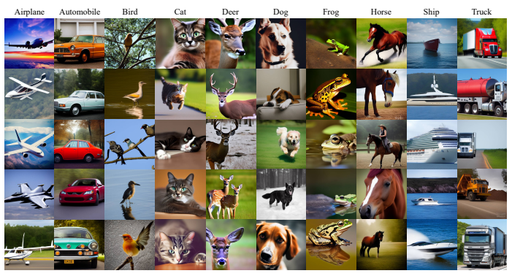
Figure 2 : Examples of AI-generated images within the dataset contributed by this study, selected at random with regards to their real CIFAR-10 equivalent labels.
出典 · CC BY 4.0 · Jordan J. Bird, Ahmad Lotfi · CIFAKE: Image Classification and Explainable Identification of AI-Generated Synthetic Images · 論文の図を引用 · 元のPDFの7ページ目から図の部分を抽出しています。CNN分類器と確率出力
分類器は、畳み込み層と全結合層で構成されたCNNです。畳み込み層では、入力と学習されるフィルタの積を移動させながら足し合わせます。活性化関数ReLU f(x)=max(0,x)を適用して特徴マップを作ります。その後、プーリングと平坦化を経て全結合層に渡します。
最終出力は、単一のニューロンのシグモイド値です。値が1(REAL)または0(FAKE)に近いほど、そちら側の可能性が高いと解釈されます。学習は二値交差エントロピー損失を減らす方向で行われます。推論時には、この出力値を最も近い値に丸めてクラスを決めます。
構造探索と評価指標
まず、フィルタ数{16, 32, 64, 128}と畳み込み層数{1, 2, 3}を組み合わせて、特徴抽出器を比較します。次に、最も良い特徴抽出器の上に、{32, 64, 128, 256, ..., 4096}個のReLUニューロンを持つ全結合層を1~3層積み重ねて比較します。この過程で比較した構造は、全部で36個のニューラルネットワークです。
性能は適合率、再現率、F1 scoreで合わせて見ます。適合率は偽陽性、再現率は偽陰性の分析に使われます。F1 scoreは両者を組み合わせた指標です。著者らは、合成画像を実画像だと見逃す偽陰性が重要だと説明しています。
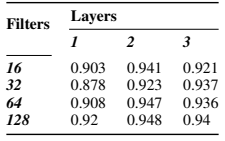
Table 4 : Observed validation precision for the filters within the Convolutional Neural Network.
出典 · CC BY 4.0 · Jordan J. Bird, Ahmad Lotfi · CIFAKE: Image Classification and Explainable Identification of AI-Generated Synthetic Images · 論文の図を引用 · 元のPDFの9ページ目から図の部分を抽出しています。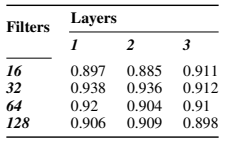
Table 5 : Observed validation recall for the filters within the Convolutional Neural Network.
出典 · CC BY 4.0 · Jordan J. Bird, Ahmad Lotfi · CIFAKE: Image Classification and Explainable Identification of AI-Generated Synthetic Images · 論文の図を引用 · 元のPDFの9ページ目から図の部分を抽出しています。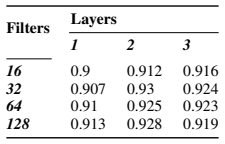
Table 6 : Observed validation F1-Score for the filters within the Convolutional Neural Network.
出典 · CC BY 4.0 · Jordan J. Bird, Ahmad Lotfi · CIFAKE: Image Classification and Explainable Identification of AI-Generated Synthetic Images · 論文の図を引用 · 元のPDFの9ページ目から図の部分を抽出しています。分類結果と最適な構成
特徴抽出器の実験では、2層・32フィルタの構成が最も低い損失を示しました。その二値交差エントロピーは0.18でした。同じ実験で最も精度が高かったのは、2層・128フィルタの構成で、精度は92.98%、損失は0.221でした。これらの数値は検証セットで報告された値です。
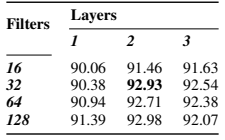
Table 2 : Observed classification accuracy metrics for feature extraction networks.
出典 · CC BY 4.0 · Jordan J. Bird, Ahmad Lotfi · CIFAKE: Image Classification and Explainable Identification of AI-Generated Synthetic Images · 論文の図を引用 · 元のPDFの8ページ目から図の部分を抽出しています。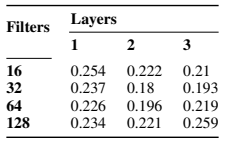
Table 3 : Observed validation loss for the filters within the Convolutional Neural Network.
出典 · CC BY 4.0 · Jordan J. Bird, Ahmad Lotfi · CIFAKE: Image Classification and Explainable Identification of AI-Generated Synthetic Images · 論文の図を引用 · 元のPDFの8ページ目から図の部分を抽出しています。全結合層の実験では、単一の全結合層で64個のニューロンの構成が93.55%の最高精度を示しました。ただし、F1 scoreの最大値は、単一の全結合層で64個のReLUを使う構成の0.936でした。著者らは、このモデルを最終的な構造の説明に使っています。要約に出ている92.98%は特徴抽出器の実験での最高精度なので、全結合層の実験の精度とは区別する必要があります。
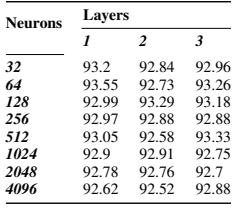
Table 7 : Observed validation accuracy for the dense layers within the Convolutional Neural Network.
出典 · CC BY 4.0 · Jordan J. Bird, Ahmad Lotfi · CIFAKE: Image Classification and Explainable Identification of AI-Generated Synthetic Images · 論文の図を引用 · 元のPDFの9ページ目から図の部分を抽出しています。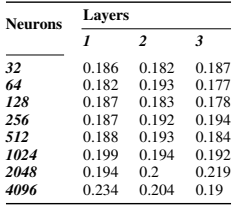
Table 8 : Observed validation loss for the dense layers within the Convolutional Neural Network.
出典 · CC BY 4.0 · Jordan J. Bird, Ahmad Lotfi · CIFAKE: Image Classification and Explainable Identification of AI-Generated Synthetic Images · 論文の図を引用 · 元のPDFの9ページ目から図の部分を抽出しています。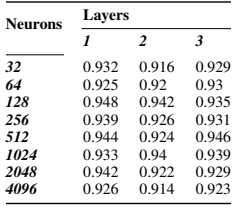
Table 9 : Observed validation precision for the dense layers within the Convolutional Neural Network.
出典 · CC BY 4.0 · Jordan J. Bird, Ahmad Lotfi · CIFAKE: Image Classification and Explainable Identification of AI-Generated Synthetic Images · 論文の図を引用 · 元のPDFの10ページ目から図の部分を抽出しています。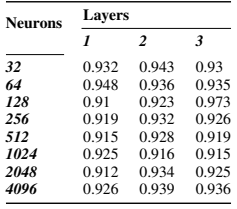
Table 10 : Observed validation recall for the dense layers within the Convolutional Neural Network.
出典 · CC BY 4.0 · Jordan J. Bird, Ahmad Lotfi · CIFAKE: Image Classification and Explainable Identification of AI-Generated Synthetic Images · 論文の図を引用 · 元のPDFの10ページ目から図の部分を抽出しています。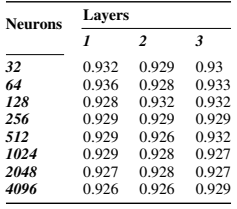
Table 11 : Observed validation F1-Score for the dense layers within the Convolutional Neural Network.
出典 · CC BY 4.0 · Jordan J. Bird, Ahmad Lotfi · CIFAKE: Image Classification and Explainable Identification of AI-Generated Synthetic Images · 論文の図を引用 · 元のPDFの10ページ目から図の部分を抽出しています。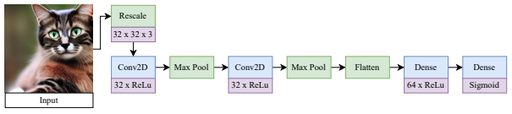
Figure 5 : An example of one of the final model architectures following hyperparameter search for the classification of real or AI-generated images.
出典 · CC BY 4.0 · Jordan J. Bird, Ahmad Lotfi · CIFAKE: Image Classification and Explainable Identification of AI-Generated Synthetic Images · 論文の図を引用 · 元のPDFの11ページ目から図の部分を抽出しています。Grad-CAMで見た判断領域
Grad-CAMは、予測クラスに対する勾配とCNNの特徴マップを掛け合わせて足し合わせ、ReLUを適用します。これにより、入力画像の重要な領域をヒートマップで示します。この手法は学習済みモデルの予測を変えず、どの位置が出力に寄与したかを可視化します。
可視化の結果、実画像の判断は画像全体に広く分布する傾向がありました。一方、合成画像の判断は、背景のぼかしや布の模様のように視覚的な欠陥がありそうな一部の領域に集中していました。飛行機、鳥、カエル、馬、船の画像では、対象そのものにほとんど活性化が現れませんでした。この結果は、無作為に選んだ少数の画像を視覚的に解釈したものです。定量的な位置評価で検証したものではありません。
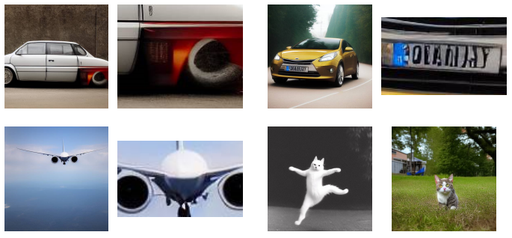
Figure 3 : Examples of visual defects found within the synthetic image dataset.
出典 · CC BY 4.0 · Jordan J. Bird, Ahmad Lotfi · CIFAKE: Image Classification and Explainable Identification of AI-Generated Synthetic Images · 論文の図を引用 · 元のPDFの7ページ目から図の部分を抽出しています。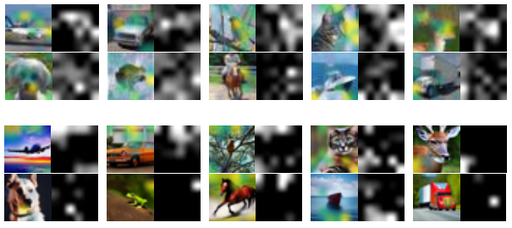
Figure 6 : Gradient class activation maps (Grad-CAM) overlays and raw heatmaps for prediction interpretation. Top examples show real images and bottom examples show AI-generated images. Brighter pixels represent features contributing to the output class label.
出典 · CC BY 4.0 · Jordan J. Bird, Ahmad Lotfi · CIFAKE: Image Classification and Explainable Identification of AI-Generated Synthetic Images · 論文の図を引用 · 元のPDFの11ページ目から図の部分を抽出しています。適用範囲と残された課題
この結果は、CIFAR-10のクラスとStable Diffusion 1.4で生成した32pxの画像から得られたものです。著者らは今後、より新しい生成モデルや、顔や臨床画像など他の領域へデータセットを広げるべきだと提案しています。アテンションベースの手法が、分類と説明の両方で代替になりうるとも述べています。
Grad-CAMの解釈はヒートマップを視覚的に議論したもので、それを定量的に検証した実験は示されていません。したがって、合成画像の欠陥領域が実際の識別の根拠だという結論は、この条件と視覚的解釈の範囲内で読む必要があります。
論文情報
- 著者
- Jordan J. Bird, Ahmad Lotfi
- 学会・ジャーナル
- arXiv · プレプリント
- 公開日
- 2023年3月24日
- 登録日
- 2026年11月6日
- 更新日
- 2023年3月24日
- バージョン
- v1
- arXiv
- 2303.14126
- カテゴリ
- cs.CV · cs.AI · cs.LG
- ライセンス
- CC BY 4.0
- 掲載内容
- 論文情報・解説・論文の図
この解説は、Refivuの韓国語解説をAIで翻訳したものです。不正確な翻訳や誤りが含まれる可能性があります。論文と図の利用条件は各出典に従います。
アブストラクト
Recent technological advances in synthetic data have enabled the generation of images with such high quality that human beings cannot tell the difference between real-life photographs and Artificial Intelligence (AI) generated images. Given the critical necessity of data reliability and authentication, this article proposes to enhance our ability to recognise AI-generated images through computer vision. Initially, a synthetic dataset is generated that mirrors the ten classes of the already available CIFAR-10 dataset with latent diffusion which provides a contrasting set of images for comparison to real photographs. The model is capable of generating complex visual attributes, such as photorealistic reflections in water. The two sets of data present as a binary classification problem with regard to whether the photograph is real or generated by AI. This study then proposes the use of a Convolutional Neural Network (CNN) to classify the images into two categories; Real or Fake. Following hyperparameter tuning and the training of 36 individual network topologies, the optimal approach could correctly classify the images with 92.98% accuracy. Finally, this study implements explainable AI via Gradient Class Activation Mapping to explore which features within the images are useful for classification. Interpretation reveals interesting concepts within the image, in particular, noting that the actual entity itself does not hold useful information for classification; instead, the model focuses on small visual imperfections in the background of the images. The complete dataset engineered for this study, referred to as the CIFAKE dataset, is made publicly available to the research community for future work.
この論文を引用
Jordan J. Bird, Ahmad Lotfi (2023). CIFAKE: Image Classification and Explainable Identification of AI-Generated Synthetic Images. arXiv:2303.14126v1. https://arxiv.org/abs/2303.14126v1
BibTeX
@misc{bird2023cifake,
  title = {{CIFAKE: Image Classification and Explainable Identification of AI-Generated Synthetic Images}},
  author = {Jordan J. Bird and Ahmad Lotfi},
  year = {2023},
  eprint = {2303.14126},
  archivePrefix = {arXiv},
  url = {https://arxiv.org/abs/2303.14126v1}
}