논문 해설
Co-Creating Neurorehabilitation Technology Alongside Lived Experience Experts: A Participatory Design Workshop
당사자 경험 전문가와 함께 신경재활 기술을 공동 설계하기: 참여형 디자인 워크숍
- 연구 문제 신경재활 기술은 LE 전문가가 설계 후반에만 참여하는 경우가 많아, 초기 설계 단계에 LE 전문가를 참여시키는 방법과 그 영향을 확인할 필요가 있습니다.
- 연구 방법 국제 학회 워크숍에서 참석자와 LE 전문가가 Double Diamond의 세 단계를 따라 Journey Map 기반으로 공동 설계하고, 설문·녹취 LLM 추출·Journey Map 주제 분석으로 과정을 평가합니다.
- 주요 결과 LE 전문가의 입력은 그룹 논의를 생활 경험 기반 우선순위로 옮겼고, 목표의 구체성에 따라 과제 특화 제품 또는 개념 장치가 나왔으며, 참석자와 LE 전문가의 워크숍 평가는 높았습니다.
LE 전문가가 늦게 참여하는 문제
신경재활 기술은 임상 효과가 확인되어도 실제 임상 현장에 도입되는 데 오래 걸립니다. 이 논문은 그 원인 중 하나로, 생활 경험(lived experience, LE)을 가진 환자 전문가가 설계의 초기 단계가 아니라 완성된 프로토타입을 시험하는 단계에서만 참여하는 현실을 짚습니다. 사용성 평가에만 관여하는 사용자 중심 설계와 달리, 참여 설계(participatory design)는 프로젝트 전 단계에 걸쳐 LE 전문가와 다른 이해관계자가 공동 의사결정을 하는 방식입니다. 그러나 공학 배경의 연구자는 LE 참여 방법과 질적 분석에 대한 훈련이 부족한 경우가 많습니다. 따라서 이 연구는 연구자가 LE 전문가와 함께 설계를 시작하도록 돕는 워크숍을 제시하고, LE 전문가의 참여가 설계 과정과 결과에 어떤 영향을 미치는지 확인하고자 합니다.
Double Diamond 기반 워크숍 구성
워크숍은 국제 신경재활 학회(ICNR 2024)에서 진행되었고, 참석자 18명과 LE 전문가 5명이 다섯 그룹으로 나뉘었습니다. 각 그룹은 LE 전문가 한 명과 그 보호자 한 명을 포함했으며, 최대 6명으로 구성되었습니다. 워크숍은 Double Diamond 모델의 Discover, Define, Develop 세 단계를 사용했습니다. Discover 단계에서는 LE 전문가 없이 참석자들이 Data Collection Notebook에서 선택한 목표 활동을 Journey Map의 단계와 목표로 나눕니다. Define 단계에서는 LE 전문가가 합류하여 End-user Experience 항목을 채우고 핵심 설계 문제를 공동으로 정의합니다.
Develop 단계에서는 정의된 문제에 대한 해결책을 토론과 스케치로 만들고 두 분 발표를 진행합니다. 이 구성은 LE 전문가의 입력이 문제 정의 단계에 들어가도록 순서를 설계한 것입니다.
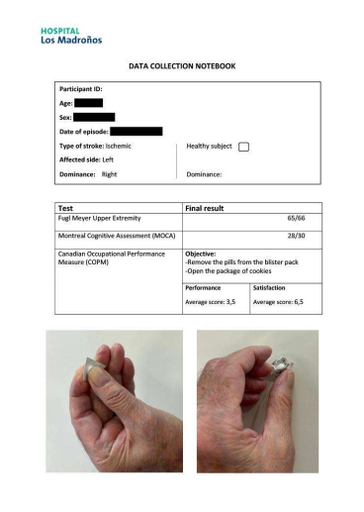
Figure 1 : Example of the Data Collection Notebook used by Group D during the workshop. The notebook, created together with the LE expert, includes their demographics and scores on several clinical tests. The performance and satisfaction scores for the Canadian Occupational Performance Measure are rated on a 10-point scale, with the LE expert illustrating one of the objectives. The Spanish version of the notebook was employed. Potentially identifiable information has been redacted.
원문 · CC BY 4.0 · Irene L. Y. Beck, Salvatore L. Cucinella, Johannes B. J. Bussmann, Natacha Léon, José López-Sánchez, Francesca Lunardini, Katherine L. Poggensee, Cristina Vázquez-González, Joost de Winter, Laura Marchal-Crespo · Co-Creating Neurorehabilitation Technology Alongside Lived Experience Experts: A Participatory Design Workshop · 원문 그림 인용 · 원본 PDF 7쪽에서 그림 영역을 추출했습니다.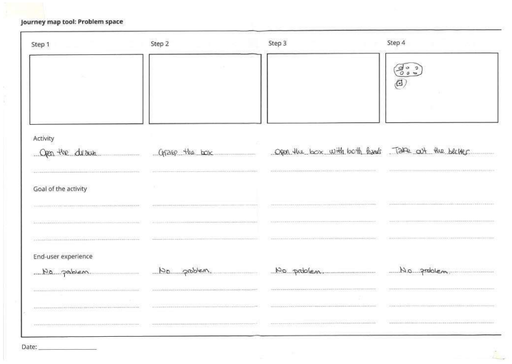
Figure 2 : Part of the Journey Map: Problem space tool filled by Group D. The tool was used by participants to break down an LE expert-defined goal (e.g., removing pills from a blister pack) into sequential steps by completing the Step, Activity, and Goal of the Activity sections (Exercise 1). The End-user Experience section was completed once the LE expert joined the group (Exercise 2).
원문 · CC BY 4.0 · Irene L. Y. Beck, Salvatore L. Cucinella, Johannes B. J. Bussmann, Natacha Léon, José López-Sánchez, Francesca Lunardini, Katherine L. Poggensee, Cristina Vázquez-González, Joost de Winter, Laura Marchal-Crespo · Co-Creating Neurorehabilitation Technology Alongside Lived Experience Experts: A Participatory Design Workshop · 원문 그림 인용 · 원본 PDF 8쪽에서 그림 영역을 추출했습니다.녹취 전사와 LLM 기반 추출
워크숍 녹음은 Whisper large-v3로 로컬에서 전사되었고, 전사문은 익명화 후 DeepL로 스페인어에서 영어로 번역되었습니다. 이후 Microsoft 365 Copilot에서 GPT-5.5 Think Deeper 모드를 사용해 최종 해결책, 최대 10개의 주요 고려사항, LE 전문가가 제기한 고려사항을 추출했습니다. 각 항목에는 원문 발화를 그대로 인용하도록 요구했고, 모든 인용은 녹취록과 대조해 확인했습니다. 두 저자는 Group A와 Group C의 녹취록에 같은 프롬프트를 적용한 인간 추출 결과와 LLM 추출 결과를 비교했으며, 그 결과 많은 고려사항이 겹쳤지만 강조점은 달랐다고 보고합니다.
이 비교는 두 그룹에 대해서만 이루어졌고, 나머지 세 그룹에는 LLM 보조 접근이 사용되었습니다.
Journey Map 주제 분석
Journey Map은 Analysis on a Wall 방식과 여섯 단계 주제 분석의 적응판으로 분석되었습니다. 네 명의 연구자는 각 Journey Map 옆에 Post-it으로 초기 코드를 만들고, 합의 과정을 거쳐 각 지도별 최종 주제를 정했습니다. 이후 모든 지도의 주제를 비교해 전체 주제를 정의했습니다. 분석은 LE 전문가 참여가 설계 과정에 미친 영향에 초점을 맞췄습니다. 이 분석은 Journey Map 자료에서 나온 주제 분석이며, 녹취 기반 LLM 추출과는 별도의 자료입니다.
LE 전문가 입력이 바꾼 설계 논의
그룹별 분석에서 LE 전문가의 입력은 참석자들의 학문 기반 가정에서 벗어나, 두려움, 자신감, 감각적 불편, 피로, 미적 요소, 독립성 같은 생활 경험에 근거한 우선순위로 논의를 옮겼습니다. 목표가 좁게 정해진 그룹은 과제에 특화된 해결책을 만들었습니다. 예를 들어 Group D는 알약 포장 개봉 과제에서 손끝 집기를 전체 손 압박으로 바꾸는 집게형 장치를 제안했습니다. Group E는 손톱 깎기 과제에서 탁상형 한 손 손톱깎이를 설계했습니다. 반면 Group A와 C처럼 넓은 목표는 자전거 타기의 감각 피드백 시스템, 요리를 위한 자극 장착 손목 부목 같은 개념 장치로 이어졌습니다. Group B는 넓은 샤워 목표에서도 샤워 보조 장치라는 구체적 제품을 만들었습니다.
이 결과는 네 그룹의 설계 방향을 보여 주는 관찰이며, 모든 목표에서 같은 결과가 나온다는 뜻은 아닙니다.
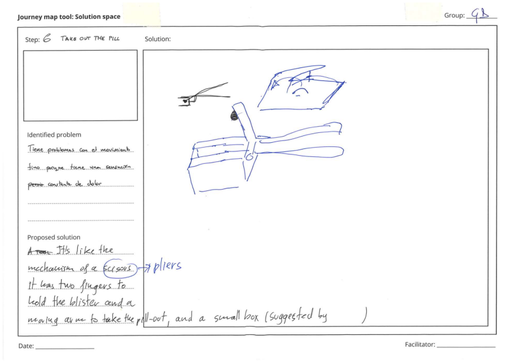
Figure 3 : Example of a completed Journey Map: Solution space tool, from Group D. Groups documented the co-defined problem with the LE expert, and outlined the proposed solution together with a sketch of the co-created idea. Potentially identifiable information has been redacted.
원문 · CC BY 4.0 · Irene L. Y. Beck, Salvatore L. Cucinella, Johannes B. J. Bussmann, Natacha Léon, José López-Sánchez, Francesca Lunardini, Katherine L. Poggensee, Cristina Vázquez-González, Joost de Winter, Laura Marchal-Crespo · Co-Creating Neurorehabilitation Technology Alongside Lived Experience Experts: A Participatory Design Workshop · 원문 그림 인용 · 원본 PDF 10쪽에서 그림 영역을 추출했습니다.설문으로 본 참석자와 LE 전문가의 평가
참석자들은 사전 설문에서 이미 LE 전문가와의 협업이 설계를 개선한다고 높게 평가했습니다. 워크숍 후에는 공동 창작 방법에 대한 자신감이 3.1에서 4.1로 가장 크게 올랐습니다. 사후 설문에서 참석자는 워크숍을 1에서 10점 척도로 평가했고, 평균은 9.1 (SD = 1.2)이었습니다. 이 점수들은 설문 항목의 척도와 응답자 집단에 따라 해석해야 하며, 설계 결과의 품질을 직접 측정한 값은 아닙니다. 또한 연구진 세 명과 공저자 한 명의 응답은 점수 계산에서 제외되었습니다.
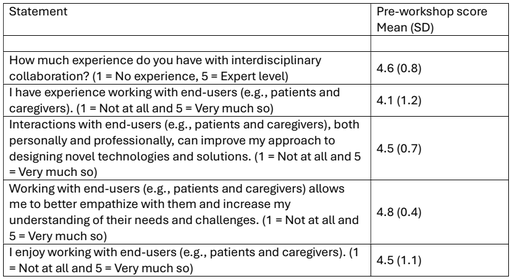
Table 1 . Workshop attendees’ responses to five pre-workshop items. a
원문 · CC BY 4.0 · Irene L. Y. Beck, Salvatore L. Cucinella, Johannes B. J. Bussmann, Natacha Léon, José López-Sánchez, Francesca Lunardini, Katherine L. Poggensee, Cristina Vázquez-González, Joost de Winter, Laura Marchal-Crespo · Co-Creating Neurorehabilitation Technology Alongside Lived Experience Experts: A Participatory Design Workshop · 원문 그림 인용 · 원본 PDF 15쪽에서 그림 영역을 추출했습니다.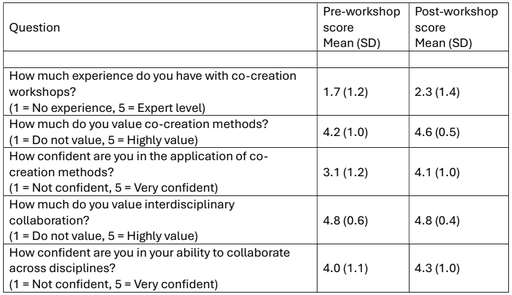
Table 2 . Workshop attendees’ responses to the five questions administered both pre- and
원문 · CC BY 4.0 · Irene L. Y. Beck, Salvatore L. Cucinella, Johannes B. J. Bussmann, Natacha Léon, José López-Sánchez, Francesca Lunardini, Katherine L. Poggensee, Cristina Vázquez-González, Joost de Winter, Laura Marchal-Crespo · Co-Creating Neurorehabilitation Technology Alongside Lived Experience Experts: A Participatory Design Workshop · 원문 그림 인용 · 원본 PDF 16쪽에서 그림 영역을 추출했습니다.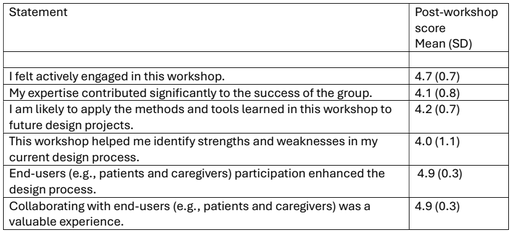
Table 3 . Workshop attendees’ agreement with statements post-workshop. 1 = Not at all, 5 =
원문 · CC BY 4.0 · Irene L. Y. Beck, Salvatore L. Cucinella, Johannes B. J. Bussmann, Natacha Léon, José López-Sánchez, Francesca Lunardini, Katherine L. Poggensee, Cristina Vázquez-González, Joost de Winter, Laura Marchal-Crespo · Co-Creating Neurorehabilitation Technology Alongside Lived Experience Experts: A Participatory Design Workshop · 원문 그림 인용 · 원본 PDF 16쪽에서 그림 영역을 추출했습니다.선택 편향, 시간 제약, 해석의 한계
저자들은 워크숍이 학회에서 열렸고 참석이 자발적이었기 때문에, 이미 공동 창작과 LE 협업을 가치 있게 여기는 사람들이 선택되었을 가능성을 제한점으로 듭니다. 워크숍은 두 시간 동안 세 단계를 진행해야 했으므로, 각 단계에 충분한 시간을 주지 못했다고 보고합니다. 참석자 중 시간 압박을 가장 큰 불만으로 꼽은 사람이 많았습니다. 또한 연구진이 사전에 설명한 원칙과 행동 강령이 긍정적인 응답을 유도했을 수 있고, LE 전문가와 보호자 사이의 권력 차이가 그룹 논의에 영향을 주었을 수 있습니다. 이 결과들은 저자들이 제시한 해석이며, 설계 결과의 장기적 효과를 확인한 것은 아닙니다. LLM 추출은 두 그룹에서만 인간 분석과 비교되었다는 점도 해석 범위를 제한합니다.
논문 정보
- 저자
- Irene L. Y. Beck, Salvatore L. Cucinella, Johannes B. J. Bussmann, Natacha Léon, José López-Sánchez, Francesca Lunardini, Katherine L. Poggensee, Cristina Vázquez-González, Joost de Winter, Laura Marchal-Crespo
- 학회·저널
- arXiv · 프리프린트
- 최초 공개일
- 2026년 11월 9일
- 등록일
- 2026년 11월 10일
- 수정일
- 2026년 11월 9일
- 버전
- v1
- arXiv
- 2611.12202
- 분류
- cs.HC · cs.RO
- 원문 이용 조건
- CC BY 4.0
- 제공 범위
- 논문 정보, 해설, 허용된 원문 그림
AI 해설은 논문 원문과 별개의 설명이며 오류가 있을 수 있습니다. 원문과 그림은 각 출처의 이용 조건과 따로 표시된 권리를 따릅니다.
초록
Involving patients' lived experience (LE) early in neurorehabilitation technology design can improve the relevance and effectiveness of solutions, yet LE experts are often involved only when finished prototypes are tested. We present and evaluate a participatory design (PD) workshop for early LE involvement, examine how LE contributions influence design processes and outcomes, and provide recommendations for similar approaches. We conducted a PD workshop at the 6th International Conference on NeuroRehabilitation. Five people who have had a stroke (LE experts) and 18 workshop attendees (including the LE experts' caregivers) were organized into five groups. Following the Discover, Define, and Develop phases of the Double Diamond model, each group used Journey Maps and Data Collection Notebooks to co-create a solution for an objective specified by an LE expert. Journey Maps were thematically analyzed, and group audio transcripts underwent structured extraction using a large language model. LE input shifted discussions from discipline-based assumptions toward priorities grounded in lived experience, including fear, confidence, sensory discomfort, fatigue, aesthetics, and independence. Narrow objectives, such as opening a blister pack, produced task-specific solutions, whereas broader objectives generated device concepts, including sensory feedback for cycling and a stimulation-equipped cooking splint. Satisfaction was high among attendees and LE experts. All workshop tools and protocols are shared to support adoption. The workshop offers a practical foundation for involving LE experts early in neurorehabilitation technology development. Future iterations should better capture psychological and social dimensions, allow more reflection, and include the full range of relevant stakeholders through sustained transdisciplinary engagement between researchers and the LE community.
원문 인용
Irene L. Y. Beck, Salvatore L. Cucinella, Johannes B. J. Bussmann, Natacha Léon, José López-Sánchez, Francesca Lunardini, Katherine L. Poggensee, Cristina Vázquez-González, Joost de Winter, Laura Marchal-Crespo (2026). Co-Creating Neurorehabilitation Technology Alongside Lived Experience Experts: A Participatory Design Workshop. arXiv:2611.12202v1. https://arxiv.org/abs/2611.12202v1
BibTeX
@misc{beck2026creating,
  title = {{Co-Creating Neurorehabilitation Technology Alongside Lived Experience Experts: A Participatory Design Workshop}},
  author = {Irene L. Y. Beck and Salvatore L. Cucinella and Johannes B. J. Bussmann and Natacha Léon and José López-Sánchez and Francesca Lunardini and Katherine L. Poggensee and Cristina Vázquez-González and Joost de Winter and Laura Marchal-Crespo},
  year = {2026},
  eprint = {2611.12202},
  archivePrefix = {arXiv},
  url = {https://arxiv.org/abs/2611.12202v1}
}