논문 해설
LABEL: Literature Asymmetry between Efficacy and Limits in Drug Knowledge and Language Models
LABEL: 약물 지식·언어 모델에서 효능과 한계 사이의 문헌 비대칭성
- 연구 문제 산문 코퍼스가 약물의 금기를 적응증보다 덜 명명하는지 같은 약물 안에서 검증하는 것이 필요합니다.
- 연구 방법 PrimeKG의 같은 약물 적응증과 금기를 텍스트 명명 기준으로 세고 Mantel-Haenszel 오즈비로 비교합니다.
- 주요 결과 Wikipedia에서 적응증 명명 대 금기 명명의 교차비는 2.43이었고, FDA 라벨 전체에서는 1.05였습니다.
연구 질문과 문제 설정
이 논문은 약물의 적응증(benefit)과 금기(contraindication)가 일반 텍스트 문서에 얼마나 고르게 기록되는지를 묻습니다. 약물 안전 정보는 환자 안전에 중요하지만, 위키백과나 PubMed 초록 같은 산문에서 금기가 적응증보다 덜 명명되는지 측정하려면 약물의 인기 차이를 통제해야 합니다. 저자들은 같은 약물 안에서 두 관계를 비교하는 방식으로 이 교란을 제거했습니다. 이어서 언어 모델이 같은 사실을 기억으로 답하는지, 검색된 구절이 있을 때 얼마나 개선되는지를 함께 봅니다.
명명 판정과 within-drug 오즈비
사실은 PrimeKG의 약물-질병 간선에서 가져오며, 각 약물마다 적응증 3개와 금기 3개를 무작위로 뽑아 균형 표본을 만듭니다. 상위 질병 명칭인 패밀리 수준(수준 2)은 명명으로 세지 않습니다. 무관한 질병을 같은 방식으로 맞춘 우연 일치 비율을 기준선으로 함께 계산합니다. 통계는 약물별 2×2 표를 Mantel-Haenszel 방식으로 합산한 오즈비입니다. 이 방식은 약물의 인기 차이가 적응증과 금기 비교에 섞이지 않도록 약물 내부의 대비만 사용합니다.
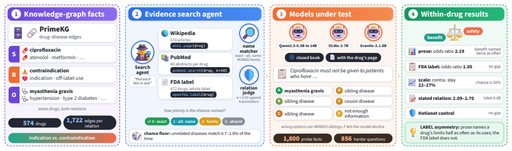
Figure 1 : Overview of our study pipeline. (1) We sample paired benefit facts (indications) and safety facts (contraindications) for the exact same drugs from the PrimeKG knowledge graph. (2) We retrieve text from Wikipedia, PubMed abstracts, and officialFDAdruglabels,andcheckbothwhetherthetextmentionsthetargetdiseaseandwhetherthesentencestatesthecorrect medical relationship. (3) We test language models on the same facts both closed book (from memory alone) and open book (with a retrieved passage). (4) Comparing benefit and safety facts within each drug reveals theLabelasymmetry.
원문 · CC BY 4.0 · S M Rayeed, Charles V. Stewart, Yao Ma · LABEL: Literature Asymmetry between Efficacy and Limits in Drug Knowledge and Language Models · 원문 그림 인용 · 원본 PDF 2쪽에서 그림 영역을 추출했습니다.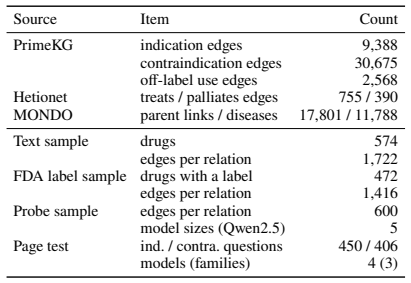
Table 1 : Data in this study. Anedgeis one drug-disease fact inaknowledgegraph.Thelowerblockgivesthesampleswe draw for each test.
원문 · CC BY 4.0 · S M Rayeed, Charles V. Stewart, Yao Ma · LABEL: Literature Asymmetry between Efficacy and Limits in Drug Knowledge and Language Models · 원문 그림 인용 · 원본 PDF 3쪽에서 그림 영역을 추출했습니다.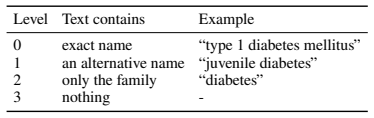
Table 2 : Levels at which a text can name a disease. Levels0 and1count asnamed.
원문 · CC BY 4.0 · S M Rayeed, Charles V. Stewart, Yao Ma · LABEL: Literature Asymmetry between Efficacy and Limits in Drug Knowledge and Language Models · 원문 그림 인용 · 원본 PDF 4쪽에서 그림 영역을 추출했습니다.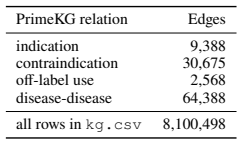
Table11 :PrimeKGrelationsweuse.Thecontraindicationto indication ratio is3.27.
원문 · CC BY 4.0 · S M Rayeed, Charles V. Stewart, Yao Ma · LABEL: Literature Asymmetry between Efficacy and Limits in Drug Knowledge and Language Models · 원문 그림 인용 · 원본 PDF 14쪽에서 그림 영역을 추출했습니다.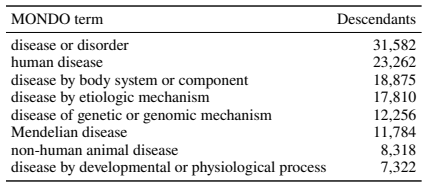
Table12 :ThebroadestMONDOterms,allremovedasfamily names by the cut at400descendants.
원문 · CC BY 4.0 · S M Rayeed, Charles V. Stewart, Yao Ma · LABEL: Literature Asymmetry between Efficacy and Limits in Drug Knowledge and Language Models · 원문 그림 인용 · 원본 PDF 14쪽에서 그림 영역을 추출했습니다.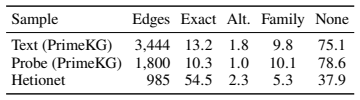
Table 13 : Naming level of every sampled edge in Wikipedia (%), both relations together.
원문 · CC BY 4.0 · S M Rayeed, Charles V. Stewart, Yao Ma · LABEL: Literature Asymmetry between Efficacy and Limits in Drug Knowledge and Language Models · 원문 그림 인용 · 원본 PDF 15쪽에서 그림 영역을 추출했습니다.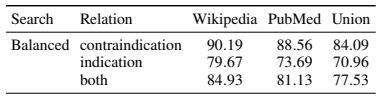
Table 14 : Share of facts (%) that a corpus does not name (level above1),1,722edges per relation.
원문 · CC BY 4.0 · S M Rayeed, Charles V. Stewart, Yao Ma · LABEL: Literature Asymmetry between Efficacy and Limits in Drug Knowledge and Language Models · 원문 그림 인용 · 원본 PDF 15쪽에서 그림 영역을 추출했습니다.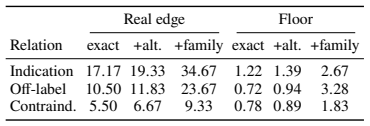
Table 15 : Cumulative match rate (%) in Wikipedia for real edges and for three unrelated diseases per edge,600edges per relation. Each column adds a set of names to the one before.
원문 · CC BY 4.0 · S M Rayeed, Charles V. Stewart, Yao Ma · LABEL: Literature Asymmetry between Efficacy and Limits in Drug Knowledge and Language Models · 원문 그림 인용 · 원본 PDF 16쪽에서 그림 영역을 추출했습니다.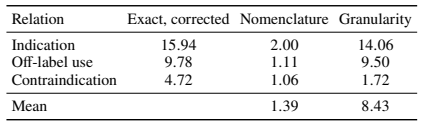
Table16 :Floor-correctednamingrate(%)attheexactlevel, and the floor-corrected gain (points) from alternative names and from family names up to two levels.
원문 · CC BY 4.0 · S M Rayeed, Charles V. Stewart, Yao Ma · LABEL: Literature Asymmetry between Efficacy and Limits in Drug Knowledge and Language Models · 원문 그림 인용 · 원본 PDF 16쪽에서 그림 영역을 추출했습니다.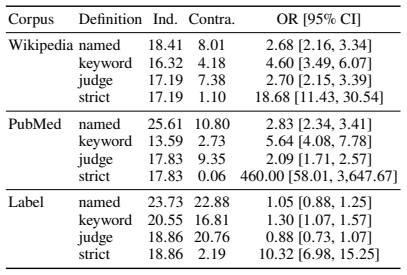
Table34 :Shareoffacts(%)countedasstatedundereachdef- inition,andthewithin-drugoddsratiowithRobins-Breslow- Greenland intervals.1,722edges per relation for Wikipedia and PubMed,1,416for the label.
원문 · CC BY 4.0 · S M Rayeed, Charles V. Stewart, Yao Ma · LABEL: Literature Asymmetry between Efficacy and Limits in Drug Knowledge and Language Models · 원문 그림 인용 · 원본 PDF 24쪽에서 그림 영역을 추출했습니다.산문 코퍼스의 명명 격차
PubMed 초록은 균형 검색을 써도 26.31%와 11.44%로 오즈비 2.77을 기록했습니다. 두 코퍼스를 합친 경우에도 29.04%와 15.91%, 오즈비 2.19였습니다. 금기 쪽 격차는 약물 내 사실 수가 적은 구간에서 더 크게 나타났습니다. 저자들은 이 차이가 측정 방식이 아니라 산문의 성격에서 온다고 해석합니다.
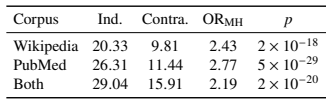
Table3 :Shareoffacts(%)thattextnames,within-drugodds ratio of indication against contraindication and its Cochran- Mantel-Haenszel (𝑝): 574 drugs, 1722 edges per relation.
원문 · CC BY 4.0 · S M Rayeed, Charles V. Stewart, Yao Ma · LABEL: Literature Asymmetry between Efficacy and Limits in Drug Knowledge and Language Models · 원문 그림 인용 · 원본 PDF 5쪽에서 그림 영역을 추출했습니다.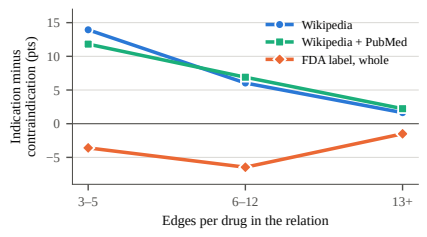
Figure 3 : Coverage gap (indication minus contraindication namingrate,inpoints)groupedbythedrug’snumberoffacts inthatrelation.Positivebarsmeanthetextfavorsindications. Prose favors indications in every group, whereas the FDA label does not.
원문 · CC BY 4.0 · S M Rayeed, Charles V. Stewart, Yao Ma · LABEL: Literature Asymmetry between Efficacy and Limits in Drug Knowledge and Language Models · 원문 그림 인용 · 원본 PDF 5쪽에서 그림 영역을 추출했습니다.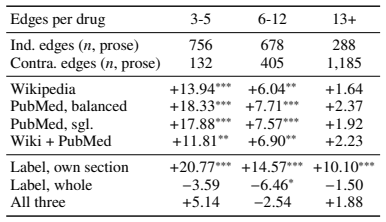
Table 20 : Indication minus contraindication naming rate (points) within strata of the drug’s edge count.∗𝑝 <0.05, ∗∗
원문 · CC BY 4.0 · S M Rayeed, Charles V. Stewart, Yao Ma · LABEL: Literature Asymmetry between Efficacy and Limits in Drug Knowledge and Language Models · 원문 그림 인용 · 원본 PDF 19쪽에서 그림 영역을 추출했습니다.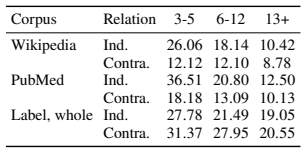
Table 21 : Naming rate (%) by relation within strata of the drug’s edge count.
원문 · CC BY 4.0 · S M Rayeed, Charles V. Stewart, Yao Ma · LABEL: Literature Asymmetry between Efficacy and Limits in Drug Knowledge and Language Models · 원문 그림 인용 · 원본 PDF 19쪽에서 그림 영역을 추출했습니다.닫힌 책 질문과 어려운 선택지
언어 모델 실험은 사실을 다섯 지선다 문항으로 바꿔 평가합니다. 정답 질병과 무작위 질병 네 개를 보기로 두고 각 선택지의 평균 토큰 로그확률이 가장 높은 보기를 고릅니다. 더 어려운 설정에서는 오답을 정답의 MONDO 형제 질병으로 채우고, 답하지 않는 선택지를 추가했습니다. 평가 모델은 Qwen2.5-0.5B, Qwen2.5-7B, OLMo-2-7B, Granite-3.1-8B입니다.
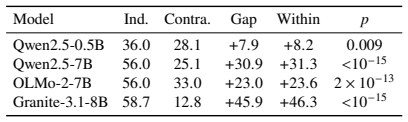
Table6 :Closed-bookaccuracy(%)withwrongoptionsfrom the answer’s MONDO neighborhood and aNot enough in- formationoption;450indication and406contraindication questions.Withinisthegapcomputedwithingroupsofques- tions whose page names the answer, its family or nothing. The𝑝-value tests this within-group gap.
원문 · CC BY 4.0 · S M Rayeed, Charles V. Stewart, Yao Ma · LABEL: Literature Asymmetry between Efficacy and Limits in Drug Knowledge and Language Models · 원문 그림 인용 · 원본 PDF 7쪽에서 그림 영역을 추출했습니다.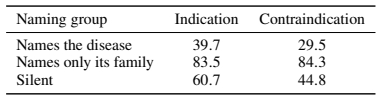
Table 28 : Share of questions (%) whose four wrong options are all MONDO siblings of the answer.
원문 · CC BY 4.0 · S M Rayeed, Charles V. Stewart, Yao Ma · LABEL: Literature Asymmetry between Efficacy and Limits in Drug Knowledge and Language Models · 원문 그림 인용 · 원본 PDF 21쪽에서 그림 영역을 추출했습니다.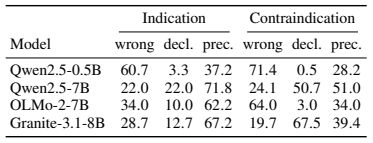
Table 30 : How models fail closed book with harder wrong options (%).Decl.is the share of questions answeredNot enough information;prec.is the accuracy on the questions the model answers.
원문 · CC BY 4.0 · S M Rayeed, Charles V. Stewart, Yao Ma · LABEL: Literature Asymmetry between Efficacy and Limits in Drug Knowledge and Language Models · 원문 그림 인용 · 원본 PDF 22쪽에서 그림 영역을 추출했습니다.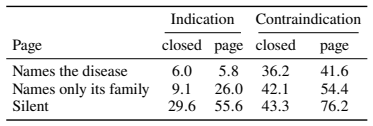
Table 33 : Share of questions answeredNot enough informa- tion(%), closed book and with the drug’s page, averaged over Qwen2.5-7B, OLMo-2-7B and Granite-3.1-8B.
원문 · CC BY 4.0 · S M Rayeed, Charles V. Stewart, Yao Ma · LABEL: Literature Asymmetry between Efficacy and Limits in Drug Knowledge and Language Models · 원문 그림 인용 · 원본 PDF 23쪽에서 그림 영역을 추출했습니다.모델 크기와 금기 정확도
어려운 선택지에서 Granite-3.1-8B의 적응증과 금기 차이는 45.9점, OLMo-2-7B는 23.0점이었습니다. 페이지 실험에서는 질병명을 직접 포함한 구절이 금기 질문 정확도를 14.2점, 적응증 질문 정확도를 11.1점 올렸습니다. 같은 실험에서 침묵하는 구절은 정확도를 낮췄고, 패밀리 명칭만 있는 구절은 적응증 정확도를 8.2점 낮췄습니다.
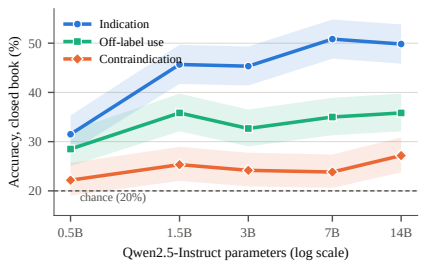
Figure 5 : Closed-book five-choice accuracy (%) across five Qwen2.5 sizes (0.5B to14B) on600facts per relation. Shadedbandsshow95%intervals,andthedashedlinemarks the20%chancerate.Scaleimprovesaccuracyonindications but leaves contraindications near chance.
원문 · CC BY 4.0 · S M Rayeed, Charles V. Stewart, Yao Ma · LABEL: Literature Asymmetry between Efficacy and Limits in Drug Knowledge and Language Models · 원문 그림 인용 · 원본 PDF 7쪽에서 그림 영역을 추출했습니다.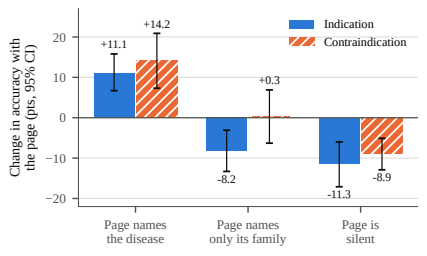
Figure7 :Changeinaccuracy(points)whenaretrievedprose passage is added to the prompt, averaged over Qwen2.5-7B, OLMo-2-7B and Granite-3.1-8B, grouped by whether the passage names the disease, names only its MONDO family, orissilent.Whenthepassagenamesthedisease,modelsgain as much on safety limits (+14.2) as on benefits (+11.1).
원문 · CC BY 4.0 · S M Rayeed, Charles V. Stewart, Yao Ma · LABEL: Literature Asymmetry between Efficacy and Limits in Drug Knowledge and Language Models · 원문 그림 인용 · 원본 PDF 8쪽에서 그림 영역을 추출했습니다.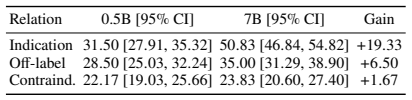
Table 26 : Probe accuracy (%) of Qwen2.5-0.5B and Qwen2.5-7B, and the paired gain between them (points), on600edges per relation. Indication gain minus contraindi- cation gain:+17.67[12.68,22.70],𝑝=4.8×10 −12.
원문 · CC BY 4.0 · S M Rayeed, Charles V. Stewart, Yao Ma · LABEL: Literature Asymmetry between Efficacy and Limits in Drug Knowledge and Language Models · 원문 그림 인용 · 원본 PDF 20쪽에서 그림 영역을 추출했습니다.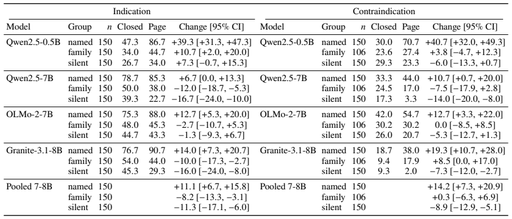
Table 31 : Accuracy (%) closed book and with the drug’s page, and the change (points) with a95% bootstrap interval over questions, by what the page says about the answer. The pooled rows average each question over Qwen2.5-7B, OLMo-2-7B and Granite-3.1-8B first. In the named group, the indication change minus the contraindication change is−3.1[−11.6,+5.1] points pooled, so a written safety fact helps at least as much as a written benefit fact.
원문 · CC BY 4.0 · S M Rayeed, Charles V. Stewart, Yao Ma · LABEL: Literature Asymmetry between Efficacy and Limits in Drug Knowledge and Language Models · 원문 그림 인용 · 원본 PDF 23쪽에서 그림 영역을 추출했습니다.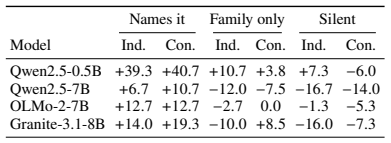
Table 32 : Change in accuracy (points) from closed book to thedrug’spage,bywhatthepagesaysabouttheanswer.Each cell has150questions, except106family-only contraindica- tion questions.
원문 · CC BY 4.0 · S M Rayeed, Charles V. Stewart, Yao Ma · LABEL: Literature Asymmetry between Efficacy and Limits in Drug Knowledge and Language Models · 원문 그림 인용 · 원본 PDF 23쪽에서 그림 영역을 추출했습니다.한계
주 지표는 텍스트에 질병명이 나타나는지를 측정하므로, pre-training 데이터에 사실이 얼마나 노출되었는지를 직접 추적하지 않습니다. 저자들은 PrimeKG의 세분화된 하위 질병이 텍스트의 상위 질병명과 다를 수 있다고 봅니다. PubMed 분석은 초록만 사용했으므로 전체 문헌의 하한에 해당합니다. 객관식 평가는 정답 질병을 알아보는 능력을 측정하며, 자유 형식 회상 능력과 같지는 않습니다.
논문 정보
- 저자
- S M Rayeed, Charles V. Stewart, Yao Ma
- 학회·저널
- arXiv · 프리프린트
- 최초 공개일
- 2026년 11월 14일
- 등록일
- 2026년 11월 17일
- 수정일
- 2026년 11월 14일
- 버전
- v1
- arXiv
- 2611.19166
- 분류
- cs.AI · cs.IR
- 원문 이용 조건
- CC BY 4.0
- 제공 범위
- 논문 정보, 해설, 허용된 원문 그림
AI 해설은 논문 원문과 별개의 설명이며 오류가 있을 수 있습니다. 원문과 그림은 각 출처의 이용 조건과 따로 표시된 권리를 따릅니다.
초록
Every medication comes with two types of medical facts: indications, which describe what conditions the drug treats (benefits), and contraindications, which describe who must avoid it to prevent serious harm (safety limits). Although contraindications are critical for patient safety and FDA regulations require listing them as rigorously as indications, we find that contraindications are far less documented than indications in general prose. In this paper, we measure how often these texts contain both facts across 574 drugs from PrimeKG by comparing a drug's indications against its own contraindications. Across Wikipedia articles and PubMed abstracts, we find that reference prose names a drug's benefits about twice as often as its safety limits (within-drug odds ratio 2.19). We call this documentation gap LABEL (Literature Asymmetry between Efficacy and Limits). Language models mirror this gap. As we scale Qwen2.5 from 0.5B to 14B, accuracy on indications rises by 18.3 points, whereas accuracy on contraindications remains flat near random guessing. However, when we provide models with a retrieved passage that states the answer, they use safety facts just as effectively as benefits. Furthermore, routing safety questions to official FDA labels boosts accuracy by 15.8 points whenever the label states the fact. Overall, our findings show that models fail on medication safety not because they cannot reason about risk, but because free-text corpora lack safety facts. Clinical AI systems should therefore route medication-safety questions to official regulatory labels and structured databases rather than relying on general public records. Code and data are available at https://github.com/SMRayeed/LABEL.
원문 인용
S M Rayeed, Charles V. Stewart, Yao Ma (2026). LABEL: Literature Asymmetry between Efficacy and Limits in Drug Knowledge and Language Models. arXiv:2611.19166v1. https://arxiv.org/abs/2611.19166v1
BibTeX
@misc{rayeed2026label,
  title = {{LABEL: Literature Asymmetry between Efficacy and Limits in Drug Knowledge and Language Models}},
  author = {S M Rayeed and Charles V. Stewart and Yao Ma},
  year = {2026},
  eprint = {2611.19166},
  archivePrefix = {arXiv},
  url = {https://arxiv.org/abs/2611.19166v1}
}