논문 해설
qRobot: A Quantum computing approach in mobile robot order picking and batching problem solver optimization
qRobot: 모바일 로봇 주문 피킹 및 배칭 문제 해결기 최적화를 위한 양자 컴퓨팅 접근법
- 연구 문제 창고 주문 피킹·배칭에서 로봇의 총 이동 거리를 양자 최적화로 줄일 수 있는지 검증합니다.
- 연구 방법 로봇 이동 거리의 목적 함수를 QUBO와 Ising 해밀토니언으로 바꾸고 VQE로 최소화합니다.
- 주요 결과 작은 규모의 시뮬레이터 실험에서 큐빗 수가 20보다 작은 경우 여러 시뮬레이터의 동작이 D-Wave와 같게 나타났다고 보고합니다.
창고 피킹·배칭의 거리 문제
이 논문은 창고와 물류센터에서 주문 상품을 수거하는 피킹 작업의 이동 거리를 줄이는 문제를 다룹니다. 저자들은 피킹과 배칭이 주문 준비에서 가장 빈번하고 비용이 큰 작업이라고 설명하며, 주문을 묶어 한 번의 창고 순회로 수거하는 배칭이 경로 결정과 함께 얽힌다고 보고합니다. 주문 수가 두 개를 넘으면 문제는 NP-hard로 설명되고, 변수 수가 주문 수에 따라 지수적으로 늘어나므로 규모가 커질수록 기존 고전 휴리스틱의 계산 비용이 커진다고 제시됩니다.
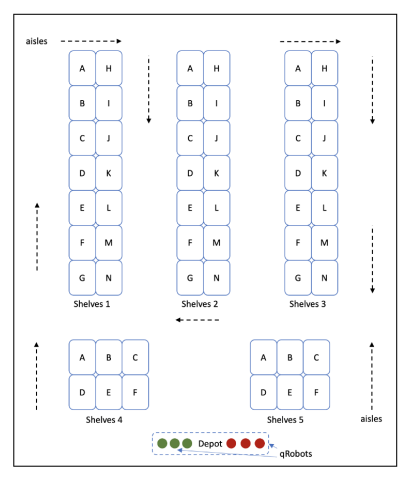
FIG. 9 . Structure of our warehouse with pick locations. The warehouse has a rectangular layout with no unused space. We use all the parallel corridors. This proof of concept contem- plates a single warehouse used to take the order and deliver it, and it is also divided into blocks, which contain slots for storing products, and transverse aisles separate them. The cross aisles do not have any products but allow the collector to navigate in the warehouse. We base our picking strategy on minimizing the route and optimizing batch preparation. We do not contemplate shelving of different levels.
원문 · CC BY 4.0 · Parfait Atchade-Adelomou, Guillermo Alonso-Linaje, Jordi Albo-Canals, Daniel Casado-Fauli · qRobot: A Quantum computing approach in mobile robot order picking and batching problem solver optimization · 원문 그림 인용 · 원본 PDF 7쪽에서 그림 영역을 추출했습니다.이 문제를 양자 계산으로 다루는 이유는 조합 최적화 문제를 이진 변수의 이차 형식으로 바꾸어 양자 어닐링이나 변분 알고리즘에 올릴 수 있기 때문입니다. 다만 이 논문이 확인하는 범위는 창고 한 곳의 소규모 정식화와 실행 시간 측정이며, 대규모 문제에서의 우위를 입증하는 것은 아닙니다.
목적 함수와 QUBO·Ising 변환
방법의 출발점은 상품 노드 0부터 n까지의 위치, 상품별 무게 W_i, 로봇 최대 적재량 M, 사용 가능한 로봇 수 K, 노드 간 거리 d_ij를 입력으로 받는 정식화입니다. 이 정식화는 시간 t와 노드 i, 로봇 p에 대한 이진 변수 x_{t,i,p}로 로봇의 위치를 나타내며, 식 (2)의 목적 함수는 모든 로봇의 이동 거리 합을 최소화합니다. 제약으로는 모든 로봇이 창고 입구(Depot)에서 출발하고 돌아오는 조건, 로봇별 적재량 상한, 각 시점에 로봇이 한 노드에만 있는 조건, 전체 경로에서 노드를 한 번씩만 지나는 조건이 포함됩니다.
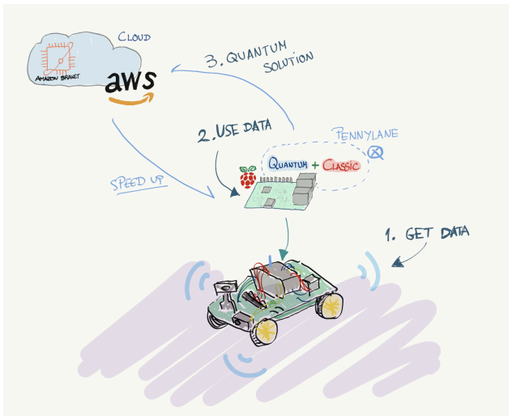
FIG. 4 . We propose a robot that prepares batches and increases the efficiency of picking in a warehouse, taking advantage of the classic Machine Learning experience and leveraging hybrid computing (classical + quantum) in the cloud and distributed. This robot uses the Optimal routing strategy to calculate the shortest route, regardless of the layout or location of the items.
원문 · CC BY 4.0 · Parfait Atchade-Adelomou, Guillermo Alonso-Linaje, Jordi Albo-Canals, Daniel Casado-Fauli · qRobot: A Quantum computing approach in mobile robot order picking and batching problem solver optimization · 원문 그림 인용 · 원본 PDF 5쪽에서 그림 영역을 추출했습니다.이 목적 함수는 QUBO 형식의 ⟨x^T|Q|x⟩로 다시 쓰이고, 이후 z_i = 2x_i − 1 변환으로 Ising 해밀토니언의 J_ij와 h_i 계수에 대응됩니다. 이렇게 얻은 해밀토니언에 대해 VQE를 실행하여 기댓값 ⟨ψ(θ)|H|ψ(θ)⟩을 고전적으로 최소화하는 것이 논문의 실행 방식입니다. 큐빗 수는 K(n+1)(n+2)+K⌈log2 M⌉로 주어지며, 논문은 이 식을 큐빗 규모의 기준으로 사용합니다.
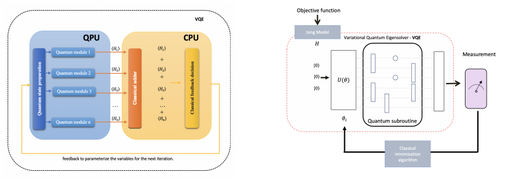
FIG. 6 . VQE working principle based on the quantum varia- tional circuit.
원문 · CC BY 4.0 · Parfait Atchade-Adelomou, Guillermo Alonso-Linaje, Jordi Albo-Canals, Daniel Casado-Fauli · qRobot: A Quantum computing approach in mobile robot order picking and batching problem solver optimization · 원문 그림 인용 · 원본 PDF 5쪽에서 그림 영역을 추출했습니다.시뮬레이터별 실행 시간 비교
검증은 qRobot 수와 적재 용량을 각각 1과 45로 고정한 조건에서 여러 공개 시뮬레이터와 양자 장치의 실행 시간을 비교하는 방식으로 이루어졌습니다. 표 I에서 D-Wave, IBMQ qasm simulator, Pennylane을 비교하며, 상품 수가 늘어나 큐빗 수가 커질수록 D-Wave의 시간 증가 방식이 목적에 맞는 것으로 저자들은 해석합니다. 반면 큐빗 수가 20보다 작은 실험에서는 이들 시뮬레이터의 동작이 D-Wave와 같아졌다고 보고됩니다.
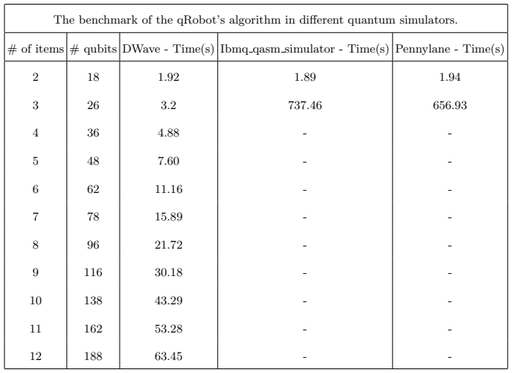
원문 그림 TABLE I. In this experimentation, both the number of qRobots and their capacities (maximum load) are fixed and are worth 1 and 45 respectively. We compare the execution time of our algorithm in the different public access simulators in the market, solving the picking and batching problem. We see that for issues of this nature, and especially for the number of qubits required in each scenario, the behaviour of the D-Wave is the desired one at the temporal level, comparing it with technologies based on quantum gates. However, it should be noted that for the experiments on numbers of qubits less than 20, the behaviour of these simulators is equated with the D-Wave. This experimentation helps to have a clear vision about the feasibility of this proof of concept.
원문 · CC BY 4.0 · Parfait Atchade-Adelomou, Guillermo Alonso-Linaje, Jordi Albo-Canals, Daniel Casado-Fauli · qRobot: A Quantum computing approach in mobile robot order picking and batching problem solver optimization · 원문 그림 인용 · 원본 PDF 9쪽에서 그림 영역을 추출했습니다.표 II와 III은 AWS Braket과 D-Wave Advantage system1을 대상으로 한 실행 시간을 다룹니다. 표 II의 시간은 지연 시간과 작업 생성·반환을 포함한 평균이며, 표 III은 실제 양자 컴퓨터에서 지연 시간, 작업 생성, 반환을 제외한 시간만 보고합니다. 원격 양자 컴퓨터는 Oregon에 있었고 로봇은 Barcelona에 있었으며, 평균 지연은 약 2초, 작업 관리까지 포함하면 약 8초였습니다. 큐빗 수가 30을 넘는 경우 AWS Braket이 Qiskit이나 Pennylane보다 실행 시간과 큐빗 측면에서 낫다고 보고되었지만, 이 비교는 해당 조건의 측정 결과입니다.
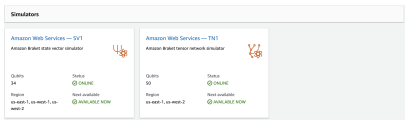
FIG. 3 . Quantum Simulators systems where we can see it state vector simulator (34 qubits) and tensor network simu- lator (50 qubits).
원문 · CC BY 4.0 · Parfait Atchade-Adelomou, Guillermo Alonso-Linaje, Jordi Albo-Canals, Daniel Casado-Fauli · qRobot: A Quantum computing approach in mobile robot order picking and batching problem solver optimization · 원문 그림 인용 · 원본 PDF 4쪽에서 그림 영역을 추출했습니다.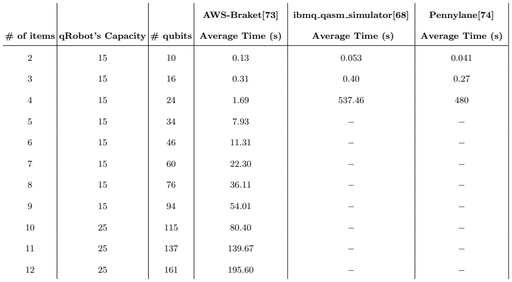
원문 그림 TABLE III. In this table, we only consider the running time of the quantum algorithm on the real quantum computer from the qRobot (Advantage system1.1[72]), not counting latency time, job creation, and job return time.
원문 · CC BY 4.0 · Parfait Atchade-Adelomou, Guillermo Alonso-Linaje, Jordi Albo-Canals, Daniel Casado-Fauli · qRobot: A Quantum computing approach in mobile robot order picking and batching problem solver optimization · 원문 그림 인용 · 원본 PDF 13쪽에서 그림 영역을 추출했습니다.규모 확장과 분산 계산의 한계
저자들은 상품 수와 로봇 수가 크게 늘면 필요한 큐빗 수가 지나치게 커질 수 있다고 밝힙니다. 이를 줄이기 위해 중앙 컴퓨터가 계산을 나누어 각 로봇이 K=1로 자신의 경로를 계산하는 방식이 논의되지만, 저자들은 최적해에 도달하지 못할 수 있으며 배치 생성을 미리 해야 한다고 덧붙입니다. 또한 이 논문은 QUBO 형식이 어닐링형 양자 컴퓨터에 적합하다고 설명하면서, 게이트형 장치에서는 같은 규모를 다루기 어렵다는 점을 함께 제시합니다.
목적 함수는 이동 거리의 최소화에 집중되어 있으며, 작업 시간 최소화는 향후 연구로 남겨 두었습니다. 여기서 확인한 결과는 한 창고 설정과 제한된 상품 수의 실험에서 얻은 것이므로, 실제 대규모 창고 운영 조건으로 바로 일반화할 수 없습니다.
논문 정보
- 저자
- Parfait Atchade-Adelomou, Guillermo Alonso-Linaje, Jordi Albo-Canals, Daniel Casado-Fauli
- 학회·저널
- arXiv · 프리프린트
- 최초 공개일
- 2021년 5월 11일
- 등록일
- 2026년 11월 6일
- 수정일
- 2021년 5월 11일
- 버전
- v1
- arXiv
- 2105.04865
- 분류
- quant-ph
- 원문 이용 조건
- CC BY 4.0
- 제공 범위
- 논문 정보, 해설, 허용된 원문 그림
AI 해설은 논문 원문과 별개의 설명이며 오류가 있을 수 있습니다. 원문과 그림은 각 출처의 이용 조건과 따로 표시된 권리를 따릅니다.
초록
This article aims to bring quantum computing to robotics. A quantum algorithm is developed to minimize the distance travelled in warehouses and distribution centres where order picking is applied. For this, a proof of concept is proposed through a Raspberry Pi 4, generating a quantum combinatorial optimization algorithm that saves the distance travelled and the batch of orders to be made. In case of computational need, the robot will be able to parallelize part of the operations in hybrid computing (quantum + classical), accessing CPUs and QPUs distributed in a public or private cloud. Before this, we must develop a stable environment (ARM64) inside the robot (Raspberry) to run gradient operations and other quantum algorithms on IBMQ, Amazon Braket, D'wave and Pennylane locally or remotely. The proof of concept will run in such quantum environments above.
원문 인용
Parfait Atchade-Adelomou, Guillermo Alonso-Linaje, Jordi Albo-Canals, Daniel Casado-Fauli (2021). qRobot: A Quantum computing approach in mobile robot order picking and batching problem solver optimization. arXiv:2105.04865v1. https://arxiv.org/abs/2105.04865v1
BibTeX
@misc{atchadeadelomou2021qrobot,
  title = {{qRobot: A Quantum computing approach in mobile robot order picking and batching problem solver optimization}},
  author = {Parfait Atchade-Adelomou and Guillermo Alonso-Linaje and Jordi Albo-Canals and Daniel Casado-Fauli},
  year = {2021},
  eprint = {2105.04865},
  archivePrefix = {arXiv},
  url = {https://arxiv.org/abs/2105.04865v1}
}