논문 해설
Hyperspectral Sensors and Autonomous Driving: Technologies, Limitations, and Opportunities
하이퍼스펙트럴 센서와 자율주행: 기술, 한계, 그리고 기회
- 연구 문제 자동차 인지에서 RGB 카메라는 시각적으로 비슷한 물질을 구분하기 어렵고, 악천후에서 성능이 떨어집니다. 이 논문은 HSI의 기술 현황과 상용 카메라의 자동차 적합성을 검토합니다.
- 연구 방법 HSI의 센서와 획득 방식, 자동차용 데이터셋을 정리한 뒤 216개 상용 HSI 및 MSI 카메라를 프레임 속도, 공간 해상도, 분광 채널 수, AEC-Q100 온도 기준으로 평가합니다.
- 주요 결과 216개 카메라 중 네 대만 프레임 속도, 해상도, 채널 수 기준을 동시에 만족하며, AEC-Q100 Grade 3 온도 기준을 만족하는 카메라는 없습니다. HSI 카메라의 약 73%는 VIS와 NIR에 집중되어 있습니다.
자동차 인지에 하이퍼스펙트럴 이미징이 필요한 이유
자율주행과 ADAS의 인지 시스템은 주로 RGB 카메라, 라이다, 레이더에 의존합니다. 그런데 RGB 카메라는 시각적으로 비슷하지만 조성이 다른 물질을 구분하지 못합니다. 이 현상은 메타머리즘이라고 불리며, 안개, 비, 눈과 같은 악천후나 다양한 조명 조건에서 더 두드러집니다. HSI는 수백 개의 좁고 연속적인 분광 대역으로 전자기 강도를 측정하여 이 한계를 보완하는 감지 방식으로 소개됩니다. 반면 상용 HSI 시장은 연구 관심에 비해 자동차 적용이 제한적입니다. 이 논문은 이러한 간극을 줄이기 위해 HSI의 기초 원리, 자동차용 데이터셋과 연구 현황, 216개 상용 카메라의 자동차 적합성을 함께 검토합니다.
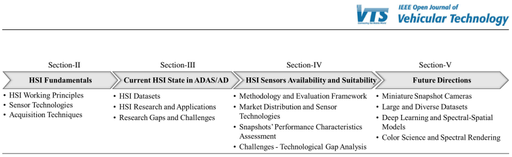
FIGURE 2 . Review paper structure: Outlining HSI fundamentals, current state, sensor considerations, and future research opportunities for ADAS/AD.
원문 · CC BY 4.0 · Imad Ali Shah, Jiarong Li, Roshan George, Tim Brophy, Enda Ward, Martin Glavin, Edward Jones, Brian Deegan · Hyperspectral Sensors and Autonomous Driving: Technologies, Limitations, and Opportunities · 원문 그림 인용 · 원본 PDF 3쪽에서 그림 영역을 추출했습니다.HSI의 기본 구조와 센서 선택
HSI의 출력은 두 공간 차원과 한 분광 차원으로 이루어진 하이퍼큐브입니다. 각 화소는 연속된 분광 신호를 가지므로 물질별 분광 특성을 화소 단위로 비교할 수 있습니다. MSI는 대개 약 3개에서 15개 정도의 분리된 대역을 사용하며, 대역 사이에 간격이 있을 수 있습니다. 따라서 두 방식의 차이는 대역 수뿐 아니라 대역의 연속성과 폭에도 있습니다.
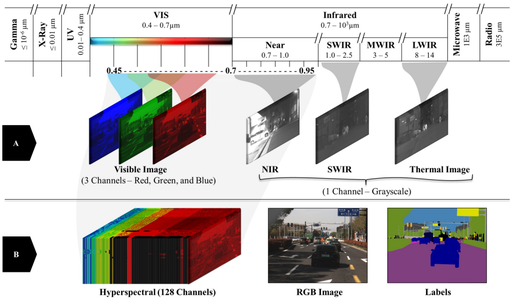
FIGURE 1 . Comparative Overview of Imaging Modalities Across the Electromagnetic Spectrum. (A) Depicts RGB imaging (three channels: red, green, blue) alongside grayscale representations of Near-Infrared (NIR), Short-Wave Infrared (SWIR), and Long-Wave Infrared (LWIR) bands from the Multispectral object detection dataset [4], spanning the 0.4–14µm range. Multispectral Imaging (MSI) typically involves combining multiple (around 4-15) broader spectral channels. (B) Illustrates Hyperspectral Imaging (HSI) with 128 narrow, contiguous spectral channels from the Hyperspectral City dataset (0.45–0.95µm) [5], shown with its corresponding RGB image and semantic labels. The figure provides a comparative overview of grayscale, RGB, MSI, and HSI modalities, emphasizing the enhanced spectral resolution of HSI. Note: Color mappings are for representation purposes only.
원문 · CC BY 4.0 · Imad Ali Shah, Jiarong Li, Roshan George, Tim Brophy, Enda Ward, Martin Glavin, Edward Jones, Brian Deegan · Hyperspectral Sensors and Autonomous Driving: Technologies, Limitations, and Opportunities · 원문 그림 인용 · 원본 PDF 2쪽에서 그림 영역을 추출했습니다.센서 선택은 분광 범위를 결정합니다. Si는 VNIR 영역에서 성숙한 기술로 널리 쓰이지만 약 1.1 µm 이상에서는 사용이 제한됩니다. InGaAs는 SWIR 영역을 담당하며 확장형 제품은 더 넓은 범위를 제공하지만 비용과 냉각 요구가 커집니다. MCT와 InSb는 MWIR 및 LWIR 영역에서 쓰이며 극저온 냉각이 필요한 경우가 많습니다. 리뷰된 카메라에서 Si와 InGaAs 센서가 상용 HSI 카메라의 87%를 차지한다고 보고됩니다.
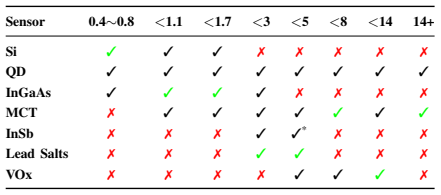
TABLE 1 . Suitability of Imaging Sensors: EM Spectrum (in µm)
원문 · CC BY 4.0 · Imad Ali Shah, Jiarong Li, Roshan George, Tim Brophy, Enda Ward, Martin Glavin, Edward Jones, Brian Deegan · Hyperspectral Sensors and Autonomous Driving: Technologies, Limitations, and Opportunities · 원문 그림 인용 · 원본 PDF 4쪽에서 그림 영역을 추출했습니다.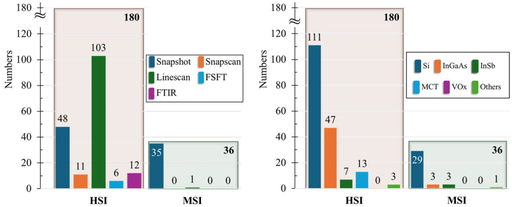
FIGURE 6 . Distribution of imaging categories (i.e., HSI and MSI) based on (left) acquisition mode and (right) sensor type: Illustrating the number of cameras for each acquisition mode (Snapshot, Snapscan, Linescan, FSFT, FTIR) and sensor types (Si, InGaAs, InSb, MCT, VOx), respectively.
원문 · CC BY 4.0 · Imad Ali Shah, Jiarong Li, Roshan George, Tim Brophy, Enda Ward, Martin Glavin, Edward Jones, Brian Deegan · Hyperspectral Sensors and Autonomous Driving: Technologies, Limitations, and Opportunities · 원문 그림 인용 · 원본 PDF 10쪽에서 그림 영역을 추출했습니다.획득 방식과 주행 장면에서의 trade-off
HSI 획득 방식은 공간 스캔, 분광 스캔, 스냅샷, 하이브리드 방식으로 나뉩니다. 공간 스캔 방식인 Whiskbroom은 한 번에 한 공간 지점의 전체 스펙트럼을 얻고, Pushbroom은 한 줄의 공간 전체 스펙트럼을 얻은 뒤 이동하여 장면을 구성합니다. 두 방식 모두 기계적 이동과 긴 취득 시간이 필요하므로 움직이는 차량과 보행자가 있는 주행 장면에서 왜곡이 생길 수 있습니다.
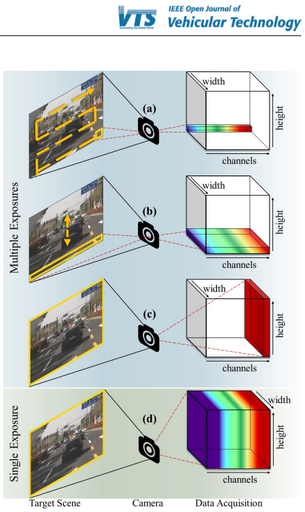
FIGURE 4 . Overview of HSI acquisition methods where yellow lines show the captured spatial location and Violets-to-Red gradient represents the spectral information captured by the respective method: (a) Point or Whiskbroom, (b) Line or Pushbroom, (c) Wavelength Scan using filter wheel or tunable filters, and (d) Snapshot or Global Shutter.
원문 · CC BY 4.0 · Imad Ali Shah, Jiarong Li, Roshan George, Tim Brophy, Enda Ward, Martin Glavin, Edward Jones, Brian Deegan · Hyperspectral Sensors and Autonomous Driving: Technologies, Limitations, and Opportunities · 원문 그림 인용 · 원본 PDF 5쪽에서 그림 영역을 추출했습니다.분광 스캔 방식은 장면 전체를 한 번에 보지만 분광 대역을 순차적으로 바꾸므로 빠르게 움직이는 물체에서 가장자리 흐림이 생깁니다. 스냅샷 방식은 한 번의 노출로 하이퍼큐브 전체를 얻으므로 주행 장면에 적합하다고 원문이 설명합니다. 다만 스냅샷 방식도 분광, 공간, 시간 해상도 사이의 trade-off를 가집니다. 예를 들어 Mosaic Filter Array는 필터 수가 늘수록 공간 해상도가 줄어듭니다.
자동차용 HSI 데이터셋의 범위와 한계
리뷰는 HyKo, HSI-Drive, H-City, HSI-Road를 주요 자동차용 HSI 데이터셋으로 검토합니다. HyKo는 VIS와 NIR로 나뉜 두 하위 데이터셋을 가지며, HSI-Drive는 사계절과 다양한 환경의 주행 장면을 25개 분광 대역으로 담습니다. H-City는 128개 채널과 세밀한 주석을 가진 도시 장면 데이터셋으로 설명됩니다. HSI-Road는 25개 채널로 도로 표면을 이진 분류하는 데이터셋입니다.
그러나 H-City의 1,330개 주석 장면은 Cityscapes처럼 수천 장면을 가진 RGB 데이터셋과 비교하면 규모가 작습니다. 원문은 이 규모 차이를 자동차 HSI 연구의 중요한 제약으로 짚습니다. 또한 데이터셋 사이에 공간 해상도와 분광 채널 수가 표준화되어 있지 않고, 분광 범위도 일관되지 않습니다.
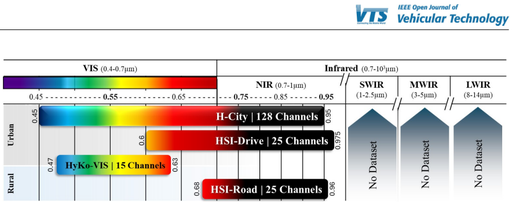
FIGURE 5 . Spectral coverage and channel distribution of available snapshot-based HSI datasets for urban and rural driving scenarios. The visualization highlights each dataset’s coverage in the VIS and NIR regions. Currently, no snapshot-based HSI datasets extend beyond VIS and NIR.
원문 · CC BY 4.0 · Imad Ali Shah, Jiarong Li, Roshan George, Tim Brophy, Enda Ward, Martin Glavin, Edward Jones, Brian Deegan · Hyperspectral Sensors and Autonomous Driving: Technologies, Limitations, and Opportunities · 원문 그림 인용 · 원본 PDF 7쪽에서 그림 영역을 추출했습니다.216개 상용 카메라의 자동차 적합성 검증
리뷰는 2024년 1월부터 2025년 6월 사이에 제조사 자료로 수집한 216개 상용 HSI 및 MSI 카메라를 MCS 기준으로 평가합니다. MCS는 AEC-Q100 Grade 3 온도 범위, 20 FPS 이상의 프레임 속도, 1 MP 이상의 공간 해상도, 30개 이상의 분광 채널을 포함합니다. 원문은 20 FPS 기준이 현재 HSI 기술의 한계를 고려한 보수적 추정치라고 설명합니다.
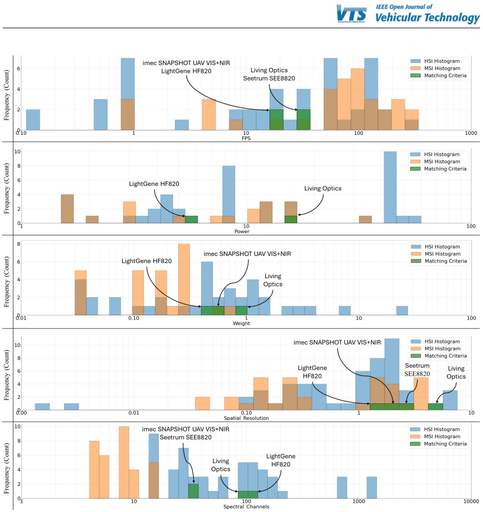
FIGURE 9 . Performance characterization of commercially available and reviewed HSI (Blue) and MSI (Orange) cameras, crucial for ADAS/AD system applications. The histograms display the distribution of Frames Per Second (FPS), Power Consumption (in Watts: W), Weight (in kilogram: kg), Spatial Resolution (in megapixel: MP), and Spectral Channels among the reviewed cameras. Overlaid as green bars are the cameras that satisfy the criteria of FPS ≥ 20, spatial resolution ≥ 1 MP, and spectral channel≥ 30. Out of 216 cameras, only four cameras (with their respective characteristics shown with arrows) meet these combined criteria, highlighting the limited availability and current landscape of high-performance, commercially viable solutions.
원문 · CC BY 4.0 · Imad Ali Shah, Jiarong Li, Roshan George, Tim Brophy, Enda Ward, Martin Glavin, Edward Jones, Brian Deegan · Hyperspectral Sensors and Autonomous Driving: Technologies, Limitations, and Opportunities · 원문 그림 인용 · 원본 PDF 13쪽에서 그림 영역을 추출했습니다.평균 프레임 속도는 HSI 카메라 61.89 FPS, MSI 카메라 96.76 FPS로 보고됩니다. 이 평가에서 네 대의 카메라만 MCS의 프레임, 해상도, 채널 기준을 동시에 만족합니다. 그러나 216개 카메라 중 AEC-Q100 Grade 3 온도 기준을 만족하는 카메라는 없습니다. 따라서 네 대라는 결과는 온도 조건을 제외한 세 기준의 결과로 읽어야 하며, 온도까지 포함하면 자동차 적합 카메라가 확인되지 않았다는 뜻입니다.
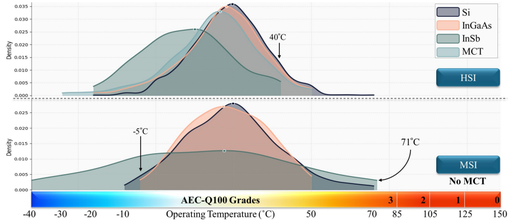
FIGURE 8 . Operating temperature distribution of HSI and MSI cameras by sensor material in comparison to the Automotive Electronics Council’s AEC-Q100 Standards. From -40°C to 85°C (Grade: 3), 105°C (Grade: 2), 125°C (Grade: 1), 150°C (Grade: 0). None of the reviewed cameras meet AEC-Q100 automotive qualification standards. Si and InSb sensors demonstrate wider operating temperature ranges compared to InGaAs and MCT.
원문 · CC BY 4.0 · Imad Ali Shah, Jiarong Li, Roshan George, Tim Brophy, Enda Ward, Martin Glavin, Edward Jones, Brian Deegan · Hyperspectral Sensors and Autonomous Driving: Technologies, Limitations, and Opportunities · 원문 그림 인용 · 원본 PDF 12쪽에서 그림 영역을 추출했습니다.분광 범위 집중과 LWIR 한계
카메라의 분광 범위도 자동차 적용을 제한합니다. HSI 카메라의 약 73%는 VIS와 NIR 대역에 집중되어 있고, MSI 카메라는 84%가 VNIR에 집중되어 있습니다. 이 분포는 Si 검출기 기술의 성숙도와 농업, 원격탐사, 주간 영상 응용의 수요를 반영한다고 저자들은 해석합니다.
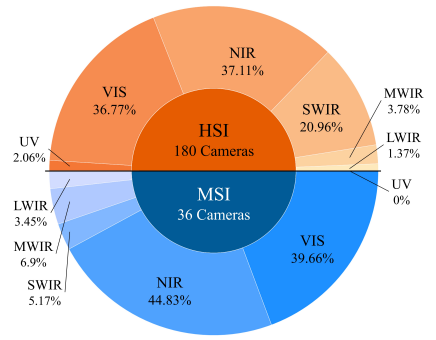
FIGURE 7 . Distribution of spectral band coverage of commercially available HSI and MSI cameras reviewed in this study. The illustrated high alignment to the VNIR region demonstrates that current cameras are primarily designed for remote sensing applications and have limited availability for SWIR to LWIR applications required for adverse conditions and nighttime operations. Note: LWIR capabilities are limited to single-channel covering the broader 8-14µm thermal region.
원문 · CC BY 4.0 · Imad Ali Shah, Jiarong Li, Roshan George, Tim Brophy, Enda Ward, Martin Glavin, Edward Jones, Brian Deegan · Hyperspectral Sensors and Autonomous Driving: Technologies, Limitations, and Opportunities · 원문 그림 인용 · 원본 PDF 10쪽에서 그림 영역을 추출했습니다.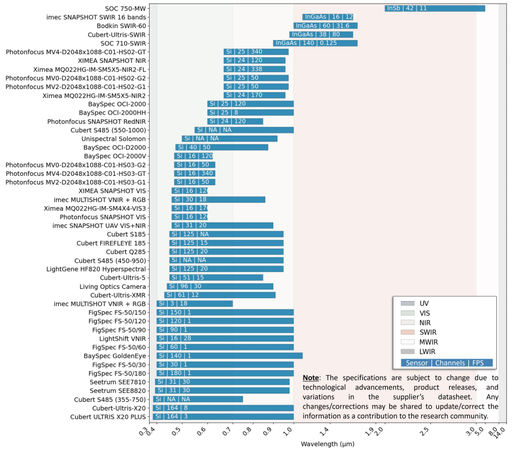
FIGURE 10 . Overview of the reviewed commercially available snapshot HSI cameras only. The plot illustrates the wavelength range from 0.3 to 14µm (Not to Scale) with each camera covering its spectral range, categorized by sensor type (i.e., Si, InGaAs), number of spectral channels it captures, and FPS. The spectral coverage in corresponding spectral bands (e.g., VIS, NIR, etc) is also indicated. ’NA’ denotes data not available in the camera datasheets or manufacturer’s websites.
원문 · CC BY 4.0 · Imad Ali Shah, Jiarong Li, Roshan George, Tim Brophy, Enda Ward, Martin Glavin, Edward Jones, Brian Deegan · Hyperspectral Sensors and Autonomous Driving: Technologies, Limitations, and Opportunities · 원문 그림 인용 · 원본 PDF 14쪽에서 그림 영역을 추출했습니다.SWIR은 안개, 비, 저조도 조건에서 장점이 있고 LWIR은 야간 보행자 검출에 중요한 열 신호를 제공합니다. 그러나 리뷰된 LWIR 카메라는 8~14 µm의 단일 채널 열 영상으로 제한되어 물질 판별에 필요한 분광 해상도가 부족합니다. 이 결과는 리뷰된 상용 카메라의 분포에 대한 것이며, 연구 전체에서 이 영역의 기술 가능성을 측정했다는 뜻은 아닙니다.
남은 과제와 적용 범위
이 리뷰가 보여 주는 가장 큰 제약은 자동차 등급의 하드웨어와 표준화된 데이터가 부족하다는 점입니다. 자동차 온도 기준을 만족하는 HSI 카메라가 확인되지 않았고, 현재 MCS를 통과한 네 대도 VNIR 범위에 있습니다. 데이터셋 측면에서는 H-City의 1,330개 장면이 RGB 대규모 데이터셋과 비교하여 작으며, 데이터셋 간 분광 표준이 일관되지 않습니다.
이 결과는 리뷰가 검토한 제조사 자료와 선택한 MCS 기준의 범위 안에서 읽어야 합니다. 원문이 제시한 장기 방향은 자동차 등급 스냅샷 카메라, 대규모 표준화 데이터셋, 실시간 처리에 맞춘 분광-공간 모델입니다. 이 방향들은 리뷰가 제안한 연구 과제이며, 이 논문이 그 해결책을 실험으로 입증했다는 뜻은 아닙니다.
논문 정보
- 저자
- Imad Ali Shah, Jiarong Li, Roshan George, Tim Brophy, Enda Ward, Martin Glavin, Edward Jones, Brian Deegan
- 학회·저널
- arXiv · 프리프린트
- 최초 공개일
- 2025년 8월 27일
- 등록일
- 2026년 11월 6일
- 수정일
- 2025년 8월 27일
- 버전
- v1
- arXiv
- 2508.19905
- DOI
- 10.1109/ojvt.2025.3636075
- 분류
- cs.CV · cs.ET
- 원문 이용 조건
- CC BY 4.0
- 제공 범위
- 논문 정보, 해설, 허용된 원문 그림
AI 해설은 논문 원문과 별개의 설명이며 오류가 있을 수 있습니다. 원문과 그림은 각 출처의 이용 조건과 따로 표시된 권리를 따릅니다.
초록
Hyperspectral imaging (HSI) offers a transformative sensing modality for Advanced Driver Assistance Systems (ADAS) and autonomous driving (AD) applications, enabling material-level scene understanding through fine spectral resolution beyond the capabilities of traditional RGB imaging. This paper presents the first comprehensive review of HSI for automotive applications, examining the strengths, limitations, and suitability of current HSI technologies in the context of ADAS/AD. In addition to this qualitative review, we analyze 216 commercially available HSI and multispectral imaging cameras, benchmarking them against key automotive criteria: frame rate, spatial resolution, spectral dimensionality, and compliance with AEC-Q100 temperature standards. Our analysis reveals a significant gap between HSI's demonstrated research potential and its commercial readiness. Only four cameras meet the defined performance thresholds, and none comply with AEC-Q100 requirements. In addition, the paper reviews recent HSI datasets and applications, including semantic segmentation for road surface classification, pedestrian separability, and adverse weather perception. Our review shows that current HSI datasets are limited in terms of scale, spectral consistency, the number of spectral channels, and environmental diversity, posing challenges for the development of perception algorithms and the adequate validation of HSI's true potential in ADAS/AD applications. This review paper establishes the current state of HSI in automotive contexts as of 2025 and outlines key research directions toward practical integration of spectral imaging in ADAS and autonomous systems.
원문 인용
Imad Ali Shah, Jiarong Li, Roshan George, Tim Brophy, Enda Ward, Martin Glavin, Edward Jones, Brian Deegan (2025). Hyperspectral Sensors and Autonomous Driving: Technologies, Limitations, and Opportunities. arXiv:2508.19905v1. https://doi.org/10.1109/ojvt.2025.3636075
BibTeX
@article{shah2025hyperspectral,
  title = {{Hyperspectral Sensors and Autonomous Driving: Technologies, Limitations, and Opportunities}},
  author = {Imad Ali Shah and Jiarong Li and Roshan George and Tim Brophy and Enda Ward and Martin Glavin and Edward Jones and Brian Deegan},
  year = {2025},
  eprint = {2508.19905},
  archivePrefix = {arXiv},
  doi = {10.1109/ojvt.2025.3636075},
  url = {https://arxiv.org/abs/2508.19905v1}
}