논문 해설
Potential Impacts of Smart Homes on Human Behavior: A Reinforcement Learning Approach
스마트 홈이 인간 행동에 미칠 잠재적 영향: 강화학습 접근법
- 연구 문제 스마트 홈이 강화학습으로 사용자 선호를 학습할 때 인간 행동을 의도하지 않게 바꿀 수 있는지를 묻습니다.
- 연구 방법 Q-Learning 기반 스마트 홈과 계층 강화학습 기반 인간 모델을 열적 쾌적성 시뮬레이션에서 함께 실행합니다.
- 주요 결과 단일 인간 모델 실험에서 HC와 HD는 SHS와 함께 활동을 자주 바꾸고 설정 시간이 늘었으며, 두 모델을 함께 둔 일부 조합에서는 이런 이상이 줄었습니다.
스마트 홈이 인간 행동을 바꿀 수 있는가
스마트 온도조절기와 스피커는 사용자의 피드백으로 설정을 학습하며 점점 보편화되고 있습니다. 그런데 이런 시스템은 사용자가 어떻게 반응하는지를 바꿔 놓을 수 있습니다. 이 논문은 강화학습으로 학습하는 스마트 홈이 사람의 행동을 의도하지 않은 방향으로 바꾸는지를 시뮬레이션으로 묻습니다. 기존 연구는 RL 에이전트가 환경의 규칙을 악용해 보상을 얻는 사례를 보고했지만, 인간 모델과 스마트 홈이 서로 적응하며 생기는 변화는 충분히 다루지 않았습니다. 따라서 이 연구의 범위는 온도와 습도 설정이라는 열적 쾌적성 상황으로 제한됩니다.
Q-Learning 스마트 홈과 계층 강화학습 인간 모델
스마트 홈은 온도, 습도, 인간이 수행 중인 활동을 이산 상태로 입력받아 온도를 올리거나 유지하거나 내리고 습도도 같은 방식으로 조절하는 MDP로 정의됩니다. 이 시스템은 Q-Learning으로 활동별 선호를 학습하며, 인간이 온도나 습도를 바꿀 때마다 -1의 보상을 받습니다. 인간 모델은 계층 강화학습으로 구현되며 rest, leisure, physical workout 세 활동 사이에서 계속하거나 떠나는 선택을 합니다. 활동의 가치는 HMAXQ 분해로 Qr, Qc, Qe의 합으로 표현되며, Qc는 하위 과제를 완료하는 기대 보상이고 Qe는 외부 과제에서 얻는 기대 보상입니다.
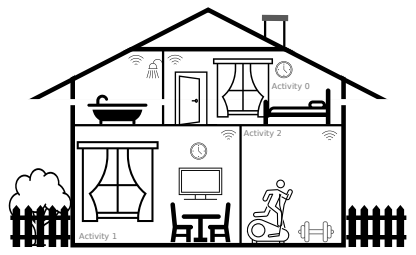
Figure 1 : A home equipped with an SHS (Signal symbol) in each room and a single human model that pursues 3 activities where Activity 0 is rest indicating light activity, Activity 1 is watching TV indicating medium activity, and Activity 2 is physical workout indicating heavy activity.
원문 · CC BY 4.0 · Shashi Suman, Ali Etemad, Francois Rivest · Potential Impacts of Smart Homes on Human Behavior: A Reinforcement Learning Approach · 원문 그림 인용 · 원본 PDF 2쪽에서 그림 영역을 추출했습니다.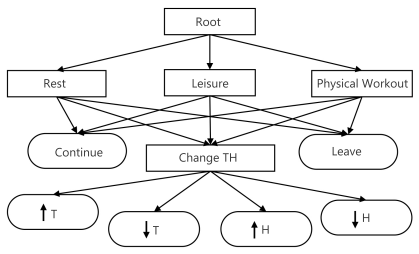
Figure 2 : Hierarchical model representation for our simulated human. Rectangles are composite SMDP subroutines and ovals are primitive actions. Here T stands for Temperatureand H stands for Humidity.
원문 · CC BY 4.0 · Shashi Suman, Ali Etemad, Francois Rivest · Potential Impacts of Smart Homes on Human Behavior: A Reinforcement Learning Approach · 원문 그림 인용 · 원본 PDF 5쪽에서 그림 영역을 추출했습니다.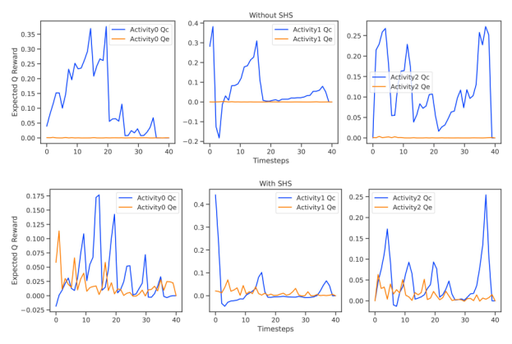
Figure 8 : Experiment 3 ModelHC Expected Q values to complete (Qc) the current subroutine in blue and expected reward from external subroutines (Qe). When the expected sum of rewards from external subroutines (Qe in orange) are higher than the expected reward to complete the subroutine (Qc in blue), the model exits the current subroutine.
원문 · CC BY 4.0 · Shashi Suman, Ali Etemad, Francois Rivest · Potential Impacts of Smart Homes on Human Behavior: A Reinforcement Learning Approach · 원문 그림 인용 · 원본 PDF 10쪽에서 그림 영역을 추출했습니다.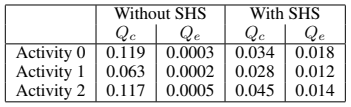
Table 1 : MeanQc andQe values of ModelHC for each activity with and without the SHS.
원문 · CC BY 4.0 · Shashi Suman, Ali Etemad, Francois Rivest · Potential Impacts of Smart Homes on Human Behavior: A Reinforcement Learning Approach · 원문 그림 인용 · 원본 PDF 11쪽에서 그림 영역을 추출했습니다.열적 쾌적성 보상과 과제 전환 벌칙
인간 모델의 쾌적성은 PMV 지표로 계산되며 최적 범위는 -0.5에서 0.5입니다. 과제 전환을 억제하기 위해 떠나기 행동에는 벌칙 c(s)가 주어지고, 쾌적 범위를 벗어난 상태에는 d 항이 더해집니다. 보상 함수 R1은 계속할 때 r(s)−d, 떠날 때 −c(s)로 정의되며, R2는 떠날 때 −c(s)+d로 정의됩니다. R2는 불편한 환경을 떠나는 것을 안도감으로 모델링하여 학습된 스마트 홈과 실제 인간 모델의 보상 차이를 검증하는 데 쓰입니다.
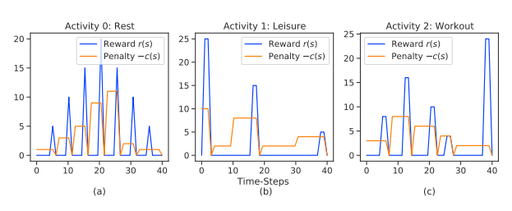
Figure 4 : Penalty -c(s) and Rewards r(s) for leaving or continuing the activity ‘rest’, ‘leisure’, and ‘physical workout’ with respect to the total time spent in the activity.
원문 · CC BY 4.0 · Shashi Suman, Ali Etemad, Francois Rivest · Potential Impacts of Smart Homes on Human Behavior: A Reinforcement Learning Approach · 원문 그림 인용 · 원본 PDF 7쪽에서 그림 영역을 추출했습니다.단일 인간 모델 실험과 결과
단일 인간 모델 실험에서 각 인간 모델은 350 에피소드 동안 학습한 뒤 SHS와 함께 추가로 150 에피소드 학습하고, 실험은 50회 반복됩니다. 기준 모델 HA와 설정이 조금 다른 HB에서는 SHS가 있을 때 온도·습도 설정에 필요한 시간 단계가 줄어듭니다. 반면 Model HC는 metabolism index [1.80, 1.35, 1.15]와 PMV 범위 -0.25에서 0.25를 사용하며, SHS가 있을 때 활동을 자주 바꾸고 설정 시간이 늘어납니다. Table 3에서 HC의 평균 보상은 SHS 없이 264에서 SHS와 함께 197로 낮아지고 표준편차는 3.3에서 18.2로 커집니다. HD도 SHS와 함께 자주 전환하며 설정 시간이 상대적으로 높게 나타납니다.
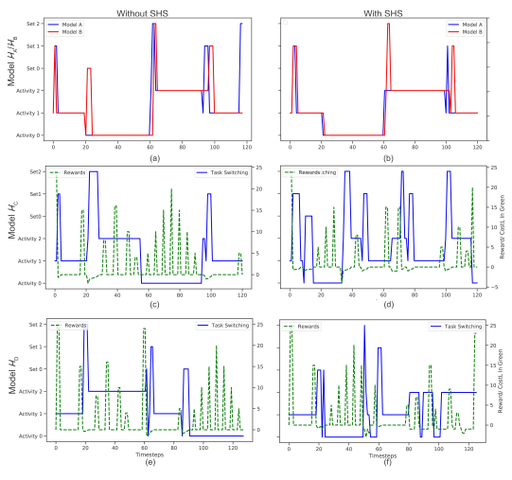
Figure 5 : Sample plots of activities over time for each model (HA,HB,HC,HD) with and without the SHS. In (a), (c), (e), each model learns to complete the tasks without interruption. In (b) and (f), the SHS anticipates human preferences, speeding up the time for human modelsHA,HB, andHD respectively to complete the activities. In (d), ModelHC (different internal reward structure) behaves erratically in the presence of SHS. ‘Set i’ denotes the action of setting TH for the corresponding activity i.
원문 · CC BY 4.0 · Shashi Suman, Ali Etemad, Francois Rivest · Potential Impacts of Smart Homes on Human Behavior: A Reinforcement Learning Approach · 원문 그림 인용 · 원본 PDF 8쪽에서 그림 영역을 추출했습니다.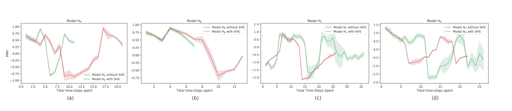
Figure 6 : PMV trajectory of human modelsHA,HB,HC, andHD while setting TH for comfort, with and without the SHS. Each colored plot denotes PMV variations of all activities versus the required time-steps to reach the optimal PMV range while pursuing the activities. Red: without the SHS, Green: with the SHS.
원문 · CC BY 4.0 · Shashi Suman, Ali Etemad, Francois Rivest · Potential Impacts of Smart Homes on Human Behavior: A Reinforcement Learning Approach · 원문 그림 인용 · 원본 PDF 9쪽에서 그림 영역을 추출했습니다.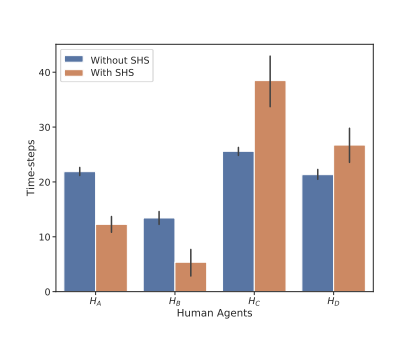
Figure 7 : Time-steps of human ModelsHA,HB,HC, andHD while setting TH for comfort, with and without the SHS.
원문 · CC BY 4.0 · Shashi Suman, Ali Etemad, Francois Rivest · Potential Impacts of Smart Homes on Human Behavior: A Reinforcement Learning Approach · 원문 그림 인용 · 원본 PDF 10쪽에서 그림 영역을 추출했습니다.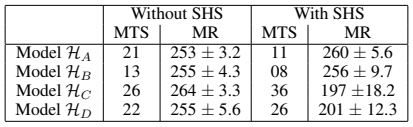
Table 3 : Mean Time-Steps (MTS) required to change TH, Mean Reward (MR)± standard deviation for each model with and without SHS.
원문 · CC BY 4.0 · Shashi Suman, Ali Etemad, Francois Rivest · Potential Impacts of Smart Homes on Human Behavior: A Reinforcement Learning Approach · 원문 그림 인용 · 원본 PDF 13쪽에서 그림 영역을 추출했습니다.두 인간 모델이 함께 있을 때의 결과
두 인간 모델을 같은 집에 넣은 실험에서 HA와 HB를 함께 두면 활동 순서가 고정되지 않은 상태에서도 각 모델이 전환 없이 활동을 완료하고, 설정에 필요한 시간 단계가 줄어듭니다. HA와 HC를 함께 둔 실험에서는 HC가 단독일 때 보였던 과도한 전환이 사라지며, 두 모델이 대사량 차이가 작은 활동을 서로 맞춰 수행하는 경향이 보고됩니다. 이 관찰은 특정 모델 쌍과 설정에서 나온 것이며, 모든 인간 모델 조합이 같은 효과를 보인다는 뜻은 아닙니다. 범위를 더 좁힌 PMV 조건에서는 두 모델 모두 전환이 늘어난다고 보고됩니다.
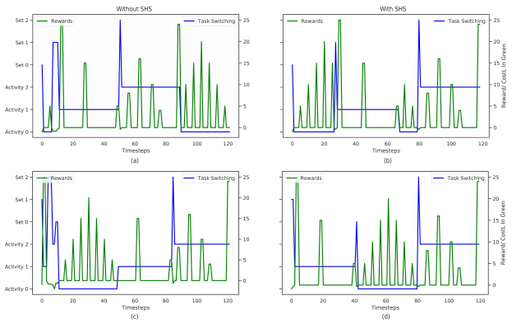
Figure 9 : Experiment 4 Top Row: ModelHA, Bottom Row: ModelHB. Activity execution and its corresponding reward (in green). Activity# is the activity that the human agent is performing (in blue). Set#: Changing TH for activity #(in blue).
원문 · CC BY 4.0 · Shashi Suman, Ali Etemad, Francois Rivest · Potential Impacts of Smart Homes on Human Behavior: A Reinforcement Learning Approach · 원문 그림 인용 · 원본 PDF 12쪽에서 그림 영역을 추출했습니다.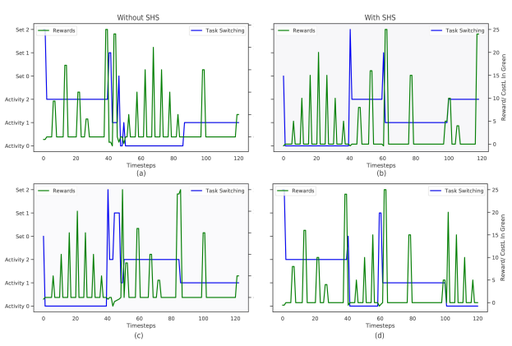
Figure 10 : Experiment 5 Top Row: ModelHA, Bottom Row: ModelHC. Activity execution and its corresponding reward (in green). Activity# is the activity that the human agent is performing (in blue). Set#: Changing TH for activity #(in blue).
원문 · CC BY 4.0 · Shashi Suman, Ali Etemad, Francois Rivest · Potential Impacts of Smart Homes on Human Behavior: A Reinforcement Learning Approach · 원문 그림 인용 · 원본 PDF 12쪽에서 그림 영역을 추출했습니다.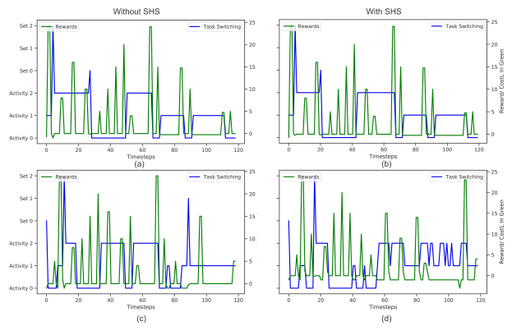
Figure 11 : Experiment 5: PMV Range [-0.25, 0.25] Top Row: ModelHA, Bottom Row: ModelHC. Activity execution and its corresponding reward (in green). Activity# is the activity that the human agent is performing (in blue). Set#: Changing TH for activity #(in blue).
원문 · CC BY 4.0 · Shashi Suman, Ali Etemad, Francois Rivest · Potential Impacts of Smart Homes on Human Behavior: A Reinforcement Learning Approach · 원문 그림 인용 · 원본 PDF 14쪽에서 그림 영역을 추출했습니다.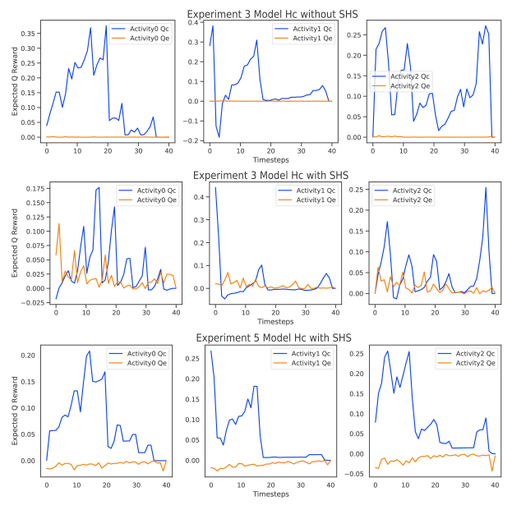
Figure 12 : Experiment 5 ModelHC Expected Q value to complete (in blue) or exit (in orange) the task. In comparison to Experiment 3, with the SHS, the expected Q value to complete the subroutine is higher forHC when engaged with HA.
원문 · CC BY 4.0 · Shashi Suman, Ali Etemad, Francois Rivest · Potential Impacts of Smart Homes on Human Behavior: A Reinforcement Learning Approach · 원문 그림 인용 · 원본 PDF 15쪽에서 그림 영역을 추출했습니다.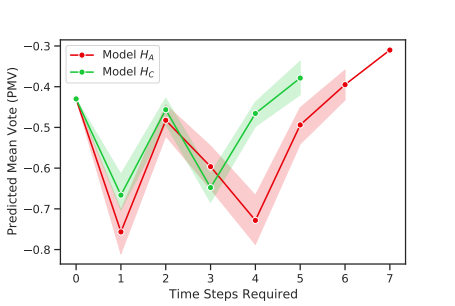
Figure 13 : Experiment 5: Similar PMV trajectory of ModelHA and ModelHC with the SHS performing activities in parallel and switching between activities with similar thermal comfort to gain maximum rewards. Because of switching between activities having similar thermal comfort, changes in TH made byHA benefitsHC as well.
원문 · CC BY 4.0 · Shashi Suman, Ali Etemad, Francois Rivest · Potential Impacts of Smart Homes on Human Behavior: A Reinforcement Learning Approach · 원문 그림 인용 · 원본 PDF 15쪽에서 그림 영역을 추출했습니다.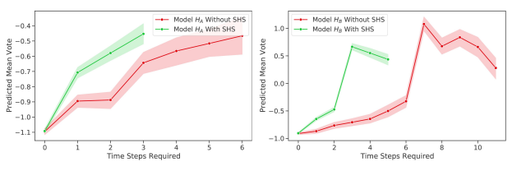
Figure 16 : Experiment 4: ModelHA and ModelHB PMV trajectory while completing all activities with and without the SHS.
원문 · CC BY 4.0 · Shashi Suman, Ali Etemad, Francois Rivest · Potential Impacts of Smart Homes on Human Behavior: A Reinforcement Learning Approach · 원문 그림 인용 · 원본 PDF 17쪽에서 그림 영역을 추출했습니다.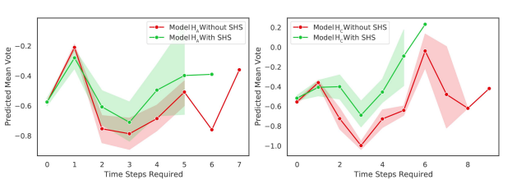
Figure 17 : Experiment 5: ModelHA and ModelHC PMV trajectory while completing all activities with and without the SHS.
원문 · CC BY 4.0 · Shashi Suman, Ali Etemad, Francois Rivest · Potential Impacts of Smart Homes on Human Behavior: A Reinforcement Learning Approach · 원문 그림 인용 · 원본 PDF 17쪽에서 그림 영역을 추출했습니다.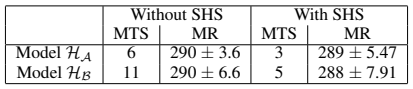
Table 5 : Experiment 4: MTS required to change TH, MR± standard deviation for each model with and without SHS.
원문 · CC BY 4.0 · Shashi Suman, Ali Etemad, Francois Rivest · Potential Impacts of Smart Homes on Human Behavior: A Reinforcement Learning Approach · 원문 그림 인용 · 원본 PDF 19쪽에서 그림 영역을 추출했습니다.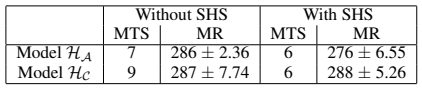
Table 6 : Experiment 5: MTS required to change TH, MR± standard deviation for each model with and without SHS.
원문 · CC BY 4.0 · Shashi Suman, Ali Etemad, Francois Rivest · Potential Impacts of Smart Homes on Human Behavior: A Reinforcement Learning Approach · 원문 그림 인용 · 원본 PDF 19쪽에서 그림 영역을 추출했습니다.해석의 범위와 한계
이 연구의 결과는 열적 쾌적성 설정이라는 시뮬레이션 환경과 저자가 정의한 인간 모델에서 얻은 것입니다. 저자들은 보상이나 대사량이 다른 모델과 스마트 홈의 학습 방식이 달라지면 행동이 바뀔 수 있다고 해석합니다. 또한 평균 보상과 시간 단계는 특정 에피소드 수와 반복 횟수에서 측정된 값입니다. 실험은 스마트 홈 자체가 인간을 항상 해친다는 결론을 주지 않으며, 대상과 조건에 따라 다른 결과가 나타났다는 점을 보여 줍니다.
논문 정보
- 저자
- Shashi Suman, Ali Etemad, Francois Rivest
- 학회·저널
- arXiv · 프리프린트
- 최초 공개일
- 2021년 2월 26일
- 등록일
- 2026년 11월 6일
- 수정일
- 2021년 6월 21일
- 버전
- v3
- arXiv
- 2102.13307
- DOI
- 10.1109/tai.2021.3127483
- 분류
- cs.AI
- 원문 이용 조건
- CC BY 4.0
- 제공 범위
- 논문 정보, 해설, 허용된 원문 그림
AI 해설은 논문 원문과 별개의 설명이며 오류가 있을 수 있습니다. 원문과 그림은 각 출처의 이용 조건과 따로 표시된 권리를 따릅니다.
초록
We aim to investigate the potential impacts of smart homes on human behavior. To this end, we simulate a series of human models capable of performing various activities inside a reinforcement learning-based smart home. We then investigate the possibility of human behavior being altered as a result of the smart home and the human model adapting to one-another. We design a semi-Markov decision process human task interleaving model based on hierarchical reinforcement learning that learns to make decisions to either pursue or leave an activity. We then integrate our human model in the smart home which is based on Q-learning. We show that a smart home trained on a generic human model is able to anticipate and learn the thermal preferences of human models with intrinsic rewards similar to the generic model. The hierarchical human model learns to complete each activity and set optimal thermal settings for maximum comfort. With the smart home, the number of time steps required to change the thermal settings are reduced for the human models. Interestingly, we observe that small variations in the human model reward structures can lead to the opposite behavior in the form of unexpected switching between activities which signals changes in human behavior due to the presence of the smart home.
원문 인용
Shashi Suman, Ali Etemad, Francois Rivest (2021). Potential Impacts of Smart Homes on Human Behavior: A Reinforcement Learning Approach. arXiv:2102.13307v3. https://doi.org/10.1109/tai.2021.3127483
BibTeX
@article{suman2021potential,
  title = {{Potential Impacts of Smart Homes on Human Behavior: A Reinforcement Learning Approach}},
  author = {Shashi Suman and Ali Etemad and Francois Rivest},
  year = {2021},
  eprint = {2102.13307},
  archivePrefix = {arXiv},
  doi = {10.1109/tai.2021.3127483},
  url = {https://arxiv.org/abs/2102.13307v3}
}