논문 해설
Sign Language Representation by TEO Humanoid Robot: End-User Interest, Comprehension and Satisfaction
TEO 휴머노이드 로봇에 의한 수어 표현: 최종 사용자의 관심, 이해도 및 만족도
- 연구 문제 청각장애 사용자가 자막 대신 TEO 로봇의 스페인 수어 재현을 선호하고 이해할 수 있는지를 검증합니다.
- 연구 방법 TEO의 Dextra TPMG90-2 로봇 손 동작을 OpenRAVE 시뮬레이션으로 구현하고 손가락 철자, 가정 어휘, 만족도 설문으로 평가합니다.
- 주요 결과 데모 후 수어 선택은 13명에서 15명으로 늘었지만 McNemar 검정은 유의하지 않았습니다. 손가락 철자 평균 정답률은 82%, 어휘는 83%, 만족도 평균은 0.78이었습니다.
청각장애 사용자와 수어 로봇의 과제
이 논문은 청각장애 및 난청 사용자가 로봇과 상호작용할 때 자막 대신 수어를 선호하는지, 그리고 로봇이 재현한 수어를 얼마나 이해하고 만족하는지를 묻습니다. 기존에는 자막이 가장 널리 쓰이는 접근 수단이지만, 자막은 읽기 능력과 충분히 큰 화면을 요구합니다. 수어 재현은 손가락 자세뿐 아니라 팔의 움직임, 머리와 얼굴 표정 같은 비수지 표지(non-manual markers)까지 의미에 영향을 주므로 복잡합니다. 이 연구는 TEO 휴머노이드 로봇의 Dextra TPMG90-2 로봇 손으로 스페인 수어(LSE)를 재현하고, 16명의 청각장애 및 난청 참여자를 대상으로 선호도, 손가락 철자 이해, 기본 가정 어휘 이해, 만족도를 측정합니다.
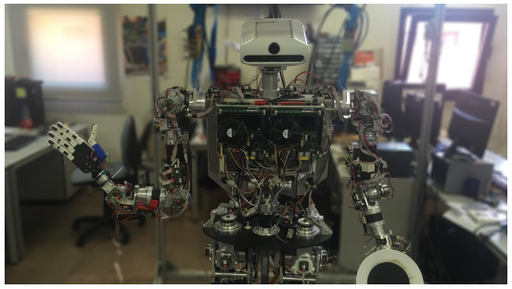
Figure 1 . Humanoid robot TEO performing informal greeting with Dextra TPMG90-2 robotic hands.
원문 · CC BY 4.0 · Jennifer J. Gago, Juan G. Victores, Carlos Balaguer · Sign Language Representation by TEO Humanoid Robot: End-User Interest, Comprehension and Satisfaction · 원문 그림 인용 · 원본 PDF 3쪽에서 그림 영역을 추출했습니다.시뮬레이션 기반 수어 자극과 평가 설계
연구진은 TEO의 수어 동작을 OpenRAVE와 QtCoin 뷰어 환경에서 시뮬레이션 파일로 구현했습니다. 설문은 익명 온라인 양식으로 LSE 기관을 통해 배포되었고, 배경은 중립적으로 단순화되었습니다. 평가는 손가락 철자 테스트와 기본 가정 어휘 테스트로 구성됩니다. 손가락 철자 테스트는 스페인어 알파벳 30개 문자를 세 개씩 묶어 제시하며, 어휘 테스트는 가정 관련 단어 10개를 드롭다운 목록에서 하나씩 선택하게 합니다. 두 테스트의 오답 구조는 혼동 행렬로 분석되며, 만족도는 유용성, 이해 용이성, 편안함, 향후 전망, 의인화, 미관의 여섯 주제를 -2에서 2까지 5단계 Likert 척도로 측정합니다.
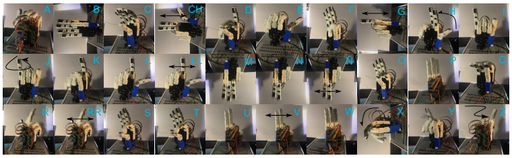
Figure 3 . Spanish dactylology developed by Dextra TPMG90-2 robotic hand for joint position configuration.
원문 · CC BY 4.0 · Jennifer J. Gago, Juan G. Victores, Carlos Balaguer · Sign Language Representation by TEO Humanoid Robot: End-User Interest, Comprehension and Satisfaction · 원문 그림 인용 · 원본 PDF 4쪽에서 그림 영역을 추출했습니다.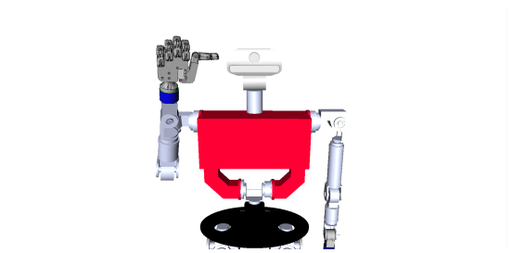
Figure 5 . Frame of TEO’s simulation signing letter E for the dactylology test. Vocabulary obtained from CNSE Foundation for the Suppression of Communication Barriers images and signs LSE database.
원문 · CC BY 4.0 · Jennifer J. Gago, Juan G. Victores, Carlos Balaguer · Sign Language Representation by TEO Humanoid Robot: End-User Interest, Comprehension and Satisfaction · 원문 그림 인용 · 원본 PDF 6쪽에서 그림 영역을 추출했습니다.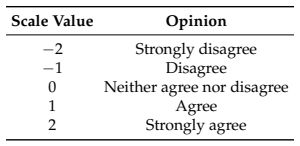
Table 2 . Five-level Likert scale used in the user satisfaction questionnaire.
원문 · CC BY 4.0 · Jennifer J. Gago, Juan G. Victores, Carlos Balaguer · Sign Language Representation by TEO Humanoid Robot: End-User Interest, Comprehension and Satisfaction · 원문 그림 인용 · 원본 PDF 9쪽에서 그림 영역을 추출했습니다.사전·사후 선호도의 McNemar 검정
사전 조사에서는 참여자가 자막과 수어 중 하나를 고르고, TEO가 LSE로 안부를 묻는 데모를 본 뒤 같은 질문에 다시 응답합니다. 이 쌍체 이분형 자료에는 McNemar 검정이 쓰였습니다. 결과에서 수어를 선택한 응답은 데모 전 13명, 데모 후 15명이었고, 불일치 쌍은 두 개였으며 모두 전에는 자막이었다가 후에는 수어를 택한 방향이었습니다. 불일치 쌍의 합이 25보다 작아 카이제곱 근사는 적절하지 않다고 원문이 설명하므로, 연속성 보정 McNemar 검정의 양측 P값 0.4795와 정확 이항 검정의 근거를 함께 봅니다. 이 P값은 통계적으로 유의하지 않으며, 저자들은 관찰된 변화가 우연으로 설명될 수 있고 효과의 일관된 증거가 없다고 해석합니다.
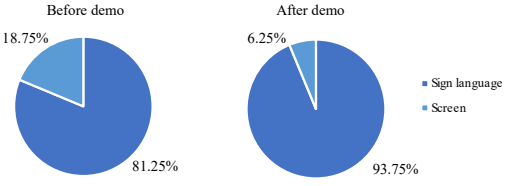
Figure 4 . User preference rate regarding human–robot interaction before and after interacting with TEO.
원문 · CC BY 4.0 · Jennifer J. Gago, Juan G. Victores, Carlos Balaguer · Sign Language Representation by TEO Humanoid Robot: End-User Interest, Comprehension and Satisfaction · 원문 그림 인용 · 원본 PDF 5쪽에서 그림 영역을 추출했습니다.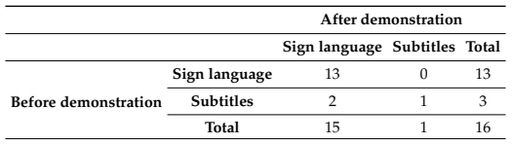
Table 1 . McNemar’s test table that shows user preferences regarding human–robot interaction before and after the demonstration.
원문 · CC BY 4.0 · Jennifer J. Gago, Juan G. Victores, Carlos Balaguer · Sign Language Representation by TEO Humanoid Robot: End-User Interest, Comprehension and Satisfaction · 원문 그림 인용 · 원본 PDF 5쪽에서 그림 영역을 추출했습니다.손가락 철자 이해 결과
손가락 철자 테스트에서 평균 정답률은 82%였고, 450개 응답 중 369개가 정답이었습니다. 혼동 행렬은 F, H, K, Ñ, RR, Z 같은 문자에서 오류가 집중됨을 보여 줍니다. 예를 들어 F는 T로 60% 혼동되었고, Ñ는 N으로 40% 혼동되었습니다. 나이와 정답 수의 선형 추세선은 기울기 -0.071과 결정계수 R2d 0.1076을 보이며, 이는 낮은 설명력입니다. 한 이상치 응답을 제외하면 기울기는 -0.0996, R2d는 0.3453으로 달라집니다. 따라서 나이 영향은 이상치 처리 여부에 따라 달라지는 약한 경향으로 읽어야 합니다.
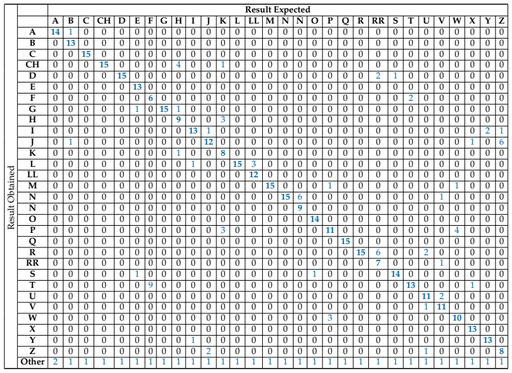
Table 3 . Confusion matrix: dactylology. The elements of diagonal, which represent correct answers, are marked in bold. Elements with a shaded background mean 100% correct answers, discarding those of the “Other” row. In the Spanish alphabet, the CH, LL, RR and Ñ represent individual letters.
원문 · CC BY 4.0 · Jennifer J. Gago, Juan G. Victores, Carlos Balaguer · Sign Language Representation by TEO Humanoid Robot: End-User Interest, Comprehension and Satisfaction · 원문 그림 인용 · 원본 PDF 10쪽에서 그림 영역을 추출했습니다.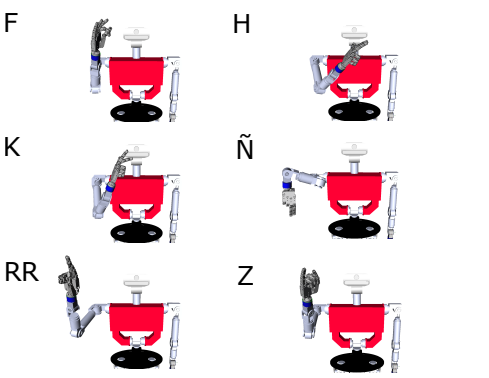
Figure 7 . Initial frames of challenging letters in dactylology. Dactylology obtained from CNSE Foundation for the Suppression of Communication Barriers images and signs LSE database .
원문 · CC BY 4.0 · Jennifer J. Gago, Juan G. Victores, Carlos Balaguer · Sign Language Representation by TEO Humanoid Robot: End-User Interest, Comprehension and Satisfaction · 원문 그림 인용 · 원본 PDF 11쪽에서 그림 영역을 추출했습니다.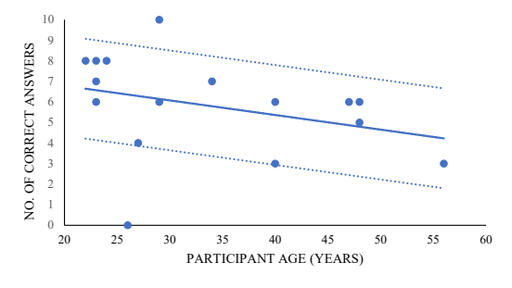
Figure 8 . Graph of number of correct answers per participant in dactylology test versus participant’s age (years) with linear trendline and linear regression channel which contains approximately 68% of all answers.
원문 · CC BY 4.0 · Jennifer J. Gago, Juan G. Victores, Carlos Balaguer · Sign Language Representation by TEO Humanoid Robot: End-User Interest, Comprehension and Satisfaction · 원문 그림 인용 · 원본 PDF 12쪽에서 그림 영역을 추출했습니다.기본 가정 어휘 결과와 혼동 구조
기본 가정 어휘 테스트의 평균 정답률은 83%였고, 160개 응답 중 133개가 정답이었습니다. 가장 낮은 단어도 62.5%의 정답률을 보였습니다. 혼동 행렬에서 Machine은 Clothes로 약 19% 혼동되었고, Door는 Closet으로 25% 혼동되었습니다. Living room은 Machine과 약 13% 혼동되었으며, Closet과 Living room 사이에도 예상치 못한 혼동이 보고되었습니다. 나이와 정답 수의 추세선 기울기는 -0.022, R2v는 0.0121로 낮아 나이에 따른 감소가 매우 약합니다. 이상치를 제외하면 기울기는 -0.0511, R2v는 0.1447로 바뀌지만 여전히 설명력은 낮습니다.
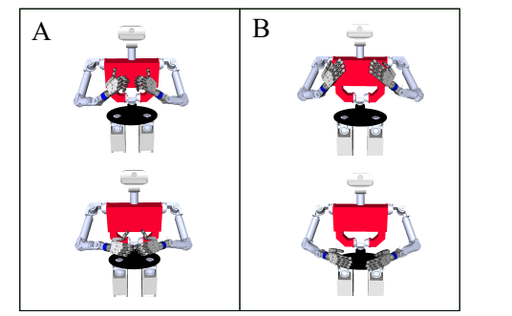
Figure 6 . Initial and final frames of TEO’s simulation signing (A) “machine” and (B) “clothes” for the vocabulary test. Vocabulary obtained from CNSE Foundation for the Suppression of Communication Barriers images and signs LSE database.
원문 · CC BY 4.0 · Jennifer J. Gago, Juan G. Victores, Carlos Balaguer · Sign Language Representation by TEO Humanoid Robot: End-User Interest, Comprehension and Satisfaction · 원문 그림 인용 · 원본 PDF 8쪽에서 그림 영역을 추출했습니다.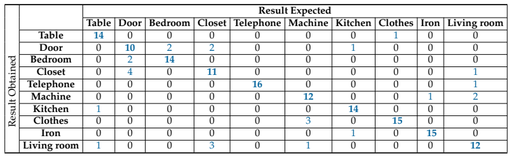
Table 4 . Confusion matrix: basic house vocabulary. The elements of diagonal, which represent correct answers, are marked in bold. Elements with a shaded background mean 100% correct answers (15 correct, and 16 in the exceptional case where there was a correct answer within the outlying data).
원문 · CC BY 4.0 · Jennifer J. Gago, Juan G. Victores, Carlos Balaguer · Sign Language Representation by TEO Humanoid Robot: End-User Interest, Comprehension and Satisfaction · 원문 그림 인용 · 원본 PDF 13쪽에서 그림 영역을 추출했습니다.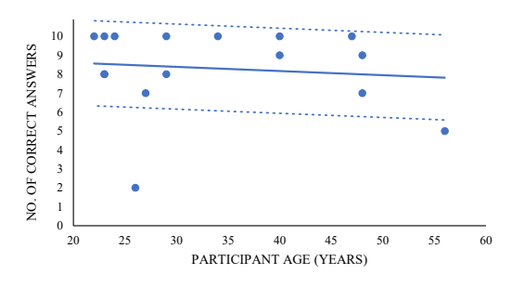
Figure 9 . Graph of number of correct answers per participant in vocabulary test versus participant’s age (years) with linear trendline and linear regression channel which contains approximately 68% of all answers.
원문 · CC BY 4.0 · Jennifer J. Gago, Juan G. Victores, Carlos Balaguer · Sign Language Representation by TEO Humanoid Robot: End-User Interest, Comprehension and Satisfaction · 원문 그림 인용 · 원본 PDF 14쪽에서 그림 영역을 추출했습니다.사용자 만족도와 적용 범위
만족도 전체 평균은 0.78이며 이는 69.5%에 해당합니다. 유용성과 향후 전망이 평균 1.2로 가장 높았고, 편안함은 0.8, 이해 용이성은 0.7이었습니다. 미관과 의인화는 각각 62%와 58%로 가장 낮았습니다. 원문은 미관과 의인화가 로봇의 외형과 관련되며 TEO가 아직 개발 중이라는 점을 함께 제시합니다. 만족도와 나이의 추세선은 기울기 -0.0568, R2s 0.42이며, 이상치를 포함한 결과도 유효한 실험 데이터로 취급됩니다. 다만 결과는 시뮬레이션 기반 수어와 16명의 참여자에 한정되며, 실제 물리 로봇에서의 재현 결과는 아직 확인되지 않았습니다.
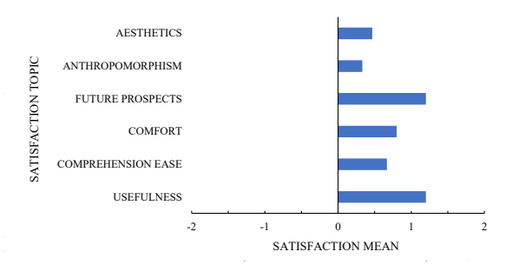
Figure 10 . Overall satisfaction classified by topic. A five level Likert scale has been used, where the values mean: (−2) Strongly disagree, (−1) Disagree, (0) Neither agree nor disagree, (1) Agree, (2) Strongly agree.
원문 · CC BY 4.0 · Jennifer J. Gago, Juan G. Victores, Carlos Balaguer · Sign Language Representation by TEO Humanoid Robot: End-User Interest, Comprehension and Satisfaction · 원문 그림 인용 · 원본 PDF 15쪽에서 그림 영역을 추출했습니다.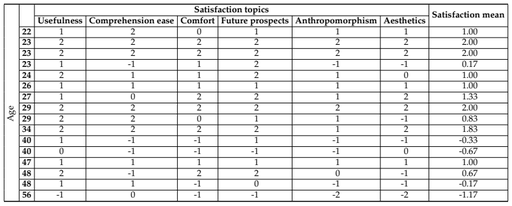
Table 5 . Satisfaction topics outcome classified by age in ascending order. A five level Likert scale has been used, where the values mean: (−2) Strongly disagree, (−1) Disagree, (0) Neither agree nor disagree, (1) Agree, (2) Strongly agree.
원문 · CC BY 4.0 · Jennifer J. Gago, Juan G. Victores, Carlos Balaguer · Sign Language Representation by TEO Humanoid Robot: End-User Interest, Comprehension and Satisfaction · 원문 그림 인용 · 원본 PDF 16쪽에서 그림 영역을 추출했습니다.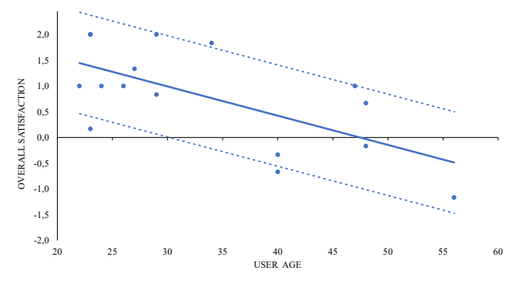
Figure 11 . Graph of user satisfaction relation versus age (years) with linear trendline and linear regression channel which contains approximately 68% of all answers. A five level Likert scale has been used, where the values mean: (−2) Strongly disagree, (−1) Disagree, (0) Neither agree nor disagree, (1) Agree, (2) Strongly agree.
원문 · CC BY 4.0 · Jennifer J. Gago, Juan G. Victores, Carlos Balaguer · Sign Language Representation by TEO Humanoid Robot: End-User Interest, Comprehension and Satisfaction · 원문 그림 인용 · 원본 PDF 16쪽에서 그림 영역을 추출했습니다.논문 정보
- 저자
- Jennifer J. Gago, Juan G. Victores, Carlos Balaguer
- 학회·저널
- arXiv · 프리프린트
- 최초 공개일
- 2019년 1월 17일
- 등록일
- 2026년 11월 6일
- 수정일
- 2019년 1월 17일
- 버전
- v1
- arXiv
- 1901.05939
- DOI
- 10.3390/electronics8010057
- 분류
- cs.RO · cs.HC
- 원문 이용 조건
- CC BY 4.0
- 제공 범위
- 논문 정보, 해설, 허용된 원문 그림
AI 해설은 논문 원문과 별개의 설명이며 오류가 있을 수 있습니다. 원문과 그림은 각 출처의 이용 조건과 따로 표시된 권리를 따릅니다.
초록
In this paper, we illustrate our work on improving the accessibility of Cyber-Physical Systems (CPS), presenting a study on human-robot interaction where the end-users are either deaf or hearing-impaired people. Current trends in robotic designs include devices with robotic arms and hands capable of performing manipulation and grasping tasks. This paper focuses on how these devices can be used for a different purpose, which is that of enabling robotic communication via sign language. For the study, several tests and questionnaires are run to check and measure how end-users feel about interpreting sign language represented by a humanoid robotic assistant as opposed to subtitles on a screen. Stemming from this dichotomy, dactylology, basic vocabulary representation and end-user satisfaction are the main topics covered by a delivered form, in which additional commentaries are valued and taken into consideration for further decision taking regarding robot-human interaction. The experiments were performed using TEO, a household companion humanoid robot developed at the University Carlos III de Madrid (UC3M), via representations in Spanish Sign Language (LSE), and a total of 16 deaf and hearing-impaired participants.
원문 인용
Jennifer J. Gago, Juan G. Victores, Carlos Balaguer (2019). Sign Language Representation by TEO Humanoid Robot: End-User Interest, Comprehension and Satisfaction. arXiv:1901.05939v1. https://doi.org/10.3390/electronics8010057
BibTeX
@article{gago2019sign,
  title = {{Sign Language Representation by TEO Humanoid Robot: End-User Interest, Comprehension and Satisfaction}},
  author = {Jennifer J. Gago and Juan G. Victores and Carlos Balaguer},
  year = {2019},
  eprint = {1901.05939},
  archivePrefix = {arXiv},
  doi = {10.3390/electronics8010057},
  url = {https://arxiv.org/abs/1901.05939v1}
}