논문 해설
DAPS: Dependency-Aware Premise Selection for LLM Theorem Proving
DAPS: LLM 정리 증명을 위한 의존성 인식 전제 선택
- 연구 문제 LLM 정리 증명기는 새로 기여된 보조정리를 활용하기 어렵고, 기존 의미 유사도 기반 전제 선택기는 희귀 전제와 분포 이동에 취약합니다.
- 연구 방법 DAPS는 Lean 의존성 그래프의 구조적 이웃을 인코딩하고 여러 양성 전제를 그룹으로 학습하며, Mathlib에서 사전학습한 뒤 Blueprint에서 연속 학습합니다.
- 주요 결과 DAPS는 Mathlib4-Heldout에서 Recall@32 89.25를 기록해 LeanHammer보다 11.41 높고, DAPS-Collection과 DAPS-Blueprint에서도 기존 선택기를 앞섭니다.
기존 전제 선택기의 한계
LLM 기반 Lean 4 정리 증명기는 빠르게 발전했지만, 새로 기여된 보조정리를 활용하기 어렵습니다. 기존 신경 전제 선택기는 질의와 후보의 의미 유사도로 순위를 매기므로, 자주 쓰이는 기초 보조정리가 상위 K에 몰리고 희귀한 전제는 밀려납니다. 또한 후보를 하나씩 짝지어 점수화하기 때문에 상위 K개가 함께 쓸 수 있는 증명 도구 묶음인지 고려하지 않습니다. 분포가 다른 경쟁 문제나 비공식 질의에서는 Mathlib에서 학습한 의미 특징이 쉽게 약해집니다. 저자들은 이 세 문제의 공통 원인을 수학이 유사성보다 의존 관계로 구조화되어 있다는 점에서 찾습니다.
의존성 자원의 구축
이 연구는 두 가지 의존성 자원을 사용합니다. 첫째, Mathlib4의 컴파일된 상수 그래프는 선언 사이의 타입이 붙은 다단계 방향 비순환 그래프로, 275k 이상의 노드와 6.5M 이상의 간선을 가집니다. 둘째, Lean Blueprint 프로젝트 53개에서 3,805개의 노드와 4,651개의 간선을 수집했습니다. 노드의 71.7%는 형식 노드이고 28.3%는 비공식 노드입니다. Blueprint 그래프는 평균 차수가 1.2로 Mathlib4보다 훨씬 희박하지만, 연구 수준의 Mathlib 밖 선언과 비공식 LaTeX 신호를 담습니다. 평가는 Mathlib4-Random, Mathlib4-Heldout, DAPS-Collection, DAPS-Blueprint의 네 벤치마크로 구성됩니다.
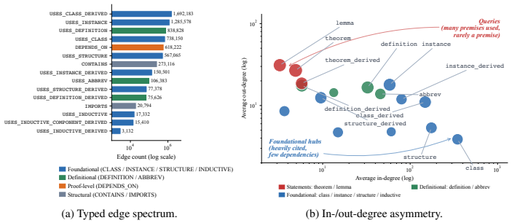
Figure 2 : Mathlib4’s dependency graph carries a rich, asymmetric, frequency-skewed structure. (a) 15 typed edge categories totaling 6.5M edges. (b) Average in- vs. out-degree per node category (bubble area ∝log 10 #nodes). Statements (red) sit at the high-out/low-in extreme, foundational type-defining constructs (blue) at the opposite extreme.
원문 · CC BY 4.0 · Zixuan Chen, Wenyuan Jiang, Junling Wang, Mrinmaya Sachan, Yinya Huang · DAPS: Dependency-Aware Premise Selection for LLM Theorem Proving · 원문 그림 인용 · 원본 PDF 4쪽에서 그림 영역을 추출했습니다.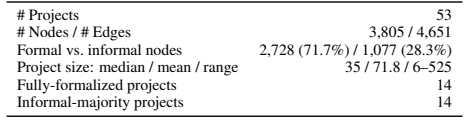
Table 1 : Mined Lean Blueprint corpus (full per-project listing in Appendix E.2).
원문 · CC BY 4.0 · Zixuan Chen, Wenyuan Jiang, Junling Wang, Mrinmaya Sachan, Yinya Huang · DAPS: Dependency-Aware Premise Selection for LLM Theorem Proving · 원문 그림 인용 · 원본 PDF 5쪽에서 그림 영역을 추출했습니다.
Table 2 : Training and evaluation data.
원문 · CC BY 4.0 · Zixuan Chen, Wenyuan Jiang, Junling Wang, Mrinmaya Sachan, Yinya Huang · DAPS: Dependency-Aware Premise Selection for LLM Theorem Proving · 원문 그림 인용 · 원본 PDF 5쪽에서 그림 영역을 추출했습니다.DAPS의 구조적 이웃 인코딩과 그룹 대조 목적
DAPS는 각 후보 전제를 자체 텍스트 표현과 2-hop 의존 부분그래프에서 샘플링한 이웃 정보로 함께 표현합니다. 텍스트 인코더는 선언의 이름, 범주, 시그니처, 문서 문자열, 진술, 증명을 이어 붙인 입력으로 기본 특징을 만들고, 이후 동결됩니다. 이웃은 1-hop과 2-hop 이웃에서 무작위로 m개를 뽑고 학습 가능한 FFN으로 점수를 매겨 상위 n개를 유지합니다. 각 이웃에는 타입 임베딩, 홉 임베딩, 위치 인코딩, 그리고 내차수와 외차수를 쓰는 차수 임베딩이 붙습니다. 학습 목적은 한 질의에 대한 여러 양성 전제를 하나의 그룹으로 질의 임베딩에 끌어당기는 다중 양성 대조 손실입니다. 손실의 분모는 양성 집합 전체와 음성 집합을 공유하므로, 한 전제만 가까운 이웃으로 학습하는 단일 양성 방식과 구별됩니다.
Mathlib pre-training과 Blueprint 연속 학습
학습은 두 단계로 진행됩니다. 먼저 Mathlib4에서 텍스트 인코더를 워밍업하고 동결한 뒤, 구조 융합 모듈을 다중 양성 대조 손실로 학습합니다. 이후 Blueprint 학습 분할에서 구조 융합 모듈을 추가로 미세 조정합니다. 이때 질의는 비공식 LaTeX 진술이며, 후보 전제는 형식 진술과 비공식 진술을 함께 사용합니다. 이 과정에서 인코더는 워밍업 뒤 동결되며, 학습 가능한 부분은 구조 융합 모듈에 해당합니다. 하이퍼파라미터는 Mathlib 단계와 Blueprint 단계에서 서로 다르게 설정되었습니다.
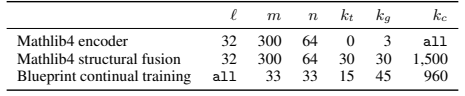
Table 14 : Training hyperparameters. ℓ = max positives per query (top-ℓ after category-priority sort); m, n= dynamic subgraph sampling budget (random sample/keep after FFN scoring); kt, kg, kc = numbers of temporal/global/cross-batch negatives per query.
원문 · CC BY 4.0 · Zixuan Chen, Wenyuan Jiang, Junling Wang, Mrinmaya Sachan, Yinya Huang · DAPS: Dependency-Aware Premise Selection for LLM Theorem Proving · 원문 그림 인용 · 원본 PDF 22쪽에서 그림 영역을 추출했습니다.검색 성능 결과
주 검색 결과에서 DAPS는 Recall@32를 기준으로 기존 선택기들과 비교되었고, 값은 세 번 실행의 평균과 표준편차로 보고됩니다. Mathlib4-Heldout에서 DAPS는 89.25를 기록해 강한 기준선인 LeanHammer의 77.84보다 11.41 높습니다. Mathlib4-Random에서도 80.68로 LeanHammer의 73.99보다 높습니다. 경쟁 문제 분포의 DAPS-Collection에서는 모든 기존 선택기가 3.20 아래에 머무는 반면 DAPS는 23.53을 기록했습니다. Blueprint 말뭉치의 DAPS-Blueprint에서는 Blueprint 연속 학습 후 50.08로 LeanHammer의 40.42보다 높습니다.
이 결과는 본문에 보고된 조건에서의 측정이며, Mathlib 기준선은 같은 Mathlib 의존성 데이터로 재학습된 값입니다.

Table 15 : Full retrieval results on Mathlib4-Random (mean±standard deviation over three runs).
원문 · CC BY 4.0 · Zixuan Chen, Wenyuan Jiang, Junling Wang, Mrinmaya Sachan, Yinya Huang · DAPS: Dependency-Aware Premise Selection for LLM Theorem Proving · 원문 그림 인용 · 원본 PDF 25쪽에서 그림 영역을 추출했습니다.
Table 16 : Full retrieval results on Mathlib4-Heldout (mean±standard deviation over three runs).
원문 · CC BY 4.0 · Zixuan Chen, Wenyuan Jiang, Junling Wang, Mrinmaya Sachan, Yinya Huang · DAPS: Dependency-Aware Premise Selection for LLM Theorem Proving · 원문 그림 인용 · 원본 PDF 25쪽에서 그림 영역을 추출했습니다.
Table 17 : Full retrieval results onDAPS-Collection (mean±standard deviation over three runs).
원문 · CC BY 4.0 · Zixuan Chen, Wenyuan Jiang, Junling Wang, Mrinmaya Sachan, Yinya Huang · DAPS: Dependency-Aware Premise Selection for LLM Theorem Proving · 원문 그림 인용 · 원본 PDF 25쪽에서 그림 영역을 추출했습니다.
Table 18 : Full retrieval results onDAPS-Blueprint (mean ± standard deviation over three runs). MePo does not support the Blueprint candidate collection.
원문 · CC BY 4.0 · Zixuan Chen, Wenyuan Jiang, Junling Wang, Mrinmaya Sachan, Yinya Huang · DAPS: Dependency-Aware Premise Selection for LLM Theorem Proving · 원문 그림 인용 · 원본 PDF 25쪽에서 그림 영역을 추출했습니다.구성요소 절제와 그룹 대조 목적
절제 실험은 DAPS의 구성요소가 성능에 얼마나 기여하는지 분리해 봅니다. 그룹 수준 대조 목적을 단일 양성 InfoNCE로 바꾸면 Mathlib4-Random, Mathlib4-Heldout, DAPS-Collection의 Recall@32가 각각 56.48, 56.00, 15.25로 낮아집니다. 구조 융합을 제거하면 텍스트 인코더만 남아 Mathlib 지표와 DAPS-Collection 지표가 크게 떨어집니다. 이 절제 결과는 고정 시드의 점 추정값이며, 주 표의 세 번 실행 평균과 구분해 읽어야 합니다. 따라서 이 결과는 해당 설정 안에서 각 구성요소를 유지하는 효용을 보여 주며, 모든 조건에서의 인과적 증명은 아닙니다.
하위 증명 실험
검색 지표가 실제 증명 성공으로 이어지는지도 확인되었습니다. 형식 정리 증명에서는 miniF2F-test 위에서 Goedel-Prover-V2-8B와 DeepSeek-Prover-V2-7B에 선택된 전제를 제공했습니다. 여섯 설정 모두에서 전제를 제공한 경우가 전제가 없는 기준선보다 높았고, DAPS는 여섯 설정 중 네 곳에서 가장 좋았습니다. 비공식 증명 실험에서는 IMO-ProofBench에서 Qwen3-235B, DeepSeek-V3.1, Kimi-K2-Instruct, Gemini-3.6-Flash를 대상으로 비교했습니다. 이 설정에서 DAPS가 준 전제는 네 모델 모두에서 가장 높은 Pass@8을 얻었습니다.
다만 저자들은 평가된 증명기가 전제 목록을 이용하도록 특별히 학습되지 않았다는 점을 한계로 지적합니다.
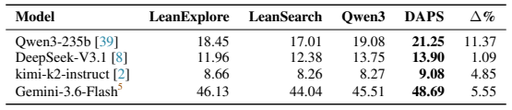
Table 4 : Downstream utility performance. Pass@8 of different LLMs on IMO-ProofBench [ 19] using premises from compared premise selectors. In this table, we strictly follow the original grading prompts from the IMO-ProofBench paper and use the identical grading model. Qwen3: Qwen3-Embedding-8B.∆%:∆% vs best baseline
원문 · CC BY 4.0 · Zixuan Chen, Wenyuan Jiang, Junling Wang, Mrinmaya Sachan, Yinya Huang · DAPS: Dependency-Aware Premise Selection for LLM Theorem Proving · 원문 그림 인용 · 원본 PDF 8쪽에서 그림 영역을 추출했습니다.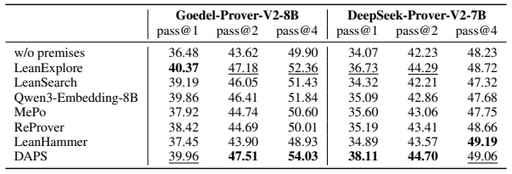
Table 5 : Formal theorem proving results on miniF2F-test [45].Boldand underline are the best and the second-best results, respectively.
원문 · CC BY 4.0 · Zixuan Chen, Wenyuan Jiang, Junling Wang, Mrinmaya Sachan, Yinya Huang · DAPS: Dependency-Aware Premise Selection for LLM Theorem Proving · 원문 그림 인용 · 원본 PDF 9쪽에서 그림 영역을 추출했습니다.한계와 남은 질문
저자들은 Blueprint 벤치마크가 미관측 프로젝트 전체에 대한 일반화를 입증하지 않는다고 밝힙니다. 이 벤치마크는 236개의 테스트 질의를 포함하며 질의당 평균 1.74개의 참조 전제를 가집니다. 형식 증명 평가는 두 개의 7B-8B 증명기와 miniF2F-test에 한정됩니다. 실패 사례 분석에서는 타입 수준의 과일반화, 어휘적 형제 이탈, 같은 프로젝트 안의 주제 부분그래프 이탈이 관찰되었습니다. 또한 주 표의 결과는 세 번 실행의 평균이지만, 절제 실험은 고정 시드의 점 추정값이므로 두 종류의 결과를 같은 수준의 통계적 근거로 읽으면 안 됩니다.
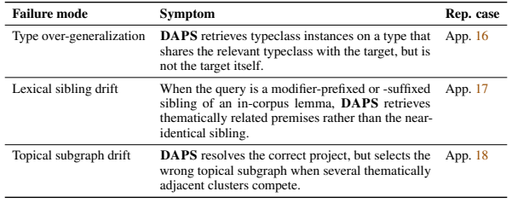
Table 21 : Failure modes observed in our case studies, with one representative case per mode (full case studies in Appendices 16–18).
원문 · CC BY 4.0 · Zixuan Chen, Wenyuan Jiang, Junling Wang, Mrinmaya Sachan, Yinya Huang · DAPS: Dependency-Aware Premise Selection for LLM Theorem Proving · 원문 그림 인용 · 원본 PDF 27쪽에서 그림 영역을 추출했습니다.논문 정보
- 저자
- Zixuan Chen, Wenyuan Jiang, Junling Wang, Mrinmaya Sachan, Yinya Huang
- 학회·저널
- arXiv · 프리프린트
- 최초 공개일
- 2026년 10월 30일
- 등록일
- 2026년 11월 3일
- 수정일
- 2026년 10월 30일
- 버전
- v1
- arXiv
- 2610.41536
- 분류
- cs.LO · cs.CL · cs.LG
- 원문 이용 조건
- CC BY 4.0
- 제공 범위
- 논문 정보, 해설, 허용된 원문 그림
AI 해설은 논문 원문과 별개의 설명이며 오류가 있을 수 있습니다. 원문과 그림은 각 출처의 이용 조건과 따로 표시된 권리를 따릅니다.
초록
LLM-based theorem proving in Lean 4 has advanced rapidly, but provers are difficult to leverage newly contributed lemmas, because retrieval skews toward popular foundational lemmas, leaving the right premises buried among hundreds of thousands of candidates. Existing neural selectors rank candidates by semantic similarity, with three intrinsic limitations: frequency-skewed retrieval, isolated pairwise ranking, and degradation on out-of-distribution queries such as competition problems and informal language. Given that mathematics is structured by dependencies rather than similarities, we restore this signal to both the training data and the model. We curate two underused dependency resources. We conduct the first systematic mining of 53 Lean Blueprint projects, a previously untapped corpus of 3,805 manually curated informal+formal nodes that capture rare, research-level premises absent from Mathlib4. We further pair it with the extraction of comprehensive, typed, multi-level Mathlib4 dependencies. We then introduce DAPS, a dependency-aware premise selector with a structural neighborhood encoder, a group-level contrastive objective, and a Mathlib-then-Blueprint adaptation procedure. DAPS reaches mean Recall@32 of 89.25 on Mathlib4-Heldout (+11.41 over the strong selector LeanHammer), and maintains this lead on two out-of-distribution benchmarks. Further experiments demonstrate that DAPS premises improve theorem proving on miniF2F and IMO-ProofBench. Project page: https://daps-eth.github.io/.
원문 인용
Zixuan Chen, Wenyuan Jiang, Junling Wang, Mrinmaya Sachan, Yinya Huang (2026). DAPS: Dependency-Aware Premise Selection for LLM Theorem Proving. arXiv:2610.41536v1. https://arxiv.org/abs/2610.41536v1
BibTeX
@misc{chen2026daps,
  title = {{DAPS: Dependency-Aware Premise Selection for LLM Theorem Proving}},
  author = {Zixuan Chen and Wenyuan Jiang and Junling Wang and Mrinmaya Sachan and Yinya Huang},
  year = {2026},
  eprint = {2610.41536},
  archivePrefix = {arXiv},
  url = {https://arxiv.org/abs/2610.41536v1}
}