논문 해설
Security Considerations in AI-Robotics: A Survey of Current Methods, Challenges, and Opportunities
AI 로보틱스의 보안 고려사항: 현재 방법, 과제, 기회에 관한 서베이
- 연구 문제 AI-Robotics 시스템은 일상과 산업 전반에 확산되었지만, 센서·알고리즘·데이터가 악용되어 물리적 피해를 낳을 수 있습니다. 이 논문은 이러한 위험을 공격 표면, 윤리 및 법적 문제, HRI 보안의 세 차원에서 정리합니다.
- 연구 방법 논문은 지각, 항법 및 계획, 제어로 구성된 하이브리드 아키텍처를 기준으로 공격 표면을 물리 공격, 디지털 공격, 기타 관련 공격으로 분류하고, 각 범주에 대응하는 방어 전략을 정리합니다.
- 주요 결과 입력 센서에 대한 재밍과 스푸핑, 센서 데이터 처리 소프트웨어의 취약점, 학습 단계의 모델 중독과 추론 단계의 프라이버시 공격이 주요 위협으로 정리됩니다. 각 위협에는 필터링, 이상 탐지, fine-pruning, 차등 개인정보 보호 등의 방어가 대응합니다.
AI-Robotics 보안이 왜 중요한가
AI-Robotics 시스템은 지각, 항법 및 계획, 제어의 세 계층으로 구성되며, 청소 로봇부터 반자율 자동차까지 일상에 깊이 들어와 있습니다. 원문은 이러한 시스템의 물리적 구성요소, 알고리즘, 데이터가 악의적 행위자에게 악용되어 심각한 결과를 낳을 수 있다고 지적합니다. 예를 들어 도로 표지판을 미세하게 바꾸어 Tesla 차량을 시속 50마일 가속시킨 2020년 적대적 공격 사례와, 2015년 Jeep Cherokee가 원격으로 해킹되어 차량 140만 대가 리콜된 사례가 제시됩니다. 이 논문은 이러한 위험을 공격 표면, 윤리 및 법적 문제, HRI 보안의 세 차원에서 종합적으로 정리하는 것을 목표로 합니다.
계층형 AI-Robotics 아키텍처와 공격 대상
논문은 로봇 아키텍처를 감지(sense), 계획(plan), 행동(act)의 세 기본 요소로 설명하고, 계층형, 반응형, 하이브리드 숙고-반응형 패러다임을 비교합니다. 현대 AI-Robotics 시스템은 주로 하이브리드 구조를 따르며, 논문은 지각(Perception), 항법 및 계획(Navigation & Planning), 제어(Control)의 세 계층으로 이를 정리합니다. 지각 계층은 GPS, IMU, 카메라, LiDAR 등의 센서로 환경 상태를 감지하고, 항법 및 계획 계층은 지도와 센서 정보로 웨이포인트를 생성하며, 제어 계층은 액추에이터 명령을 만듭니다. 이 구조가 공격 표면을 나누는 기준이 됩니다.
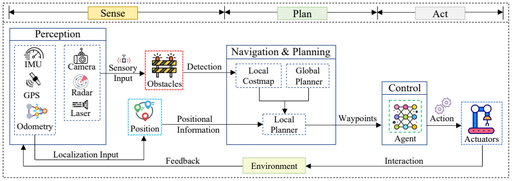
FIGURE 1 : A generic robot architecture consisting of perception, navigation, and control stacks. Icons from [34]
원문 · CC BY 4.0 · Subash Neupane, Shaswata Mitra, Ivan A. Fernandez, Swayamjit Saha, Sudip Mittal, Jingdao Chen, Nisha Pillai, Shahram Rahimi · Security Considerations in AI-Robotics: A Survey of Current Methods, Challenges, and Opportunities · 원문 그림 인용 · 원본 PDF 4쪽에서 그림 영역을 추출했습니다.공격 표면 분류 체계
논문은 공격 표면을 물리 공격, 디지털 공격, 기타 관련 공격의 세 영역으로 나눕니다. 물리 공격은 지각 계층의 입력 센서를 대상으로 하고, 디지털 공격은 항법 및 계획, 제어 계층과 AI 모델을 대상으로 합니다. 두 범주는 서로 얽혀 있어, 센서가 변조되어 생성된 손상 데이터가 객체 인식 알고리즘을 거쳐 항법과 액추에이터 명령에 영향을 줄 수 있다고 원문은 설명합니다. 기타 관련 공격에는 백도어, 악성코드, 랜섬웨어, 통신 네트워크 공격이 포함됩니다. 이 분류는 논문 전체 구성의 축이며, 각 공격을 방어 전략과 함께 정리하는 방식으로 이어집니다.
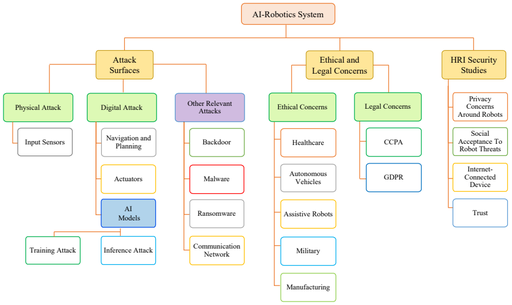
FIGURE 2 : An overview of our proposed taxonomy. The central parent node represents the overarching AI Robotic System, from which three primary branches emerge: Attack Surface, Ethical and Legal Concerns, and Human-Robot Interaction. Attack surfaces is further into two families: physical attack and digital attack. Physical attacks encompass attacks on the perception layer (input sensors). Digital attacks include attacks on navigation and planning, attacks on actuators, and attacks on AI models (training and inference attacks).
원문 · CC BY 4.0 · Subash Neupane, Shaswata Mitra, Ivan A. Fernandez, Swayamjit Saha, Sudip Mittal, Jingdao Chen, Nisha Pillai, Shahram Rahimi · Security Considerations in AI-Robotics: A Survey of Current Methods, Challenges, and Opportunities · 원문 그림 인용 · 원본 PDF 6쪽에서 그림 영역을 추출했습니다.입력 센서 공격과 방어
물리 공격은 센서의 손상, 제거, 재밍, 스푸핑 등으로 지각을 교란합니다. 재밍 공격은 강한 빛으로 카메라를 방해하거나 LiDAR를 눈부시게 하는 방식으로 설명되며, 방어로는 근적외선 차단 필터와 감광 렌즈가 제시됩니다. 스푸핑 공격은 GPS 신호를 위조하거나 LiDAR에 레이저 투사, 형상 조작, 객체 조작을 적용하는 방식이며, 방어로 필터링, 무작위화, 센서 융합과 이상 탐지가 소개됩니다. 소프트웨어 취약점도 OpenCV, TensorFlow, Open3D 같은 센서 데이터 처리 프레임워크에서 발생할 수 있다고 원문은 지적합니다. 이 절의 공격과 방어는 원문 표 2에 요약되어 있습니다.
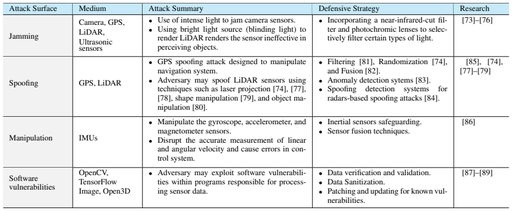
TABLE 2 : Overview of attacks on input sensors along with defensive strategies.
원문 · CC BY 4.0 · Subash Neupane, Shaswata Mitra, Ivan A. Fernandez, Swayamjit Saha, Sudip Mittal, Jingdao Chen, Nisha Pillai, Shahram Rahimi · Security Considerations in AI-Robotics: A Survey of Current Methods, Challenges, and Opportunities · 원문 그림 인용 · 원본 PDF 8쪽에서 그림 영역을 추출했습니다.AI 모델 대상 공격: 학습과 추론
학습 단계 공격인 모델 중독은 학습 데이터에 레이블 오염 등을 주입하여 모델이 예기치 않게 동작하도록 만듭니다. 원문은 Microsoft Tay 챗봇 사례와 VirusTotal 중독 사례를 들어 검증되지 않은 학습 데이터의 위험을 설명하고, 방어로 이상치 식별, 입력 전처리, 가지치기와 fine-tuning의 결합인 fine-pruning을 소개합니다. 추론 단계 공격인 모델 추론 공격은 질의와 출력 분석으로 학습 데이터의 민감한 정보를 추정하며, 섀도 모델을 만들어 구성하는 방식이 설명됩니다. 모델 역추론, 모델 회피, 모델 변경이 이 범주에 포함되며, 방어로는 데이터 증강, 차등 개인정보 보호, 선택적 망각 등이 언급됩니다.
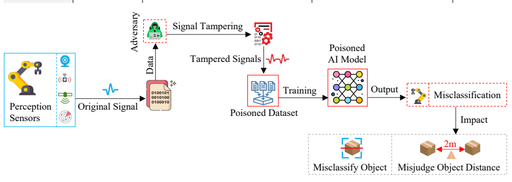
FIGURE 5 : An example of training attack on AI pipeline that causes misclassification of objects and misjudgment of object distance.
원문 · CC BY 4.0 · Subash Neupane, Shaswata Mitra, Ivan A. Fernandez, Swayamjit Saha, Sudip Mittal, Jingdao Chen, Nisha Pillai, Shahram Rahimi · Security Considerations in AI-Robotics: A Survey of Current Methods, Challenges, and Opportunities · 원문 그림 인용 · 원본 PDF 12쪽에서 그림 영역을 추출했습니다.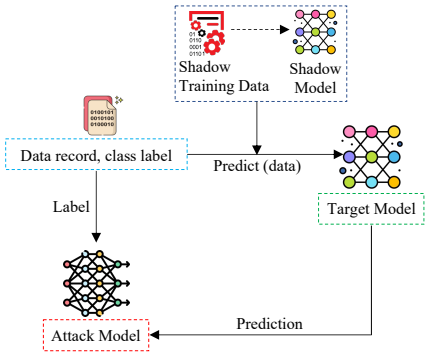
FIGURE 6 : An overview of a membership inference attack where the attacker queries the target model utilizing the shadow training set and shadow model to obtain a prediction vector containing probabilities for each class [166].
원문 · CC BY 4.0 · Subash Neupane, Shaswata Mitra, Ivan A. Fernandez, Swayamjit Saha, Sudip Mittal, Jingdao Chen, Nisha Pillai, Shahram Rahimi · Security Considerations in AI-Robotics: A Survey of Current Methods, Challenges, and Opportunities · 원문 그림 인용 · 원본 PDF 13쪽에서 그림 영역을 추출했습니다.윤리 및 법적 쟁점
논문의 두 번째 차원은 로봇의 윤리 및 법적 문제입니다. 의료 로봇에서는 환자 프라이버시, 비용, 동의 문제가 제기되고, 자율주행차에서는 트롤리 문제와 자기희생 딜레마가 다뤄집니다. 보조 로봇에서는 의존성과 사회적 고립, 군사 로봇에서는 도덕적 책임과 인도적 원칙의 준수 문제가 쟁점이 됩니다. 법적 측면에서는 로봇 책임 소재와 개인정보 보호 규정이 논의됩니다. 원문은 미국 CCPA와 유럽 GDPR을 비교하며, GDPR은 명시적 동의와 잊힐 권리를, CCPA는 데이터 보안 요건과 삭제 권리를 규정한다고 설명합니다.
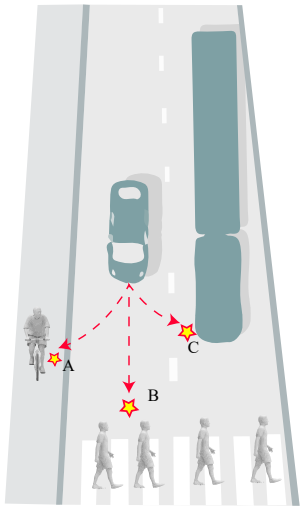
FIGURE 7 : A graphical depiction of the ethical dilemma for the A Vs in an inevitable crash. Option (A): crash with the cyclist on the right; Option (B): continue straight and crash with two pedestrians; Option (C): self-sacrifice by crashing with the truck on the left. Adapted from [190].
원문 · CC BY 4.0 · Subash Neupane, Shaswata Mitra, Ivan A. Fernandez, Swayamjit Saha, Sudip Mittal, Jingdao Chen, Nisha Pillai, Shahram Rahimi · Security Considerations in AI-Robotics: A Survey of Current Methods, Challenges, and Opportunities · 원문 그림 인용 · 원본 PDF 14쪽에서 그림 영역을 추출했습니다.HRI 보안과 프라이버시 강화 기술
HRI 보안은 사람과 로봇 사이의 물리적, 인지적, 사회적 상호작용에서 무결성, 프라이버시, 안전이 위협받는 문제를 다룹니다. 원문은 고령자가 카메라보다 로봇에 대해 프라이버시 보호 행동을 덜 한다는 연구, 로봇 자율성이 인간 정체성과 일자리에 대한 위협으로 인식되는 연구, 인터넷 연결 장난감과 로봇 통합 스마트 홈의 프라이버시 문제를 소개합니다. 대응책으로 프라이버시 강화 기술(PET)이 제시되며, 원문은 이를 데이터 변경, 데이터 차폐, 시스템과 아키텍처의 세 범주로 나누는 보고서를 인용합니다. 신뢰는 로봇 요인, 작업과 환경 요인, 인간 요인으로 나뉘어 논의됩니다.
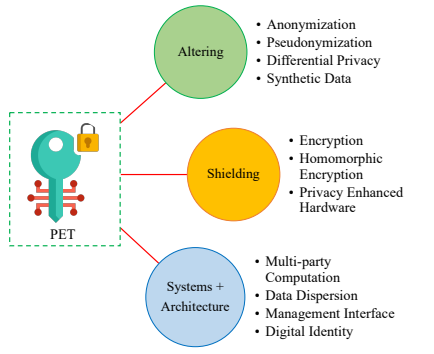
FIGURE 8 : A graphical illustration of Privacy Enhancing Technologies (PET). Adapted from [231].
원문 · CC BY 4.0 · Subash Neupane, Shaswata Mitra, Ivan A. Fernandez, Swayamjit Saha, Sudip Mittal, Jingdao Chen, Nisha Pillai, Shahram Rahimi · Security Considerations in AI-Robotics: A Survey of Current Methods, Challenges, and Opportunities · 원문 그림 인용 · 원본 PDF 17쪽에서 그림 영역을 추출했습니다.남은 연구 과제
원문은 미래 연구로 공격 표면 완화, 군집 로봇과 지식 전이의 보안, 인간-로봇 생태계의 보안, 설명 가능성, 안전한 로봇 학습, 검증과 평가, 보안 인식 교육의 일곱 영역을 제안합니다. 이들 제안은 원문이 제시한 연구 방향이며 실험으로 검증된 결과가 아닙니다. 논문은 조사와 분류 체계를 제시하는 서베이이므로, 개별 방어 기법의 성능을 통일된 조건에서 비교하지는 않습니다. 따라서 여기서 제시된 방어와 권고는 원문이 인용한 개별 연구의 조건 안에서 읽어야 합니다.
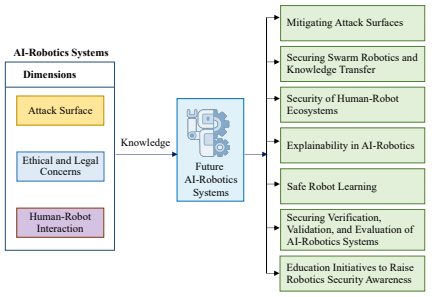
FIGURE 9 : A visual representation outlining the future research direction aimed at improving the security of AI- Robotics systems.
원문 · CC BY 4.0 · Subash Neupane, Shaswata Mitra, Ivan A. Fernandez, Swayamjit Saha, Sudip Mittal, Jingdao Chen, Nisha Pillai, Shahram Rahimi · Security Considerations in AI-Robotics: A Survey of Current Methods, Challenges, and Opportunities · 원문 그림 인용 · 원본 PDF 18쪽에서 그림 영역을 추출했습니다.논문 정보
- 저자
- Subash Neupane, Shaswata Mitra, Ivan A. Fernandez, Swayamjit Saha, Sudip Mittal, Jingdao Chen, Nisha Pillai, Shahram Rahimi
- 학회·저널
- arXiv · 프리프린트
- 최초 공개일
- 2023년 10월 12일
- 등록일
- 2026년 11월 6일
- 수정일
- 2024년 1월 26일
- 버전
- v3
- arXiv
- 2310.08565
- 분류
- cs.RO · cs.AI
- 원문 이용 조건
- CC BY 4.0
- 제공 범위
- 논문 정보, 해설, 허용된 원문 그림
AI 해설은 논문 원문과 별개의 설명이며 오류가 있을 수 있습니다. 원문과 그림은 각 출처의 이용 조건과 따로 표시된 권리를 따릅니다.
초록
Robotics and Artificial Intelligence (AI) have been inextricably intertwined since their inception. Today, AI-Robotics systems have become an integral part of our daily lives, from robotic vacuum cleaners to semi-autonomous cars. These systems are built upon three fundamental architectural elements: perception, navigation and planning, and control. However, while the integration of AI-Robotics systems has enhanced the quality our lives, it has also presented a serious problem - these systems are vulnerable to security attacks. The physical components, algorithms, and data that make up AI-Robotics systems can be exploited by malicious actors, potentially leading to dire consequences. Motivated by the need to address the security concerns in AI-Robotics systems, this paper presents a comprehensive survey and taxonomy across three dimensions: attack surfaces, ethical and legal concerns, and Human-Robot Interaction (HRI) security. Our goal is to provide users, developers and other stakeholders with a holistic understanding of these areas to enhance the overall AI-Robotics system security. We begin by surveying potential attack surfaces and provide mitigating defensive strategies. We then delve into ethical issues, such as dependency and psychological impact, as well as the legal concerns regarding accountability for these systems. Besides, emerging trends such as HRI are discussed, considering privacy, integrity, safety, trustworthiness, and explainability concerns. Finally, we present our vision for future research directions in this dynamic and promising field.
원문 인용
Subash Neupane, Shaswata Mitra, Ivan A. Fernandez, Swayamjit Saha, Sudip Mittal, Jingdao Chen, Nisha Pillai, Shahram Rahimi (2023). Security Considerations in AI-Robotics: A Survey of Current Methods, Challenges, and Opportunities. arXiv:2310.08565v3. https://arxiv.org/abs/2310.08565v3
BibTeX
@misc{neupane2023security,
  title = {{Security Considerations in AI-Robotics: A Survey of Current Methods, Challenges, and Opportunities}},
  author = {Subash Neupane and Shaswata Mitra and Ivan A. Fernandez and Swayamjit Saha and Sudip Mittal and Jingdao Chen and Nisha Pillai and Shahram Rahimi},
  year = {2023},
  eprint = {2310.08565},
  archivePrefix = {arXiv},
  url = {https://arxiv.org/abs/2310.08565v3}
}